
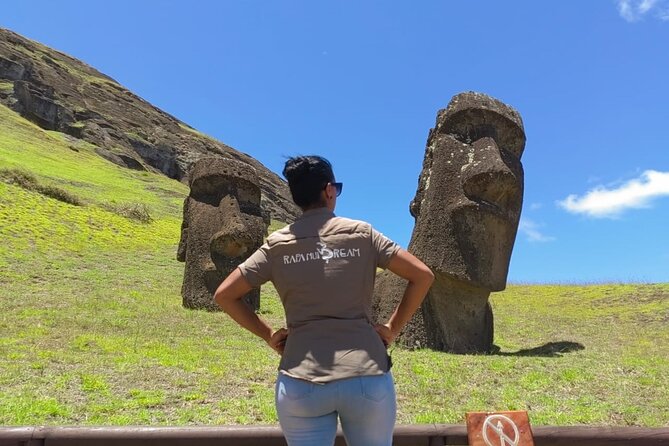
Reviewed · 2-DAY EXPERIENCES
2 Days touring Rapa Nui Highlights in small groups
This tour is interesting because it links the island’s major moai and ceremonial sites into a focused route, the kind that helps you see the full story without bouncing around on your own. I love the small group setup, capped at 8 people, so you get space to hear the guide and space to look closely at the monuments.
I also love the restored-and-ruin contrast across the stops, from the best-preserved ahu to places where moai are still toppled or unrestored. One drawback to consider: the day can move at a pretty steady pace, and the guide may start the next explanation before everyone has fully caught up.
Key Things You’ll Notice on This Rapa Nui Highlights Tour
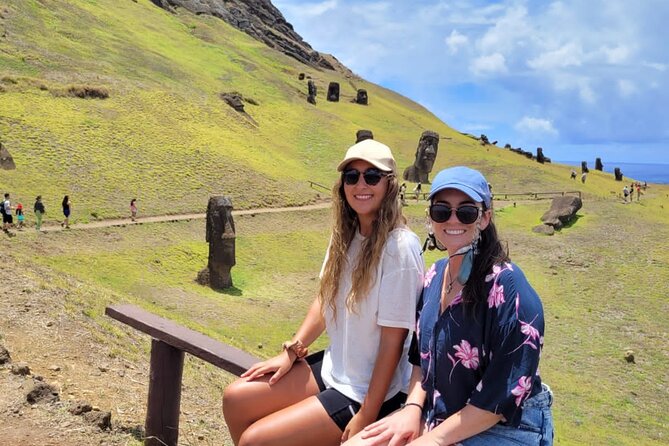
- Small group of up to 8 people: easier conversation, less crowd pressure at the sites
- Major ahu sequence across the island: beach and shoreline platforms, quarry zones, and ceremonial complexes
- A moai “factory to finale” arc: you see carving technique at Rano Raraku and then the platforms where moai were set
- Restored sites next to unrestored ones: you’ll understand what survived versus what was left damaged
- National Park ticket required before day one starts: you’ll want to handle that early, at the Ma’u Henua offices or online
Why This 2-Day Rapa Nui Highlights Route Feels Efficient (Without Feeling Rushed)
Rapa Nui is big in meaning, but small in geography, and that’s exactly where a highlights route can either help or hurt. This one helps because it takes you to the big, recognizable ahu and the sites that explain how the moai culture worked, not just where to take photos.
Across the 2 days, you’re not only visiting “pretty statues.” You’re seeing the stages: where moai were carved, where they were erected, and where political conflict and time left major sites damaged. That structure is what makes the tour satisfying if you want context along with famous scenery.
And since it’s English, with a maximum of 8 travelers, you can ask quick questions and keep your attention on what matters at each stop instead of waiting for a huge bus crowd to form.
One heads-up: the itinerary is packed with short stop windows, and the pacing can feel brisk if you walk slowly or prefer extra time at each platform. You’ll get the information, but you may have to keep up with the group to hear it all in one go.
A few more Easter Island departures to weigh up
- From Hanga Roa: Rapa Nui Culture Sightseeing Tour
★ 4.6 · 307 reviews - From Hanga Roa: Easter Island Highlights 2-Day Tour
★ 4.3 · 205 reviews - From Hanga Roa: Easter Island Sightseeing Full Day Tour
★ 4.5 · 189 reviews
Price and Time: Is $1,000 Per Person Good Value?
At $1,000 per person for a 2-day highlights experience (about 6 to 7 hours in duration per day), the value depends on what you want out of Rapa Nui.
Here’s where the price can make sense:
- You’re paying for transport and a small-group guide that connects multiple major sites in sequence.
- You’re also paying for interpretation across both preserved and damaged places, including an on-site interpretation center option at Ahu Vaihu and a ceremonial-village experience at Orongo.
Where you might feel the cost more:
- A few stops are listed as Admission Ticket Not Included, so your final out-of-pocket cost may be higher than the headline price.
- The route is tight, with many stops around 20 to 45 minutes, so if you want slow pacing and lots of wandering time, you might prefer a more flexible tour style.
If you only have limited time on Easter Island and you want the best “bang for your day,” this route is a strong contender. If you’re planning a long stay and want to linger, you may find it a bit scheduled.
Stop 1: Anakena’s Ahu Nau Nau and Ahu Ature Huki (Where Preservation Shows the Best)
Your first major stop is Ahu Nau Nau, located on the beach area of Hanga Rau o te Ariki (Anakena). This matters because it’s described as the platform on the beach where the old society’s capital was located. In other words, you’re starting with a place tied to power and settlement, not just a random collection of monuments.
Ahu Nau Nau has seven moai on its surface, and it’s known for being among the best preserved and restored in the island’s collection. That restoration piece is important. When you see moai that still look “whole,” it helps you understand what the sites are supposed to be like before you move on to places where everything is broken or missing.
Next you’ll also see Ahu Ature Huki, restored by the Rapa Nui community in the 1950s. The restoration by the community is part of the value here. It’s not just archaeology. You’re seeing how living people keep working with heritage.
Time-wise, expect around 35 minutes for this area. With admission marked free for this stop, it’s also one of the easier places budget-wise.
A small practical note: since this is an open beach setting, plan to be mentally ready for wind and bright light when you’re trying to take photos or simply read the site.
Stop 2: Ahu Te Pito Kura and Moai Paro (Famous, Huge, and Still Unrestored)
Then comes Ahu Te Pito Kura, a site built around one of the most striking moai stories on the island: Moai Paro. This moai is described as the largest transferred successfully from the Rano Raraku quarry to its ahu.
The numbers make it feel unreal: it’s 9.9 meters tall, with an estimated weight over 80 tons. And the key twist is that Moai Paro is lying down, torn down and not yet restored. Seeing an iconic piece in an unfinished or damaged state changes how you read the story. You’re not only admiring craftsmanship, you’re witnessing the reality of what went wrong or what never fully came back after conflict and time.
One more detail that people tend to love is the pukao in front of the moai: almost 2 meters high, about 10 tons. Even before you get to Puna Pau later, you can see how these red headdresses were meant to be an essential part of the whole figure.
This stop is about 25 minutes, and admission is marked Not Included, so budget for a separate ticket here.
If you’re the type who likes the “how did they do it” side of archaeology, Te Pito Kura is the kind of stop that turns your imagination on. You can physically sense the scale difference between what was carved and what was moved.
The other half of a Easter Island week:
- Two days of Full Day Tour of Rapa Nui + Sunrise in Tongariki
★ 4.5 · 132 reviews - Full Day Tour in Rapa Nui
★ 4.5 · 122 reviews - 2-Day Private Tour Easter Island Highlights Complete Discovery
★ 5.0 · 110 reviews - Private Tour: Full Day Easter Island Highlights
★ 5.0 · 106 reviews
Stop 3: Rano Raraku, the Moai Factory (How the Carving Actually Works)
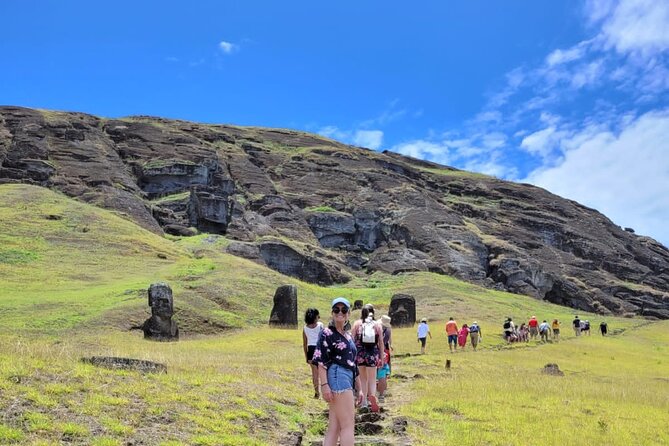
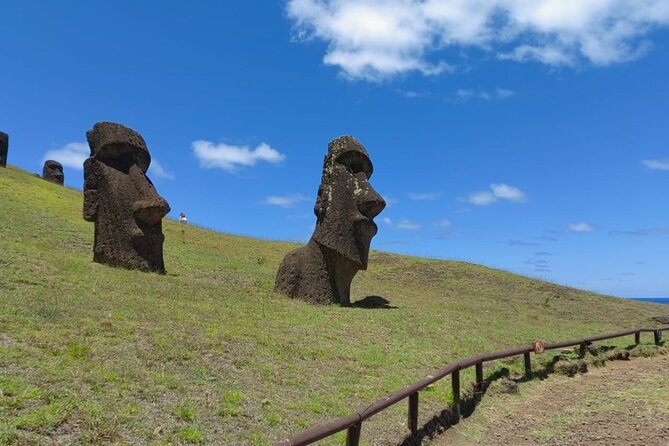
Next is the Rano Raraku quarry, which is basically the island’s moai workshop. It’s described as having around 400 examples of moai. Some are still embedded in volcanic rock, and others are scattered around the parking area.
This stop is one of the most valuable parts of the itinerary because it shifts you from finished icons to construction. You can appreciate the construction technique and the fact that not every moai followed the same path.
If you’ve only seen moai on platforms, this is where you understand the scale of labor. The quarry is messy by nature, with works-in-progress and pieces that never left. That’s not a flaw in the experience. It’s exactly what gives Rano Raraku its punch.
Plan on about 1 hour 30 minutes here. Since admission is marked Not Included, factor that in. If you’re trying to make your schedule match your budget, this is the one stop where you may feel the trade-off most.
Stop 4: Ahu Tongariki (Polynesia’s Big Platform and the Power of Scale)
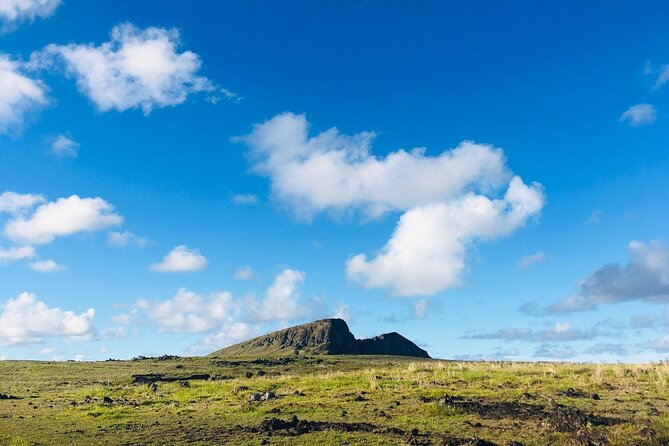
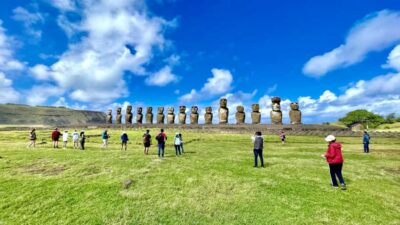
At Ahu Tongariki, you’re stepping into the largest platform (ahu) in Polynesia, with 15 upright moai. The key visual is that their backs face the ocean.
That detail matters because it changes how you interpret what you’re seeing. The platform is not only a stage for the statues. It’s also a design choice about orientation and ritual space. It reads like a set meant to work with the sea, wind, and open horizon.
You’ll get about 45 minutes at Tongariki, and admission is marked Not Included.
If you care about photos, Tongariki is likely going to be one of your best shots on the whole tour, because the arrangement is so clear and the scale is so obvious. Just remember that you may need to stand, wait, and adjust as you share sightlines with the group.
Stop 5: Ahu Vaihu and the Interpretation Center (The Consequences Part)
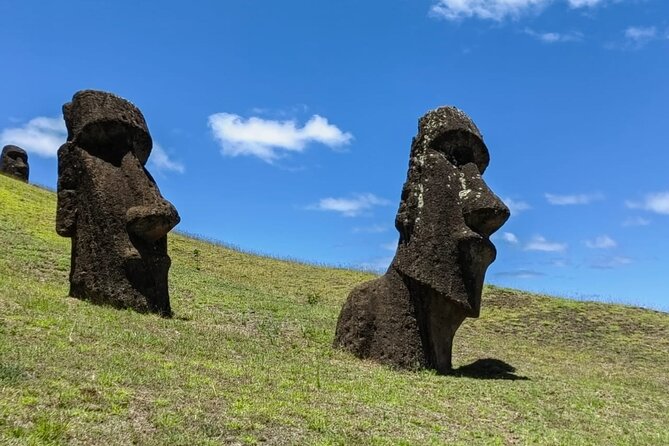
Ahu Vaihu is where the story gets darker and more human. The stop includes an interpretation center that lets you enter buildings, which makes the history easier to grasp than looking at ruins only from the outside.
This area focuses on the consequences of the toppling of the statues due to clan conflicts. Even if you already know the big idea, having a place designed to explain it helps you connect the dots across the whole itinerary, especially after seeing the “statement platforms” like Tongariki.
Expect around 30 minutes. Admission is marked Not Included.
I like this stop because it balances the moai spectacle with the reality that the culture faced upheaval. It turns the monuments from collectibles into evidence of major social change.
Stop 6: Ahu Vinapu (Basalt Precision and the Inca Connection Discussion)
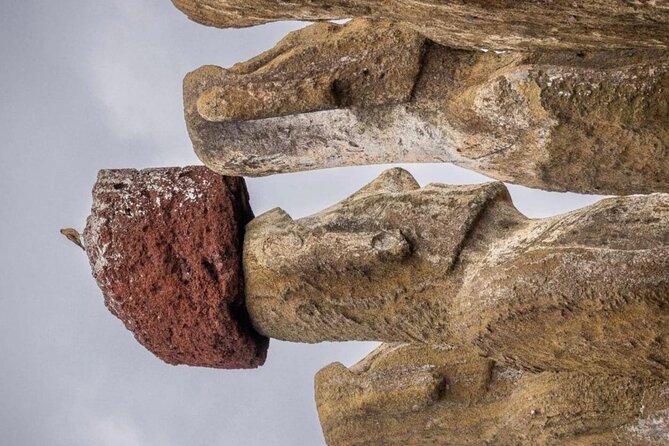
Then you’ll visit Ahu Vinapu, described as a ceremonial complex with a unique platform built with large basalt slabs. The details here are meant to spark curiosity: there’s mention of a possible connection with the Inca empire.
Also included are two ceremonial platforms, Ahu Tahira and Ahu Vinapu, plus ruins of a third older ahu. Even with damage from tribal conflicts in the 18th century, the site preserves enough structure to feel how seriously the builders worked the stone.
You’ll spend about 40 minutes, with admission marked Not Included.
This is the stop for you if you enjoy thinking about engineering and style differences. You’re not only looking at moai shapes now. You’re studying how the ground itself was engineered for ceremony.
Stop 7: Puna Pau (Where the Red Pukao Came From)
Next is Puna Pau, a red slag quarry where the pukao headdresses were mainly sculpted.
This stop helps you connect the pieces. At Te Pito Kura, you saw the bulky pukao in front of Moai Paro. Here, you see the material source that gave those headdresses their famous red tone.
Expect about 25 minutes, and admission is marked Not Included.
Even if you only have a short time at Puna Pau, it’s worth it because it gives you the “raw ingredient” version of a monument feature.
Stop 8: Ahu Tahai (Ceremony Today, Plus a Notable Tomb)
At Ahu Tahai, you’ll see three impressive ceremonial platforms: Ko Te Riku, Tahai, and Vai Uri. This site is important not only for its archaeology, but also because it’s described as key in contemporary ceremonies.
So you’re watching a living tradition, not just a museum-style ruin.
A second reason to like Tahai is the tomb of William Mulloy, an American archaeologist who made important contributions at Rapa Nui. If you’re the kind of traveler who likes to connect the dots between today’s sites and the research behind them, this detail adds weight.
The viewing here is also called out for the harmonious atmosphere and the soothing sound of the sea, which makes it a friendly spot for photographs.
Plan for about 30 minutes, and admission is marked Free.
Stop 9: Ahu Akivi (Seven Moai Facing the Ocean, Old and Unusual)
Then comes Ahu Akivi, with seven moai facing the ocean. It’s described as originally being called Ahu Atiu and as being over 500 years old.
That “facing ocean” detail matters because it makes the site feel different from platforms where the moai backs are turned. It suggests intentional placement and meaning tied to sightlines and movement.
Expect around 20 minutes here. Admission is marked Not Included.
Stop 10: Rano Kau (The Volcano That Once Supplied Drinking Water)
Next you’ll reach Rano Kau, described as the largest volcano on Rapa Nui and one of the island’s most impressive natural settings.
The practical history angle is clear: its crater was one of the most important sources of drinking water in ancient times. That gives the stop a grounded feeling, beyond scenery.
This is also the kind of place where the tour pace can help you slow down, because the feeling of immensity and silence is part of what makes Rano Kau memorable.
You’ll likely spend about 20 minutes. Admission is marked Free.
If you’re sensitive to long driving days, take a breath here. It’s a natural reset before the last big cultural stop.
Stop 11: Orongo on the Rano Kau Rim (Petroglyphs and the Bird-Man Cult)
Finish at Orongo, a ceremonial village where you’ll explore unique archaeological structures, including javelin stone houses with a style found across the island. You’ll also see petroglyphs that connect to the bird-man cult.
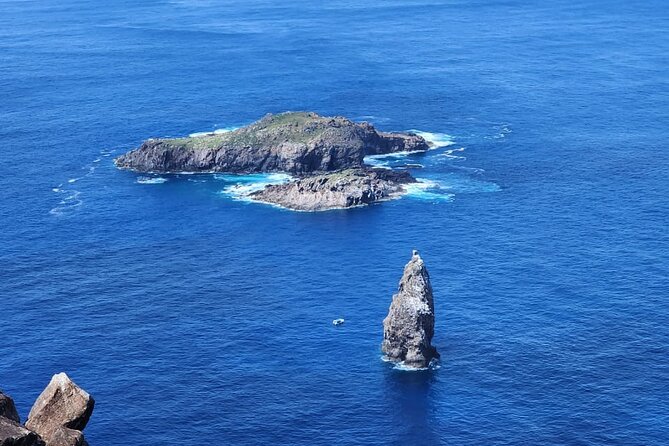
Orongo is on top of the Rano Kau volcano and comes with panoramic views of the Pacific Ocean and the motu, which are the small islets. The location is strategic, and you feel that when you look out.
Plan for about 45 minutes. Admission is marked Not Included.
This is a strong finale because it ties together ritual architecture, rock art, and a specific cultural theme. After seeing moai carving and platforms, you end with a different kind of expression: symbols and stories carved into stone.
Best Fit: Who Should Choose This Small-Group Tour
This tour works best if you want:
- A clear highlights plan across key monuments on a limited schedule
- A small group with an English-speaking guide
- The contrast of restored, preserved, and unrestored sites so you understand both success and damage
It may not be the right fit if you need lots of quiet time at each stop or you move slowly on uneven ground, because the pace can be tight and the guide may start explanations before the group has fully gathered.
If you like your Rapa Nui with structure, context, and variety, this is a good choice.
Should You Book? My Take on Rapa Nui Dream’s Highlights Tour
Book it if you’re on a time crunch and you want the island’s most important moai and ceremonial sites in a guided, efficient small-group format. The route covers the full chain of meaning, from Rano Raraku’s carving technique to platform life at ahu like Tongariki and Tahai, then to the ritual world at Orongo.
Skip it or consider alternatives if budget is tight and you expect to pay several additional admissions along the way, since multiple stops are marked Not Included. Also think twice if you really want slow, stop-and-stare exploration, because the schedule is designed to cover a lot.
If you do book, plan to stay close to the group during explanations, especially on the early stops. That small behavior choice will make the whole tour feel smoother and more rewarding.
FAQ
How many people are in the group?
The tour has a maximum of 8 travelers, keeping it in a small-group format.
Is pickup offered?
Yes, pickup is offered. You’re asked to wait at the entrance or reception of your accommodation, and you’ll be communicated the day before with relevant details.
What language is the tour in?
The tour is offered in English.
What time does the tour start?
The start time is 9:30 am.
Do I need a ticket for the National Park?
Yes. Before starting the first day, you must have your National Park ticket. You can buy it in person at the Ma’u Henua offices or online at https://www.rapanuinationalpark.com/pages/compra-de-tickets
Are entrance fees included for all stops?
Not all stops are included. Some stops are marked Admission Ticket Free, while others are marked Admission Ticket Not Included.
Is there a mobile ticket?
Yes, a mobile ticket is offered.
How long is the tour?
Duration is about 6 to 7 hours.
What if I need to cancel?
Cancellation is free. You can cancel up to 24 hours in advance for a full refund, and cut-off times are based on local experience time.
More 2-Day Experiences in Easter Island
- 2 Days Highlights Tour in Easter Island Moai and Nature
★ 4.0 · 55 reviews - Two days of Full Day Tour of Rapa Nui + Sunrise in Tongariki
★ 4.8 · 55 reviews - 2 Day Private Tour: Easter Island’s Cultural Heritage
★ 5.0 · 40 reviews - 2 Day Small Group Tour in Moai Monuments and Historic Pathways
★ 5.0 · 22 reviews
Freshly reviewed in Easter Island
- Easter Island 2 Half Days and 2 Full Days Private Trekking Tour★ 5.0 · 3 reviews
- Astronomical Tour on Easter Island★ 3.5 · 3 reviews
- Full day Private Tour: Poike Walk through the abandoned area★ 4.5 · 3 reviews
- T1-THE GRAND TOUR (non-cruise visitors)★ 5.0 · 3 reviews
- Private Tour: Full-Day Easter Island Birdman Cult★ 5.0 · 3 reviews
- Moai Rise and Fall: Full Day Private Tour★ 5.0 · 3 reviews
- Rapa Nui Astrophotography and Stargazing Night Tour Combination★ 5.0 · 3 reviews
- 4-Day Easter Island Experience with Hotel, Tours & Dinner show★ 5.0 · 3 reviews
2-Day Experiences, compared.

Cable Car, Funicular and Sightseeing Bus in Santiago two days
Read our review →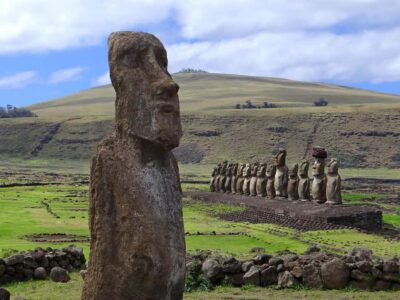
Two days of Full Day Tour of Rapa Nui + Sunrise in Tongariki
Read our review →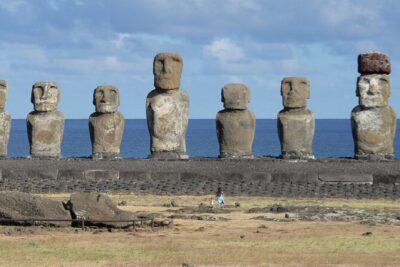
2-Day Private Tour Easter Island Highlights Complete Discovery
Read our review →Two days of Full Day Tour of Rapa Nui + Sunrise in Tongariki
Read our review →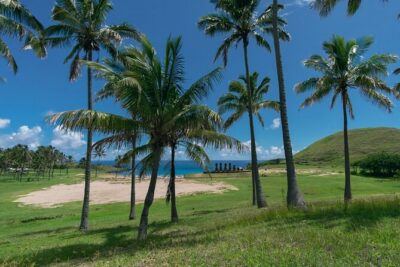
2 Days Highlights Tour in Easter Island Moai and Nature
Read our review →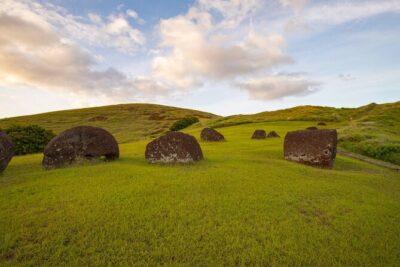
2 Day Private Tour: Easter Island’s Cultural Heritage
Read our review →Browse the lists this tour appears in