
Reviewed · HIKING & TREKKING
Easter Island 2 Half Days and 2 Full Days Private Trekking Tour
Easter Island, also called Rapa Nui, is one of those places where every turn feels like a time machine, from restored ceremonial platforms to volcanic caves. This specific private tour is built to hit the big meaning-heavy moai sites plus the quieter geology, without you doing the map homework.
I especially like how it pairs the showstoppers with context. You start with restored ahu like Ahu Tahai and then move into Orongo’s Birdman ceremony world, so the day doesn’t feel like a checklist. Second, you get a guide who helps with more than facts, with Toto standing out for smart photo spots and practical care when my wife hurt her knee (ice-pack and a walking stick were organized right away).
The main drawback is budgeting and expectations. The tour price is $934 per person, but the mandatory National Park ticket is not included, and that is required for park sites. Also, this is designed for people with at least moderate fitness, since caves and uneven ground are part of the deal.
Key highlights you will actually feel
- Ahu Tongariki sunrise planning with seasonal sunrise direction and extra winter cloud awareness
- Toto-style guiding, including help with mobility issues and extra kindness like fresh pineapple juice from his farm
- Real variety: ceremonial ahu, quarry sites (Rano Raraku, Puna Pau), and lava caves (Ana Te Pahu, Ana Te Pora, Ana Kakenga)
- Private transportation and pickup from your accommodation across Hanga Roa
- Meals included (breakfast and lunch), plus water during the day
Why this private Rapa Nui trek works better than a loose itinerary
Easter Island is not huge, but it can be annoying to do independently. Roads are limited, distances between key sites add up, and you will lose time trying to line up entries, parking, and the right order. A private guide fixes that fast, with a route that makes sense for both timing and learning.
What makes this tour feel practical is the pacing. You get a mix of longer stops for interpretation and photo time, plus shorter site visits that keep the day moving. And because it is private, you can slow down when you want the details or speed up when you are ready to get to the next moai.
The tone is also right for this island. You are not just looking at statues. You are learning how the island’s people organized ceremonial life, how moai were sourced from volcanic areas, and why cave spaces mattered.
More trekking out of Easter Island:
- Poike: Full Day Hike
★ 5.0 · 4 reviews - Puerto Natales: Base of the Towers Day Hike
★ 4.8 · 727 reviews - From Santiago: Cajón del Maipo and Volcán San José Hike 8K
★ 4.9 · 418 reviews
Price and logistics: what you pay for, and what you must add
The tour costs $934.00 per person for about 4 days. What you get in that price is meaningful: private transportation, a professional guide (offered in English), breakfast and lunch, and water. You also get a mobile ticket, which makes day-of entry less stressful.
Then there is the unavoidable add-on. A National Park ticket is mandatory and not included. It is $100.00 per person, valid for 10 days from first entry and for all park sites. Even if one stop is listed as free for admission, you should still plan around the park ticket because the tour is clearly built around park areas.
This is also good to know: accommodation is not included, and the tour is not available for cruise ship passengers. So if you are thinking of doing a same-day shore excursion, this is not that.
If you want the best value, treat the private guide and transport as the main product. The moai sites are famous, but you are paying for the person who can connect the dots and keep the route smooth.
Day 1: Ahu Tahai sunset area, Orongo Birdman ceremony, and volcanic Rano Kau
Day 1 is about arriving with a sense of place, then letting the island explain itself.
Ahu Tahai, restored and photo-friendly
You start at Ahu Tahai, a restored ceremonial complex worked on in 1974 by American archaeologist Dr. William Mulloy. Tahai brings together three principal ahu from north to south: Ko Te Riku, Tahai, and Vai Ure. Since it is close to town, this is the kind of place where sunset photos are popular, and the ruins feel easy to access without a long day stretch.
Even if you have seen moai before, Tahai is a good opener because it is about restoration choices. You can spot how the site was brought back to communicate meaning, not just stone placement.
A few more Easter Island departures to weigh up
- From Hanga Roa: Rapa Nui Culture Sightseeing Tour
★ 4.6 · 307 reviews - From Hanga Roa: Easter Island Highlights 2-Day Tour
★ 4.3 · 205 reviews - From Hanga Roa: Easter Island Sightseeing Full Day Tour
★ 4.5 · 189 reviews - Two days of Full Day Tour of Rapa Nui + Sunrise in Tongariki
★ 4.5 · 132 reviews
Orongo, where the Birdman ceremony story comes alive
Next is Orongo, a village on one side of the Rano Kau crater. This is one of the big sites on the island because it connects to the Birdman ceremony. The setting helps. You are high enough to feel exposed to wind and ocean, which makes the rituals feel more grounded in real geography.
Orongo is a longer stop (about 2 hours), so you can take your time. You will want it here. The atmosphere matters because it is not just a viewpoint, it is a ceremonial landscape.
Rano Kau crater and its plant-and-water legacy
Then you head to Rano Kau on the southwest side. Expect a dramatic crater experience and the feeling that you are standing beside ancient infrastructure. The crater is listed as 1.5 km large, and it is noted as the biggest reserve of endemic flora on Rapa Nui. Its lake was also described as an important ancient source of drinking water.
This stop is shorter (about 30 minutes) but it helps you understand why volcanoes were not just scenery. On Easter Island, volcanoes were resources.
Ahu Vinapu and the precise-stone connection
To close the day, you visit Ahu Vinapu. This site is known for precise stonework compared to Inca architecture style. You also see ruins and a moai platform area that gives clues about early Polynesian culture on the island.
Vinapu is a great “brain” stop. It makes you think about building techniques and cultural contact ideas, without needing a lecture that runs on forever.
Day 1 takeaway: You begin with restoration, move into ritual storytelling, then end with early architectural clues.
Day 2: Tongariki’s scale, Rano Raraku moai quarry, and Anakena’s calm beach stop
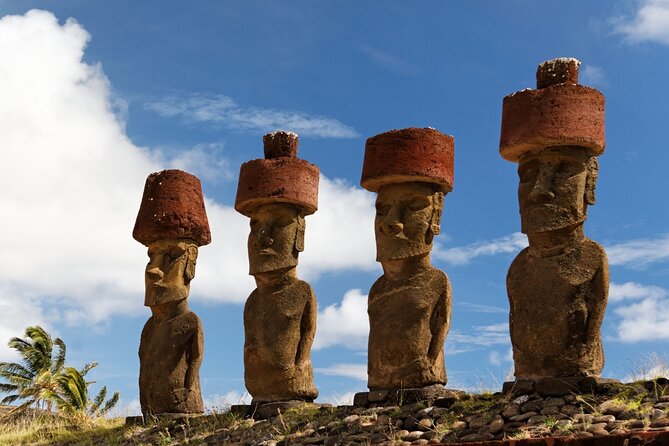
Day 2 is the biggest hitting day, with several core moai platforms plus quarry context. It is also where you really feel the island’s extremes: huge platforms, then back to sand and water at Anakena.
Ahu Akahanga, where the moai still look like they fell
You start on the southeast coast at Ahu Akahanga. It is considered emblematic because it helps you understand how the village related to ceremonial centers. The ground-level views include moai images shown as being on backs and foreheads, giving you a rawer feel than fully restored locations.
This kind of stop is valuable because it shows that not everything arrived in perfect order. It makes the island history feel more honest.
Ahu Tongariki, the reconstructed moai wall
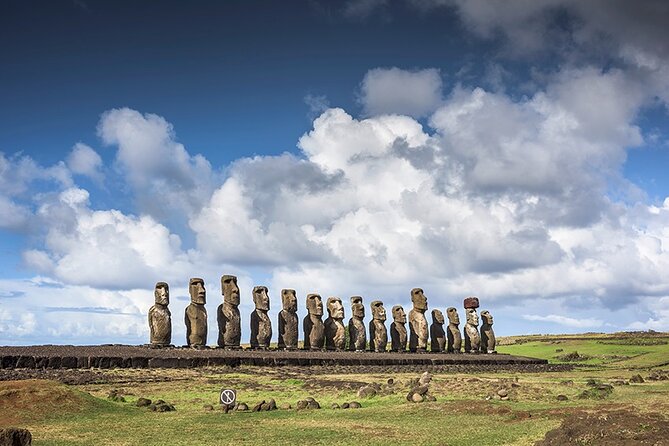
Then comes Ahu Tongariki, located opposite Rano Raraku. This is described as the largest reconstructed platform on the island, and the most imposing moai platform overall. You can see fifteen standing statues facing inland, with their backs toward the Pacific Ocean.
Plan your camera time here. Tongariki is about scale, and that scale becomes clearer when the guide points out layout and the orientation of the statues.
Rano Raraku, where the moai were built
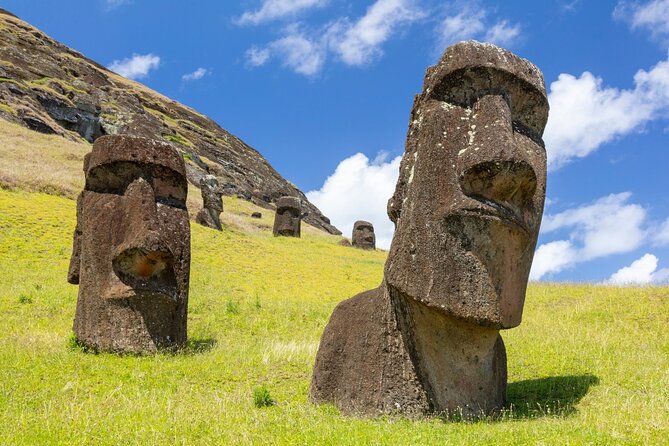
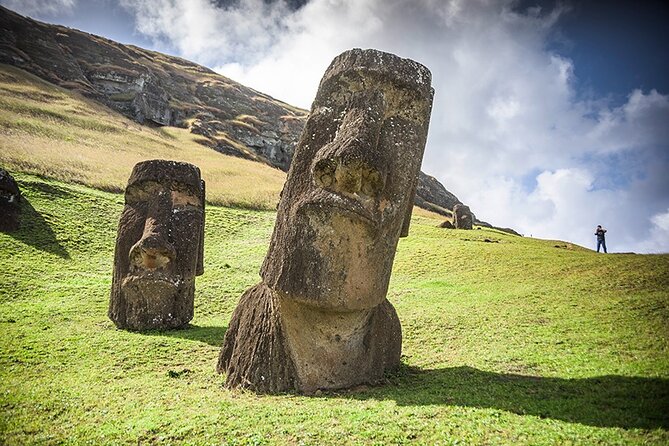
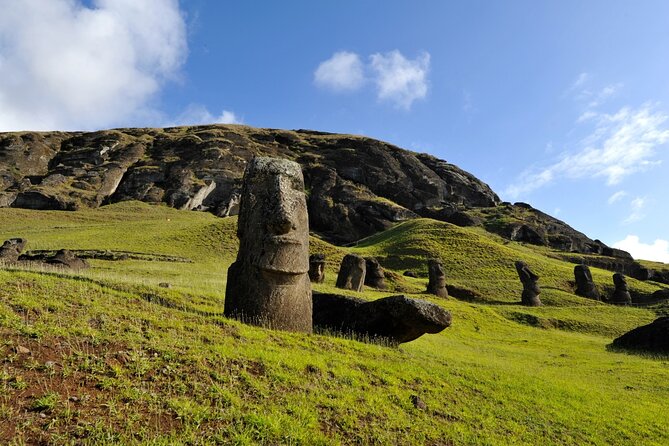
Next is Rano Raraku, the only volcanic cone tuff quarry existing on Easter Island. This is important because it explains why moai were made larger-scale than before, thanks to the quarry stone type. You are at the quarry where moai were built, and where they were moved from to ahu.
This is the day’s key “how it worked” stop. You might have seen moai all over, but Rano Raraku helps you understand the production side.
Ahu Te Pito Kura and the famous stone tradition
Then you visit Ahu Te Pito Kura, where the numbers help you grasp why people talk about this place. It is listed as 11 meters long and about 90 tons in weight. Nearby is the famous rounded stone called Te Pito ‘o te Henua. There is also a tradition that this stone was brought by ancestors.
This is a good pause before Anakena because it mixes physical scale with cultural meaning.
Anakena Beach and ahu Nau Nau
Finally, you end at Anakena Beach, known for warm turquoise water and coral sand. It is the main beach on the island and linked to royal residence tradition for the Miru Araki line. You also visit Ahu Nau Nau, described as one of the most refined ahu because of the moai presentation.
This ending is smart. You close the day with something relaxing and human-sized, which makes the day feel less exhausting and more balanced.
Day 2 takeaway: Big ceremonial platforms, the quarry that explains the building, then a restorative beach moment.
Day 3: Pu Kao red-stone quarry and the cave circuit you should not rush
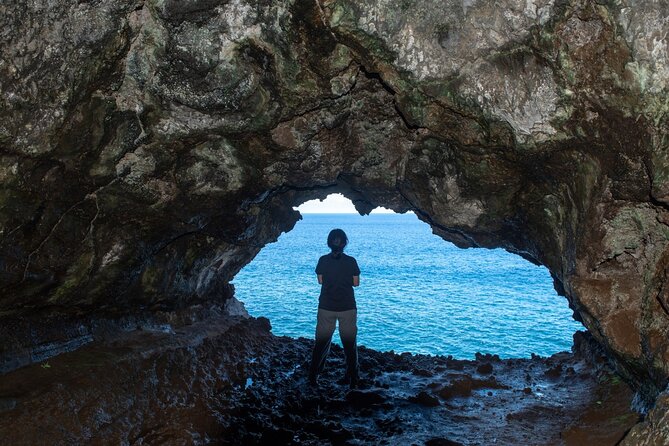
Day 3 leans into materials and underground spaces. It is the day for people who like geology, but it still stays connected to culture.
Puna Pau, where the red stone hair was made
At Puna Pau, you get the story behind the moai’s red stone pieces, the Pu Kao. This quarry is where the red volcanic stone was extracted. It also includes 23 cylindrical prototypes of Pu Kao at early carving stages, which helps you picture the workflow and how pieces were prepared.
You also get privileged views of Hanga Roa village from here. This stop is about 30 minutes, which is short, but it is a strong “materials” moment.
Ahu Akivi, the astronomical moai platform
Next is Ahu Akivi, one of the few ceremonial platforms not located by the sea. It has seven moai restored to standing position by archaeologists William Mulloy and Gonzalo Figueroa, along with the Rapa Nui community. A key detail is that the moai have astronomical positioning guidance and they look toward the setting sun.
That astronomic angle changes how you look at the site. Even if you are not timing the sunset, you can feel the intentional alignment.
Ana Te Pahu, four chambers and the banana-cave clue
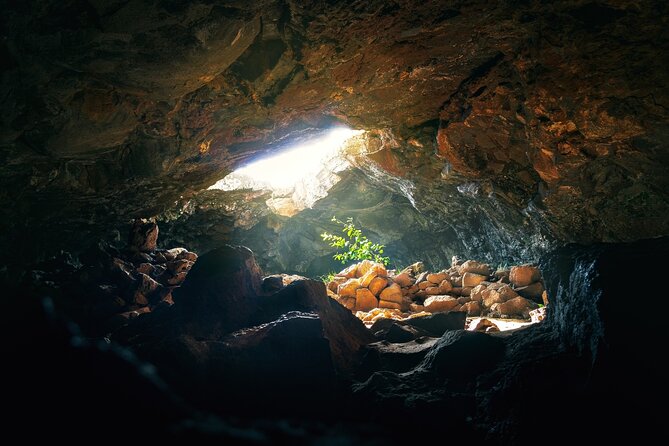
Then the tour shifts underground to Ana Te Pahu, described as the largest cave on Rapa Nui. Lava channels connect four underground chambers. The space was used in primitive times, including umu cooking areas, because the cave’s size fit food preparation needs. The entrance is known as the cave of the bananas, with banana trees near the entry.
This stop is about 1 hour. Give it time. Caves make lighting tricky, and the guide can help you see what matters in the structure.
Ahu Te Peu, left unrestored after internal conflict
After the caves, you visit Ahu Te Peu, a site left unrestored. That matters because you see how ancient inhabitants left it after internal conflicts led to moai toppling. The area once held a lively village, and tradition attributes a 43-meter-long boathouse, called hare paenga Tore Tahuna, to Ariki Tu’u Ko Ihu.
Unrestored sites can feel raw and slightly unsettling, but that is part of their value. They show the island’s story without smoothing it away.
Ana Kakenga and Ana Te Pora, refuge and ceremony
Next comes Ana Kakenga, a volcanic cave formed by lava flowing into the sea, creating two openings facing the cliff. It stretches about 50 meters and served as a kionga, a place of refuge in ancient times.
Finally, you visit Ana Te Pora, another volcanic cave. The main entrance is about 100 meters from the parking lot, and it was used as both shelter and a ceremonial place.
Both cave stops are around 1 hour each. This is where moderate fitness helps. You are moving through uneven, volcanic terrain and spending real time standing in shaded areas.
Day 3 takeaway: You go from quarry materials to celestial placement, then into the island’s underground survival and ceremony spaces.
Day 4: Ahu Tongariki sunrise, seasonal direction, and winter cloud reality
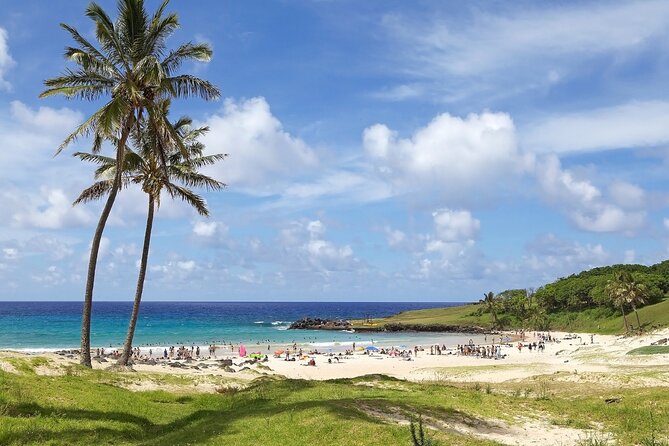
Day 4 is the big visual payoff: Ahu Tongariki at sunrise. Expect about 4 hours, and this is not an afterthought stop. It is the whole reason this final day is special.
Here is the practical timing detail that affects your expectations. The sunrise direction depends on the season. During October to March, the sun rises behind the platform. During the rest of the year, it rises from Poike volcano. There is also a note that wintertime can mean more chances of unclear skies.
This matters because sunrise trips are always about the weather curve. If skies are hazy, you might still enjoy the moai silhouette, but it can be less dramatic. Your guide’s job is to manage that and help you get the best possible angles anyway.
Day 4 takeaway: You start the day with moai in their most cinematic light, then you leave with a stronger memory than a photo file alone.
Guide quality: why Toto is the name to ask for
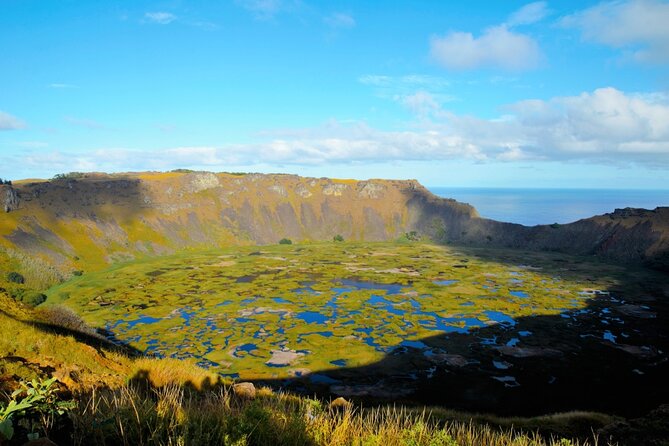
A good guide can turn Easter Island from wow to understand. What stands out here is how the guide approach shows up in the real moments, not just the big facts.
One detailed example: Toto helped with a knee injury on the day of the tour, arranging an ice-pack and a walking stick immediately. That is exactly the kind of practical competence you hope for when you are walking on irregular ground and spending hours outside.
Also, the same guide style shows up in small local touches. Fresh pineapple juice from a pineapple farm was part of the experience and made the day feel more personal without turning it into a gimmick.
If you have mobility concerns, this is the type of operator where you can feel more confident you will not be left to fend for yourself. The tour also says it suits moderate physical fitness, so if you are active but not a trail runner, you are in the right range.
What this tour is best for (and what it is not)
This tour is a strong fit if you want:
- A private, English-speaking guide who connects moai sites to where the stones came from and why ceremonial spaces were placed where they were
- The big names like Tongariki plus the less famous but meaningful cave and quarry stops
- Convenience, meaning pickup from your accommodation and private transportation so you do not spend your day figuring logistics
It may not be the best fit if:
- You want to stay strictly on the beach. This is not a resort pacing plan. You will be walking and moving between sites, including caves.
- You are on a tight schedule where sunrise is a must but weather risk feels stressful. Winter can have unclear skies, and the itinerary leans into sunrise anyway.
- You are looking for a cruise-ship-style half-day, since the tour is not available for cruise ship passengers.
Should you book it? My practical take
If you are spending a few days on Easter Island and you want maximum meaning per hour, I would book this. The combination of restored ceremonial sites, quarry production stories, and lava caves gives you a fuller picture than a standard “moai only” day.
The deal-breaker question is money plus the park ticket. At $934 plus the mandatory $100 National Park ticket per person, you should plan for the total cost up front. Once you accept that, the inclusion of breakfast, lunch, water, and private transportation makes the price feel more reasonable, not like you are paying extra for time.
My other recommendation: request a guide by name if Toto is available. The way he handled a knee issue and still kept the day moving says a lot about how this experience is managed on the ground.
In short, if you want the island’s best known moai moments plus the underground and quarry details that explain them, this is the kind of private tour you will remember long after the photos.
FAQ
Is pickup from my hotel included?
Yes. Pickup is offered from all hotels or accommodations on the island. You just need to let the company know your hotel name.
Is this tour private or shared?
It is private. Only your group will participate.
What meals are included?
Breakfast and lunch are included, and water is provided during the tour.
Is the National Park ticket included?
No. The National Park ticket is mandatory and not included. It costs $100.00 per person and is valid for 10 days from your first entry for all park sites.
What admission tickets are included for specific stops?
The plan notes admission ticket status by site. Some sites list admission as not included, while Rano Kau is listed as free. The mandatory National Park ticket still applies for park sites.
How long is the tour?
The tour is about 4 days.
What language is the tour guide?
The tour is offered in English.
What physical condition do I need?
The tour recommends a moderate physical fitness level.
Can the tour handle dietary restrictions?
Yes. Dietary restrictions like vegetarian and vegan can be accommodated. You should indicate your needs at booking.
Can I cancel for a full refund?
You can cancel for free up to 24 hours in advance for a full refund. If you cancel less than 24 hours before the start time, the amount paid is not refunded.
Freshly reviewed in Easter Island
- Astronomical Tour on Easter Island★ 3.5 · 3 reviews
- Full day Private Tour: Poike Walk through the abandoned area★ 4.5 · 3 reviews
- T1-THE GRAND TOUR (non-cruise visitors)★ 5.0 · 3 reviews
- Private Tour: Full-Day Easter Island Birdman Cult★ 5.0 · 3 reviews
- Moai Rise and Fall: Full Day Private Tour★ 5.0 · 3 reviews
- Rapa Nui Astrophotography and Stargazing Night Tour Combination★ 5.0 · 3 reviews
- 4-Day Easter Island Experience with Hotel, Tours & Dinner show★ 5.0 · 3 reviews
- 4-Days Trip to Discover Easter Island★ 4.0 · 3 reviews
Hiking & Trekking, compared.
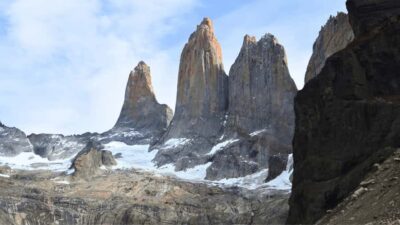

Trekking Base Torres – Torres del Paine trek from Puerto Natales
Read our review →
Glacier Hike at El Morado Glacier, from Santiago
Read our review →
Trekking Mirador el volcano + Geometric hot springs
Read our review →Browse the lists this tour appears in