
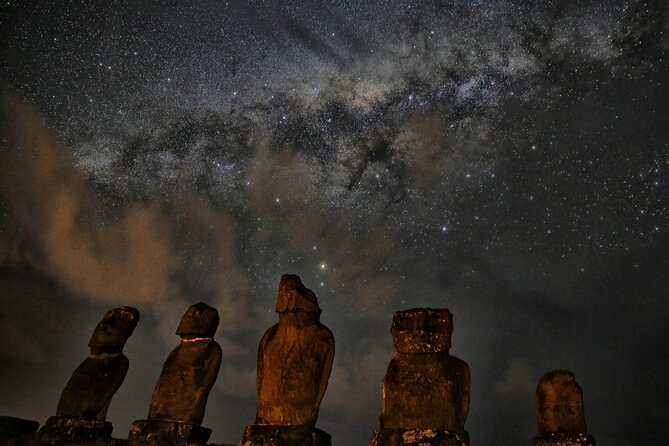
Reviewed · STARGAZING & ASTRONOMY TOURS
Rapa Nui Astrophotography and Stargazing Night Tour Combination
Rapa Nui at night is interesting because the island’s biggest landmarks and the sky basically share the same stage. You get more than pretty darkness, you get a guided way to read the stars, including why they mattered to Polynesian navigators. I especially love the hands-on telescope time and the fact that the guides explain what you’re actually looking at, not just pointing upward.
My second favorite part is the photo plan, with dedicated stops at major ceremonial sites and a promise to send your images later by email. That photo takeaway is real value. One possible drawback: you’re paying a premium, and the Rapa Nui National Park admission ticket is not included, so your total cost depends on buying that pass online in advance.
Key highlights you will feel right away
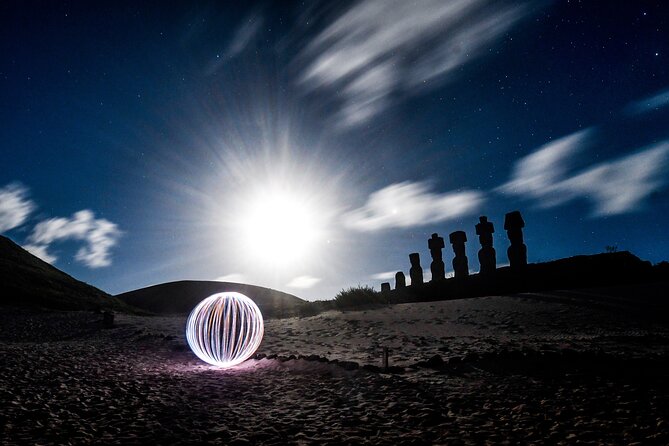
- Polynesian astral navigation talk that turns random dots into a usable sky map
- Telescope viewing plus guidance so you do not miss the best targets
- Night photography at Ahu Nau Nau and Anakena with a scheduled coffee break
- Ahu Tongariki for moai-at-night shots, with a possible switch to Ahu Anakena
- Marc and Hekii’s pacing, including extra time for you during the astrophotography portion
Why this two-night sky plan works on Easter Island
On Easter Island, night can be tricky. The sky is great when conditions cooperate, but weather and cloud cover can steal your view without warning. This tour is built around that reality by focusing on two strong “anchors” on the island, so you still get a memorable experience even when the sky needs some patience.
What makes this stand out is the blend of learning and doing. You start with a structured sky session that includes a talk on Polynesian navigation techniques and the way the night sky is organized. Then you move into telescope observation and actual photo time at iconic sites. By the end, you are not just impressed. You feel oriented, like you know what you’re seeing and why it matters.
Also, the group is kept intentionally small. The max is 10 travelers, which usually means you get real attention, not a rushed assembly line. And the guides you may meet, like Marc and Hekii, earn strong marks for making the experience feel calm and unrushed, even when the night is moving fast.
Other nights under the desert sky:
- Rapa Nui Stargazing
★ 4.5 · 62 reviews - The Rapa Nui Stargazing Experience
★ 4.5 · 32 reviews - Rapa Nui Astronomical Experience
★ 5.0 · 19 reviews
Day 1: Ahu Nau Nau, Anakena beach, and a sky you can use
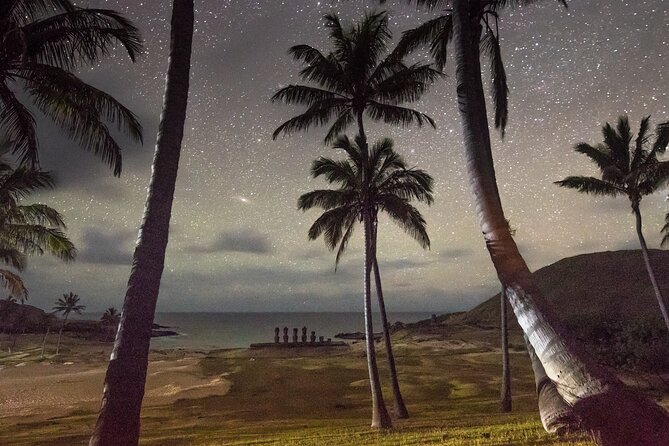
Day 1 centers on the area near Anakena Beach and begins with your first ceremonial stop: Ahu Nau Nau. Expect a night intro session that covers Polynesian navigation techniques, plus a practical overview of the night sky layout. This is the kind of explanation that helps you connect constellations and planets to real directions, instead of treating them like trivia.
Then the plan shifts to photography at Anakena. This is where the island’s silhouette and the sky’s depth work together. If you care about night images, you will appreciate that they do not just say go take photos. They time the experience so you can actually focus, including a coffee break and telescope viewing before you move into the photo window.
Important detail for planning: Day 1 runs about 3 hours total, including transportation back to your lodging. Admission for specific sites is not included, so if you are budgeting, keep that in mind from the start.
The telescope session and the navigation lesson (the part you will be grateful for later)
The best part of the night education is that it is meant to help you see. Marc’s style is practical, and the goal is not to overload you with astronomy terms. It is to help you spot patterns and understand how navigators could use the sky. In the time you spend at Ahu Nau Nau, you get help locating stars, constellations, and planets through telescope observation.
I like this approach because it solves a common vacation problem: on a dark night, you end up staring with no system. Here, you leave with a mental map. Even if the sky changes, you still have something solid to look for.
You may also notice how the guide handles timing. One standout theme from the experience is that Hekii gives you all the time you need during the astrophotography portion. That matters because night photography is not fast. It is repetition, adjustments, and waiting for the sky to cooperate. If you are the type who wants multiple tries, this pacing is a big deal.
Day 2: Ahu Tongariki for moai-at-night photos, with a backup option
Day 2 brings you to Ahu Tongariki, the largest moai platform on Rapa Nui. This is one of the most photogenic places on the island by day, and at night it becomes a whole different mood. The big draw is the subject, the moai platform, plus the star backdrop you get when you are there after dark.
The tour also gives you flexibility based on conditions and timing. A big plus is that you could go to Ahu Anakena instead of Tongariki as an alternate plan. That matters if you prefer a different setting or if something about the night makes one location more workable than the other.
Like Day 1, this stop is time-efficient, designed for concentrated photo results rather than hours of wandering. You get about 2 hours at this part of the program. National park admission is again not included.
A few more Easter Island departures to weigh up
- Ride to the highest point on the island for sunset
★ 5.0 · 40 reviews - Sunset in the Andes Mountains
★ 5.0 · 332 reviews - Astronomical Tour “Under the Night Sky”
★ 5.0 · 284 reviews - Santiago: Andes Mountains Sunset and Valle Nevado & Picnic
★ 4.6 · 181 reviews
Tongariki versus Anakena: how to choose what you care about
Even if you do not get to choose the exact stop order every time, it helps to understand the vibe difference.
- Ahu Tongariki is dramatic and iconic. If you want moai scale and a “wow” frame, this is the one.
- Ahu Anakena can feel more intimate, especially paired with beach atmosphere and open-sky views.
If you are the type who wants a classic, recognizable Rapa Nui photo, Tongariki usually fits that goal best. If you are chasing a softer, beach-forward night look, Anakena is often the better match. Either way, the tour is designed around getting you into position and helping you make the most of the sky while it lasts.
Price and what you actually pay for at $695 per person
At $695 per person for the combination, this is not a budget activity. You should think of it as paying for two things: guided dark-sky instruction and dedicated night photo time at major sites, including specialized astrophotography guidance.
A huge factor in the value equation is what is included and what is not. Your telescope and guiding time are part of the package. But the Rapa Nui National Park ticket is not included, and it is listed as $80 USD per person. You need to buy that ticket online before the tour.
So your realistic “all-in” planning looks like:
- Tour price: $695 per person
- National park ticket: $80 USD per person (additional, not included)
Is it worth it? For me, it usually is if you want more than casual stargazing and you care about night photos with real guidance. If you just want a quick sky look, you may be able to DIY. But if you want the learning component and the guided photo approach, you are paying for someone to handle positioning, timing, and the technical side.
Pickup, start time, and how to not miss the evening
You start at 8:00 pm, and the meeting point is KatipareHanga Roa, Easter Island. Pickup depends on which part of the combo you are doing. Stargazing is a shared excursion, and you meet in front of Katipare library around 19:30 in winter and 20:30 in summer.
Astrophotography is described as a private tour with hotel pickup included. That split matters. It means you should confirm what you are doing each night and where you are expected to meet.
At the end, they drop you off at your lodging. There is a reason they build it this way. On Rapa Nui, you do not want to be figuring out dark roads after a long night shoot. This tour’s structure protects your energy.
One more timing note: this experience is booked early. On average it is booked 76 days in advance, so if you are traveling during a popular window, start planning before you feel relaxed.
Photos returned by email, and what that means for your expectations
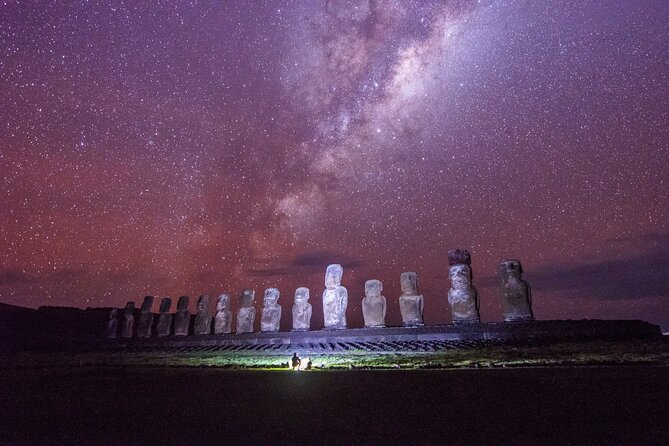
One of the smartest practical touches is the photo workflow. Your photo from Day 1 will be sent by email in about 5 days, and the note is that internet on the island is slow. Translation for you: do not expect it immediately. Plan on a short wait, and treat it like a souvenir you receive after you return or after you get back online.
This is also one of the reasons the tour can justify its price. They are not only pointing you at the sky. They are capturing images for you, then delivering them afterward. If you care about having a strong night photo without spending your whole trip fighting a camera in the dark, this is a big value lever.
Moonlight, weather, and how the guides help you “win the night”
On Easter Island, you cannot control the weather. Clouds can roll in, and nights can go from clear to moody fast. This is where good guiding earns its keep.
One strong signal from the experience is smart timing. Even with a nearly full moon, the guides planned the schedule so the visit at Anakena Beach happened before the moon rose. That’s exactly the kind of detail that changes your results, because moonlight can wash out stars.
The good part is that you are not left alone to gamble. The experience is weather dependent, and if conditions are not good enough, you are offered a different date or a full refund. That is not a guarantee of a perfect sky every time, but it protects you from paying for a night that never gets off the ground.
Still, keep your mindset flexible. If you can stay in the area a bit longer, you increase your odds that one of your nights lines up with good sky.
Who this tour is for, and who should reconsider
This is a great fit if you:
- Want to learn how to find things in the sky, with real guidance
- Care about astrophotography results, not just looking
- Prefer small groups, since the max is 10 travelers
- Enjoy the idea of combining culture and astronomy, especially through Polynesian navigation context
It might be less ideal if you:
- Expect a laid-back, casual stargazing walk with no structure
- Are only interested in moai photos during the day and feel night is not worth the cost
- Do not want to deal with a separate $80 USD park ticket you must buy online beforehand
If you like your evenings organized, and you want photos plus meaning, you will probably love this combo.
Should you book this Rapa Nui Astrophotography and Stargazing combination?
I think you should book it if your main goal is night sky learning and strong night imagery at major Rapa Nui sites. The combination of a navigation-focused sky talk, telescope viewing, and guided photo time is exactly what makes this feel like more than just a nighttime drive.
The biggest “check before you commit” items for me are simple:
- Budget for the National Park ticket you must buy online (listed as $80 USD per person)
- Plan to meet on time for the late start, especially if your pickup is shared before the private part
- Accept that weather drives outcomes, but the tour includes a weather-based safety net
If you show up ready to learn and you care about the photos you bring home, this is one of the most practical ways to turn Rapa Nui’s night sky into something you can actually point to and explain later.
FAQ
What time does the tour start?
The experience starts at 8:00 pm. Pickup timing is listed as about 19:30 in winter or 20:30 in summer, when meeting in front of Katipare library.
Is pickup from my lodging included?
Pickup is offered. Stargazing meets in front of Katipare library for the shared portion, and the astrophotography portion includes hotel pickup. You are also dropped off at your lodging at the end.
How long is the experience?
It runs for about 2 days. Day 1 is about 3 hours total including transportation, and Day 2 includes about 2 hours at the main stop.
Is the Rapa Nui National Park ticket included in the price?
No. The National Park ticket is not included and is listed as 80 USD per person. You need to buy it online before the tour.
What language is the tour offered in?
The tour is offered in English.
What is the group size limit?
This tour/activity has a maximum of 10 travelers.
Do I get photos from the tour?
Yes. Your photo from Day 1 will be sent via email in about 5 days.
Is the tour dependent on weather?
Yes. It requires good weather. If it is canceled due to poor weather, you are offered a different date or a full refund.
Is this tour suitable for most travelers?
The information provided says most travelers can participate. Confirmation is received at the time of booking.
Freshly reviewed in Easter Island
- Easter Island 2 Half Days and 2 Full Days Private Trekking Tour★ 5.0 · 3 reviews
- Astronomical Tour on Easter Island★ 3.5 · 3 reviews
- Full day Private Tour: Poike Walk through the abandoned area★ 4.5 · 3 reviews
- T1-THE GRAND TOUR (non-cruise visitors)★ 5.0 · 3 reviews
- Private Tour: Full-Day Easter Island Birdman Cult★ 5.0 · 3 reviews
- Moai Rise and Fall: Full Day Private Tour★ 5.0 · 3 reviews
- 4-Day Easter Island Experience with Hotel, Tours & Dinner show★ 5.0 · 3 reviews
- 4-Days Trip to Discover Easter Island★ 4.0 · 3 reviews
Stargazing & Astronomy Tours, compared.
The Roofless Experience San Pedro de Atacama Stargazing Tour
Read our review →

Astronomical Tour with Guide and Pick Up San Pedro de Atacama
Read our review →
“Astronomical Adventure in San Pedro de Atacama”
Read our review →Browse the lists this tour appears in