
Reviewed · LUNCH EXPERIENCES
Sacred Horizons – 2 MUST VISIT full-day tours + lunch
This two-day Sacred Horizons route is a smart way to see Easter Island beyond the famous moai rows. You cover volcanic craters, ceremonial stone sites, and the big ahu viewpoints, plus a classic beach finish at Anakena Beach. It feels built for first-timers who want the key stops in one organized plan on Rapa Nui.
I love that it includes lunch twice, so you spend less time hunting for food and more time enjoying the sites. I also like the small group size (max 15), which helps you get smoother timing at popular locations.
One possible drawback is that national park entrance fees are not included, and the stops are timed (about 45 minutes each), so the pace can feel a little brisk if you want to linger a lot at a single spot.
Key highlights you will care about
- Two included lunches keep your day from turning into a logistics puzzle
- Small group (up to 15) helps the schedule feel controlled, not rushed chaos
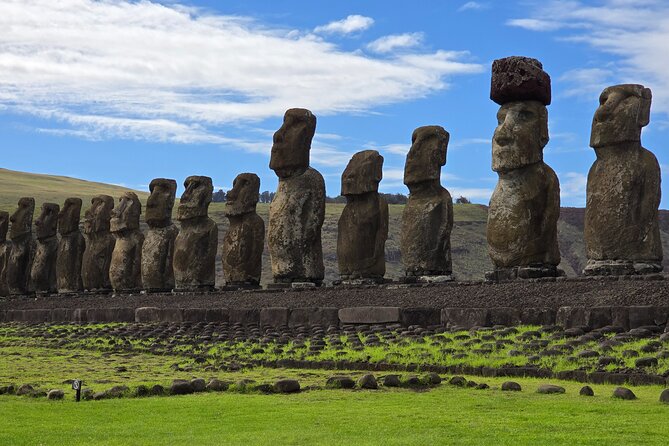
- Day 2 packs the biggest moai line-up, including 15 moai at Ahu Tongariki
- Orongo and Rano Kau connect the island’s birdman cult to the crater views
- Puna Pau quarry explains where the red topknots (pukao) came from
- An hour at Anakena Beach gives you real downtime, with time that can include a quick swim
Sacred Horizons in two days: why this route is a good first-time plan
If you only have a short window on Easter Island, Sacred Horizons is set up like a highlight reel with actual context. You start with the ceremonial core around the Rano Kau crater, then move through architectural and cave sites, and finish with several of the most important ahu and moai locations on day 2. That matters because on Rapa Nui, the meaning is often tied to location. A moai row is not just a photo stop, it is part of how the Rapanui understood power, sea access, and sacred space.
You will also notice the tour is built around variety. Day 1 leans into ceremony, geology, and the island’s “how it worked” archaeology. Day 2 leans harder into the moai storytelling, including the quarry area where many statues were shaped. That contrast is one of the reasons the tour works well as a pair of days, not just two long drives between points on a map.
A few more Easter Island departures to weigh up
- Portillo and Laguna del Inca Tour with Lunch at Hotel Portillo
★ 5.0 · 642 reviews - Santa Rita Vineyard Tour with Lunch An unforgettable experience!
★ 5.0 · 356 reviews - Puero Natales: Glacier Tour with Lunch & Whiskey Aperitif
★ 4.6 · 110 reviews
The 9:00 am start and max 15 group size, what it means for your day
The tour begins at 9:00 am, meeting at MahinaturAtamu Tekena in Hanga Roa, and it ends back at the same point. That simple loop is practical. You do not burn time figuring out transfers or reworking plans for each stop.
Group size is capped at 15, and you ride in an air-conditioned vehicle. On Easter Island, where roads can be slow and distances add up, that is a real quality-of-life detail. A smaller group also tends to make the schedule feel more orderly when you are arriving at sites that people want to photograph fast.
Two more practical notes that affect your comfort:
- Pickup is offered, but you must confirm. Pickup is not valid for guests traveling by cruise or charter flight, and it will be confirmed by email or WhatsApp. If it is not confirmed, you need to show up at the sales office downtown.
- No restroom on board and no WiFi. Plan your timing like a local day trip, not like a city tour.
Day 1 on Rapa Nui: Orongo, Rano Kau, and the sites that explain ceremony
Day 1 is set up as a “ceremony and origins” walk across the island’s sacred map. You move through six stops, each about 45 minutes, with admissions not included. That means you are mostly seeing, listening, and absorbing, not having time for long museum-style reading.
Orongo: the birdman (Tangata Manu) ceremonial village
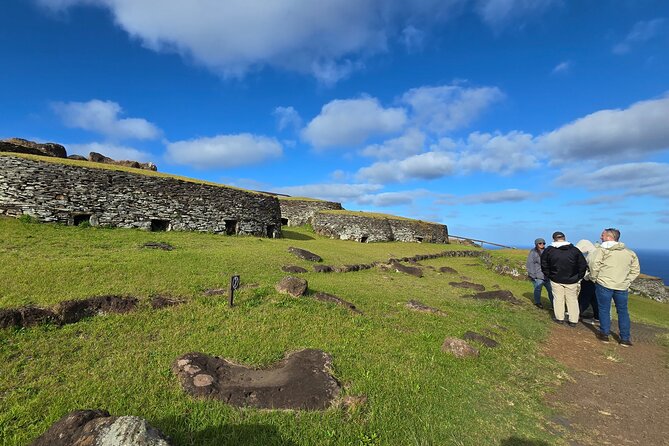
Orongo is an ancient ceremonial village on the edge of the Rano Kau crater. This is where the birdman (Tangata Manu) cult is centered, and you see stone houses plus petroglyphs that hint at how ritual life unfolded.
What I like about Orongo as an opener is the location. Even without perfect conditions, the crater edge setting makes it easier to understand why people built sacred spaces where the sky, sea, and volcanic walls all meet.
The other half of a Easter Island week:
- From Hanga Roa: Rapa Nui Culture Sightseeing Tour
★ 4.6 · 307 reviews - From Hanga Roa: Easter Island Highlights 2-Day Tour
★ 4.3 · 205 reviews - From Hanga Roa: Easter Island Sightseeing Full Day Tour
★ 4.5 · 189 reviews - Two days of Full Day Tour of Rapa Nui + Sunrise in Tongariki
★ 4.5 · 132 reviews
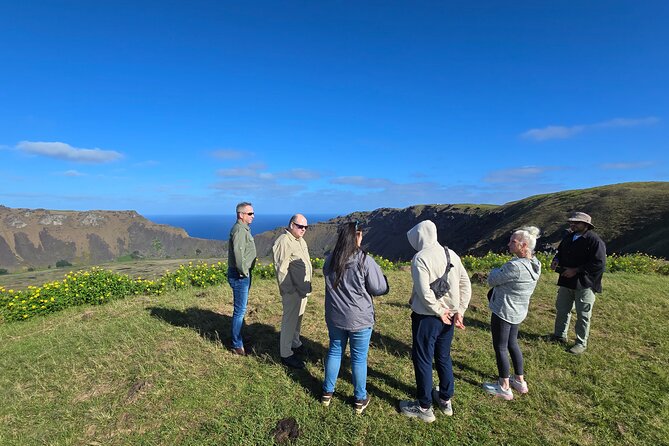
Rano Kau: volcanic crater views and a freshwater lagoon
Right after Orongo, you go to Rano Kau, another crater stop. Here, the big draw is the mix of geology and living detail: a freshwater lagoon and lush vegetation. You also get panoramic views from the rim, and Orongo is literally connected to what you are looking at.
Consider this if you hate craters and views. This day is designed for you to care about the “why here” of sacred geography.
Ahu Vinapu: the careful stonework lesson
At Ahu Vinapu, you focus on architecture. The ahu has stone walls known for sophisticated construction and a precise stone alignment. This stop is a nice change of pace from the more open ceremonial settings, because it trains your eye on craftsmanship.
If you love when a tour slows down just enough for meaning, this is one of those stops. You are not just seeing moai, you are learning how building skill signaled status and purpose.
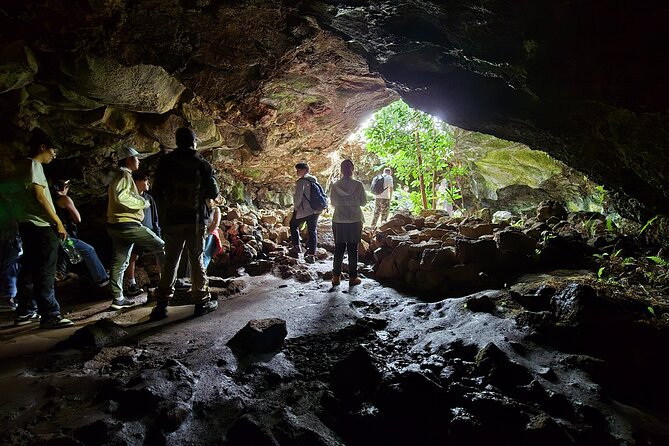
Ana Te Pahu: lava tube cave life and refuge
Next is Ana Te Pahu, a cave formed by an ancient lava tube. The idea here is not postcard scenery. It is shelter and survival. The Rapanui used it as a dwelling and refuge, and archaeological remains point to how people lived there during times of social unrest.
This stop gives you a reality check. Easter Island archaeology is not only monuments. It is also daily life, stress, and what happens when resources and power shift.
Ahu Akivi: seven moai facing the sea
Then you reach Ahu Akivi, famous for its seven moai aligned facing the sea. What makes it different is that it is one of the few ahu located inland, based on the local oral tradition honoring early explorers.
This is a good stop if you like symbolism. Even though you are not staring at the biggest moai lineup of the trip, you are seeing deliberate placement and a specific story tied to the horizon.
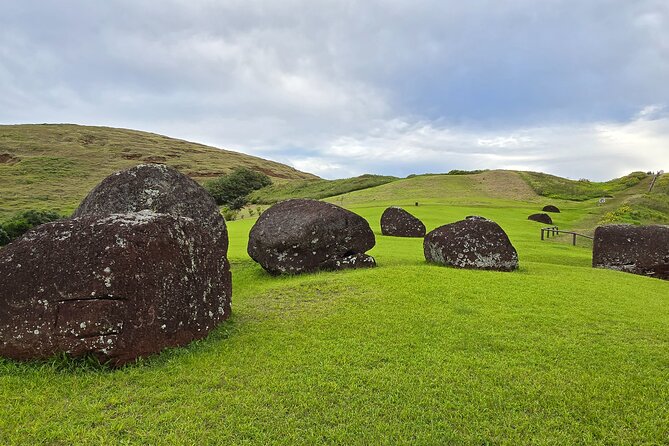
Puna Pau: the red scoria quarry and pukao topknots
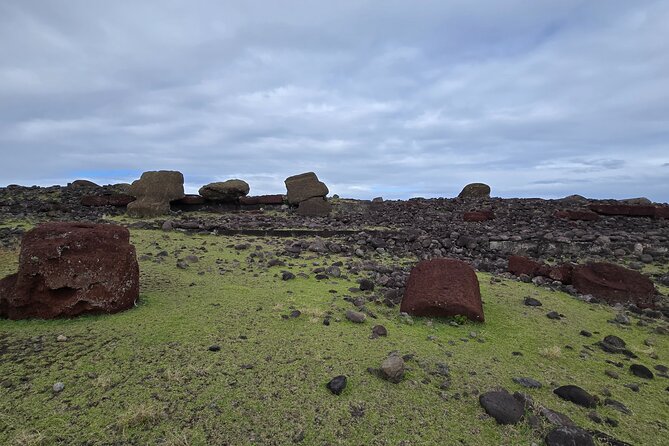
Finally on day 1, you visit Puna Pau, a red scoria quarry where the pukao topknots were carved. The value here is you get to connect the moai you will see later with the materials and labor that created them.
This stop also helps your photos. When you understand where the topknots came from, the moai look less random and more like a fully engineered design.
Day 1 wrap: what you will walk away understanding
By the time you finish Puna Pau, you should feel like you have the “how the island thinks” piece. You saw ceremony (Orongo and Rano Kau), building skill (Ahu Vinapu), life in hard conditions (Ana Te Pahu), sea orientation and tradition (Ahu Akivi), and even the raw material of the moai look (Puna Pau).
If you are sensitive to fast pacing, remember each stop is about 45 minutes. You are not going to feel rushed at every single moment, but you are also not settling in for an all-day linger.
Day 2 on Rapa Nui: toppled moai, the moai quarry, and Anakena Beach
Day 2 is where the tour turns louder. You still get a steady schedule with about 45 minutes at most stops, but the scale and spectacle increase fast. You cover five stops, ending with Anakena Beach for about an hour.
Ahu Akahanga: toppled moai and tribal conflict context
At Ahu Akahanga, you see toppled moai. The point of this site is historical reflection: it shows how tribal wars shaped outcomes, including monuments that did not survive intact.
This is a useful pause in the story. A tour that only highlights perfection can feel shallow. Akahanga adds tension and consequence.
Rano Raraku: the volcanic quarry where many moai were sculpted
Then comes Rano Raraku, a volcanic quarry where many moai were shaped. You also see unfinished statues, which is a rare look at the creation process rather than only the finished effect.
This stop is especially helpful if you want to understand why moai look the way they do. When you see the quarry setting and partially made statues, it becomes easier to imagine labor stages and the limits of stone.
Ahu Tongariki: 15 moai and one of the island’s biggest wow moments
Next is Ahu Tongariki, the largest and most restored ahu on Easter Island, with 15 moai standing in a row. It is one of the island’s main archaeological attractions, and it is easy to see why people talk about it.
If you like dramatic compositions, Tongariki delivers. The line-up reads from far away, and from close up you get scale and alignment that are hard to recreate from pictures.
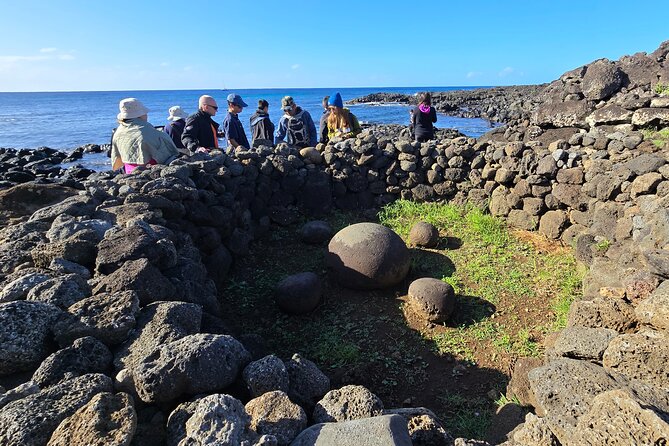
Ahu Te Pito Kura: Paro and the spherical stone
At Ahu Te Pito Kura, the focus is on the biggest moai ever erected on the island, called Paro. You also get to hear about a spherical stone believed to have spiritual properties, often tied to the idea of the world’s navel in Rapanui tradition.
This is a good stop to slow your brain down. It mixes archaeology with belief, and it gives you insight into why the island’s monuments were treated as meaningful objects, not just art.
Anakena Beach: white sand, turquoise water, and a real break
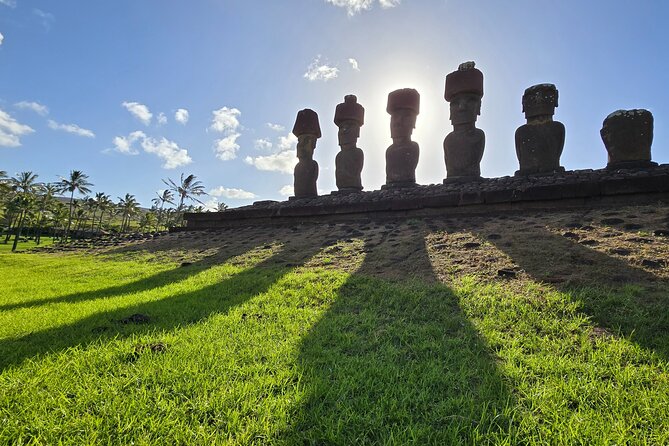
You end at Anakena Beach for about 1 hour. It is known for white sand and turquoise water and for being the landing site of the first Polynesian settlers. You also have Ahu Nau Nau nearby, with restored moai.
This is also the downtime part of the tour. With an hour here, you can take your time, soak in the setting, and if conditions are right, plan for a swim. I like that the tour gives you an off-ramp from archaeology without dropping you into a shopping stop.
Lunch on Rapa Nui: two included meals, and why it matters
Lunch is included twice. You get the payoff in practical terms. You do not have to guess where you will eat on a crowded day, and you avoid the “late lunch” problem that can ruin a sightseeing schedule.
In the second lunch especially, the meal is described as generous local dishes served at a very nice restaurant, with food freshly prepared the same day by the kitchen team. That kind of care matters because Easter Island cuisine is part of the experience, not just fuel.
One thing to consider: the pace is still a tour pace. If you are not a big eater, you might find the second lunch slightly redundant. But if you like trying local dishes and you want the day to feel complete, two included lunches are a real advantage.
Price and value: $260 that adds up if you budget correctly
At $260 per person for a two-day experience, this is not a budget filler. The value comes from the structure: air-conditioned transport, pickup, English guidance, a maximum group size of 15, and two included lunches.
The main catch is cost visibility. National Park entrance fees are not included, and individual sites also note admission tickets not included. That means your final spend depends on the fees you need to pay on arrival or online for the park access. If you plan for that upfront, the price becomes easier to judge as a full package rather than a “tour only” cost.
For many people, the best value here is time saved. You are covering a lot of ground with coordinated stops, and you are not doing route planning between distant areas.
Practical details that help you have a smoother trip
A few specifics will help you pack and plan better:
- Mobile ticket is offered, so bring the phone you booked with.
- The tour is offered in English.
- Service animals are allowed.
- The tour indicates it is near public transportation and that most travelers can participate.
- WiFi and restrooms on board are not included.
- The experience requires good weather. If it is canceled due to poor weather, you get offered a different date or a full refund.
These details are not glamorous, but they decide whether a long day feels easy or exhausting.
Who should book this Sacred Horizons tour, and who might skip it
This tour is a strong match for you if:
- You want an organized way to cover the major Easter Island sites across two days
- You like explanations tied to specific places, not only big monument photos
- You prefer a calm group setup, with max 15 rather than a huge bus crowd
- You want lunch included both days so your schedule stays intact
You might consider skipping or adapting your plan if:
- You know you want a very slow pace at one or two places, and you do not like structured timing
- You are sensitive to the idea that each stop is about 45 minutes, with a steady flow between them
- You are traveling on a schedule where the included pickup rules matter (like cruise or charter flight conditions)
Should you book Sacred Horizons? My decision guide
Book this if you want a “high signal” overview of Rapa Nui with the big moai moments plus the cultural and geological context. The best reason is simple: the pairing of day 1 ceremony and day 2 moai spectacle, capped with an hour at Anakena Beach, creates a complete arc.
Skip it if your style is long, quiet wandering without a timetable. This is not that kind of tour. It is a guided route designed for coverage, clear meaning at each stop, and two full days that take you from crater to quarry to beach.
If you do book, budget for the park entrance fees separately, plan for no restroom on board, and treat the day like a serious outing. Do that, and you will finish with a much stronger sense of how the island’s monuments, materials, and beliefs connect.
FAQ
What is the duration of the Sacred Horizons tour?
It runs for about 2 days.
How much does the tour cost?
The price is $260.00 per person.
Is pickup included, and how do I confirm it?
Pickup is offered. Reservation is not valid for guests traveling by cruise or charter flight. Pickup is confirmed by email or WhatsApp, and if it is not confirmed you need to show up at the sales office downtown.
What time does the tour start, and where is the meeting point?
The start time is 9:00 am, and the meeting point is MahinaturAtamu Tekena, 2770000 Hanga Roa, Isla de Pascua, Valparaíso, Chile. The tour ends back at the meeting point.
What is included in the price?
Included features are an air-conditioned vehicle and lunch (2). The tour also offers a mobile ticket and is in English.
What is not included?
National Park entrance fee and admissions at the listed stops are not included. WiFi on board and a restroom on board are also not included.
How many people are in the group?
The maximum group size is 15 travelers.
What happens if weather is poor?
The tour requires good weather. If it is canceled due to poor weather, you will be offered a different date or a full refund.
More Full-Day in Easter Island
- Full Day Tour in Rapa Nui
★ 4.5 · 122 reviews - Private Tour: Full Day Easter Island Highlights
★ 5.0 · 106 reviews - Full day tour – DREAM
★ 5.0 · 86 reviews - Private Full-Day Easter Island Highlights North and West
★ 5.0 · 84 reviews
Freshly reviewed in Easter Island
- Easter Island 2 Half Days and 2 Full Days Private Trekking Tour★ 5.0 · 3 reviews
- Astronomical Tour on Easter Island★ 3.5 · 3 reviews
- Full day Private Tour: Poike Walk through the abandoned area★ 4.5 · 3 reviews
- T1-THE GRAND TOUR (non-cruise visitors)★ 5.0 · 3 reviews
- Private Tour: Full-Day Easter Island Birdman Cult★ 5.0 · 3 reviews
- Moai Rise and Fall: Full Day Private Tour★ 5.0 · 3 reviews
- Rapa Nui Astrophotography and Stargazing Night Tour Combination★ 5.0 · 3 reviews
- 4-Day Easter Island Experience with Hotel, Tours & Dinner show★ 5.0 · 3 reviews
Lunch Experiences, compared.
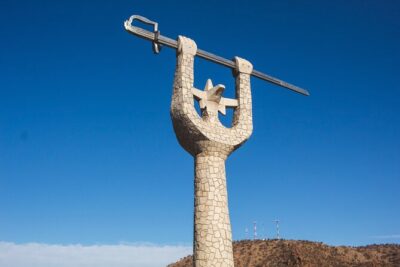
Portillo and Laguna del Inca Tour with Lunch at Hotel Portillo
Read our review →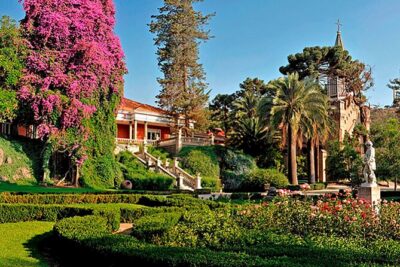
Santa Rita Vineyard Tour with Lunch An unforgettable experience!
Read our review →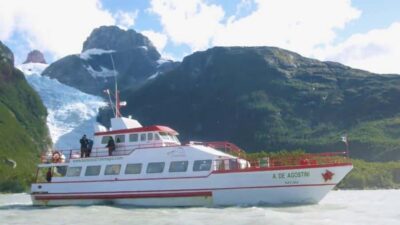
Puero Natales: Glacier Tour with Lunch & Whiskey Aperitif
Read our review →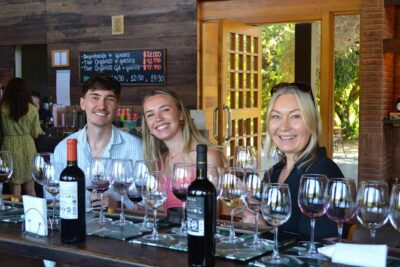
Casablanca world class wines, 4 vineyards & Tanino lunch stop
Read our review →
Balmaceda & Serrano Glaciers Boat Tour and traditional lunch.
Read our review →

Penguin Watching Navigation Cachagua Lunch From STGO Private Tour
Read our review →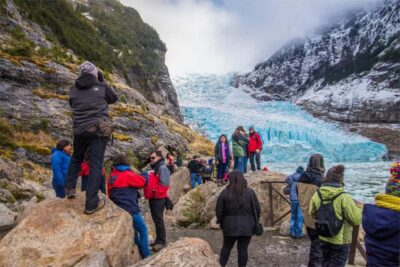
P. Natales: Balmaceda & Serrano Glaciers with Lunch & Whisky
Read our review →Browse the lists this tour appears in