
Reviewed · EASTER ISLAND TOURS
Private Tour: 2 Half Days & 1 Full Day Easter Island Essentials
Easter Island is one of those places where the icons on the shore look simple, until you hear the story behind them. This private tour is interesting because it links the ceremonial centers, the quarries, and the coast in a tight 3-day run, so you do not waste time guessing what matters most. I especially like the private guide factor, and I also love that you get smart, human recommendations to fit the day to where you are and what you want next, like people highlighted from guides such as Tokerau and Alberto.
One thing to keep in mind is cost plus entry fees. The tour price is $795 per person, but the national park ticket is not included (listed at 80 USD per person), so plan on adding that to your total if you want all the sites covered.
Key highlights you should know before you book
- A true private tour for only your party, with pickup and drop-off and transport by private vehicle
- Sunrise at Ahu Tongariki, timed so the view changes by season (behind the platform in Oct to Mar, otherwise from Poike volcano)
- All the “big ideas” stops in three days, from Orongo and Birdman country to the quarry at Rano Raraku and Puna Pau red stone
- Flexibility built in, including adapting to what you want to prioritize rather than marching you through a rigid script
- Guides with strong communication, with multiple guides named in reviews, including Alberto and Yo-yo
- Lunch included so you can spend more daylight on the sites and less time figuring out meals
Why this “Easter Island essentials” private tour is ideal for a tight schedule
If you are short on time on Rapa Nui, you want two things: correct site order and an explanation that actually connects the dots. This tour is designed for that. It is a private 3-day program, meant for people staying two nights, and it packs the core ceremonial and production areas into a logical loop across the island. You are not just ticking off moai photos, you are seeing where the stone came from, where people gathered, and what the rituals were trying to say.
I also like that it is truly private, not a shared shuttle with a noisy crowd. The difference is not just comfort. It means your guide can shape the pace, help you decide what to linger on, and fit in small practical wants like shopping, which came up in a review about Alberto. That matters on an island where a lot of your day happens outdoors and on roads that can eat time.
The third reason this is a good fit for time-crunched travelers is the way the itinerary is built around “big themes.” Day 1 leans into cultural and ceremonial spaces (Orongo, Vinapu, Tahai). Day 2 connects ceremonial platforms to the quarry that created many of the moai. Day 3 focuses on the sunrise moment plus the locations tied to astronomical ideas and red stone production.
A few more Easter Island departures to weigh up
- From Hanga Roa: Rapa Nui Culture Sightseeing Tour
★ 4.6 · 307 reviews - From Hanga Roa: Easter Island Highlights 2-Day Tour
★ 4.3 · 205 reviews - From Hanga Roa: Easter Island Sightseeing Full Day Tour
★ 4.5 · 189 reviews
How private guiding changes the feel of Easter Island
On Easter Island, the guide can make or break the experience. The icons are everywhere, but meaning is not automatic. This tour centers on a professional guide, and the reviews are loud about communication and presentation. People praised guides like Tokerau for delivering clear, digestible history and for sounding genuinely passionate about the island. Yo-yo also got credit for being punctual and explaining things nicely, and at least one family-style experience highlighted flexibility when traveling with kids.
You can expect the guide to do more than name places. You should count on context: why Orongo was tied to the Birdman ceremony, why Rano Raraku matters because it is the quarry where moai were made, and why Ahu Akivi is an exception because it is not located by the sea and includes astronomical positioning guidance.
Another practical benefit is that the guide helps you handle the “in-between” decisions. One review specifically mentioned food and activities recommendations based on location, schedule, and transportation. That may sound like small talk, but on Rapa Nui it saves real time and avoids the common problem of ending up hungry, overheated, or stuck with bad timing.
Day 1: Orongo, Rano Kau, Vinapu, and Ahu Tahai for the Birdman and early ceremonial zones
Day 1 is about getting the big picture of Rapa Nui’s ceremonial world, then ending near town where sunset photos are easiest.
Orongo (1 hour 30 minutes)
Orongo village sits on one side of the Rano Kau crater. This is one of the island’s two main sites tied to the Birdman ceremony. The time here is long enough to slow down. Do not rush it. You are in a landscape of ritual connections, and your guide can link the location to the kind of competition and symbolism that people practiced here.
The other half of a Easter Island week:
- Two days of Full Day Tour of Rapa Nui + Sunrise in Tongariki
★ 4.5 · 132 reviews - Full Day Tour in Rapa Nui
★ 4.5 · 122 reviews - 2-Day Private Tour Easter Island Highlights Complete Discovery
★ 5.0 · 110 reviews - Private Tour: Full Day Easter Island Highlights
★ 5.0 · 106 reviews
Rano Kau (30 minutes)
Rano Kau is on the southwest side, with the crater lake and volcanic setting dominating the views. The crater is described as 1.5 km across and noted as the biggest reserve of endemic flora on Rapa Nui, with the lake historically used as drinking water. Even with a short stop, you get a nature-and-history one-two punch: people relied on the crater, and the crater area also framed where major ceremonies happened.
Ahu Vinapu (30 minutes)
Next up is Ahu Vinapu, known for fine ancient construction work. There are theories about how the construction style might relate to Inca building methods, so this stop is great if you like the “how could that be connected” side of history. Just go in knowing that theories are part of the story here, not one neat final answer.
Ahu Tahai (1 hour)
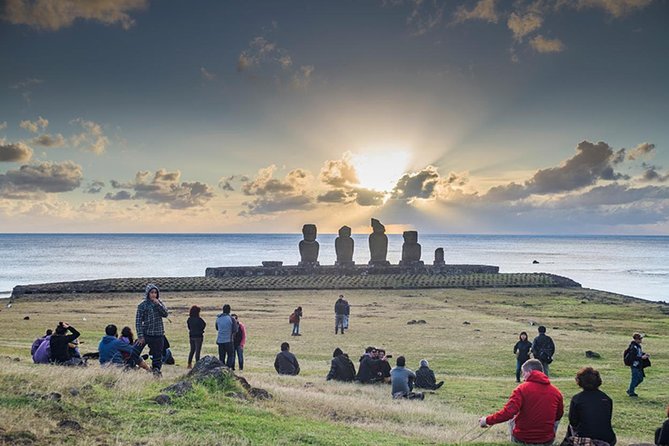
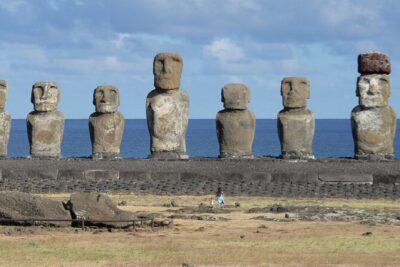
Day 1 finishes at Ahu Tahai, a ceremonial complex restored in 1974 by American archaeologist Dr. William Mulloy. Tahai includes three principal ahu from north to south: Ko Te Riku, Tahai, and Vai Ure. Because it is close to town, this is a popular sunset spot, and this is where you get the classic end-of-day rhythm. If you want an easy transition from site time to dinner time, this is a smart place to finish.
Day 1 value: you start with ceremonies (Orongo), then anchor them in place and survival (Rano Kau), add a construction-tech angle (Vinapu), and end with an accessible sunset location (Tahai).
Day 2: Tongariki, Rano Raraku, Te Pito Kura, and Anakena for moai power and the island’s “production chain”
Day 2 is where the tour really leans into moai scale and the real-world logistics behind them: stone, carving, moving, and ceremony.
Ahu Akahanga (1 hour)
On the southeast coast, Ahu Akahanga helps you understand how a village setting can relate to a ceremonial center or ahu. The tour description mentions the striking experience of seeing the figures on their backs and on their foreheads on the ground. That is the kind of detail that matters when you are trying to imagine what the site looked like in use, not just what it looks like now.
Ahu Tongariki (1 hour 30 minutes)
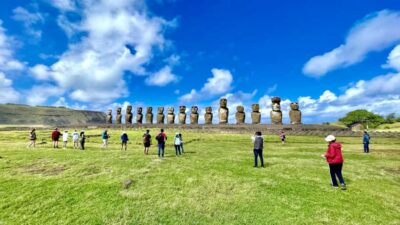
Ahu Tongariki is the heavyweight of the reconstructed moai platforms. It is described as the largest from the reconstructions on the island, and the most imposing platform overall, with fifteen visible standing statues. Their backs face the Pacific Ocean. When the wind picks up, you feel that you are literally standing in a designed viewing system, not just in front of a sculpture row.
This stop also sets up the bigger payoff later in the itinerary: your sunrise visit on Day 3. People in the reviews singled out the sunrise moment over the fifteen moai as a top highlight, including one review that called it the best part of the tour.
Rano Raraku (2 hours)
Rano Raraku is one of the most important stops on the whole itinerary. It is the only volcanic cone tuff quarry on the island (according to the tour description). This is where the material allowed moai to be carved on a larger scale. You are looking at the quarry and the place where moai were shaped before being moved to the ahu around the island.
Give yourself time here. Two hours sounds long until you realize this is the “source” area for the island’s most famous objects. If you want to understand why certain moai look the way they do, this is the place where your guide can connect the material story to the visual ones.
Ahu Te Pito Kura (30 minutes)
Ahu Te Pito Kura is paired with the story of a huge moai associated with Ahu o Paro, described as 11 meters long and about 90 tons, transported from Rano Raraku. Next to this ahu is the famous rounded stone, Te Pito ‘o te Henua, described in tradition as having been brought by ancestors.
This is also a good moment to slow down and reflect on how meaning works on Rapa Nui. The tour gives you an object, then gives you a story, and then your guide helps you understand why both matter.
Anakena Beach (1 hour)
You end Day 2 at Anakena, the island’s main beach, described with warm turquoise waters and coral sand. The beach is linked to the Miru Araki royal family as an ancestral residence, and Ahu Nau Nau here is described as one of the most accomplished ahu on the island due to the refinement of its moai.
This is not just a break. It is a chance to experience the coastal side of the culture. When you have already spent the day on stone and ceremony, Anakena gives you the human scale, plus a clear sense of why people built their ritual centers where they did.
Day 3 sunrise at Tongariki plus Akivi and Puna Pau red-stone production
Day 3 is the “memory anchor” day. It starts with sunrise at Ahu Tongariki, then moves to two stops that add a different kind of meaning: non-sea ceremonial positioning at Ahu Akivi and the red stone carving story at Puna Pau.
Ahu Tongariki at sunrise (1 hour 30 minutes)
This is the star of the show. The tour description spells out how the sunrise alignment changes by season: during summertime (October to March) the sun rises behind the platform, and during the rest of the year, it rises from Poike volcano. Wintertime can bring more chances of unclear skies, which is a simple reminder that nature is part of the deal with sunrise viewing.
If you have ever watched people get emotional at a place like this, it usually comes down to contrast. By sunrise, the moai are still and enormous, while the sky is doing something new every minute. This is why one review called the sunrise over the fifteen moai the best part.
Ahu Akivi (30 minutes)
Ahu Akivi is one of the few ceremonial platforms not located by the sea. It includes seven moai restored to standing positions by archaeologists William Mulloy and Gonzalo Figueroa, together with the Rapa Nui community. The tour description also notes the astronomical positioning guidance, with the moai looking toward the setting sun.
This is the stop for you if you want to move beyond “moai are sculptures” and into “moai are part of a system.” The astronomy detail is not just trivia. It changes how you look at the platform layout.
Puna Pau (30 minutes)
Puna Pau rounds out the production chain. This quarry is where red volcanic stone was extracted and used for the carving of Pu Kao, the moai hair. The tour description mentions 23 cylindrical prototypes of Pu Kao at an early carving stage, connected to how pieces were prepared and transported. You also get a privileged view of Hanga Roa village from here.
If Rano Raraku is about the moai bodies, Puna Pau is about the finishing touches. Together they help you picture the full look of these figures, not just the carved bodies.
Price and logistics: what $795 covers, and what to budget for
At $795 per person, this is not a cheap excursion. But it is also not paying for someone to drive you around and point at rocks. Your money goes toward a private guide, private transportation, hotel pickup and drop-off, and lunch included. On an island like Easter Island, those pieces matter because time on the roads and time spent without a plan can quickly become the real cost.
Then there is the additional entry fee. The national park ticket is not included and is listed as 80 USD per person. So if you are budgeting for the full on-site experience, plan on $875 per person total before any personal extras.
One more practical note: the tour is not available for cruise ship passengers. If you are arriving by ship, you will need to confirm alternatives that match your schedule.
Also, this tour gets booked well in advance, with an average booking window listed at 134 days. That is a sign that the demand is real, especially for the sunrise day. If your dates are fixed, I would book early.
What to expect on the ground: time blocks, travel rhythm, and comfort
Your days are structured around specific time blocks at major sites, and that is good news if you like clarity. Day 1 includes 1 hour 30 minutes at Orongo, 30 minutes at Rano Kau, 30 minutes at Ahu Vinapu, and 1 hour at Ahu Tahai. Day 2 is heavier: 1 hour at Ahu Akahanga, 1 hour 30 minutes at Tongariki, 2 hours at Rano Raraku, 30 minutes at Te Pito Kura, and 1 hour at Anakena. Day 3 keeps the morning momentum with 1 hour 30 minutes at Tongariki at sunrise, then 30 minutes each at Ahu Akivi and Puna Pau.
That rhythm tells you the tour prioritizes big sites, not lots of small stops. You will spend more time outside than in a vehicle, but there is still plenty of driving and walking. The best way to enjoy it is to come ready for repeated outdoor conditions. Since Anakena is a beach stop and Tongariki is a sunrise stop, pack for both sun and cooler early-hour air. Comfort shoes help, because even short stops at stone sites can mean uneven ground.
Because lunch is included, you also avoid a common stress point. You can keep your energy up without hunting for food in the middle of the day.
Who this private Easter Island essentials tour suits best
This tour fits best if you:
- Want to see the island’s core moai-related sites in three days without planning every route yourself
- Care about meaning, not just photos, and you like explanations tied to specific locations
- Prefer a private setup where the guide can adjust priorities, including time for shopping or shifting focus for families
- Are staying on Easter Island for two nights and want a full, efficient run
It may feel less ideal if you want total freedom every hour. The tour is private, but it still follows a designed sequence of sites with set time windows. You will get flexibility, but you are still buying “essentials” rather than a custom blank-slate route.
Should you book it? My take
Book this if you want Rapa Nui’s essentials in a clean, guided story, and if sunrise at Ahu Tongariki is on your must-do list. The pricing makes sense when you weigh what is included: a private guide, hotel pickup and drop-off, private transport, and lunch, plus the fact that the itinerary hits the ceremonial hubs and the places where the moai were made and finished. The sunrise stop is a real standout, and the guide quality shows up repeatedly in reviews, including people praising Tokerau, Alberto, and Yo-yo for clarity and personality.
Skip it only if your priority is total DIY wandering and you do not care much about the whys behind the sites. If you are the type who wants to understand why Orongo matters, why Rano Raraku is a quarry, and why Akivi has astronomical positioning, this tour delivers that in a time-efficient way.
FAQ
What is included in the price?
The tour includes lunch, private transportation, a professional guide, and hotel pickup and drop-off with transport by private vehicle.
What is not included?
A national park ticket is not included, listed at 80 USD per person. The tour also notes it is not available for cruise ship passengers.
How long is the tour?
It is a 3-day experience, described as approximately 3 days, with two half days and one full day included.
Is this a private tour?
Yes. It is private, and only your group participates.
Which major sites do you visit?
You visit Orongo, Rano Kau, Ahu Vinapu, Ahu Tahai, Ahu Akahanga, Ahu Tongariki, Rano Raraku, Ahu Te Pito Kura, Anakena Beach, Ahu Tongariki for sunrise, Ahu Akivi, and Puna Pau.
When does the sunrise happen at Ahu Tongariki?
The tour includes a sunrise at Ahu Tongariki. The sun rises behind the platform during October to March, and from Poike volcano during the rest of the year. Wintertime is noted as having more chances of unclear skies.
What is the cancellation policy?
You can cancel for free up to 24 hours in advance for a full refund. If you cancel less than 24 hours before the experience start time, the amount paid is not refunded. Cut-off times are based on the experience’s local time.
Freshly reviewed in Easter Island
- Easter Island 2 Half Days and 2 Full Days Private Trekking Tour★ 5.0 · 3 reviews
- Astronomical Tour on Easter Island★ 3.5 · 3 reviews
- Full day Private Tour: Poike Walk through the abandoned area★ 4.5 · 3 reviews
- T1-THE GRAND TOUR (non-cruise visitors)★ 5.0 · 3 reviews
- Private Tour: Full-Day Easter Island Birdman Cult★ 5.0 · 3 reviews
- Moai Rise and Fall: Full Day Private Tour★ 5.0 · 3 reviews
- Rapa Nui Astrophotography and Stargazing Night Tour Combination★ 5.0 · 3 reviews
- 4-Day Easter Island Experience with Hotel, Tours & Dinner show★ 5.0 · 3 reviews
Easter Island Tours, compared.
Two days of Full Day Tour of Rapa Nui + Sunrise in Tongariki
Read our review →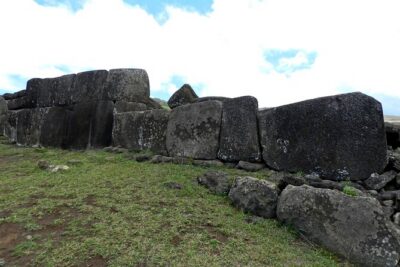
2-Day Private Tour Easter Island Highlights Complete Discovery
Read our review →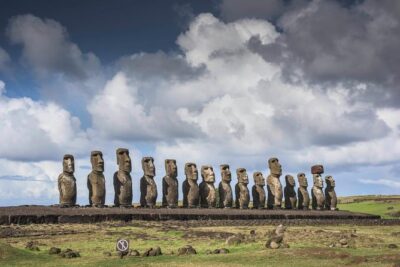
Private Tour: Full Day Easter Island Highlights
Read our review →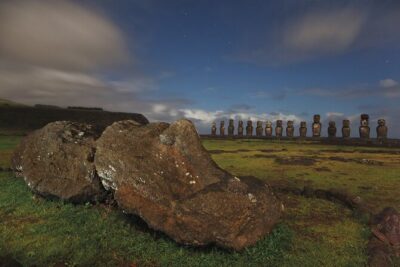
Browse the lists this tour appears in