
Reviewed · STARGAZING & ASTRONOMY TOURS
Easter Island: Rapa Nui Stargazing Tour
Stargazing on Easter Island is special because the sky is the main event, and you get a guided lens on what it meant to Polynesian voyagers. I love how this tour mixes astronomy with cultural context, not just names of constellations.
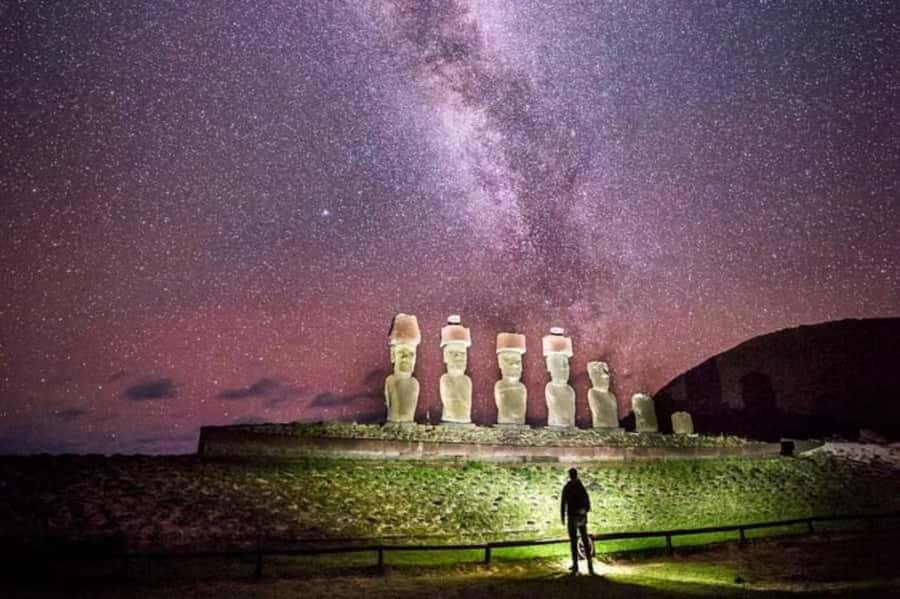
Two things I really like: you get quality time with a telescope at a remote observation spot, and you also visit moai at night at Ahu Nau Nau, which makes your photos feel more story-like than postcard-like. One possible drawback is that it runs on good-weather conditions, so if the night is cloudy, you’ll be asked to reschedule or get a refund.
Key points before you go
Polynesian navigation lessons tied directly to the stars you’re seeing
Telescope viewing of stars and planets at a remote site
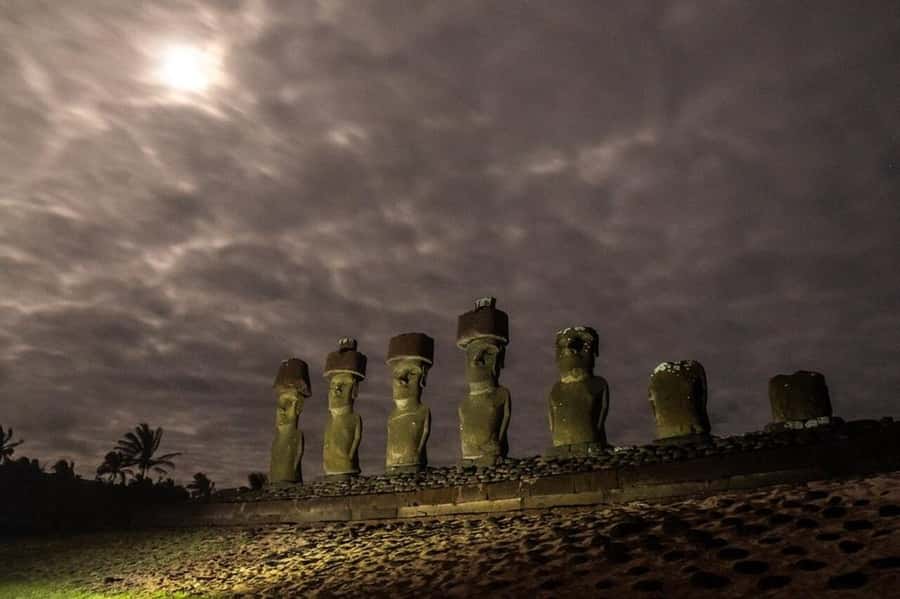
Night access to Ahu Nau Nau for moai photos after dark
Hot chocolate and local cake during the evening break
Small group size with a maximum of 12 people
Guide energy includes traditional song moments (you might hear Mark, also called Marc)
Why stargazing on Rapa Nui feels like a time machine
Easter Island, or Rapa Nui, is remote enough that the night sky can feel closer and clearer than you expect. On this tour, you are not just looking up. You’re learning how people used the heavens as a practical tool for travel and survival, then you’re doing the looking with a telescope.
What makes it work is the pacing. The guide frames the night in a way that helps your brain connect dots quickly, especially if you do not have a background in astronomy. You start with big ideas like basic astronomy, Polynesian voyaging, and settlement patterns, then you move into specific sky observations you can actually see that night.
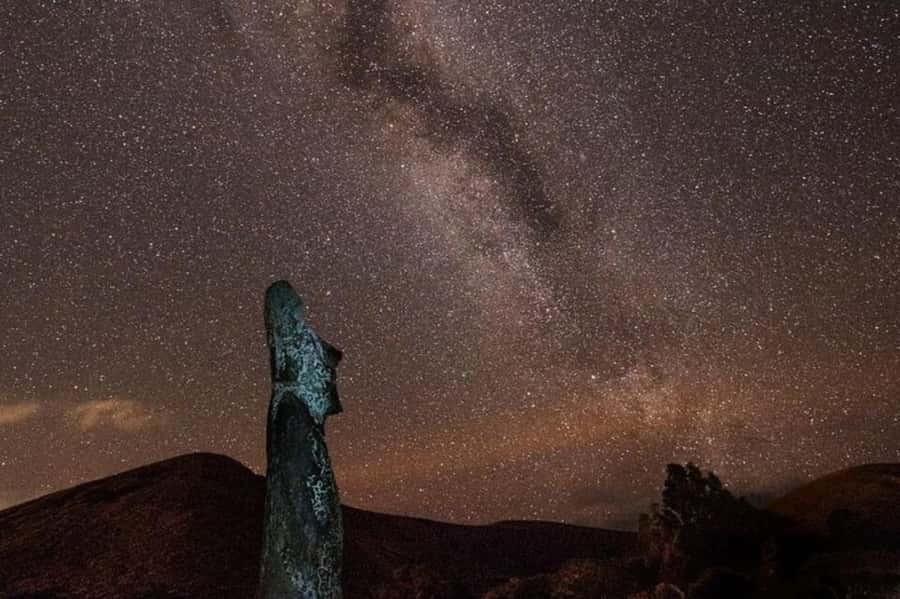
Also, the star view here is tied to the Southern Hemisphere sky. That means you are not limited to the same familiar shapes you might see back home. You’ll be guided to constellations visible from this part of the world, and you’ll get explanations that turn those patterns into navigation and meaning.
Other nights under the desert sky:
- Rapa Nui Stargazing
★ 4.5 · 62 reviews - The Rapa Nui Stargazing Experience
★ 4.5 · 32 reviews - Rapa Nui Astronomical Experience
★ 5.0 · 19 reviews
Meeting at Katipare Library and how the 3-hour evening is paced
You meet in front of Katipare Library, Centro Lector Katipare, in Hanga Roa. The start time shifts with the seasons: 21:00 in summer and 19:00 in winter. That matters because you will spend the prime dark-sky window actually outside, not stuck indoors.
From there, you head out with a driver and live commentary on board. This is where the tour builds its context, so the stargazing does not feel like a standalone activity. You’ll likely get your bearings fast: what to look for, why it matters, and how the guide plans to use the telescope when the night conditions are at their best.
The whole experience runs 3 hours, and the structure stays focused. That is good if you want an evening that feels efficient and full of purpose. If you want a long, multi-stop night tour with lots of separate attractions, you might find the format tight.
Small group size is another practical plus. With a maximum of 12 travelers, you are not fighting for visibility or trying to hear over a crowd. It also tends to make telescope time feel more personal, since the guide can keep track of who is trying to find each object.
Polynesian wayfinding lessons you can map onto the sky
This tour is built around how Polynesian voyagers used the night sky. You’ll hear about the principles of basic astronomy, the history of Polynesian voyaging and settlement, and navigational techniques. The idea is to show you how sky knowledge became practical information.
A key part is the way the guide connects what you see overhead to the logic of wayfinding. When you understand that stars can function like a reference system, constellations start to feel less like trivia and more like coordinates.
You’ll also get archaeo-astronomy of Rapa Nui, which is a fancy phrase but the concept is simple: it’s about how Rapa Nui sites and culture relate to the sky. That connection becomes extra meaningful when you later visit moai at night, because you see the island as a place that has always had relationships with celestial events.
If you like stories that have real-world use, this is a strong fit. If you only want quick stargazing without context, you can still enjoy it, but the value shines most when you lean into the guided explanations.
The telescope at a remote observation site, and what to watch for
At some point you’ll reach an observatory-style location away from town lights. That’s where the telescope comes in, and it is not just for show. You’ll view stars and planets through the telescope, with the guide explaining what you are seeing and why it matters.
One of the most praised parts is the telescope experience itself, including the way the guide helps you actually track objects in the sky. Some people specifically noted improvements to the telescope setup and that the group spent a solid amount of time using it, not just a quick peek.
Here’s what you should mentally prepare for: it is not a museum lecture. The guide is pointing, talking, and guiding your eyes in real time. You might find it helpful to bring a phone with a stargazing app for orientation, but don’t rely on it. The tour’s explanations are tailored to what you’ll see tonight.
Comfort and safety are also real considerations. One review called out uneven ground, including for an older traveler group. Keep your steps slow, wear shoes with good grip, and plan to use your own flashlight carefully if needed. Also, bring layers. Even if Rapa Nui looks mild during the day, nighttime on the coast and at observation points can turn cool fast.
A few more Easter Island departures to weigh up
- From Hanga Roa: Rapa Nui Culture Sightseeing Tour
★ 4.6 · 307 reviews - From Hanga Roa: Easter Island Highlights 2-Day Tour
★ 4.3 · 205 reviews - From Hanga Roa: Easter Island Sightseeing Full Day Tour
★ 4.5 · 189 reviews - Two days of Full Day Tour of Rapa Nui + Sunrise in Tongariki
★ 4.5 · 132 reviews
Ahu Nau Nau at night: moai photos with a purpose
After stargazing, you get access to Ahu Nau Nau at night. This is one of the tour’s biggest “why this is different” moments. Daytime photos of moai are common. Night photos, tied to the sky story you just learned, feel like you captured something more than a statue.
This stop also helps your evening feel like it has a rhythm. You move from the invisible (constellations, planets, star patterns) to the physical (moai and ceremonial platforms). The contrast is the point.
There is a built-in photo benefit too. A digital photo is included, and you’ll also have the option to take your own photos. If you want to shoot your own star images, the guide may allow you to set up for personal shots, and some visitors found tripod-based phone photos workable on the night.
During this section, you’ll also have a coffee break, with hot chocolate and local cake included. It is a nice reset when your hands get cold and you want a moment that is not about craning your neck upward the entire time.
Your practical photo plan for the night sky and moai
If you care about photos, plan for two different styles: wide sky shots and moai-focused shots. The tour supports both.
For moai photos, the environment is dark, so you’ll likely be using phone night modes or simple steady shooting. The included digital photo takes pressure off, especially if you want one good memory without fiddling with settings.
For star photos, expect that conditions like wind, cloud cover, and how dark the observation area is will affect results. That’s why the weather requirement matters. If the sky cooperates, you have a real chance of capturing the Southern Hemisphere constellations the guide is talking about.
Also, remember what you’re there for. The best shots usually happen after you understand where the guide wants you to look. So take the time to listen, then shoot. Otherwise, it is easy to end up with photos that look nice but do not connect to what you learned.
Weather, full-moon limits, and the one ticket you still need
This tour runs only with good weather. If it gets canceled because conditions are poor, you’ll be offered a different date or a full refund. In other words, your stargazing success depends on the sky being clear enough to see and use the telescope.
There is also a full-moon restriction. The tour is not available close to the full moon, specifically 4 days before and 2 days after. That’s not random. Moonlight can wash out star visibility, and the experience is built around viewing stars and planets clearly.
One more important detail: you need your National Park ticket. Entry or admission is not included, so make sure you have it before you go. If you forget, you can end up with an evening that starts out wrong, even if the stargazing conditions are perfect.
Finally, the tour requires a minimum number of travelers. If the minimum isn’t met, you’ll be offered a different date or a full refund. Because this is a small group experience with a maximum of 12, that minimum matters.
What you get included, and where you may spend extra
For $140 per person, you’re paying for an evening with real interpretation, not just a night walk. The included items make the experience feel complete:
- Driver/guide with live commentary on board
- Hotel drop-off at the end (no hotel pick-up)
- Telescope-guided stargazing and access to the night site
- Digital photo
- Option to take your own photos
- Hot chocolate and local cake
- A small group setting
The main extra cost to budget is the National Park ticket, since entry/admission is not included. Also, while you are meeting at Katipare Library rather than being picked up, you should plan to get there on time yourself.
Who this tour fits best, and who might not love it
This tour is ideal if you want a guided, story-based sky experience. You’ll get value from the Polynesian navigation lessons, the Southern Hemisphere constellations, and the connection to Rapa Nui sites like Ahu Nau Nau.
It also suits people who enjoy hands-on learning. The telescope time is a centerpiece, and the explanations are designed to help you understand what you’re seeing instead of just admiring darkness.
It may be less ideal if you’re expecting a long list of separate stops or a lot of “free time.” The structure is focused and timeboxed at 3 hours. One review was blunt about spending more time on the telescope but feeling like there was not much going on beyond that. If that would bother you, look at your own expectations before booking.
Mobility-wise, it is not suitable for wheelchair users. And given reports of uneven ground, even able-bodied travelers should wear stable shoes and take it slow on darker sections.
Price and value: is $140 fair for 3 hours on Rapa Nui
$140 for a 3-hour, small-group stargazing tour may sound steep at first glance, especially when you factor in the National Park ticket not being included. But when you break down what you get, the price starts to make sense.
You’re paying for:
- Specialized telescope time with guided interpretation
- A remote night-site experience with Ahu Nau Nau access after dark
- A guide who explains Polynesian navigation and Rapa Nui sky connections
- Included refreshments (hot chocolate and local cake)
- Practical extras like a digital photo and the option for your own photography
If your travel style is “pay for quality guidance,” this is good value. If your goal is purely casual stargazing, you might feel you could do something cheaper on your own. The difference is guidance plus access plus time on a telescope.
Also, the guide adds energy. Multiple positive reviews point to memorable moments like singing a traditional song that the guide wrote, which turns the tour from educational into genuinely memorable.
Should you book this Rapa Nui stargazing tour?
Book it if you want your night in Hanga Roa to feel meaningful, not random. This is one of the better uses of a short visit to the island because you get both sky knowledge and night moai access in the same evening. The combination of Polynesian wayfinding explanations and telescope viewing is the core draw.
Skip it or choose another option if you’re traveling during conditions that often mean clouds, or if you get annoyed by tours that stay compact and focused instead of running a long checklist of stops. Also skip if mobility needs are a factor, since it is not wheelchair accessible and the ground can be uneven.
If you do book, set yourself up for success: arrive at Katipare Library on time for the season start, dress warm, wear grippy shoes, and plan your photos by first listening for what the guide points out. That small mindset shift makes the experience much better.
FAQ
Where is the meeting point for the tour?
You meet in front of Katipare Library (Centro Lector Katipare) in Katipare, Hanga Roa, Easter Island.
What time does the tour start?
Meeting time depends on the season, at 21:00 in summer and 19:00 in winter.
How long is the Easter Island stargazing tour?
The tour lasts 3 hours.
Is National Park admission included?
No. You need your National Park ticket for entry.
What can I see during the tour?
You’ll learn about Polynesian voyaging and basic astronomy, then view stars and planets through a telescope. You’ll also have night access to Ahu Nau Nau.
Is the tour canceled if the weather is bad?
Yes. If it is canceled due to poor weather, you’ll be offered a different date or a full refund.
Is it available around the full moon?
No. The tour is not available 4 days before and 2 days after the full moon.
Freshly reviewed in Easter Island
- Easter Island 2 Half Days and 2 Full Days Private Trekking Tour★ 5.0 · 3 reviews
- Astronomical Tour on Easter Island★ 3.5 · 3 reviews
- Full day Private Tour: Poike Walk through the abandoned area★ 4.5 · 3 reviews
- T1-THE GRAND TOUR (non-cruise visitors)★ 5.0 · 3 reviews
- Private Tour: Full-Day Easter Island Birdman Cult★ 5.0 · 3 reviews
- Moai Rise and Fall: Full Day Private Tour★ 5.0 · 3 reviews
- Rapa Nui Astrophotography and Stargazing Night Tour Combination★ 5.0 · 3 reviews
- 4-Day Easter Island Experience with Hotel, Tours & Dinner show★ 5.0 · 3 reviews
Stargazing & Astronomy Tours, compared.
The Roofless Experience San Pedro de Atacama Stargazing Tour
Read our review →

Astronomical Tour with Guide and Pick Up San Pedro de Atacama
Read our review →
“Astronomical Adventure in San Pedro de Atacama”
Read our review →Browse the lists this tour appears in