
Reviewed · EASTER ISLAND TOURS
Full Day Tour in Rapa Nui
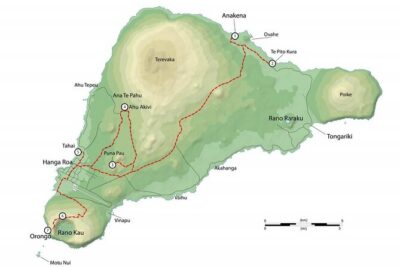
This full-day Rapa Nui tour works because it links major archaeological sites into one efficient route. You get the Moai story from “where the stone came from” to “how the island organized power,” then you finish with Orongo and the Birdman Cult. It is a lot to fit into one day, but the pacing is mostly sensible if you show up ready.
I especially like how the tour includes Ahu Akivi, the seven Moai platform that faces the open sea. I also like the mix of locations that explain the Moai “how” and “why,” including Puna Pau for the pukao topknots and Orongo for the ritual setting.
One possible drawback: this day can feel rushed if you expect a long, slow look at every platform, and some portions like the caves can be time-consuming or affected by conditions.
Key highlights to look for
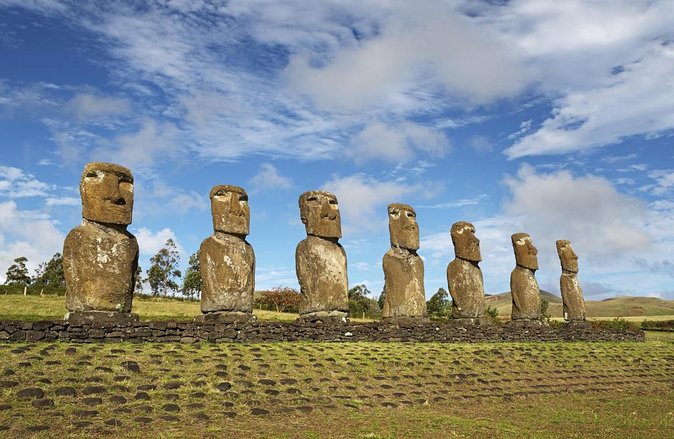
- Ahu Akivi’s sea-facing Moai: a rare viewing orientation compared with many other platforms.
- Ana Te Pahu caves: a longer stop than you might guess, with cool air and a tight, dark interior.
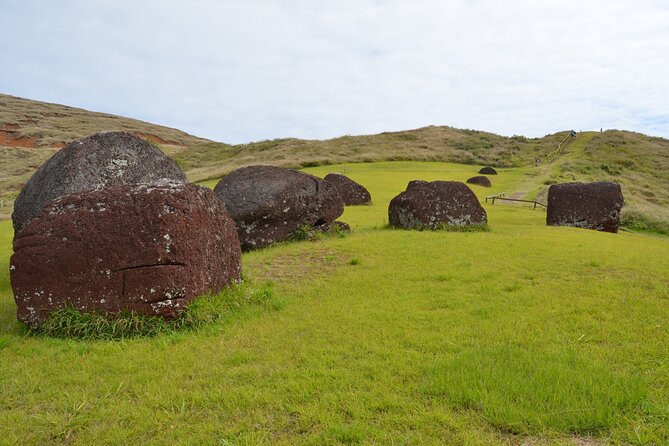
- Puna Pau red stone for pukao: you get the “materials” part of Moai making, not just the statues.
- Ahu Vinapu’s stonework: carved precision that sparks questions about outside influence and craftsmanship.
- Orongo on the crater edge: Birdman Cult context with petroglyphs and ceremonial areas.
- Rano Kau is ticket-free: one less payment step built into the route.
A West Side Rapa Nui circuit that makes Moai and Birdman click
A lot of first-time Rapa Nui days focus on the most famous icons. This route is different in a good way. It connects the island’s religious architecture (platforms and ritual spaces) with the engineering side (quarry and stone cutting) and then flips you into the Birdman world at Orongo.
What I like about this style of tour is that it gives you a framework. You stop at sites that answer different questions: Where did the Moai elements come from? How were they displayed? What did people do when power cycles shifted? By the end, the island feels less like postcard images and more like a connected story.
The tour runs about 6 hours with a 9:30 am start, and it caps at 14 travelers. That small group size matters on Rapa Nui, where logistics can be slow and where you want your guide to actually notice questions and pace photo stops.
A few more Hanga Roa departures to weigh up
- From Hanga Roa: Rapa Nui Culture Sightseeing Tour
★ 4.6 · 307 reviews - From Hanga Roa: Easter Island Highlights 2-Day Tour
★ 4.3 · 205 reviews - 2-Day Private Tour Easter Island Highlights Complete Discovery
★ 5.0 · 110 reviews
Price and logistics: $70 for a guide, plus your tickets
At $70 per person, you are paying for guide and transportation, and that’s the core value here. The sites themselves are mainly inside the Rapa Nui National Park system, and the tour states the National Park ticket is not included.
That means your real cost has two parts:
- the tour price
- your national park admission
A practical move is to plan your ticket timing so you are not scrambling at the start of the day. One review experience also flagged that park fees might need to be bought before the tour rather than paid at entry by the guide, so I strongly recommend handling your pass in advance.
Also note: the schedule can be flexible in real life. The most common complaint pattern is not “bad sites,” it is time pressure and how long each stop actually takes. That comes down to group flow, parking, and whether everyone is ready for the cave segment.
The 9:30 am start and how the day can feel in motion
You start at 9:30 am in Hanga Roa. The meeting area is described as near public transportation, so you should be able to orient yourself easily.
What you should watch for is how the vehicle picks up others. Some experiences reported that the group got collected in stages, which can push the first stop later than you expect. So if you are sensitive to tight schedules, build in patience early on.
Once you are on the island route, the pattern tends to be:
- a site with a set time window
- a transfer
- another site
- a final viewpoint style stop at the crater edge
Bathrooms and breaks are not promised on a specific minute-by-minute plan in the details you were given. Still, reviews mention bathroom stops along the way. My advice is simple: go when you can, not when you are desperate.
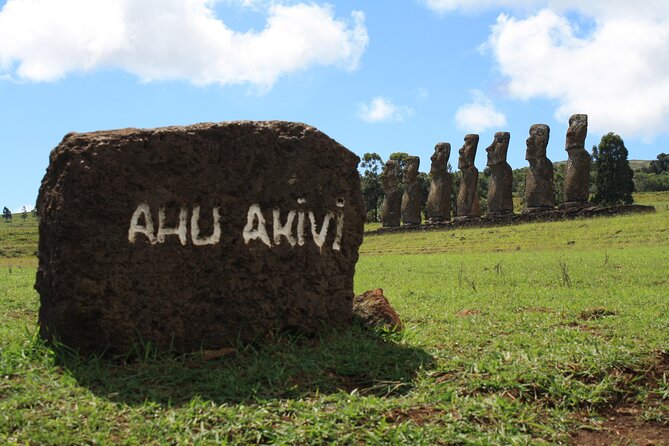
Stop 1: Ahu Akivi and the seven Moai facing the sea
Ahu Akivi is the kind of site you will remember because it looks “wrong” in a fascinating way. Most Moai platforms you see pull your eyes toward the interior of the island. Here, the seven Moai face the open sea.
That sea-facing orientation changes how you read the place. Instead of the platform acting like a back-of-house ceremonial stage, it feels like a statement toward the horizon. You start to understand that the Rapa Nui people were thinking in directions, sightlines, and time cycles, not just building monuments.
The visit is listed at 45 minutes, and that is usually enough time to:
- walk the immediate area
- take photos from different angles
- hear the key context about the site’s meaning and positioning
Ahu Akivi is also a good “warm up” stop. Even if you are tired from the ride, this platform hits fast and gives you an early payoff.
The other half of a Hanga Roa week:
- Private Full-Day Easter Island Highlights North and West
★ 5.0 · 84 reviews - From Hanga Roa: Journey from Orongo to Ana Te Pahu
★ 4.3 · 75 reviews - Journey of the Ancestors: Tongariki, Rano Raraku & Anakena Beach
★ 4.5 · 70 reviews - Full Day Private Tour: Factory of the Moai the stone giants
★ 4.5 · 63 reviews
Stop 2: Ana Te Pahu caves, and why the timing matters
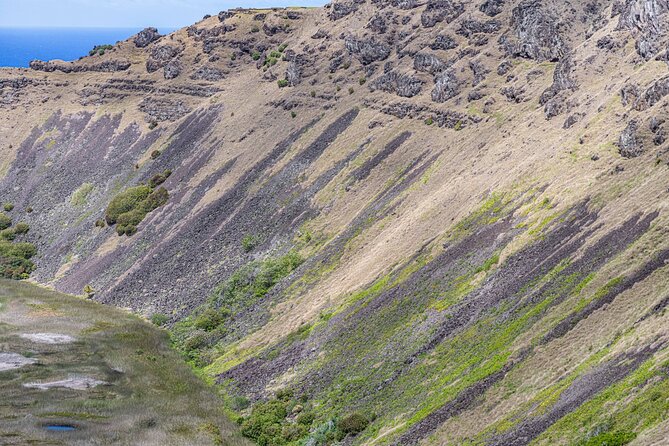
Ana Te Pahu is where you get the less-famous side of Rapa Nui archaeology. This stop is described as an archaeological site with an extensive cave system, shaped by nature and later used by the Rapa Nui.
The visit length is listed at 1 hour 30 minutes, and that is a big clue: this is not a quick “look and go” stop. In at least one experience, the cave segment took longer than expected because of the walk to reach it and time spent moving through the interior.
There are also safety comfort details to consider. One account described the cave as dark and slippery, with low ceilings and the need for flashlights, plus water on the floor. So if you do this stop:
- wear closed-toe shoes with grip
- expect cool, dim conditions inside
- bring a small light, like your phone flashlight, just in case
Physical fitness matters here. The tour says you should have moderate physical fitness. On this stop in particular, that means you will want to move steadily, not rush, and not let low visibility surprise you.
Stop 3: Puna Pau quarry and the red stone pukao
Next up is Puna Pau, a quarry that played a central role in the Moai’s appearance. This is the stop that turns the Moai from “big statues” into a manufacturing story.
Puna Pau is tied to the pukao topknots. The key detail you want to remember is that Puna Pau’s red volcanic scoria is distinct from other quarries on the island. That stone helped create the visible crown-like tops that define many Moai images.
The visit is listed at 45 minutes, which is enough to get the main idea without feeling like you are standing around. You can also think of it as a materials lesson. It helps you understand the logistics of moving heavy stone across terrain and why different sites had different jobs.
If you like craftsmanship and cause-and-effect, you will likely enjoy this stop. It is one of the best “how was it done” stops on the island day.
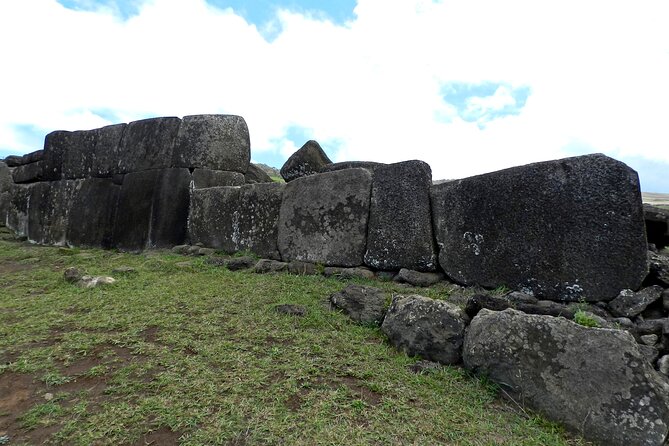
Stop 4: Ahu Vinapu and the puzzle of precision stonework
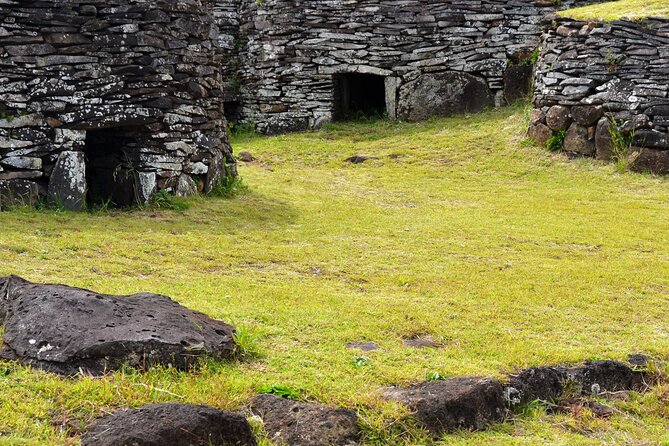
Ahu Vinapu is where the story gets intellectually spicy. The tour description highlights megalithic structures with precisely carved stones that resemble Inca-style architecture in South America.
You might not walk away with a neat answer to the question of influence. But you will come away with a better understanding of why archaeologists keep looking for patterns in how different cultures solve construction problems.
The visit is listed at 45 minutes. For a stop like Vinapu, that time is mostly about:
- seeing the stone alignment and surface work
- listening to the suggested interpretations
- taking photos from a distance and up close, if conditions allow
This is also a good midpoint reminder: the day is not only about Moai. It is about the platform technology and the way stone fit together to support ritual life.
Stop 5: Rano Kau crater views, and why the ticket is free here
Rano Kau is the nature break with a cultural layer. You visit an ancient volcanic crater with a crater lake and lush vegetation inside the caldera.
The tour gives 30 minutes here, and that is short. But it’s enough to get the rim views, which are the point. The crater is dramatic in how it frames water and green slopes inside an outer wall of rock.
One nice detail: the tour states admission ticket free for this stop. That can reduce friction on a day when the National Park ticket is not included with the tour price.
If you want a photo moment that feels more cinematic than archaeological, Rano Kau is your best bet. Keep your expectations realistic though, because 30 minutes can vanish fast once everyone stops moving for pictures.
Stop 6: Orongo and Birdman Cult rituals at the crater edge
Orongo is the emotional finale of this route. It sits near the cliffside village area connected to Rano Kau and the Birdman Cult. This is where you shift from Moai platforms and quarries into ritual competition symbolism.
The tour description emphasizes stone structures, ceremonial grounds, and petroglyphs. You also get the Birdman competition context, including the way the setting helped make it dramatic and meaningful.
The stop is listed at 1 hour 15 minutes, which is a healthy chunk compared to some other sites. That extra time matters because Orongo is the kind of place you enjoy more when you have a guide explaining:
- how the stone spaces were used
- what petroglyphs are pointing toward
- why the location was chosen on that crater edge
Orongo is also a great place to slow down mentally. By this point, you have seen multiple ends of the same island puzzle: stone sourcing, platform display, and ritual life changes over time.
Practical tips: tickets, water, shoes, and getting your language right
Here’s where your comfort and expectations can make or break the day.
Tickets and cost control
You are told National Park Ticket is not included. Plan for that cost on top of the $70 tour price. Also, at least one experience described having to buy the park pass before the tour rather than inside the entry flow. So do yourself a favor and handle it early.
Food and water
The tour details you were given do not include snacks or meals. Multiple experiences mentioned there was no water and no snack provided. On a 6-hour day with a cave, that is not a detail to ignore.
Bring:
- a bottle of water
- a snack you can eat quickly
Shoes and cave readiness
If you do Ana Te Pahu, wear shoes that can handle slippery floors. One experience described low ceilings and dark areas, with people using phone flashlights to see. I’d treat that as a “prepare for it” signal, not as fear-mongering.
Language and communication
You will get a guide, but some experiences reported mixed language groups, with guides repeating information for English and Spanish speakers. Others said English quality varied. If you care a lot about fine details, you should ask how language handling works when you confirm.
Also, because some guides may focus on moving the group efficiently, I suggest you:
- ask for a quick overview at the start
- ask how long the cave portion will be
- ask where restrooms are planned
A good guide will answer fast.
Group size and pacing
The cap is 14 travelers, which helps keep things human-sized. But the stops are still time-boxed, so you should expect photos and brief walks, not hours at one platform.
Who should book this full-day Rapa Nui tour, and who might want a different plan
This tour is a great match if you want:
- a Moai-focused day that also explains materials and ritual context
- a route that includes both platforms and caves
- enough time to see multiple west-side archaeological areas without planning every turn yourself
It is also a good choice for first-timers who want breadth. You finish with Orongo and you get a Birdman Cult explanation that makes Easter Island feel like a living culture, not only a statue museum.
It may be less ideal if you:
- want the single most famous Moai sites only (some expectations may not align with the specific stops here)
- have very strict timing needs, since pickup flow and cave conditions can affect the feeling of “full day”
- prefer long unhurried time at fewer places
In plain terms, this is a “see the main chapters” day. It is not a “slow bookshop tour” day.
Should you book this Full Day Tour in Rapa Nui?
I’d book it if you want a well-guided circuit that connects Moai platforms, quarry making, crater views, and Orongo Birdman ritual life in one run. At $70, the value is strongest when you factor in what you get: transportation plus a guide across multiple sites, with a small group size.
I’d also book it if you like practical archaeology. Puna Pau and Vinapu are the stops that give you construction and craftsmanship context, not just iconic photos.
Skip or adjust your expectations if you are hoping for a relaxed, slow-paced day or if you dislike caves. Bring water and snack, wear grippy shoes, and consider confirming language handling so you get the level of explanation you want. If you do that homework, you will end the day with a much clearer picture of what Rapa Nui built, and why it mattered.
Freshly reviewed in Hanga Roa
- Astronomical Tour on Easter Island★ 3.5 · 3 reviews
- Full day Private Tour: Poike Walk through the abandoned area★ 4.5 · 3 reviews
- T1-THE GRAND TOUR (non-cruise visitors)★ 5.0 · 3 reviews
- 4-Days Trip to Discover Easter Island★ 4.0 · 3 reviews
- Private 2 Days Essential Tour of Easter Island★ 5.0 · 4 reviews
- T2-THE MUST-HAVES OF RAPA NUI (non-cruise visitors)★ 4.5 · 4 reviews
- Private Tour: Easter Island Caves★ 4.5 · 4 reviews
- Private Tour: The Highlights of Easter Island★ 5.0 · 4 reviews
Easter Island Tours, compared.
Two days of Full Day Tour of Rapa Nui + Sunrise in Tongariki
Read our review →
2-Day Private Tour Easter Island Highlights Complete Discovery
Read our review →
Private Tour: Full Day Easter Island Highlights
Read our review →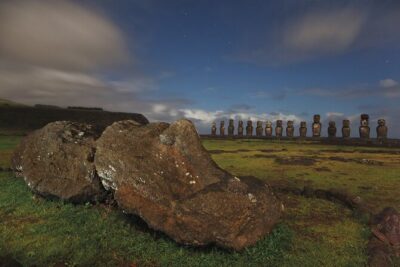
Private Full-Day Easter Island Highlights North and West
Read our review →Browse the lists this tour appears in