
Reviewed · EASTER ISLAND TOURS
Moai Rise and Fall: Full Day Private Tour
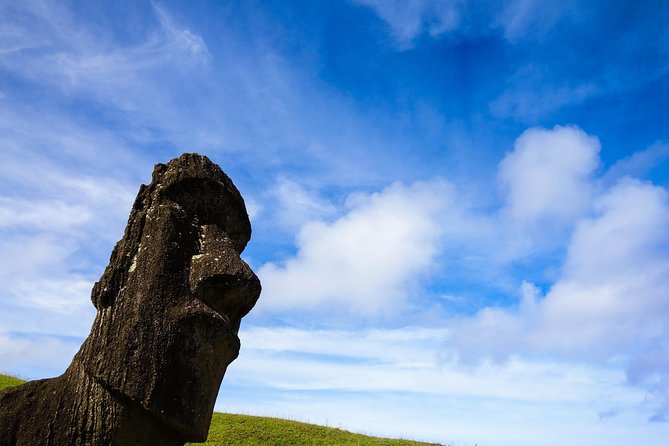
This experience is interesting because it does not treat Easter Island like a drive-by photo set. You get a slow-paced day that follows one big storyline, the rise and fall of Rapa Nui, using the island’s most important ahu sites like chapters in a book. On top of that, you get snacks and air-conditioned comfort, so you can focus on the people and the meaning, not on keeping up.
What I like most is the depth your guide can bring. In my favorite moments, I kept thinking about how the story becomes clearer when your guide can answer your questions on the spot, and a guide like Christian can handle the details in excellent English. The one drawback to plan around is the National Park Ticket requirement and the fact the day depends on good weather for the best access, especially out on the moai-working ground.
Key Highlights You’ll Care About
- A full moai arc in one day, from early ceremonial platforms to the quarry where moai were carved
- Private guiding that’s question-friendly, not a hurry-through bus ride
- Ahu Tahai sets the tone, with a tribute to American archaeologist William T. Mulloy
- Ahu Vaihu explains the fall, including reasons, plus the modern myths people repeat
- Rano Raraku shows the process, with around 400 carving attempts in different stages
A Day Built Around the Moai Rise and Fall Story
This is the kind of private tour that makes sense if you want more than a list of monuments. You start the day at 9:00 am in the Hanga Roa area, with pickup available across most of town and even from Mataveri International Airport. Then you spend roughly 5 to 8 hours moving through the key ceremonial sites that shaped Rapa Nui life, until you work your way to the place where the moai began.
The pacing is slow enough to actually notice things. That matters on Easter Island. The distance between sites is real, and the details can get lost if you feel rushed. Here, the timing is built so you can listen, walk, and look back at what you just learned.
It’s also private, so you’re not stuck with a group that wants to move at a different speed. If you and your travel partner or small group have lots of questions, this tour structure fits you well.
A few more Easter Island departures to weigh up
- From Hanga Roa: Rapa Nui Culture Sightseeing Tour
★ 4.6 · 307 reviews - From Hanga Roa: Easter Island Highlights 2-Day Tour
★ 4.3 · 205 reviews - From Hanga Roa: Easter Island Sightseeing Full Day Tour
★ 4.5 · 189 reviews
Why Private Guiding Changes Everything on Easter Island
Easter Island can be a hard place to read on your own. You will see stones and statuary, sure, but the deeper meaning lives in how you connect each ahu to the next clue: where power likely centered, how ceremony worked, and what changed over time.
A private guide helps you make those connections without feeling like you’re doing homework in the sun. Christian’s kind of strength, based on real experiences, is translating the big story into clear, human terms. You get the why behind the ruins, not just what they are called.
And it’s not only about legends. Your guide also addresses the modern ideas people repeat about the moai collapse, then helps you compare them to what the island’s remains suggest. That approach makes the day feel honest rather than dramatic.
Stop 1: Ahu Tahai, Where You Learn the Island’s Setup
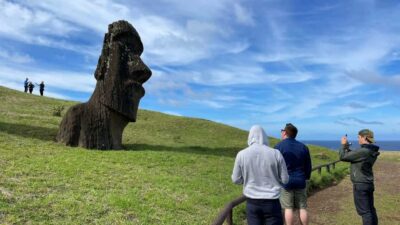
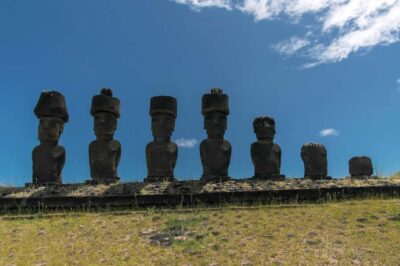
Ahu Tahai is where you get your bearings fast, even if you’ve never been to Easter Island before. You’ll take an extensive visit to the Tahai Archaeological Complex, which gives you a broad overview of Rapa Nui ancient history as an introduction to the island’s culture.
This stop is valuable because it’s like your orientation chapter. You see three monumental ahu here, plus remains of other archaeological structures. That variety helps your brain start grouping things logically, instead of treating each moai site as a standalone postcard.
There’s also a memorial connection that adds a human layer to the archaeology side of the story. The visit includes paying homage to William T. Mulloy, an American archaeologist known for his work on Easter Island. It’s a reminder that the island’s history is told through both ancient life and more modern scholarship.
If you like context early in the day, you’ll appreciate how Tahai frames everything that follows.
Stop 2: Ahu Vaihu and the “Fall” Question Everyone Asks
At Ahu Vaihu, the mood shifts. The ruins of a monumental ahu in the Vaihu district are described as a chilling memory of the moai fall. This is not just a view stop, it’s a guided explanation stop.
You’ll get a talk about the reasons for the fall and the modern myths about the collapse. That part matters because Easter Island discussions can get stuck in extremes, either total myth or total certainty. A guide who walks you through both the myths and the likely realities helps you think clearly, without turning the subject into a debate club.
There’s also an interpretive center nearby, with a functioning replica of an ancient micro-village. That’s a useful contrast to all the broken stone around you. Instead of only seeing what’s missing, you get a sense of what life might have looked like at a smaller, more human scale.
Time-wise, plan for about an hour here. It’s a strong stop if you care about the “why did things change” side of the story.
The other half of a Easter Island week:
- Two days of Full Day Tour of Rapa Nui + Sunrise in Tongariki
★ 4.5 · 132 reviews - Full Day Tour in Rapa Nui
★ 4.5 · 122 reviews - 2-Day Private Tour Easter Island Highlights Complete Discovery
★ 5.0 · 110 reviews - Private Tour: Full Day Easter Island Highlights
★ 5.0 · 106 reviews
Stop 3: Ahu Akahanga, Unrestored and Full of Fallen Statues
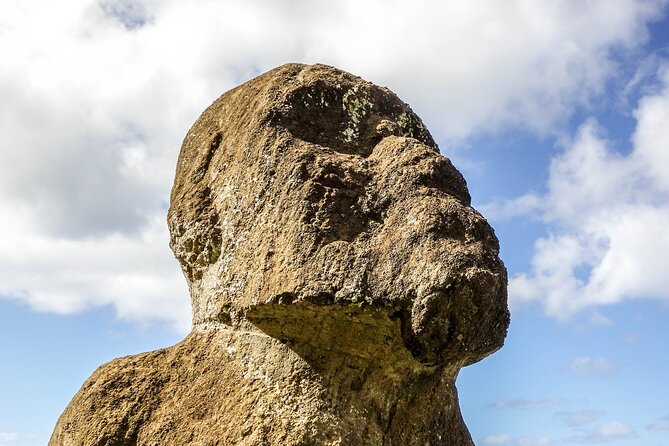
Ahu Akahanga is the kind of site that feels raw because it hasn’t been restored into something tidy. You’ll visit a ceremonial center that sits with more than a dozen fallen statues facing the remains of an ancient village.
This stop works because it doesn’t try to smooth the reality. You can look at the scale, the brokenness, and the way the site holds evidence of a dramatic shift. It’s also a reminder that the island’s story includes everyday settlements, not only monumental ceremony.
You’ll have about 40 minutes here. That’s enough time to take in the composition and understand why the sightlines and arrangement matter, without turning it into a rushed checklist.
If you prefer your history with emotional weight, this is one of the best places on the route.
Stop 4: Ahu Tongariki, the Big One, Plus Papa Tataku Poki
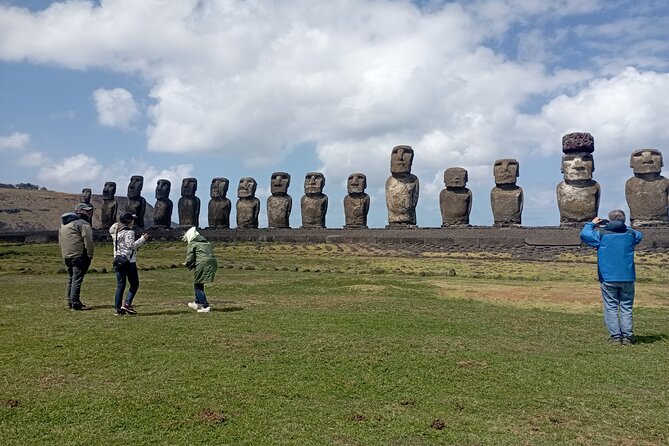
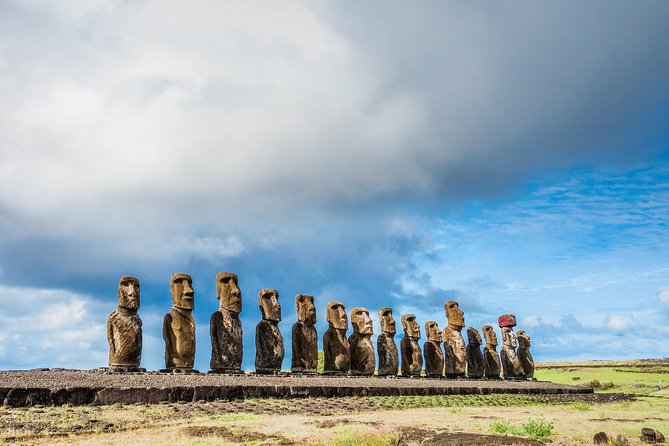
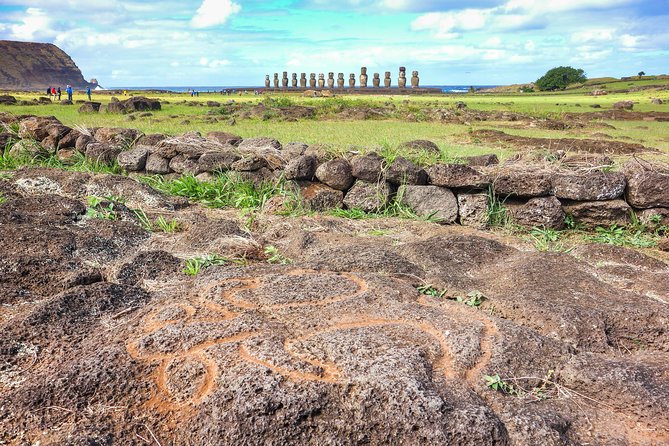
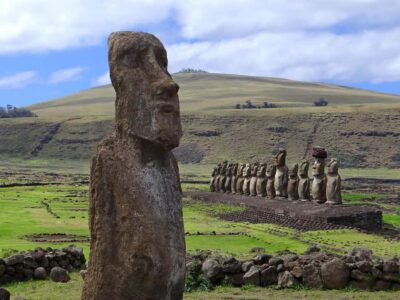
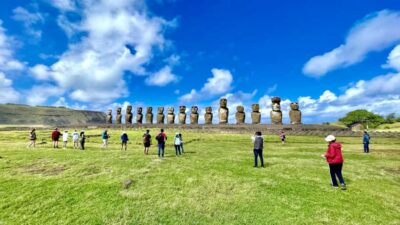
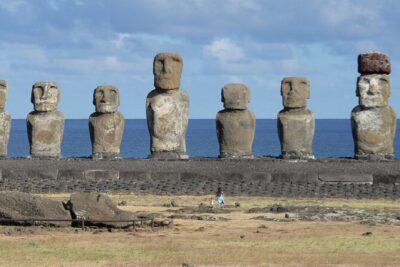
Ahu Tongariki is a headline stop for a reason. It’s described as the biggest ceremonial monument in Polynesia, and when you’re standing there, you can see how scale would have mattered for public life and ritual.
You’ll take a thorough walk around the ahu. That matters because at a site this large, the experience is not only looking straight ahead. Your understanding improves when you move around and see the monument from different angles, like your guide is teaching you how to read the arrangement.
You also visit the petroglyph site of Papa Tataku Poki in the same area. This connects to detailed legends about warfare. That legend tie-in helps you see how carved marks and stories could function together, giving a place meaning beyond its physical remains.
Plan around 1 hour 30 minutes for this stop. It’s often the part of the day that feels most “you are here in the myth” once the moai story gets momentum.
Stop 5: Rano Raraku, Where the Moai Were Born
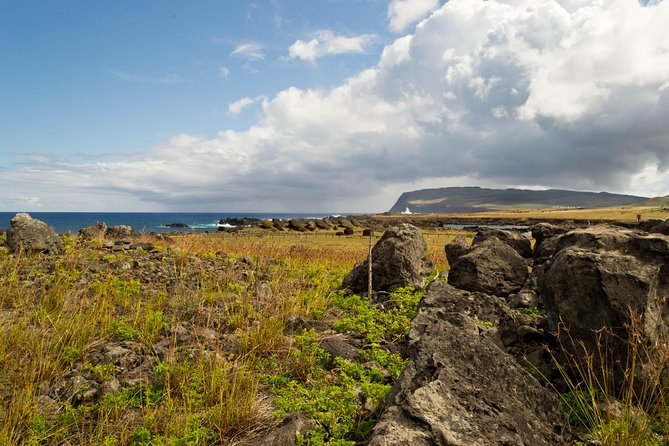
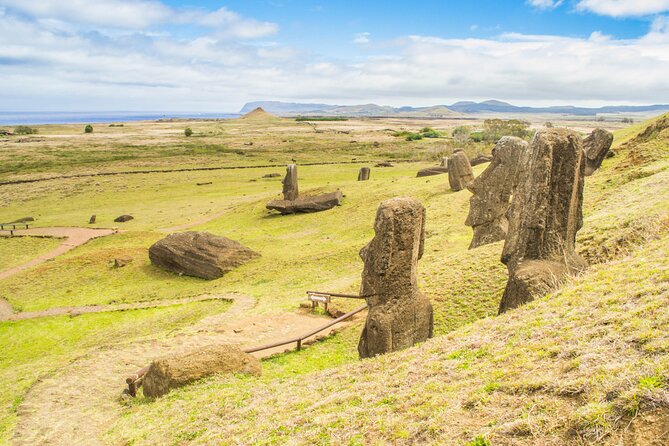
Rano Raraku is the place that makes everything click for a lot of people, especially if you’ve been wondering how these statues were created. This monumental archaeological site is known as the birthplace of the moai.
Your visit is described as in-depth, including every single feature of the place. That includes the fact that near 400 attempts at moai remain there in different stages of the carving process.
You get a rare kind of understanding here. Instead of only seeing finished pieces at ahu, you see how work progressed and how it stalled, which is the realistic version of craftsmanship. It helps you understand the island’s labor and planning as something physical, not just symbolic.
There’s also a geological and historical importance to the site. And if weather permits, you may be able to visit the small caldera at the top. Since the tour depends on good weather, keep an eye on conditions that day. If access changes, you’ll still have plenty to work with at the quarry itself.
This is the final major anchor of the day, and it often feels like the conclusion to the story you started at Tahai.
Getting Around: Pickup, AC Comfort, and a Real Start Time
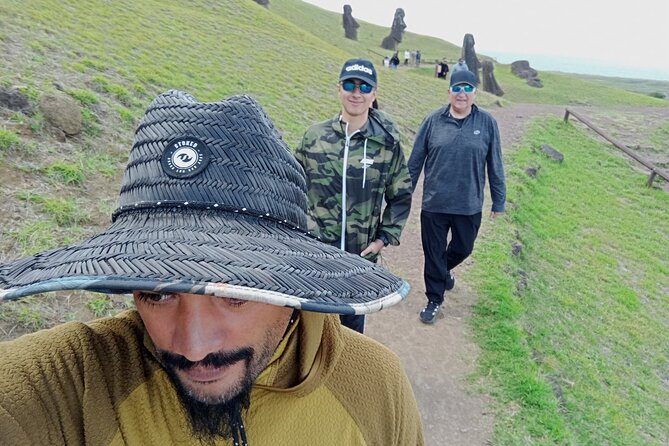
Logistics on Easter Island can make or break your day. The good news here is that you don’t have to hunt for transport. Pickup is offered from the Hanga Roa urban area, and that includes the Mataveri International Airport (IPC) as well as major hotels, hostels, vacation homes, camping sites, and downtown.
The meeting point is listed as Atamu Tekena in Hanga Roa. The tour starts at 9:00 am, which is great because you want your energy for walking early, before the afternoon heat squeezes your attention.
Transportation includes an air-conditioned vehicle and private transportation. That sounds basic, but on a volcanic island with long drives between stops, having a cool ride is not a luxury, it’s a tool to stay awake and listen.
Duration is listed as 5 to 8 hours. That range is normal for a private route because time depends on pacing and conditions. It also means you should plan an easier evening after the tour.
Price and Value: What $350 Per Person Really Buys
At $350 per person for a private day, this is not a budget excursion. But it also isn’t trying to compete with a cheap group bus tour. The value is in three places you can feel.
First, you’re paying for a private guide who can focus on your questions and interests. On Easter Island, that is where your time turns into understanding. A shared tour can give you stops and photos. This tour aims to give you meaning.
Second, you get included snacks and air-conditioned transport. Those sound small until you’re out for hours and you realize you still want to engage, not just survive the day.
Third, the major sites on the route have free admission, though you still need a National Park Ticket to enter most of them. That shifts your costs toward the essential entry requirement rather than stacking multiple paid admissions.
If you have a small group or you’re traveling as a couple, it can be a good fit because private guiding tends to feel less expensive when you split the day across people. The tour also mentions group discounts, which is worth asking about when you book.
One practical note: the average booking time is listed as 36 days in advance. That’s a sign this route has steady demand. If you want your preferred day, don’t wait.
Weather Matters More Than You Think
This tour requires good weather. That’s not just a line. It affects whether you can safely access specific areas, like the caldera at Rano Raraku, and how comfortable the day feels.
If weather ruins the plan, you should expect a different date or a full refund. The key for you is to pack flexibility into your Easter Island schedule. If your trip has only one free day, you’re taking a risk with any outdoor-heavy itinerary.
Who Should Book This Private Day
You should book this if:
- You want a guided story about the moai rise and fall, not just monument viewing
- You like asking questions and getting real answers, in English if that’s your preference
- You care about both the monumental sites and what might have been daily life, like the micro-village replica
- You prefer a slow-paced day with breaks built in, plus snacks
You might want to consider a different style if:
- You’re trying to keep costs as low as possible and don’t care about deep interpretation
- You’re very short on time and can’t spare a full day
- Weather is unpredictable in your travel window and you can’t move plans around
Should You Book the Moai Rise and Fall Private Tour?
Yes, if you want your Easter Island day to feel like learning instead of sightseeing. The route covers the big answers in a logical flow, from Ahu Tahai’s orientation and the Mulloy connection, to Ahu Vaihu’s explanation of the fall, to the scale and symbolism of Ahu Tongariki, and finishing with Rano Raraku where the moai making becomes visible.
The strongest selling point is the private guide experience. When you get a guide like Christian with solid English and real command of the island’s legends and archaeology, the day clicks.
Just do two things before you commit: make sure you can get the National Park Ticket in time, and keep your schedule flexible enough to handle weather.
FAQ
Do I need a National Park Ticket for this tour?
Yes. A National Park Ticket is required to enter most of the sites. The tour does not include that ticket.
What is the duration of the Moai Rise and Fall private tour?
It runs about 5 to 8 hours, approximately.
What time does the tour start?
The start time is 9:00 am.
Where does pickup take place?
You can be met or picked up from any place in the Hanga Roa urban area, including Mataveri International Airport (IPC) and major hotels, hostels, vacation homes, camping sites, downtown, and more.
Is the tour private or shared?
It is private. Only your group participates.
Are meals or snacks included?
Yes. Snacks are included to help you stay energized during the day.
What transport is included?
An air-conditioned vehicle is included, along with private transportation.
Is this tour offered in English?
Yes. The tour is offered in English.
Do I pay admission fees at each site?
The tour indicates admission tickets for each stop are free, but you still need the National Park Ticket for site entry.
What happens if the weather is poor?
The experience requires good weather. If it is canceled due to poor weather, you will be offered a different date or a full refund.
Can I cancel and get a full refund?
Yes. Free cancellation is available up to 24 hours in advance for a full refund. If you cancel less than 24 hours before the start time, the amount paid is not refunded.
Freshly reviewed in Easter Island
- Easter Island 2 Half Days and 2 Full Days Private Trekking Tour★ 5.0 · 3 reviews
- Astronomical Tour on Easter Island★ 3.5 · 3 reviews
- Full day Private Tour: Poike Walk through the abandoned area★ 4.5 · 3 reviews
- T1-THE GRAND TOUR (non-cruise visitors)★ 5.0 · 3 reviews
- Private Tour: Full-Day Easter Island Birdman Cult★ 5.0 · 3 reviews
- Rapa Nui Astrophotography and Stargazing Night Tour Combination★ 5.0 · 3 reviews
- 4-Day Easter Island Experience with Hotel, Tours & Dinner show★ 5.0 · 3 reviews
- 4-Days Trip to Discover Easter Island★ 4.0 · 3 reviews
Easter Island Tours, compared.
Two days of Full Day Tour of Rapa Nui + Sunrise in Tongariki
Read our review →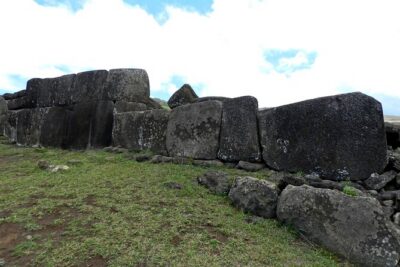
2-Day Private Tour Easter Island Highlights Complete Discovery
Read our review →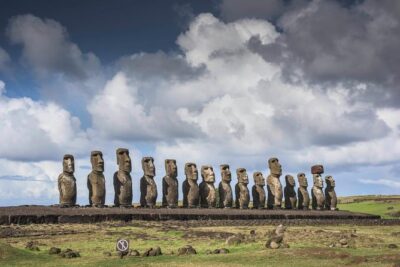
Private Tour: Full Day Easter Island Highlights
Read our review →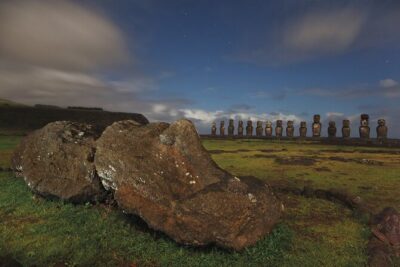
Browse the lists this tour appears in