
Reviewed · EASTER ISLAND TOURS
Private Tour: 2 Half Days & 2 Full Days
A private Easter Island tour is interesting when it is built around timing, and this one leans into the big moments: moai platforms, the volcanic quarry sites that shaped the stones, and a Tongariki sunrise finish. I especially like how it balances the famous lineup (Ahu Tongariki, Rano Raraku) with the less-crowded story places like Orongo and the inland moai at Ahu Akivi. One thing to watch, though, is the National Park ticket is not included, so you’ll need to budget extra.
This experience is priced for a private group, with pickup from your hotel and a professional guide. The reviews also point to a guide like Hugo, whose Rapa Nui love and knowledge make the history feel personal, not just recited. Since most stops list admission as not included, plan to rely on the park pass more than on walk-up tickets.
Key highlights at a glance
- Tongariki sunrise timing with seasonal notes on where the sun rises from
- Rano Raraku as the moai quarry, where the work started before the statues moved
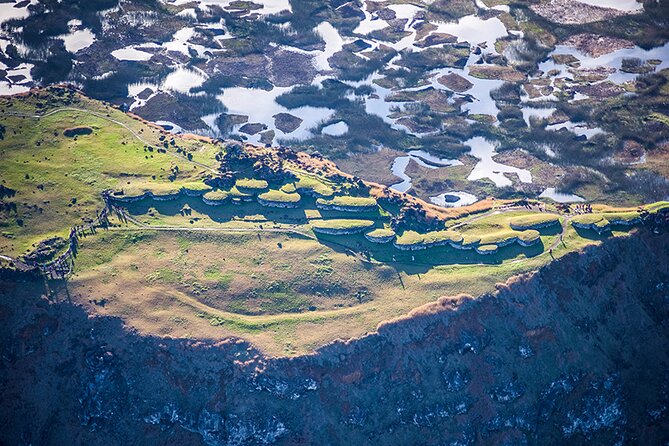
- Orongo and the Birdman ceremony site on the rim of Rano Kau
- Puna Pau for the red stone connection to moai hair (Pu Kao)
- Ahu Akivi’s astronomical positioning away from the sea, guided by the sun
- Ahu Tahai at sunset near town, with restored ahu Ko Te Riku, Tahai, and Vai Ure
Why This 4-Day Private Route Works on Easter Island
Easter Island can feel like a greatest-hits playlist, but a private, guided setup helps you connect the dots. The day-to-day plan here moves from ahu ceremonial sites to the quarries that supplied the carving material, then to volcanic and coastal landscapes that explain how people lived and organized space.
I like that it does not treat moai as just big stone faces. You’ll spend real time on how the platforms were built, how the quarry shaped what could be made, and why some ahu are positioned inland or aligned to the sun. And since it is private, your guide can slow down when you want details, without the constant squeeze of a group schedule.
The other practical win is the pickup. Being collected from your accommodation on the island saves you from arranging rides or worrying about timing before early starts.
A few more Easter Island departures to weigh up
- From Hanga Roa: Rapa Nui Culture Sightseeing Tour
★ 4.6 · 307 reviews - From Hanga Roa: Easter Island Highlights 2-Day Tour
★ 4.3 · 205 reviews - From Hanga Roa: Easter Island Sightseeing Full Day Tour
★ 4.5 · 189 reviews
Price and Park Tickets: What You’re Paying For (and What to Add)
The tour costs $934 per person, and it is designed as a private experience with private transportation plus a professional guide. Lunch is included, which helps on an island where you do not want a sightseeing day to turn into a meal scramble.
Here is the part that affects your real total: the National Park ticket is mandatory and not included. It is listed at $100 per person, valid for 10 days from your first entry and covering all park sites. Most stops also note admission tickets as not included, so the park pass is how you cover entry across the route.
So the value equation looks like this:
- You pay for guiding and transport that strings together far-flung sites efficiently
- You pay park entry separately, because that is required no matter what tour you choose
If you are already planning to visit many park sites on your own, the pass can still make sense. If you were thinking of “just a few stops,” you may want to compare your own sightseeing plan so you do not overpay.
Day 1: Muloy Restorations, Christian-Rapa Nui Mix, and Sunset at Ahu Tahai
Day 1 starts with a mix of restored ahu and cultural stops that show how Rapa Nui beliefs blended over time. You start at Ahu Huri a Urenga, restored by William Muloy. The site is known for its position looking toward the winter solstice, plus its distinctive design with four arms and hands. It is the kind of place where the physical layout makes you think about how people tracked the year and built meaning into stone.
Next is the Church of Rapa Nui. The point here is not religion as a debate, it is seeing how outside forms were adapted into local design. Inside, you will recognize Christian figures alongside traditional forms of the island, which helps explain the layered identity you see throughout Hanga Roa.
After that, the Museo Antropologico P. Sebastian Englert gives you context before you hit more monumental sites. The museum holds more than 20,000 objects tied to the Rapa Nui story. You’ll see things like tools and ornaments, including a moai eye, alongside artifacts made from bone. The museum also frames what happened after the destruction of the giant statues in inter-tribal wars, so you understand why so many things are recovered rather than continuously preserved.
Then it’s a short stop at the Cementerio de Isla de Pascua. This is where you really feel the cultural blend. Crosses, crucifixes, and moai statues can appear together around tombs that incorporate items from both traditions.
You’ll also have time at Feria Artesanal Hare Umanga, a craft market established during the Tapati Rapa Nui festivities in the 1970s. Even if you are not shopping, it’s a good way to see the kinds of crafts local artisans bring to visitors, and it makes the day feel more alive than a string of stone monuments.
To end the day, you reach Ahu Tahai, restored in 1974 by William Mulloy. It includes three principal ahu from north to south: Ko Te Riku, Tahai, and Vai Ure. Because it is close to town, this is a classic sunset-photo spot, and it is a nice way to ease into the rest of your moai-heavy days.
Day 2: Tongariki’s 15 Moai, the Quarry Trail at Rano Raraku, and Anakena
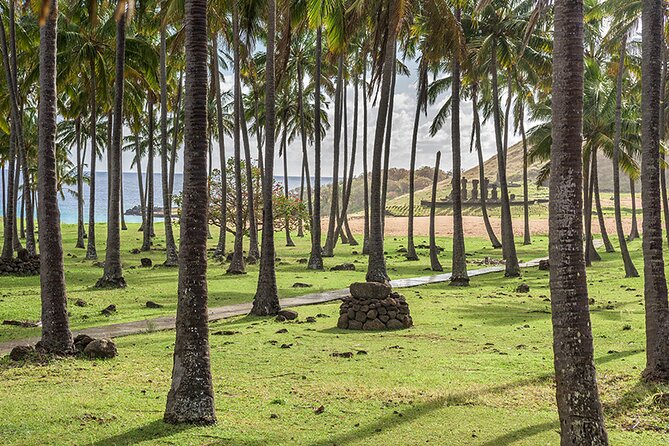
Day 2 is the moai powerhouse day, with one big platform moment after another, plus the sites that explain the materials.
First stop is Ahu Akahanga on the southeast coast. It gives you a different kind of perspective, including how the village space related to ceremonial centers. You’ll see moai on their backs and foreheads on the ground, which helps you understand that what stands today is part of a longer, interrupted story.
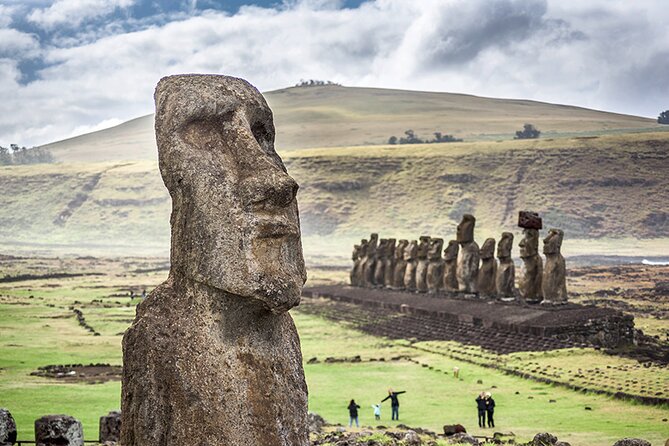
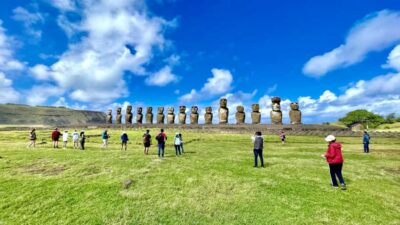
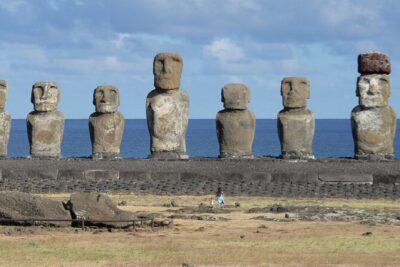
Then comes Ahu Tongariki, often considered the largest reconstructed platform on the island. It’s huge and dramatic, with 15 standing moai facing outward while their backs turn to the Pacific Ocean. This is one of those places where the scale hits you quickly, and where you also notice how the platform design frames the moai like a statement.
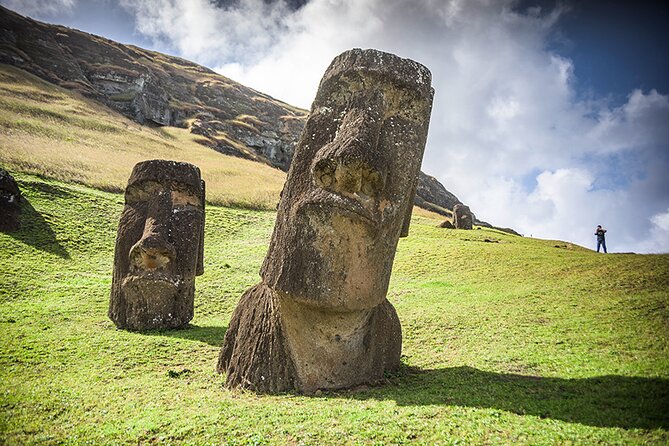
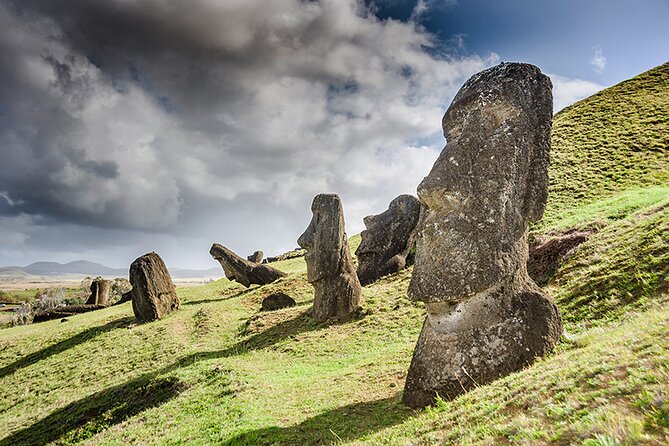
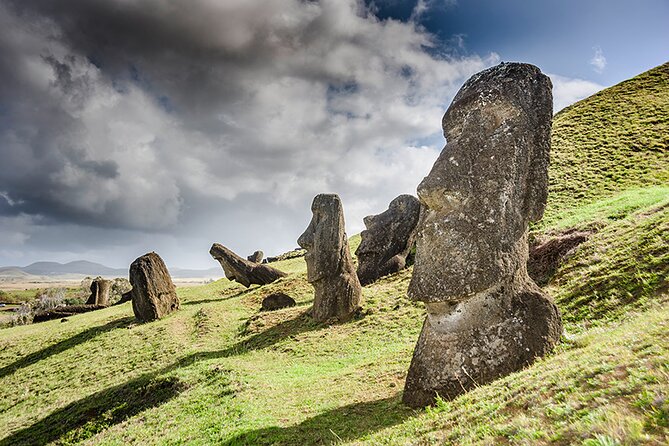
After that, you go to the island’s core production site, Rano Raraku. This is the only volcanic cone tuff quarry on Easter Island, and it is why moai could be made on a larger scale. You’re standing in the quarry where the moai were carved and where many were shaped before being moved to ahu around the island. Even if you do not know the carving details, just seeing the source matters because it turns the moai from objects into projects.
Next is Ahu Te Pito Kura, which includes a massive moai connected with the Rano Raraku quarry tradition. Nearby you’ll see the famous rounded stone Te Pito ‘o te Henua. The tradition says it was brought by ancestors, which ties geology to story in a way that feels very Rapa Nui.
The day wraps with Anakena Beach, known for warm turquoise waters and coral sand. It is also tied to royal residence history, linked with the Miru Araki royal family. You’ll get a chance to see Ahu Nau Nau, described as one of the most refined ahu, which is a fitting close to a day built on structure and meaning.
The other half of a Easter Island week:
- Two days of Full Day Tour of Rapa Nui + Sunrise in Tongariki
★ 4.5 · 132 reviews - Full Day Tour in Rapa Nui
★ 4.5 · 122 reviews - 2-Day Private Tour Easter Island Highlights Complete Discovery
★ 5.0 · 110 reviews - Private Tour: Full Day Easter Island Highlights
★ 5.0 · 106 reviews
Day 3: Orongo Birdman Views, Rano Kau Water Source, Puna Pau Red Stone, Ahu Akivi’s Sun Alignment
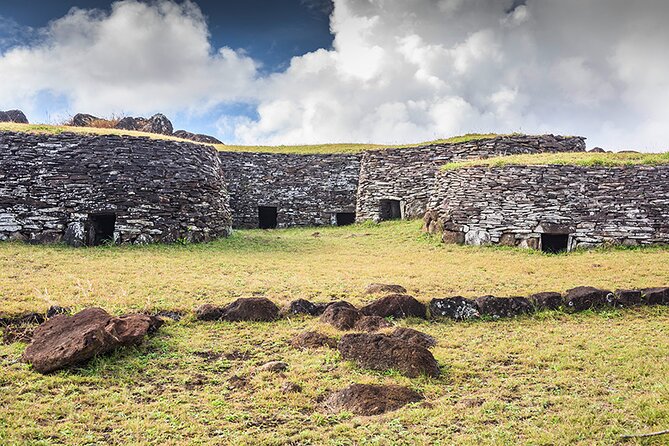
Day 3 shifts from the giant moai platforms to volcanic sites and ritual geography, and it’s a smart change of pace.
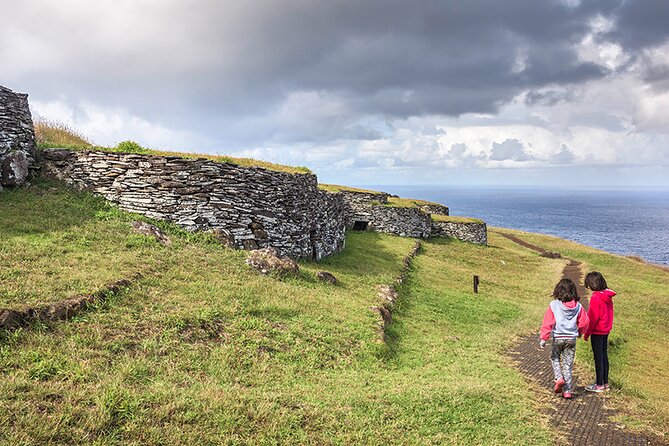
You start at Orongo, a village on one side of the Rano Kau volcano crater. Orongo is one of the key sites tied to the Birdman ceremony. Even in a short visit, you get the sense that this was a place where people watched, competed, and returned year after year around the rhythms of the island.
Next, visit Rano Kau itself. This crater is described as one of the most beautiful natural landscapes on Rapa Nui, with about a 1.5 km size and the biggest reserve of endemic flora. The lake in the crater served as an important source of drinking water in ancient times, which grounds the scenery in survival needs, not just sightseeing.
Then you go to Puna Pau, the quarry where the red volcanic stone was extracted. This connects directly to Pu Kao, the moai’s hair. You’ll hear about early carving prototypes, listed as 23 cylindrical prototypes, made to help with transportation to the ahu. You also get a privileged view of Hanga Roa village, which gives you orientation for the rest of your stay.
Finally, the day ends at Ahu Akivi. This is one of the few ceremonial platforms not located by the sea. It has seven moai restored to standing position by William Mulloy and Gonzalo Figueroa, with participation from the Rapa Nui community. The moai have a special feature: astronomical positioning guidance, and they are said to face toward the setting sun. That alignment detail is exactly the kind of thing that makes Easter Island feel like a thinking place, not just a looking place.
Day 4: Tongariki Sunrise, Seasonal Sun Notes, and the Final Moai Row
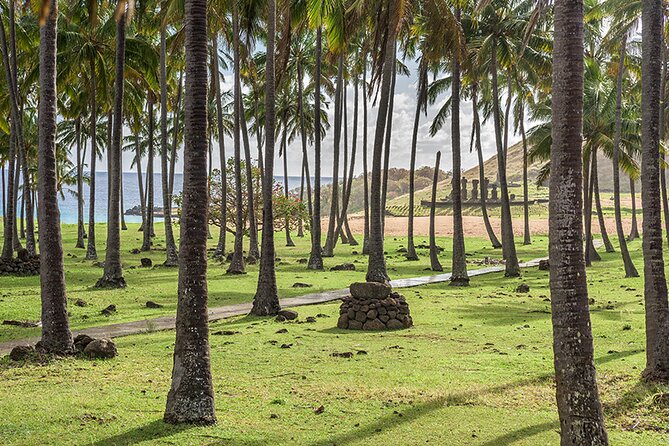
Your last day focuses on the big finishing moment: sunrise at Ahu Tongariki.
The plan here is built around the idea that the light changes everything. During summertime (October to March), the sun rises behind the platform. During the rest of the year, it is described as rising from Poike volcano. The tour also notes that there are better odds of clear skies in some seasons, with wintertime having more chances of unclear skies. That’s practical to remember, since a cloudy morning can blunt the effect even if the moai still command attention.
You’ll spend about 1 hour 30 minutes at Tongariki. If you do sunrise well, this is when it clicks most: you see the moai not as photos but as a real arrangement in real weather, with a big sky changing over a set of stones that have watched the same horizon for centuries.
This day is also your reality check on planning. Sunrise is the kind of timing that means you cannot roll in late. But if you are willing to trade your morning sleep for the views, it is one of the best ways to feel the island’s scale.
Your Guide Matters Most Here (Yes, Even More Than You Think)
This tour is listed as having a professional guide, and the reviews attached to the experience highlight one name in particular: Hugo. The praise centers on how Hugo loves Rapa Nui and how the knowledge feels inspiring rather than scripted.
That matters on Easter Island because so many sites can feel similar at first glance. Ahu after ahu, quarry after quarry, it is easy to think you are just collecting stone photos. A guide who can explain why Ahu Huri a Urenga is oriented toward the winter solstice, or why Ahu Akivi’s inland placement and sun alignment change the meaning of the site, turns the route from a checklist into understanding.
So look for a guide who makes connections, like the link between quarry material (Rano Raraku and Puna Pau) and the finished looks you see on ceremonial platforms. When that connection lands, the whole trip starts to feel like one coherent story.
Who This Private Tour Fits Best
This is best for you if you want:
- A private group experience where your pace and questions matter
- A structured plan that covers the island’s major ritual and production sites in a tight window
- A guide-led mix of monumental moai stops plus museums and cultural places like the craft market and church area
It also makes sense if you care about value, not just convenience. The included lunch, plus private transportation, makes the price feel more like a full-day service package than a bare-bones sightseeing add-on.
The tour says most travelers can participate, which suggests the schedule is broadly manageable. Still, it is a 4-day program with multiple stops each day, so you’ll want to be comfortable moving between sites.
Should You Book This Tour?
If you are visiting Easter Island with limited time and you want the route to cover both the showstoppers and the meaning behind them, I think this is a strong pick. The Tongariki sunrise focus is a major draw, and the addition of quarry sites like Rano Raraku and Puna Pau makes it more than just moai spotting.
I would only hesitate if you are trying to keep costs ultra-low or if you prefer to manage your own timing day by day. The $100 per person National Park ticket is mandatory and not included, so your total budget needs to account for it. If you are happy with that, the private format and the guide-led interpretation are what you are really buying.
Finally, note that it is often booked around 19 days in advance on average. If you have a trip window, it is smart to start early so you can align this tour with your other island days.
FAQ
How long is the Easter Island private tour?
It runs for 4 days approximately, with a mix of half-day and full-day sightseeing.
What does the tour cost?
The price is $934.00 per person.
What is included in the price?
Lunch, private transportation, and a professional guide are included.
Do I need to buy the National Park ticket?
Yes. A National Park ticket is mandatory, costs $100.00 per person, and is valid for 10 days from your first entry and for all park sites.
Is pickup from my accommodation included?
Yes. Pickup is offered at all hotels and accommodations on the island. You just need to tell the operator your hotel.
Is this a private tour?
Yes. It is private, meaning only your group participates.
What language is the tour in?
The tour is offered in English.
Is it available for cruise ship passengers?
No, the tour is not available for cruise ship passengers.
How does cancellation work?
You can cancel for a full refund if you cancel at least 24 hours before the experience’s start time. Cancellation is free, and changes within 24 hours are not accepted.
Freshly reviewed in Easter Island
- Easter Island 2 Half Days and 2 Full Days Private Trekking Tour★ 5.0 · 3 reviews
- Astronomical Tour on Easter Island★ 3.5 · 3 reviews
- Full day Private Tour: Poike Walk through the abandoned area★ 4.5 · 3 reviews
- T1-THE GRAND TOUR (non-cruise visitors)★ 5.0 · 3 reviews
- Private Tour: Full-Day Easter Island Birdman Cult★ 5.0 · 3 reviews
- Moai Rise and Fall: Full Day Private Tour★ 5.0 · 3 reviews
- Rapa Nui Astrophotography and Stargazing Night Tour Combination★ 5.0 · 3 reviews
- 4-Day Easter Island Experience with Hotel, Tours & Dinner show★ 5.0 · 3 reviews
Easter Island Tours, compared.
Two days of Full Day Tour of Rapa Nui + Sunrise in Tongariki
Read our review →
2-Day Private Tour Easter Island Highlights Complete Discovery
Read our review →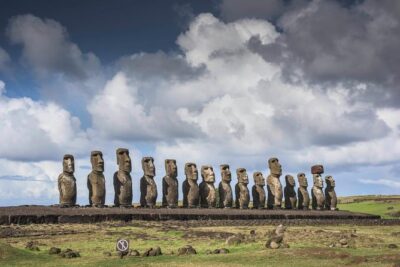
Private Tour: Full Day Easter Island Highlights
Read our review →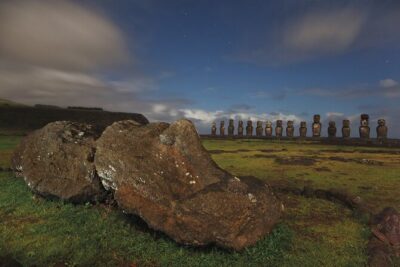
Browse the lists this tour appears in