
Reviewed · EASTER ISLAND TOURS
Full Day Tour: The Moai Trail
The Moai Trail is an efficient, guide-led circuit that ties together the island’s moai platforms with legends and everyday-life details you might miss if you go solo. You cover several of the most important ceremony sites, plus time at Anakena Beach, so the day feels complete instead of moai-only.
What I like most is the way the stops explain meaning, not just scenery. At Ahu Vaihu, you get a replica-style village scene that helps you picture how communities lived, down to features like chicken coops and stone gardens. I also like that the guiding style can work for different ages, with local guides such as Aranui or Nico using stories that land well for both kids and seniors.
One real consideration is budgeting for entry fees. The big Rapa Nui National Park admission is not included, and several stops have separate site admissions too, so build time and funds for that up front to avoid delays.
Key highlights worth knowing
- Replica village learning at Ahu Vaihu helps you connect moai sites to real daily structures like gardens and boat houses.
- Oral-history focus at Ahu Akahanga gives you context for Hotu Matu’a and the missing remains tradition.
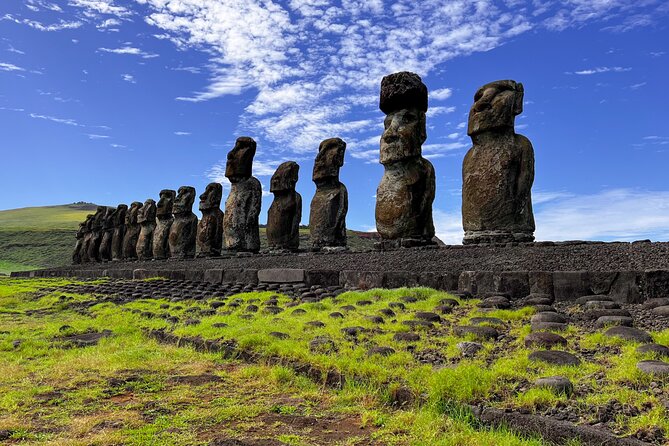
- Rano Raraku restoration story links the platform of 15 moai to recovery after the Valdivia earthquake tsunami.
- Anakena Beach free time pairs moai views with the one place you can actually relax and cool off on a white-sand shoreline.
- Small group size (max 10) keeps the day easier to manage on island roads than larger buses.
- English-speaking local guides make the storytelling clear, especially if it is your first time on Rapa Nui.
A full-day route in Rapa Nui terms, 6 to 8 hours that actually moves
This is a 6 to 8 hour day tour, built around a classic Rapa Nui “greatest hits” circuit. You start in Hanga Roa with pickup, and you can expect a steady flow of stops rather than long, idle gaps. The max group size is 10 travelers, which matters on an island where roads and parking are limited.
Pickup happens starting around 9:30 AM (there is a window, not a guaranteed exact minute). You should plan to be ready 5 to 10 minutes early at the main entrance of your accommodation. If you are outside Hanga Roa, you might need an alternate meeting point or an additional cost, so it is worth confirming your exact pickup spot before the day starts.
If you get motion sickness easily, bring what works for you. This is still a full-day itinerary with multiple driving legs and walking at each site, and the tour notes that you need to be physically compatible with the activity.
A few more Hanga Roa departures to weigh up
- From Hanga Roa: Rapa Nui Culture Sightseeing Tour
★ 4.6 · 307 reviews - From Hanga Roa: Easter Island Highlights 2-Day Tour
★ 4.3 · 205 reviews - Full Day Tour in Rapa Nui
★ 4.5 · 122 reviews
Price and logistics: the $110 ticket is only part of the budget
The tour price is $110 per person, and what you get for that cost is practical: transport, pickup and drop-off, a local guide, and essential equipment. You also get a mobile ticket, which is convenient when you are juggling multiple admissions during the day.
Here is the part that can surprise people: the main Rapa Nui National Park entrance fee is not included. You must purchase it separately in advance for $100 per person. Chileans have a different park fee (CLP40,000 per person), which is also not included for the tour price.
On top of that, some of the individual stops have separate site admissions marked as not included, while others are listed as free. So your real all-in cost depends on which paid sites you hit. The good news is that the tour is designed so you do not lose time hunting tickets mid-day, but you still need to show up prepared with the park entry sorted first.
Stop 1: Ahu Vaihu and the replica village idea that makes moai make sense
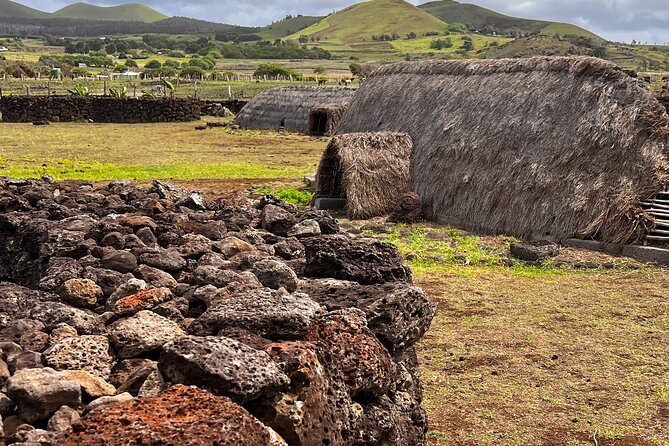
Your first major stop is Ahu Vaihu, where the focus is not only the stone platform. You also get a replica-style view of ancient village life, built to help you understand everyday structures your ancestors would have used.
The tour description points to practical elements you can look for, like chicken coops, stone gardens, boat houses, and other built features. Even if you are not a “structures and archaeology” person, this kind of stop helps you stop thinking of moai as isolated statues. Instead, you see them as part of a working cultural landscape with housing, food production, and travel by sea.
Time here is about 30 minutes, so do not expect a museum-length explanation. Use that time to ask your guide how the village replica connects to what you see in other stops later in the day. Entrance for this stop is not included, so keep that in mind when you budget.
Stop 2: Ahu Akahanga, Hotu Matu’a via oral history
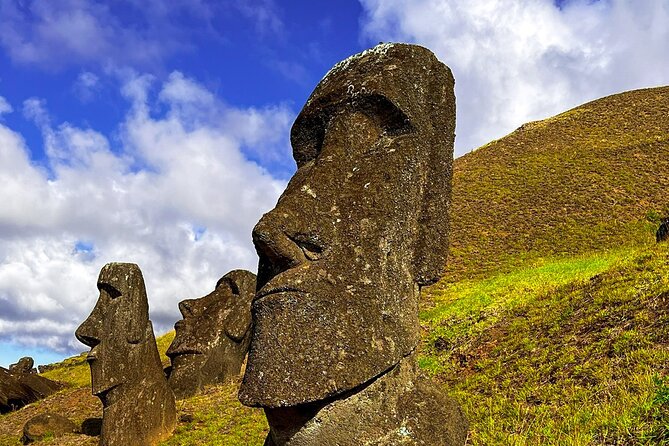
Next comes Ahu Akahanga, where the tone shifts more toward legend and origin stories. The tour notes that oral history is the island’s main source of history, and it points to a tradition connected to the first king, Hotu Matu’a.
You can see what the tour frames as the remains of that story’s key figure, described as missing, and you can also spot an original village setting with structures and platforms, with moai placed in front. This stop is useful because it gives you a bridge between myth and place. You are not just learning names, you are learning why certain sites were meaningful in the way people told their world into being.
Plan for about 45 minutes here. Entrance is listed as not included, so this is another one to mentally budget as part of your National Park and site fees.
The other half of a Hanga Roa week:
- 2-Day Private Tour Easter Island Highlights Complete Discovery
★ 5.0 · 110 reviews - Private Full-Day Easter Island Highlights North and West
★ 5.0 · 84 reviews - From Hanga Roa: Journey from Orongo to Ana Te Pahu
★ 4.3 · 75 reviews - Journey of the Ancestors: Tongariki, Rano Raraku & Anakena Beach
★ 4.5 · 70 reviews
Stop 3: Rano Raraku, the big ceremonial center and why restoration matters
Rano Raraku is the island’s heavyweight ceremonial center, and you get a longer stretch here, about 1 hour 30 minutes. The main draw is its role as the platform of the 15 moai, but the more interesting lesson is the restoration story behind it.
The tour describes a major catastrophe tied to a tsunami triggered by the Valdivia earthquake, and it explains that rebuilding was made possible thanks to contributions from people of Japanese origin, named Tadano and Sano. Whether you already know earthquake timelines or not, this is a powerful way to think about heritage on Rapa Nui. These sites were not only created by people, they were also actively repaired and cared for after disaster.
Rano Raraku is listed as free for admission on this tour, which is a nice relief if you have been tracking fees all morning. It is also one of those places where staying curious pays off. Look for how your guide links the moai platform pattern with the bigger ceremonial purpose of the center.
If you plan to take photos, bring a lens cloth and protect your camera. Wind and dust can happen, and wiping between stops saves you later.
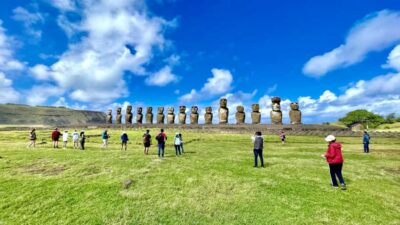
Stop 4: Ahu Tongariki and the feeling of seeing 15 moai in a single frame
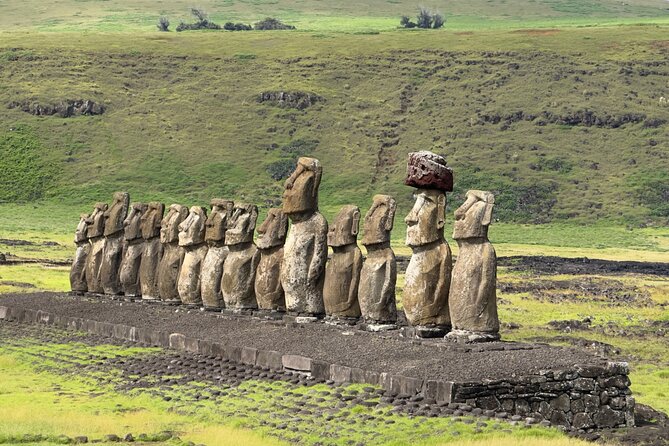
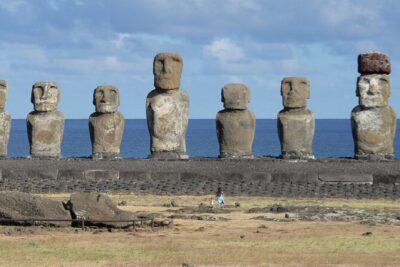
Ahu Tongariki is described as the largest ceremonial center in the Pacific, again tied to restoration after the Valdivia earthquake tsunami, with the tour repeating the Tadano and Sano role in the recovery. It is also known as the platform of the 15 moai.
This stop is shorter than Rano Raraku, about 1 hour, but it is often the moment when the day clicks visually. Seeing moai grouped like this changes how you interpret their scale and alignment. Your guide will likely connect the platform layout back to ceremonial and communal meaning, which is why the storytelling stops earlier in the route matter.
Entrance at Tongariki is listed as not included, so treat it as another fee checkpoint. If you are trying to keep things smooth, have your National Park admission ready and your cash or payment plan sorted before arriving.
Stop 5: Ahu Te Pito Kura, Paro moai scale plus the magnetic-stone story
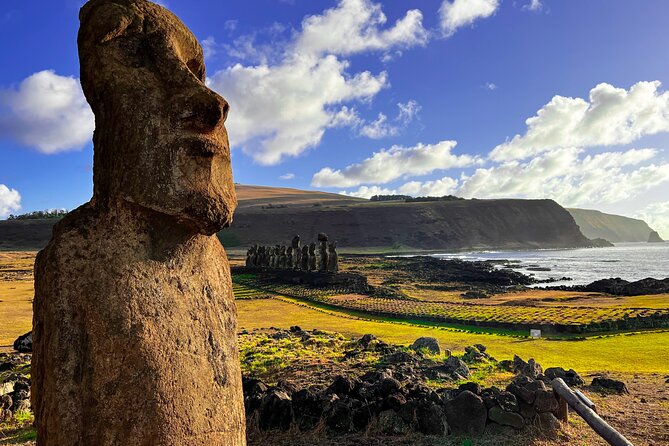
At Ahu Te Pito Kura, you get one of the tour’s most specific wow facts: the largest moai on its platform, the Paro moai. The tour description gives the scale as 10 meters high and about 88 tons, and it notes it was crowned as the largest on its platform.
Nearby is another element that adds a science-flavored twist to the visit. The tour calls out a round magnetic stone that can disorient compasses, plus the mention of particular energies. You do not need to treat this like a lab experiment to enjoy it. Just be ready for a guided moment where you learn what locals claim and how that connects to the site’s mystique.
Time here is about 30 minutes, and entrance is not included. This is a good stop for quick questions like: Why that particular location? Why build this moai on this platform? Those questions help you turn facts into understanding instead of just collecting pictures.
Stop 6: Anakena Beach, free time, white sand, palm shade, and moai nearby
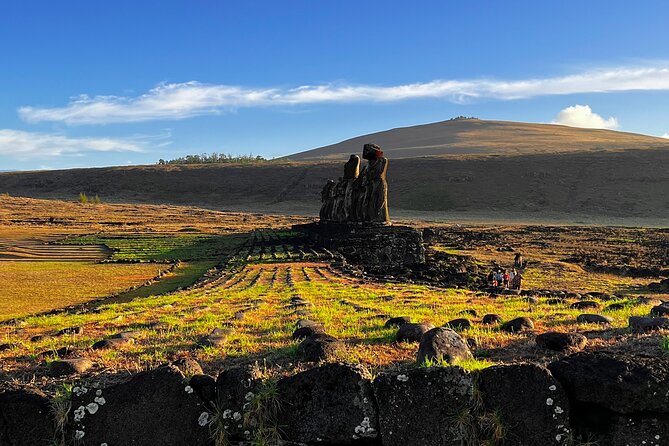
To end strong, you head to Anakena Beach, and it is listed as free for admission on this tour. The name given here is Hanga Rau o Te Ariki, meaning king’s landing bay, and the tour frames it as an intended colonization location led by Hotu Matu’a.
Over time, the tour says Anakena became an exclusive royal space, and it pairs that meaning with a practical reality: white sand and crystal clear waters, plus palm trees and moai in view. You get about 1 hour here, so it is not a full beach day, but it is enough time to cool down and reset.
Also, the end of the tour is where you usually appreciate small comforts. Some beach areas include shade and places to buy food and drinks nearby, and this is the kind of stop where you can choose between a calmer stroll and staying put under shade for a snack.
If you want to swim, you will need to follow what is allowed on-site. The tour description highlights clear water, but it does not spell out rules, so just stick to local guidance.
What kind of guide experience you should expect in English
This tour is offered in English, and the difference between a good and a great guide on Rapa Nui is how they handle context. With a full circuit day, you need stories that are understandable in real time, not facts dumped at speed.
Guides like Aranui and Nico have shown a knack for storytelling that works for mixed groups, including a young 9-year-old alongside adults and seniors. That matters because this itinerary has a lot of moai-specific detail, and kids tend to disengage if the pacing is too lecture-like.
The best way to get value from your guide is to ask one question before each major site. Example: What should I notice first here? How does this connect to what we saw at the last platform? If you do that, the day will feel less like a checklist.
Comfort and timing: how to make pickup smooth and avoid a late start
Pickup is convenient because you are not figuring out island logistics. Transport and pickup and drop-off are included, but the pickup window matters.
Be ready for pickup starting 9:30 AM onwards, and do not treat the start time like a precise appointment. If your accommodation pickup area is unclear, you should provide a reference to help the driver find you. If you are outside Hanga Roa, confirm whether you have an alternate meeting point or possible extra cost.
One more timing tip: keep a screenshot or physical proof of your National Park purchase, even if the operator uses mobile tickets for the tour itself. Confusion around which fees are already covered can create avoidable delays. The simplest fix is to verify the park entry requirement well before pickup.
Is the Moai Trail good value for your first Rapa Nui day?
If you are visiting Rapa Nui for a limited time, this is good value because it bundles transport, a guided framework, and multiple major sites into one day. At $110, you are not paying for just “seeing things,” you are paying for stitching the meaning together so the moai do not feel random.
But your value equation depends on your budget for entry fees. The big $100 National Park fee is separate, plus several stop admissions are marked not included, while others like Rano Raraku and Anakena are free within this program. So plan for a total spend that is higher than the base tour price.
You will likely feel this is worth it if you:
- Want a structured first day on Rapa Nui
- Like guided explanations that connect sites and stories
- Prefer small-group pacing rather than a huge group bus
- Are okay with a full day that includes multiple stops and driving
You might reconsider if you:
- Hate paying multiple separate admissions in one day
- Want a super relaxed beach-first schedule
- Are hoping the tour price covers all park and site entry fees, because it does not
Should you book the Moai Trail?
Book it if you want an organized, English-guided route that shows you moai sites in context, including replica village learning and a strong finish at Anakena Beach. The small group size and local guiding style make it easier for different ages to stay engaged, and the stop at Rano Raraku with the restoration story adds depth beyond the postcard version of Rapa Nui.
Skip it or ask more questions first if you cannot budget for the Rapa Nui National Park admission and the separate site fees at several stops. If you get the paperwork and tickets handled early, this tour becomes a smooth, meaningful way to see more of the island in one day.
FAQ
Do I need to buy Rapa Nui National Park tickets?
Yes. Entrance to Rapa Nui National Park is not included in the tour price. You need to purchase it separately before the tour for $100 per person, or CLP40,000 per person for Chileans.
What time does the tour start, and when is pickup?
The tour starts at 9:30 AM. Pickup happens within a time span, usually from 9:30 AM onwards, depending on where you are staying. Be ready 5 to 10 minutes before the estimated pickup time.
How long is the Moai Trail tour?
The duration is approximately 6 to 8 hours.
Is pickup and drop-off included?
Yes. Pickup and drop-off are included, and the tour also includes transport and a local guide.
Is lunch included?
Lunch is not included unless indicated. Snacks are also not included.
Which stops have free admission on this tour?
Based on the tour information, Rano Raraku and Anakena Beach are listed as free for admission. Other stops are listed as not included for admission fees.
What is the group size and language?
The tour has a maximum of 10 travelers and it is offered in English.
Freshly reviewed in Hanga Roa
- Astronomical Tour on Easter Island★ 3.5 · 3 reviews
- Full day Private Tour: Poike Walk through the abandoned area★ 4.5 · 3 reviews
- T1-THE GRAND TOUR (non-cruise visitors)★ 5.0 · 3 reviews
- 4-Days Trip to Discover Easter Island★ 4.0 · 3 reviews
- Private 2 Days Essential Tour of Easter Island★ 5.0 · 4 reviews
- T2-THE MUST-HAVES OF RAPA NUI (non-cruise visitors)★ 4.5 · 4 reviews
- Private Tour: Easter Island Caves★ 4.5 · 4 reviews
- Private Tour: The Highlights of Easter Island★ 5.0 · 4 reviews
Easter Island Tours, compared.
Two days of Full Day Tour of Rapa Nui + Sunrise in Tongariki
Read our review →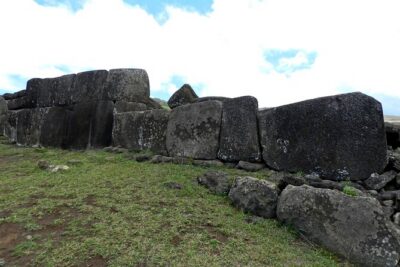
2-Day Private Tour Easter Island Highlights Complete Discovery
Read our review →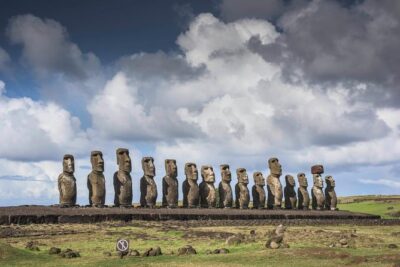
Private Tour: Full Day Easter Island Highlights
Read our review →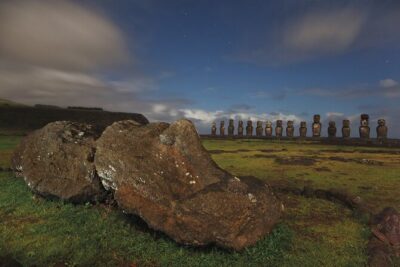
Browse the lists this tour appears in