
Reviewed · EASTER ISLAND TOURS
Full Day Tour – The Land of Hotu Matu´a
This tour is interesting because it connects the dots between where the moai were made and where they ended up. You move site to site, and the day feels like a guided timeline, not a checklist of rocks.
I like the small group size (max 9), because it keeps the pace human and makes it easier to get your questions answered. And I really like the way the guide story-tells the island, with names like Hannah, Hagita, and Hana showing up in past groups for their depth and energy.
One consideration: the Rapa Nui National Park entrance ticket is not included, and lunch is also not included. So I recommend planning your budget for those two items so the day stays smooth.
Key things that make this tour worth your time
- Moai from quarry to coast: you see Rano Raraku and then the restored platforms by the sea on the same day.
- Ruins that explain what you are looking at: Ahu Vaihu and Ahu Akahanga focus on demolished platforms and fallen moai.
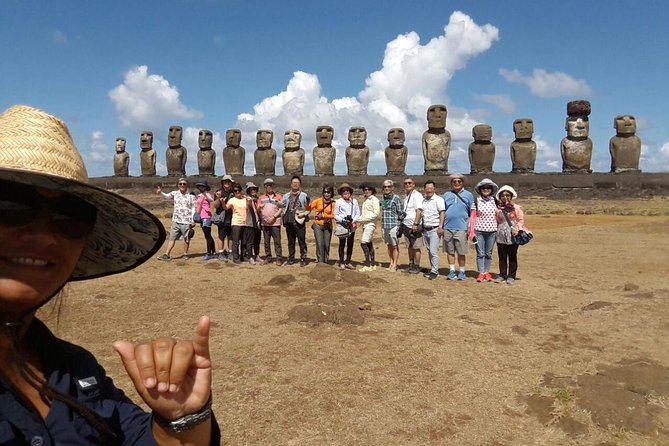
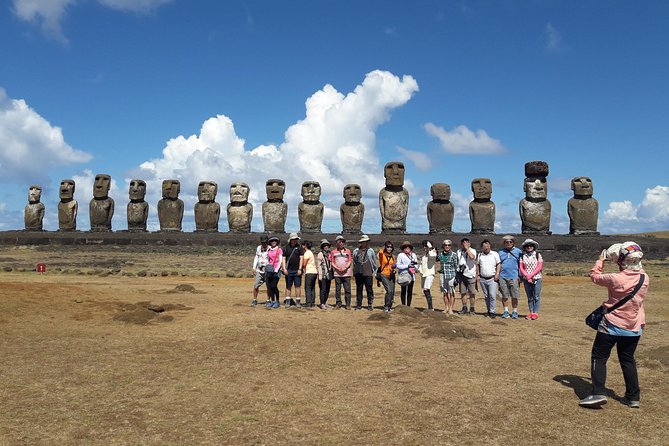
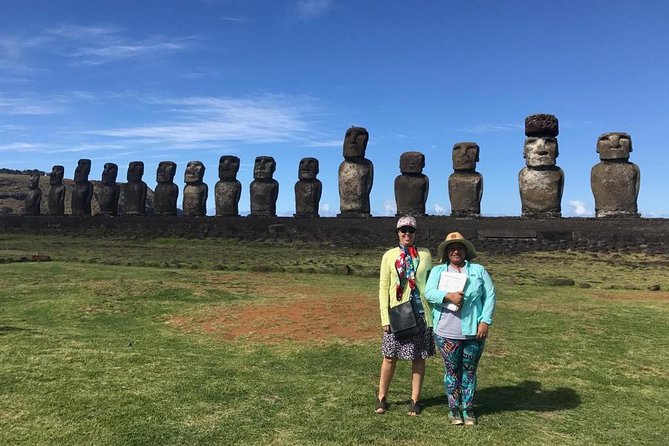
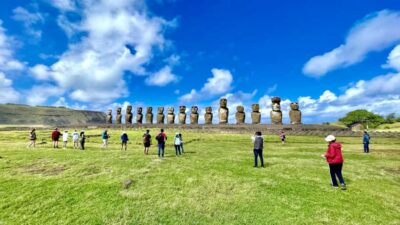
- Ahu Tongariki scale: the largest restored platform on the island, with 15 moai.
- Te Pito Kura curiosity factor: the famous magnetic stone plus a moai on its old platform.
- Up to 9 people: less waiting around, more time to talk with the guide.
- Pickup flexibility: the operator can pick up from different accommodations and adjust the schedule if needed.
Why the Hotu Matu’a route makes sense in one busy 7-hour day
If you only have one full day on Easter Island, this kind of route is smart. The itinerary is built around the island’s big moai story beats: the places tied to carving, the places tied to ancient living and ceremonial sites, and the places tied to the most famous views.
The pacing also works for real humans. You are not trying to sprint between far-flung locations. Instead, the day spreads time across six stops, with shorter visits (around 30 to 40 minutes) at the platforms and longer focus time at the quarry.
Another plus is how the route balances “wow” factor with “why it matters.” You will see the iconic restored sites, but you also spend time at locations that include ruined or toppled elements. That mix helps you understand what you are seeing instead of just photographing it.
A few more Hanga Roa departures to weigh up
- From Hanga Roa: Rapa Nui Culture Sightseeing Tour
★ 4.6 · 307 reviews - From Hanga Roa: Easter Island Highlights 2-Day Tour
★ 4.3 · 205 reviews - Full Day Tour in Rapa Nui
★ 4.5 · 122 reviews
Price and what you actually get for $177.09
At $177.09 per person for roughly 7 hours, you are paying mainly for two things: guided interpretation and transportation. The tour includes an air-conditioned vehicle, which matters on a hot island day, even if the humidity varies.
What you do not get is the budget line items that often surprise first-timers: lunch and the entrance ticket to Rapa Nui National Park. Those exclusions matter because this tour hits multiple protected sites. If you only skim the main price, the final day cost can creep up.
So I think of this as value if you want:
- an efficient, structured moai overview in one day
- a guide who can explain the meaning of platforms, ruins, and the moai placement choices
- a smooth door-to-door start via pickup
If you prefer total freedom, you might spend less by hiring a rental or going DIY. But you will likely spend that savings on time, confusion, and missed context. With this tour, you are paying to reduce friction and increase understanding.
Pickup, small group flow, and the physical reality check
You get pickup from different accommodations, and the operator is flexible with the schedule if you want a slightly different timing. That sounds routine, but it is actually useful on Easter Island, where traffic and walking time can throw off tight plans.
The group cap is 9 travelers, which is a big deal on sites where space is limited and walking paths get narrow. In smaller groups, you can hear the guide and you have a better chance of keeping together at each stop.
The activity calls for moderate physical fitness. Translation: expect some uneven ground, plus time standing and walking between viewpoints and platforms. It is not described as strenuous, but it is also not a sit-down-only tour.
Stop 1: Ahu Vaihu, the replica village and what happened to the moai
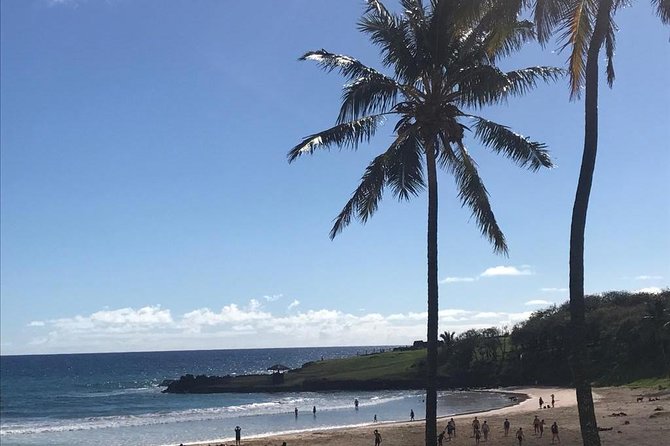
Ahu Vaihu is one of the places that sets the tone for the day by showing the island’s more broken side. You get about 40 minutes here, and the focus is on a replica village, a ruined platform, and moai that were demolished.
That matters because early on you learn not to look only for “perfect restorations.” Easter Island’s history includes interruption, collapse, and shifting uses of sacred spaces. Seeing demolition and ruin helps you understand why some sites look incomplete or scattered.
A practical note: since Ahu Vaihu is part of the protected circuit, you’ll want your Rapa Nui National Park entrance ticket ready. Plan around the need for that, because it is usually the one thing that can slow the start if you forget.
The other half of a Hanga Roa week:
- 2-Day Private Tour Easter Island Highlights Complete Discovery
★ 5.0 · 110 reviews - Private Full-Day Easter Island Highlights North and West
★ 5.0 · 84 reviews - From Hanga Roa: Journey from Orongo to Ana Te Pahu
★ 4.3 · 75 reviews - Journey of the Ancestors: Tongariki, Rano Raraku & Anakena Beach
★ 4.5 · 70 reviews
Stop 2: Ahu Akahanga, ruined platforms, old village traces, and moai lying down
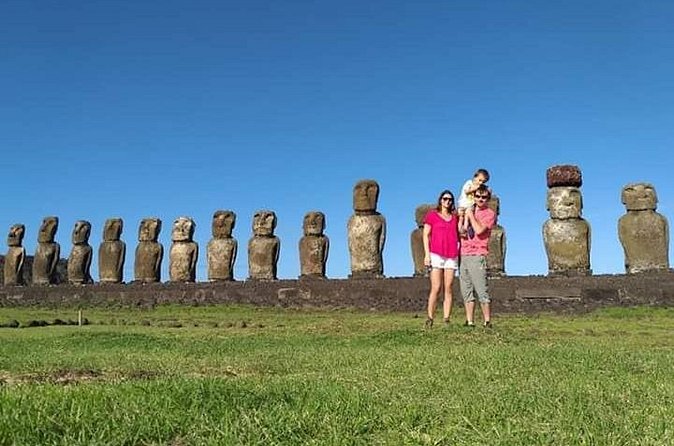
Next is Ahu Akahanga, also around 40 minutes. This stop concentrates on archaeological vestiges: ruined platforms, remains tied to an old village, and moai that are lying down.
What I like about this stop is that it gives your brain something to compare. After seeing a village replica and demolition at Ahu Vaihu, you come here and see more layers of settlement evidence. It nudges you from “tourist moai mode” into “archaeology mode,” without turning the day into a lecture.
The downside is also similar to most ruins-focused stops: views can be less dramatic than the fully restored icons. If your only goal is the postcard lineup of moai, this one might feel a bit less flashy at first glance. Still, it adds clarity fast once you start noticing the platform layout and the way sites were used.
Stop 3: Rano Raraku volcano and quarry, where moai were carved
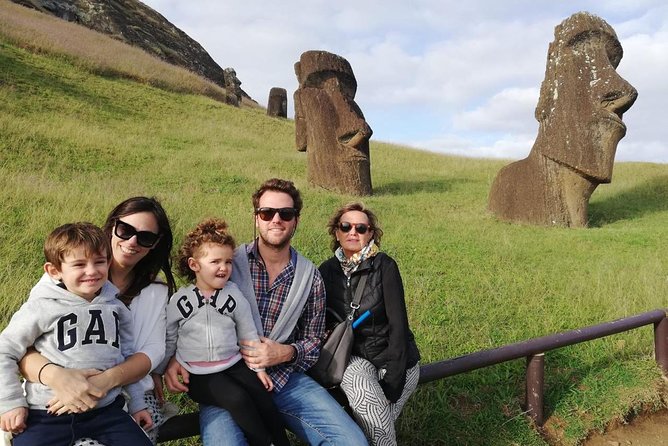
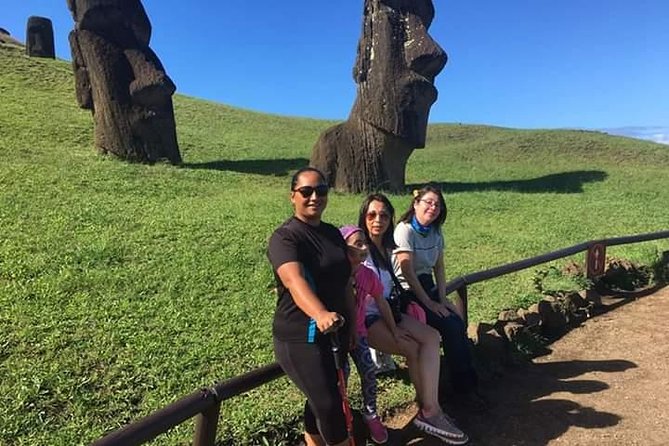
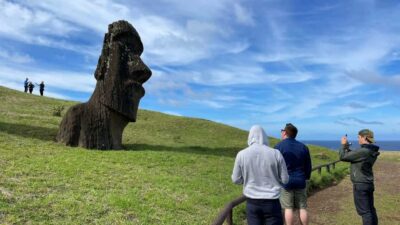
This is the big time block, about 2 hours at Rano Raraku. You are at the volcano and quarry where moai were carved, which is the closest you will get to the “moai made here” idea in one day.
I like this stop because it changes how you interpret the rest of the itinerary. When you are standing near the rock source, you can better picture the scale of the carving work and why these sites were such major undertakings.
A realistic tip: two hours at a quarry means you will spend time moving around and absorbing the terrain. If you are the type who enjoys details, this is where you will slow down naturally. If you rush, you might want to slow yourself down here because it is the most concept-driving stop on the route.
As with the other major sites, budget for your park entrance ticket, since entrance is not included with the tour.
Stop 4: Ahu Tongariki, the biggest restored platform with 15 moai
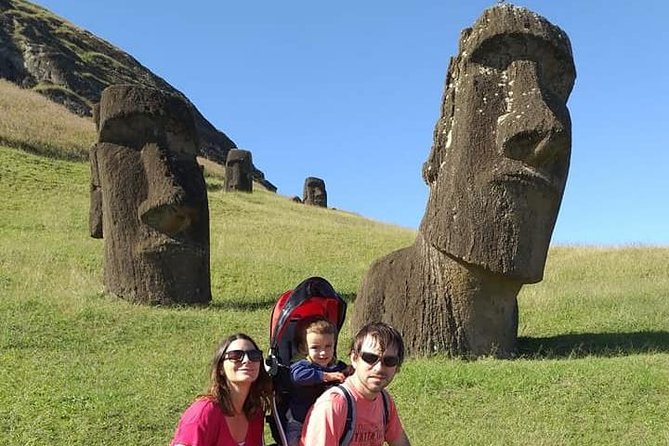
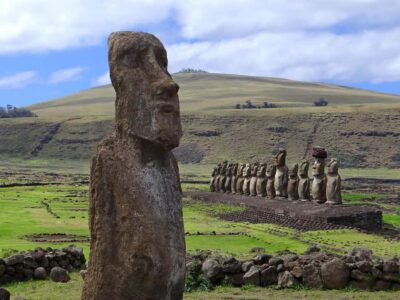
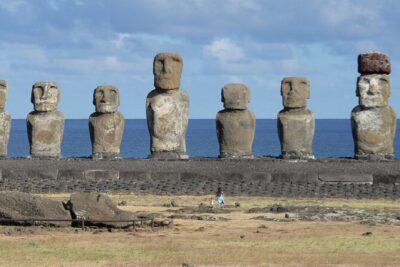
Ahu Tongariki is the headline platform stop for many people, and it is easy to see why. You get about 40 minutes at what the tour describes as the island’s largest restored platform, featuring 15 moai.
This is where the day turns into pure impact. The number helps, but so does the overall platform shape and the way the figures align. It is not just seeing a moai, it is seeing a whole composition.
One consideration: because Tongariki is such a star, it can feel more crowded than the ruins-focused stops. In a group of up to 9, it stays manageable, but I still recommend taking a breath before you start walking, then choose your angles instead of trying to see everything at once.
Also, because Tongariki is a park site, have your entrance arrangements handled ahead of time.
Stop 5: Ahu Te Pito Kura, the magnetic stone and a moai on its old platform
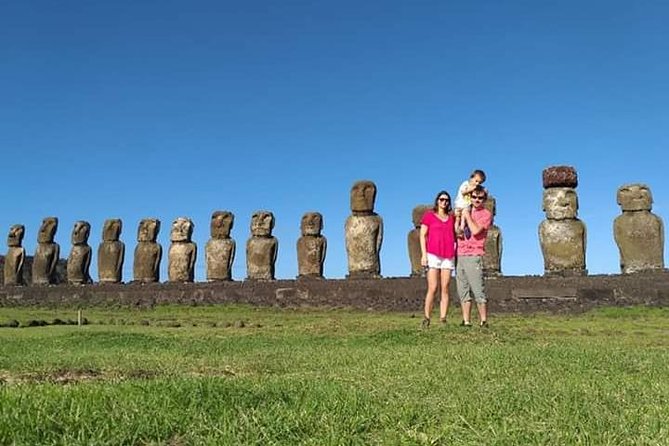
Te Pito Kura is shorter at 30 minutes, but it delivers a memorable hook. You will see the famous magnetic stone and a moai that lies on its old platform.
I like this stop because it adds a bit of mystery to the day. You are not only learning about platforms and carving, you are also hearing about the island’s famous oddities that people still talk about.
This is also a good stop to ask questions. With the time window, you can use the guide to connect the dots between what you saw earlier at the quarry and what you are now seeing at a symbolic or science-linked site. Since the tour is offered in English, you can get a clear explanation without hunting for translations.
Stop 6: Anakena Beach, restored platforms by the sea
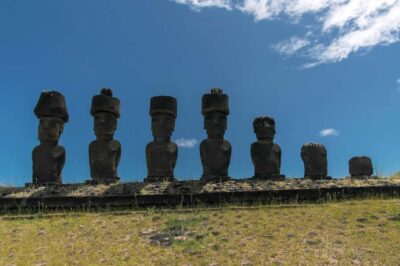
The final stop is Anakena Beach, about 1 hour. The focus here stays archaeological, with restored moai platforms in place.
This is the emotional payoff of the day. After spending hours on volcanic rock, platforms, ruins, and moai in different states, you end the route by placing everything next to the sea. You start understanding why certain locations mattered for ceremonial life, and why restoration efforts keep returning to these recognizable coastal settings.
One practical point: the beach portion is where footwear and comfort matter most. It is worth thinking about a comfortable walking option and sun protection because you are finishing outdoors.
What a great guide adds, and why Hannah, Hagita, and Hana get highlighted
The strongest part of this experience, based on how past groups describe it, is the guide. Names that come up are Hannah, Hagita, and Hana, and the common thread is how their island stories feel specific rather than generic.
I also like the practical way good guides handle real life. One of the comments I took to heart was how a guide and driver handled different pickup arrival times by waiting and still keeping the group moving through the best parts, without skipping key stops. That is the difference between a tour that looks great on paper and a tour that still feels satisfying when timing slips.
So if you book, prioritize the guide quality you get with this operator. The day’s success is less about rushing and more about interpretation, especially on a place where the details matter.
Tips to help your day feel relaxed, not rushed
Here are the small things that pay off in a long 7-hour circuit, especially on a day that includes ruins and a quarry.
- Plan lunch timing: since lunch is not included, either eat before pickup or pack a simple plan for after the tour.
- Bring sun and wind basics: even if the weather is good, exposed outdoor stops can feel intense.
- Wear shoes you trust: you will be walking on uneven ground and around archaeological areas.
- Keep your park ticket ready: the entrance ticket to Rapa Nui National Park is not included, and missing it can slow the day.
- Come with questions: this tour gives you multiple angles on moai placement and meaning, so ask for comparisons between stops.
Also, the tour requires good weather. If conditions are poor, you should expect the operator to offer a different date or a full refund. On an island, weather affects more than photos, it affects how comfortable the walking feels.
Should you book the Land of Hotu Matu’a full-day tour?
I would book this if you want a guided “moai story” in one day, with transportation handled and a small group pace. The itinerary hits the quarry (Rano Raraku), the biggest restored platform (Tongariki with 15 moai), and the beach setting at Anakena, plus two ruins-heavy stops that explain why sites look the way they do today.
I would hold off if you dislike archaeology-focused stops. Ahu Vaihu and Ahu Akahanga are about demolished and lying moai, not perfect symmetry. Also, if you are on a tight budget, the base price is only part of the total, because lunch and the national park entrance ticket are not included.
If you do book, treat the park ticket and meal plan as part of the booking, not an afterthought. With that handled, this becomes a smart, efficient way to see Easter Island’s moai world from the source to the shore.
FAQ
How long is the full day tour?
The tour lasts about 7 hours.
Is pickup included?
Yes. Pickup is offered from different accommodations, and you can request flexibility with the schedule if you prefer.
Is the tour offered in English?
Yes, the tour is offered in English.
What is not included in the price?
Lunch and the entrance ticket to Rapa Nui National Park are not included.
How big is the group, and what fitness level do I need?
The tour has a maximum of 9 travelers, and it calls for a moderate physical fitness level.
What happens if I cancel or the weather is bad?
You can cancel for a full refund up to 24 hours before the experience start time. The experience requires good weather, and if it is canceled due to poor weather, you will be offered a different date or a full refund.
Freshly reviewed in Hanga Roa
- Astronomical Tour on Easter Island★ 3.5 · 3 reviews
- Full day Private Tour: Poike Walk through the abandoned area★ 4.5 · 3 reviews
- T1-THE GRAND TOUR (non-cruise visitors)★ 5.0 · 3 reviews
- 4-Days Trip to Discover Easter Island★ 4.0 · 3 reviews
- Private 2 Days Essential Tour of Easter Island★ 5.0 · 4 reviews
- T2-THE MUST-HAVES OF RAPA NUI (non-cruise visitors)★ 4.5 · 4 reviews
- Private Tour: Easter Island Caves★ 4.5 · 4 reviews
- Private Tour: The Highlights of Easter Island★ 5.0 · 4 reviews
Easter Island Tours, compared.
Two days of Full Day Tour of Rapa Nui + Sunrise in Tongariki
Read our review →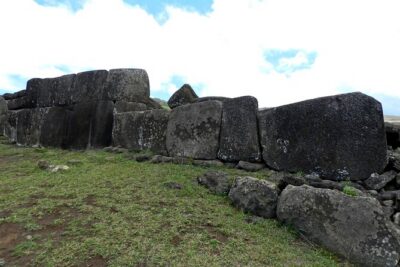
2-Day Private Tour Easter Island Highlights Complete Discovery
Read our review →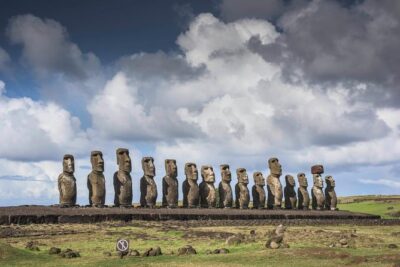
Private Tour: Full Day Easter Island Highlights
Read our review →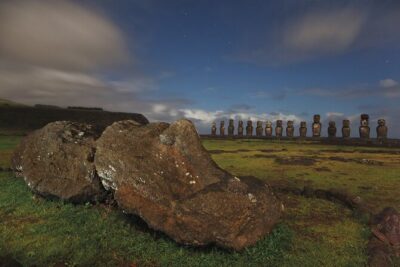
Browse the lists this tour appears in