
Reviewed · EASTER ISLAND TOURS
Private Tour: The Highlights of Easter Island
If Easter Island feels like a giant open-air museum, this private tour is the way to make it feel personal. You’re not just driving from one famous spot to the next, you’re connecting the dots between settlement sites, ceremonial power, and the moai-making workshops.
I like the true private format because you can shape the day around your pace, and you can avoid the crowded, hurry-up feeling that can flatten the experience. I also love how the route mixes the big-name moai stages with quieter, more “how did they live and work here?” stops. One drawback to plan for: it is a full day on uneven ground and sun, and there’s no lunch included, so you’ll want to bring snacks and water habits that work for you.
Key highlights you should know before you go
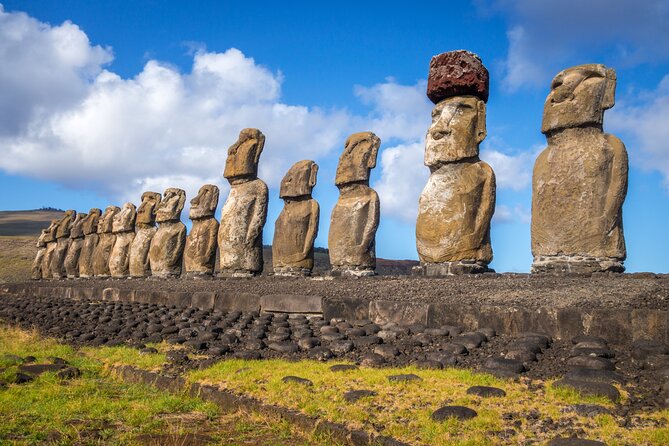
- Ahu Tongariki’s 15-moai line-up on a 100-meter altar, restored after major destruction
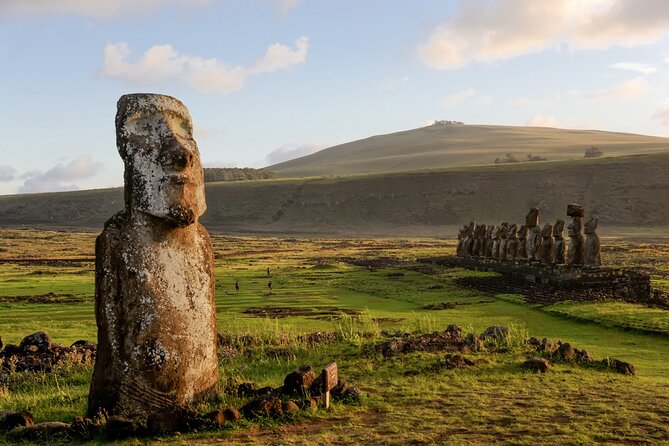
- Anakena + Ahu Nau Nau with moai restored in a sand-protected way after their destruction
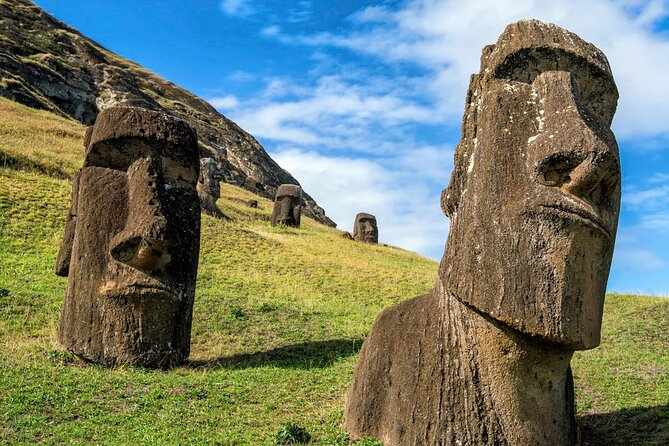
- Rano Raraku quarry time to see unfinished statues and the niches where moai once stood
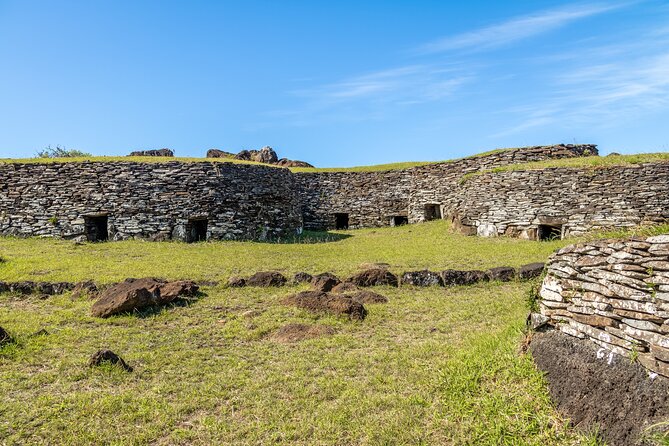
- Orongo’s Tangata Manu birdman ritual setting with over 1,700 petroglyphs
- Flexible guidance from local experts, including off-the-beaten-track moai visits when it fits your plan
A private day built around the Rapa Nui story
This is the best kind of Easter Island tour for people who want more than photos. You start in Hanga Roa, get picked up from your hotel, and spend the day seeing why Rapa Nui’s power centers were placed where they were. The “highlights” label is accurate, but it doesn’t stop at postcard views.
The day is designed for one group only. That means your guide can explain, pause, and re-route based on what you care about. In practice, that flexibility matters on an island where weather, footing, and sight lines can change quickly.
The other big value point is timing and logistics. The tour runs about 7 hours, starts at 9:00 am, and pickup is around 9:30 am unless you agree on a different time. With hotel pickup, an A/C vehicle, and bottled water included, you’re not wasting energy on transport math.
The price is $200 per person. For Easter Island, that’s a premium over shared group options, but it’s also what you’re paying for: a private, accredited local guide and the ability to see all the core sites in one packed day without feeling rushed in the same way group tours often do.
A few more Hanga Roa departures to weigh up
- From Hanga Roa: Rapa Nui Culture Sightseeing Tour
★ 4.6 · 307 reviews - From Hanga Roa: Easter Island Highlights 2-Day Tour
★ 4.3 · 205 reviews - Full Day Tour in Rapa Nui
★ 4.5 · 122 reviews
The start of your route: Anakena Beach and the moai you can read like clues
You’ll head to Anakena Beach first for about 1 hour with admission covered. This is where Easter Island’s origins feel closest to legend. The area is tied to Hotu Matu’a, the first king in Rapa Nui tradition, and it’s been viewed as a cultural cradle for the early settlement.
What makes Anakena more than “a pretty beach” is the archaeology. You’re looking at ceremonial centers, residential areas, and ahus, including:
- Ahu Ature Huki, with a single moai
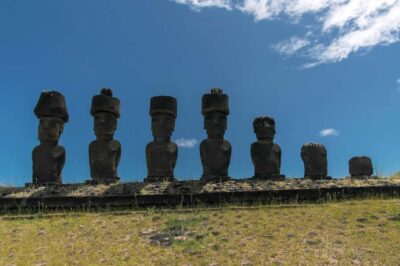
- Ahu Nau Nau, with seven moai that are famously well preserved
The Ahu Nau Nau detail that I think matters most is the restoration story. The moai were originally destroyed, and later protected from weathering by being buried in sand. So when you look at them, you’re seeing both ancient craftsmanship and the modern decision to preserve what survived. It’s one of those places where the meaning comes from context, not just size.
Potential drawback: Anakena can mean wind and sun, and you’ll be out in open areas for part of the stop. Bring sunglasses and a hat, and expect to move over sandy or uneven ground near the archaeological areas.
Tongariki’s 15 moai: why the biggest ahu is a “see it once” moment
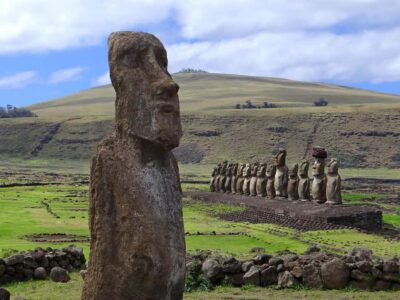
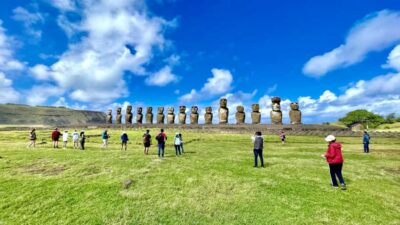
Next up is Ahu Tongariki for about 1 hour, also with admission included. This is widely treated as the grand showpiece of Easter Island, and for good reason: it’s the largest ceremonial structure on the island, associated with a religious and sociopolitical center dating back to about 900 AD.
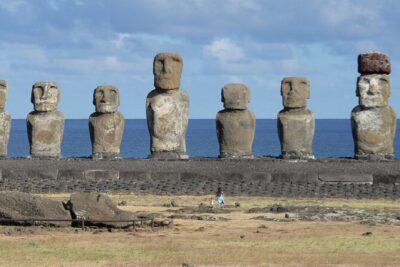
Tongariki holds 15 moai set on a 100-meter-long altar. The moai are not identical clones. Their faces show different shaping and expression, so when you stand there, you can actually start to think like the carvers. It’s like seeing a family portrait drawn with different hands.
There’s also a restoration angle here that adds value to your visit. The site was devastated, and later restored so you can experience the monument in something close to its original monumental alignment. That matters because without restoration, Tongariki would be mostly a story. With it, you can understand the scale of the sacred construction system.
Practical tip: plan to arrive ready to look slowly. The site rewards time spent on details like placement, symmetry, and the way the line of figures pulls your gaze forward.
Rano Kau: the short stop that changes your sense of the island
Then you shift from carved stone to natural structure at Rano Kau, around 30 minutes, with admission free. This is one of the most striking crater settings on Rapa Nui. The crater is about 1.5 kilometers across and has the island’s largest reserve of endemic flora.
Rano Kau also served real life needs in the past. Its lake was used as a drinking water source, and volcanic regions nearby were linked to obsidian resources. Obsidian appears tied to areas like Maunga Orito and Maunga Te Manavai, with the idea that this stone supported tool and artifact making.
Why I like this stop on a highlights route: it reminds you Easter Island was not just rituals and statues. It was also ecology, water, and materials. A 30-minute stop might sound brief, but this is the kind of place where a short pause can reset your understanding.
The other half of a Hanga Roa week:
- 2-Day Private Tour Easter Island Highlights Complete Discovery
★ 5.0 · 110 reviews - Private Full-Day Easter Island Highlights North and West
★ 5.0 · 84 reviews - From Hanga Roa: Journey from Orongo to Ana Te Pahu
★ 4.3 · 75 reviews - Journey of the Ancestors: Tongariki, Rano Raraku & Anakena Beach
★ 4.5 · 70 reviews
Ahu Akivi: the “interior ahu” that faces the sea and asks you to look twice
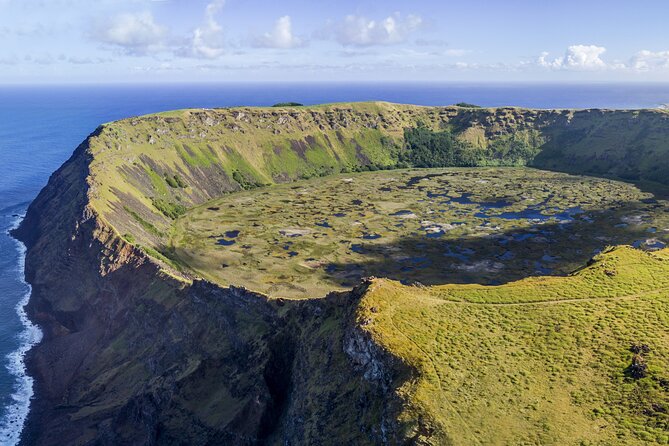
Next is Ahu Akivi for about 30 minutes, with admission included. This site is unique because it’s an interior ahu with an astronomical orientation and a restoration milestone that marked a key moment in more recent work.
Ahu Akivi is linked to the Miru clan and features seven moai. The setting is important because these statues face the sea, unlike many other moai placements. You also get a strong sense of effort and planning: the moai were transported about 15 km from the Rano Raraku quarry.
If you want a deeper interpretive moment, Akivi fits the theory that the seven statues may symbolize the first explorers or ancient Polynesian kings. Even if you don’t buy every interpretation fully, the orientation and “why here?” placement forces you to think beyond the usual moai-tour rhythm.
Potential drawback: since it’s a short stop, you’ll get the most out of it if you show up curious and let the guide’s explanation shape what you look for.
Rano Raraku quarry: where you finally see moai as a making process
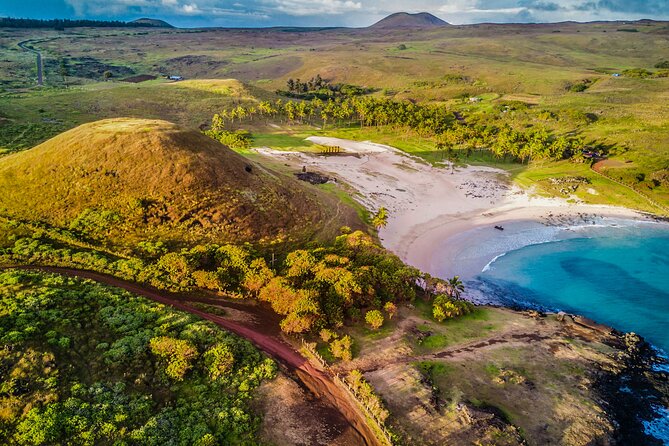
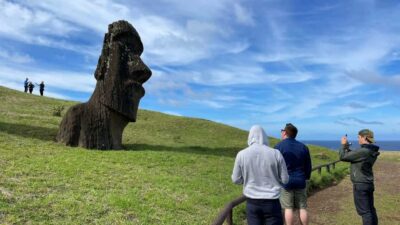
For 1 hour 30 minutes, you’ll visit Rano Raraku, the volcanic quarry where the moai were produced. Admission is included. This is one of the most valuable stops on the itinerary because it answers the big question: how did they turn stone into figures?
Rano Raraku is made from volcanic tuff. That raw material gave sculptors the surface they needed to carve the icons. The quarry is also linked to the nearly 1,000 moai found across the island. And on site you can see quarrying artifacts in a very direct way: stone heads and figures scattered across the southern slope, plus unfinished statues and empty niches.
This is the place where your brain shifts from “look at the moai” to “watch the labor.” It also reframes why there are so many statues in different stages. A workshop system is different from a completed-monument system. Here, you’re seeing a culture at work.
Practical note: you may walk over uneven ground. If you have any mobility concerns, talk to your guide ahead of time so they can pace your route appropriately.
Tahai at dusk-level scale: smaller sites, smarter clues
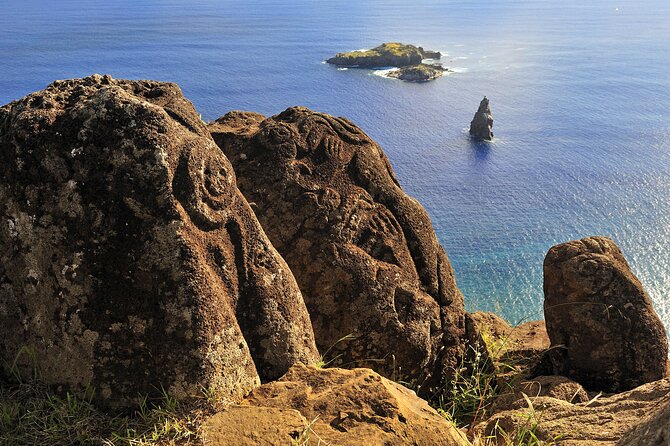
Next is Ahu Tahai, about 40 minutes, with admission included. This is a ceremonial complex linked to the Marama and Miru clans. If you’ve been focusing on massive, coastal monuments, Tahai feels like a different conversation.
The restoration work associated with archaeologist William Mulloy helped reveal something people love to hear in person: the area likely supported a settlement, with estimates of 75 to 200 people living there. Nearby caves and rocky shelters may have served as living spaces. That turns Tahai from “a place with platforms” into “a place where people actually put daily life next to ceremonial power.”
You’ll also see three ahu or ceremonial platforms. One particularly interesting detail is the stone ramp between Ahu Vai Uri and Ahu Tahai. It’s believed to have been used to lower fishing boats from an upper level to the shore. That’s practical engineering, not just symbolism.
Why this stop is worth your time: it’s a reminder that Rapa Nui culture had both ritual and logistics. The moai weren’t isolated art. They were part of a functioning system.
Orongo and the birdman ritual: the most “alive” stop on the island
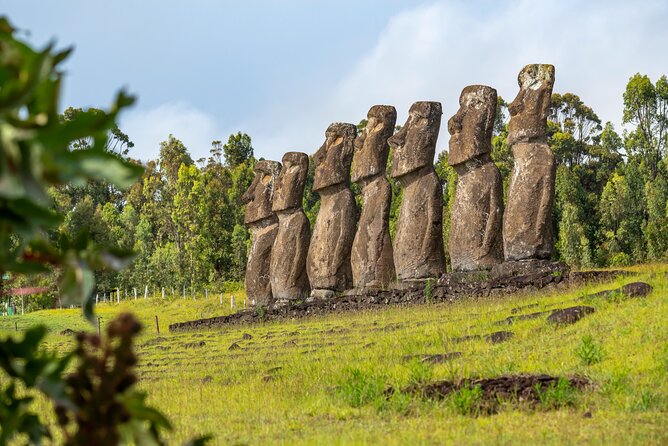
Finally, you reach Orongo, for about 1 hour, with admission included. Orongo is tied to the ancient ritual called Tangata Manu, known as the birdman competition. This was held in honor of the creator god Make Make, and the prize system determined who became the birdman for the season.
The setting is built for drama and movement. You’ll also see evidence of ritual houses around the competition period, with early constructions around 1400 AD. What makes Orongo stand out as a viewing experience is the rock art. The area is surrounded by over 1,700 petroglyphs, giving it the densest concentration of rock art on the island.
And the ritual itself helps you understand why people would risk cliffs, cold water, and long effort. It involved representatives from different clans descending the cliff, swimming to Motu Nui, and waiting for seabirds to arrive to obtain the first Manutara egg. The competition also emerges from political and religious change, when older authority lost prestige and rival groups competed for power.
Potential drawback: Orongo can mean more steps and closer cliff-edge areas. If you’re traveling with knee trouble or you just don’t like heights, take it slowly and ask your guide to help you pick the safer viewing points.
Price, value, and what you are really buying
At $200 per person, this isn’t the cheapest way to see Easter Island. It’s also not meant to be.
You’re paying for:
- A private, personalized route for only your group
- An accredited local guide (English offered)
- Hotel pickup and drop-off
- Transport in an air-conditioned vehicle
- Bottled water
- Admission included for the stops on the route, plus a note that the national park fee is not included
Here’s the value math that helps most people decide. If you’re traveling as a couple or small group, private transport plus a guide who can manage timing and explanations can save you mental effort. Even better, the private format can prevent your day from feeling like a checklist.
Also, the tour is typically booked around 138 days in advance on average. That’s a useful hint. If you’re set on dates during busier periods, lock it in early so you’re not stuck with whatever else is available.
One more practical note: lunch is not included. That doesn’t ruin the day, but it does mean you should plan snacks. Easter Island sun can make you hungry fast, and it’s better to eat calmly than to rush food between sites.
What makes the experience feel special on a private tour
Let’s be honest, moai are impressive no matter what. The difference here is pacing and interpretation.
On a private tour, I like the way you can ask follow-up questions without feeling like you’re holding up a van full of people. You can also shift your attention. For example:
- You can spend more time at Rano Raraku if you’re into the “how it was made” side.
- You can let Orongo run longer if you want the ritual context, not just petroglyph pictures.
- You can treat Tahai as your quieter reset when the bigger sites start to blur together.
The guide flexibility also matters. In this case, one guide name comes up strongly, Joaquin, praised for both deep knowledge and for being adaptable with how the day is planned. If you’ve already seen one moai area on your own, you can still fit this tour smoothly and let the route logic work for you instead of forcing repeats.
Who this tour is perfect for
This fits best if you:
- Want a full-day “highlights” sweep without joining a big group
- Care about explanations, not just quick photo stops
- Prefer a plan that can adjust to your interests and any partial pre-planning you’ve done
- Like the idea of seeing both the ceremonial icons and the places tied to making and living
It may be less ideal if you want a totally relaxed, slow-paced day with lots of independent wandering. This is structured. It’s also timed for about seven hours, so plan to be outside for most of it.
Should you book this Highlights of Easter Island private tour?
If you want a single, well-organized day that hits the main Rapa Nui power points, I’d lean yes. The itinerary covers the origin setting at Anakena, the scale of Tongariki, the practical world at Rano Kau, the orientation puzzle of Ahu Akivi, the workshop logic of Rano Raraku, the lived-in clues at Tahai, and the ritual intensity of Orongo.
Book it if you value a private setup, hotel pickup, and a guide who can keep the story coherent. Consider another option or add extra planning if you hate walking on uneven ground, you are sensitive to sun, or you want long meal breaks, since lunch isn’t included and the day is packed.
If you’re choosing one way to see Easter Island without stress, this is a strong candidate.
FAQ
How long is the Highlights of Easter Island private tour?
It’s about 7 hours (approx.).
Where does the tour start and what is the pickup timing?
The tour is based in Hanga Roa, and pickup is offered from your hotel. Pickup is around 09:30 am unless you agree on a different time. The start time is 9:00 am.
Is this a private tour or a shared group tour?
It’s a private tour/activity, so only your group participates.
What language is the tour offered in?
The tour is offered in English.
What’s included in the tour price?
Included features are 100% private and personalized experience, an accredited local guide, hotel pickup and drop-off, an air-conditioned vehicle, and bottled water. Admission tickets are included for the listed stops, while the national park fee is not included.
Is lunch included?
No. Lunch is not included.
Which major sites are visited during the day?
The tour includes stops such as Anakena Beach, Ahu Tongariki, Rano Kau, Ahu Akivi, Rano Raraku, Ahu Tahai, and Orongo.
Are admission tickets included for the stops?
Admission tickets are included for several stops on the itinerary, and Rano Kau is listed as admission free.
What happens if the weather is bad?
This experience requires good weather. If it’s canceled due to poor weather, you’ll be offered a different date or a full refund.
Can I cancel for a full refund?
Yes, you can cancel up to 24 hours in advance for a full refund. Canceling less than 24 hours before the start time does not get refunded.
Freshly reviewed in Hanga Roa
- Astronomical Tour on Easter Island★ 3.5 · 3 reviews
- Full day Private Tour: Poike Walk through the abandoned area★ 4.5 · 3 reviews
- T1-THE GRAND TOUR (non-cruise visitors)★ 5.0 · 3 reviews
- 4-Days Trip to Discover Easter Island★ 4.0 · 3 reviews
- Private 2 Days Essential Tour of Easter Island★ 5.0 · 4 reviews
- T2-THE MUST-HAVES OF RAPA NUI (non-cruise visitors)★ 4.5 · 4 reviews
- Private Tour: Easter Island Caves★ 4.5 · 4 reviews
- Sunrise in Tongariki on Easter Island Rapa Nui★ 3.5 · 5 reviews
Easter Island Tours, compared.
Two days of Full Day Tour of Rapa Nui + Sunrise in Tongariki
Read our review →
2-Day Private Tour Easter Island Highlights Complete Discovery
Read our review →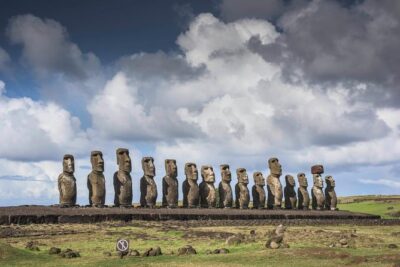
Private Tour: Full Day Easter Island Highlights
Read our review →
Browse the lists this tour appears in