
Reviewed · EASTER ISLAND TOURS
Private Tour: Full-Day Easter Island Archeological sites
A full-day loop through the island’s most important moai sites is the whole point of this experience, and it is set up as a calm, private way to see how the pieces fit together. I especially like the small-group private setup and the chance to hear clear explanations from Maeva, who helps you place what you see into both cultural meaning and today’s scientific understanding. You also get a guide who encourages a pace that fits you, which matters because some parts involve a steady uphill walk.
You’ll want to plan for extra site costs because the tour price does not include the National Park ticket. That ticket is mandatory for the park sites, and it runs $100 per person for 10 days from your first entry, so your real total depends on what you need beyond the tour fee. Also, this is not for cruise ship passengers, since port pickup is not available.
Key things to know before you commit
- Private tour only for your party with a maximum of 8 people, so you are not stuck in a loud crowd.
- Hanga Roa hotel pickup and drop-off plus transport by a private vehicle keeps the day smooth.
- Rano Raraku quarry is the key stop, since it is the island’s volcanic cone tuff source for the moai.
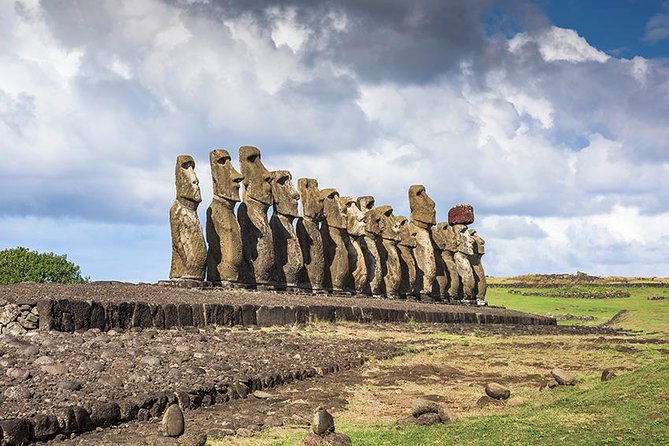
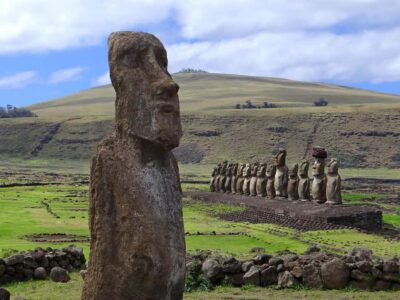
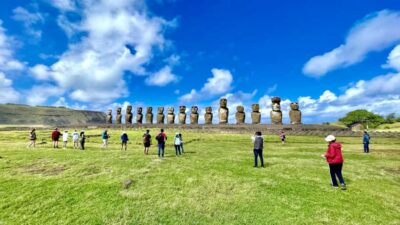
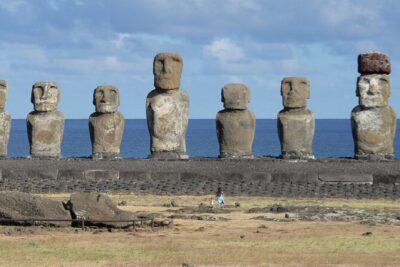
- Ahu Tongariki gives you the big visual punch, with 15 standing moai facing inland and their backs toward the Pacific.
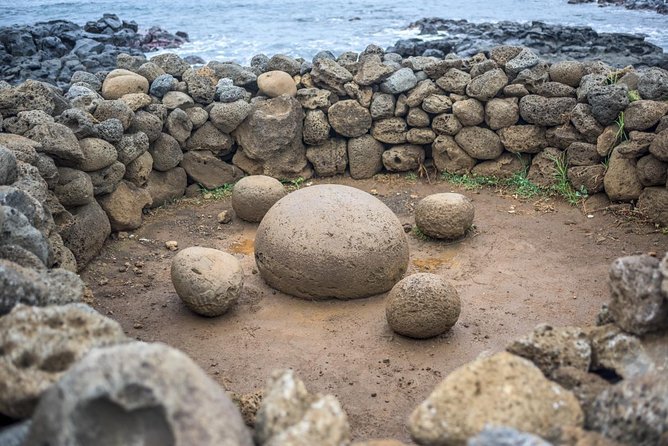
- Ahu Te Pito Kura connects the giant moai story with Te Pito ‘o te Henua, the famous rounded stone.
- Anakena Beach adds a break with coral-sand shoreline and the Miru Araki royal connection.
Why this full-day moai route feels efficient (and not rushed)
Easter Island can be a lot of work if you try to self-drive or piece together stops. This tour stays focused on the archeological anchors you really want to understand: moai platforms, how the ceremonial centers worked, and where the statues came from.
The biggest win is that the day is built around cause-and-effect. You start with how communities related to an ahu, you move to the quarry where the stone work happened, then you end with several of the island’s most recognizable platforms and shoreline sites. If you only hop between photos, you miss that logic.
A few more Hanga Roa departures to weigh up
- From Hanga Roa: Rapa Nui Culture Sightseeing Tour
★ 4.6 · 307 reviews - From Hanga Roa: Easter Island Highlights 2-Day Tour
★ 4.3 · 205 reviews - Full Day Tour in Rapa Nui
★ 4.5 · 122 reviews
The private guide experience, and why it matters here
A moai tour is not just a list of rocks. The guide’s job is to connect what you see on the ground with how the islanders organized space and meaning around the ahu.
With Kava Kava Tours, you get a professional guide and a private vehicle, and that combination keeps you from losing time. In particular, the guide approach described for Maeva is practical: she is good at setting the moai into context and also reading the pace of the group. If you prefer to walk slower on the uphill sections, you can.
It also helps that this is a private tour exclusively for your party. Even if you are traveling with friends, you can ask questions without feeling like you are stealing time from strangers.
Price and tickets: the real cost of a $263 day
The tour price is $263 per person for a full day that runs about 7 hours with a 9:00 am start. What makes the price feel fair is what it includes: a professional guide, hotel pickup and drop-off, and transport by private vehicle.
But here is the part you must budget: the National Park ticket is mandatory. It costs $100 per person and is valid for 10 days from your first entry and for all park sites. In addition, admission tickets are noted as not included for the specific stops. So think of the tour fee as the guide and logistics, and think of the park ticket as the cost of entry.
Lunch is also extra. It is listed as optional at $50 per person. If you want maximum flexibility, plan either to eat with the lunch option or bring snacks that work for you, since the day is packed with short stops.
Finally, this tour is not available for cruise ship passengers because port pickup is not offered. If you are arriving by ship, double-check your alternatives early.
Stop 1: Ahu Akahanga and the layout of the ceremonial world
Ahu Akahanga is on the southeast coast, and the key value of this stop is how it teaches you to look at the island like a system. You are not just spotting moai. You are seeing how the village arrangement related to the ceremonial center or ahu.
You get about 1 hour here, which is a good window to notice details without feeling rushed. One memorable sight is the moai figures lying on the ground, including giants you can see on their backs and with their foreheads visible on the earth. That kind of view makes the statues feel less like museum objects and more like something that was handled, moved, and repurposed.
If you like archaeology, layout, and “how did people organize their world” questions, this is the stop that sets your brain up for the rest of the day.
The other half of a Hanga Roa week:
- 2-Day Private Tour Easter Island Highlights Complete Discovery
★ 5.0 · 110 reviews - Private Full-Day Easter Island Highlights North and West
★ 5.0 · 84 reviews - From Hanga Roa: Journey from Orongo to Ana Te Pahu
★ 4.3 · 75 reviews - Journey of the Ancestors: Tongariki, Rano Raraku & Anakena Beach
★ 4.5 · 70 reviews
Stop 2: Rano Raraku quarry, the island’s moai workshop
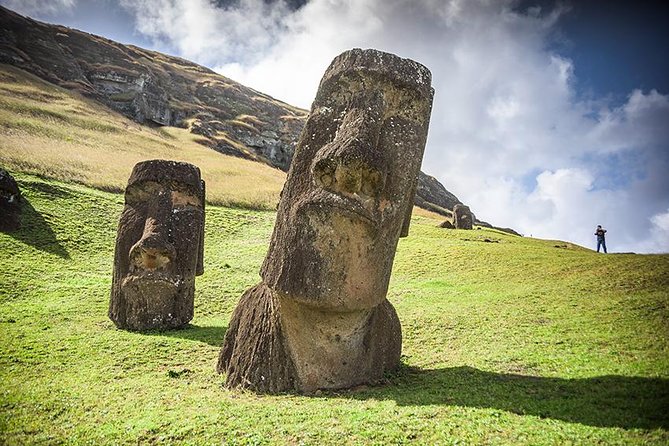
Rano Raraku is the heart of the story. This volcanic cone tuff quarry is described as the only one of its kind on the island, and it is what allowed the moai to be made on a larger scale.
Plan for 2 hours at Rano Raraku, because this is where it becomes obvious that the moai were not magically finished in place. You can see the quarry context where the stone work happened and then connect it to how moai were moved out to the ahu platforms.
Also, expect some walking. The route around major excavation involves a steady uphill feel, and the guide who keeps a pace that fits you is a real advantage here. If you know you are not a fast walker, tell your guide early and you will likely have a better experience.
If you do only one “deep understanding” stop, make it this one. Quarry knowledge changes how you interpret everything you see afterward.
Stop 3: Ahu Tongariki, the power of 15 standing moai
Ahu Tongariki is opposite Rano Raraku in the tour flow, and that pairing works well. When you have just seen where the moai were made, you are ready for the biggest platform scene.
This stop is 1 hour, and it is presented as the largest reconstructed platform on the island. The visual impact is the point: 15 visible standing moai overlook the island with their backs facing the Pacific Ocean.
If you love scale, this is your moment. The composition is strong because the moai line up in a way that makes you read the whole platform, not just individual statues. You also get a natural photo zone since the platform faces outward.
A quick practical tip: take a minute to look around the platform edges. The setting helps you understand how the ahu functioned as a ceremonial marker, not just as a stone pile.
Stop 4: Ahu Te Pito Kura and Te Pito ‘o te Henua
Ahu Te Pito Kura is shorter, about 30 minutes, but it packs in two big elements. First, you get a reference to the largest transported moai from Rano Raraku, described as 11 meters long and weighing about 90 tons, linked to Ahu o Paro.
Second, beside the ahu you will find the rounded stone called Te Pito ‘o te Henua. Tradition says it was brought by the island’s ancestors. Even if you approach the story like a skeptic, it is still fascinating to see how objects like this take on meaning in oral tradition.
Because the stop is brief, it is smart to focus on two things: the moai scale story and the stone feature. If you try to do everything at once, you can miss why people keep returning to this place.
Stop 5: Anakena Beach, royal residence, and a refined ahu
You finish at Anakena Beach, which is a nice tempo change from the stone sites. Expect warm turquoise waters and coral sand, and the chance to breathe.
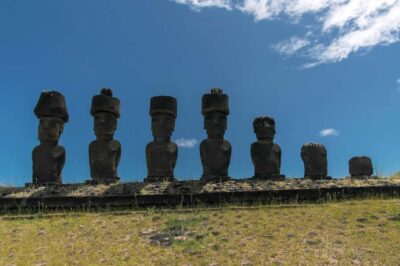
This stop runs about 45 minutes. Anakena is described as the main beach of the island and as a location tied to the Miru Araki royal family, specifically as an ancestral residence. You also visit ahu Nau Nau, described as one of the most accomplished ahu because of the refinement of its moai.
This is also a good moment for a reset if you have a sensitive stomach or sore legs. You can sit, look at the water, then walk back to the moai perspective with fresh energy.
How to handle the walking and timing on a 9:00 am start
A full-day Easter Island route can feel long, even if each stop is not huge on paper. The reason is the mix of short drives plus the fact that quarry areas can involve steady uphill walking.
The guide style described here helps. Maeva is said to encourage a pace that suits you, which is exactly what you want on a day like this. If you bring sensible expectations, you will enjoy the sites more.
I’d plan this way:
- Wear comfortable shoes you trust on uneven ground.
- Bring sun protection since the day starts at 9:00 am and you will likely spend time outside.
- Consider a light snack plan, since lunch is optional and costs extra.
You are on private transport, so you are not stuck waiting around for the slowest person in a big group. Still, keep your energy for the stops, not the car.
Value check: what you are really paying for
Let’s do a simple math view. The tour fee is $263 per person for about 7 hours. Then add the mandatory National Park ticket at $100 per person, and you are at $363 per person before lunch and before any other site admission details not included.
Even so, this can still be good value because you get a full day with:
- a professional guide
- private vehicle transport
- hotel pickup and drop-off
- a private tour capped at 8 people
If you tried to cobble together transport and a guide on your own, you would likely spend time and money and still end up missing the logical connections between quarry, platform, and ceremonial layout. The guide help is not a luxury here. It is what turns a set of viewpoints into an understanding.
This is also a tour with a strong track record: it has a 5 out of 5 rating across 19 reviews and a 100% recommendation figure shown in the overall summary. That kind of consistency usually points to a well-run day, especially for a destination where logistics can be tricky.
Who should book this, and who might want to skip it
This works best for you if you want:
- a private, small-group moai day
- a guide who connects what you see to both meaning and current scientific views
- a focused route that includes both the quarry (Rano Raraku) and multiple top ahu, not just a handful of “must-see” photos
You might reconsider if:
- you are on a cruise ship day, because port pickup is not available
- you do not want to manage extra entry costs on top of the tour price
- you are hoping for a long beach lounging day, since Anakena Beach is a 45-minute stop
If you want a single structured day that covers the island’s moai foundations and major platforms, this is one of the cleaner ways to do it.
Should you book this Easter Island private archaeological tour?
I’d book it if you care about understanding the moai as part of a system. The quarry-plus-platform sequence is the best kind of itinerary design because it teaches you cause and effect, not just where to stand for photos.
I would also book it if you value comfort and time. Hotel pickup and drop-off, a private vehicle, and a small group help you keep the day calm.
The only big hesitation is budget and tickets. Make sure you are comfortable adding the $100 National Park ticket per person to the $263 tour fee. Once you plan for that, this becomes a solid, no-drama way to spend a full day on Rapa Nui in a meaningful order.
FAQ
What time does the tour start, and how long is it?
The start time is 9:00 am, and the duration is approximately 7 hours.
Is this tour private?
Yes. It is a private tour exclusively for your party, with a maximum of 8 people per booking.
What is included in the price?
The tour includes a professional guide, hotel pickup and drop-off, private tour, and transport by private vehicle.
What costs are not included?
Lunch is not included and is listed as optional at $50 per person. The tour also notes that admission tickets are not included for the stops, and the National Park ticket is mandatory.
Do I need a National Park ticket?
Yes. A National Park ticket is mandatory for all park sites, costs $100 per person, and is valid for 10 days from your first entry.
Is the tour available for cruise ship passengers?
No. This activity is not valid for cruise passengers because port pickup is not available.
What is the cancellation policy?
You can cancel for a full refund up to 24 hours in advance of the experience start time. If you cancel less than 24 hours before, the amount paid is not refunded.
Freshly reviewed in Hanga Roa
- Astronomical Tour on Easter Island★ 3.5 · 3 reviews
- Full day Private Tour: Poike Walk through the abandoned area★ 4.5 · 3 reviews
- T1-THE GRAND TOUR (non-cruise visitors)★ 5.0 · 3 reviews
- 4-Days Trip to Discover Easter Island★ 4.0 · 3 reviews
- Private 2 Days Essential Tour of Easter Island★ 5.0 · 4 reviews
- T2-THE MUST-HAVES OF RAPA NUI (non-cruise visitors)★ 4.5 · 4 reviews
- Private Tour: Easter Island Caves★ 4.5 · 4 reviews
- Private Tour: The Highlights of Easter Island★ 5.0 · 4 reviews
Easter Island Tours, compared.
Two days of Full Day Tour of Rapa Nui + Sunrise in Tongariki
Read our review →
2-Day Private Tour Easter Island Highlights Complete Discovery
Read our review →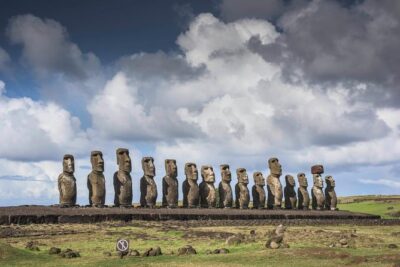
Private Tour: Full Day Easter Island Highlights
Read our review →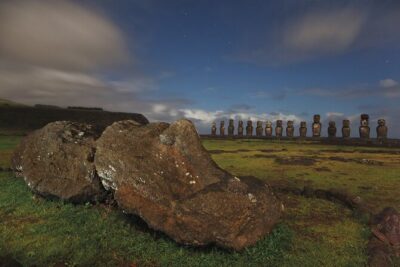
Browse the lists this tour appears in