
Reviewed · EASTER ISLAND TOURS
Private Easter Island Full-Day Tour
Easter Island feels like a museum that still breathes, and this private full-day tour gives you the best kind of help, a guide who can connect the sites to what life was like on Rapa Nui. I especially like the Ana Kai Tangata cave visit, because the paintings on the roof are visual proof of how story and power mixed on the island. I also like that you get a packed route with Orongo, the Rano Kau crater view, Puna Pau quarry, Ahu Akivi, and even the lava-tube world.
The main consideration is the cost split: the tour price does not include the national park fee, and lunch is also not included. If you are the type who hates surprises, plan that budget up front so the day stays stress-free.
Key things that make this tour worth your time
- Ana Kai Tangata cave roof paintings, tied to the island’s conflict period and the meaning behind the cave name
- Orongo ceremonial village, plus real context for the annual leader contest that happened there
- Rano Kau crater views, including the dramatic drop down to the lake below
- Puna Pau quarry and scoria, where the red stone for statue adornments was sourced
- Ana Te Pahu lava tubes, showing how people used underground spaces for daily survival and protection
- Private format up to 6 people, so you can move at a comfortable pace with one driver guide
Ana Kai Tangata to lava tubes, a full day with a guide who ties it together
This is a true full-day circuit starting with hotel pickup in Hanga Roa. You’ll ride with a driver guide who gives live commentary, then you’ll spend the day jumping between the island’s most important ceremonial, quarry, and everyday-life sites. The private setup matters here, because it turns a checklist of ruins into a connected story you can actually follow.
One of the biggest wins is how the route includes both the big visual moments and the human scale details. You start in a cave, then you go to crater viewpoints, ceremonial spaces, a quarry, a moai platform, and finally underground lava-tube living. That mix makes the island feel less like isolated attractions and more like one whole place with systems, resources, and politics.
A few more Hanga Roa departures to weigh up
- From Hanga Roa: Rapa Nui Culture Sightseeing Tour
★ 4.6 · 307 reviews - From Hanga Roa: Easter Island Highlights 2-Day Tour
★ 4.3 · 205 reviews - Full Day Tour in Rapa Nui
★ 4.5 · 122 reviews
Hotel pickup and timing, plus the simple logistics you should plan for
Your day starts at 9:30 am. The tour runs about 7 hours (described as roughly 6.5 hours of touring time), and you return to your hotel when you are finished.
A few practical notes I’d take seriously before you go:
- It is private, with a maximum of 6 people per booking and a minimum of 2.
- Hotel pickup and drop-off are included, but it is not available for cruisers, and port pickup is not included or compatible with cruise excursions.
- You should have moderate physical fitness, since you will be out walking around archaeological areas and spending time in caves or uneven terrain.
If you are traveling in a small group, the private format is where the value shows up. You are not sharing your day with a bus of strangers, and your guide can shape the pace and the focus.
Also, this tour tends to get booked ahead. The average lead time listed is 66 days, so if you are traveling in a busy season, plan to reserve early rather than hoping.
Ana Kai Tangata cave, roof paintings that hit harder than photos
You begin with Ana Kai Tangata, a cave known for the paintings on its roof. Even before you reach the other key sites, this stop sets the tone. The cave’s name reflects the island’s warfare period and cannibalism, and your guide explains the connection between that violent history and the way Rapa Nui used sacred spaces.
What I like about starting here is that it makes everything else feel less random. Later on, you’ll be seeing political ceremonies and major construction related to statues, and you’ll understand that this culture was dealing with power struggles, not just monuments for tourists to admire.
The cave itself also matters for pacing. It is not a quick drive-by stop. You’ll spend enough time to absorb what is there, and your guide will help you see why roof paintings carry so much meaning.
Rano Kau crater and panoramic views with the lake 200 meters below
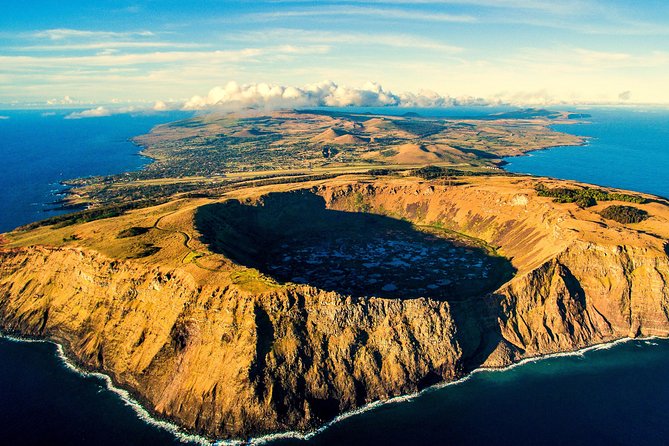
From Ana Kai Tangata, the day moves to Rano Kau, a volcanic area with big views over the island. The standout detail here is that the volcano plunges about 200 m (656 ft) down to a beautiful lake.
This is the point in the day where your guide’s explanations start to feel real. When you look into a crater and understand how the island’s volcanic shape affected where people could settle, farm, and move, the monuments become part of a living environment.
If you care about context, you’ll enjoy this stop. It is scenic, but it is also functional. The island’s shape is not background, it is part of the story.
The other half of a Hanga Roa week:
- 2-Day Private Tour Easter Island Highlights Complete Discovery
★ 5.0 · 110 reviews - Private Full-Day Easter Island Highlights North and West
★ 5.0 · 84 reviews - From Hanga Roa: Journey from Orongo to Ana Te Pahu
★ 4.3 · 75 reviews - Journey of the Ancestors: Tongariki, Rano Raraku & Anakena Beach
★ 4.5 · 70 reviews
Orongo ceremonial village, the annual contest that shaped leadership
Next comes Orongo, the ceremonial village tied to major political life during the 18th and 19th centuries. Your guide explains how annual ceremonies played out, with different tribes competing to become the island’s leader.
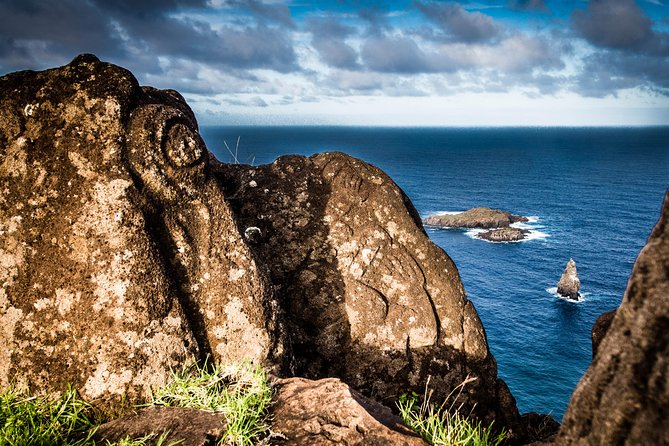
This is one of the most memorable parts of the route because you learn what made the contest hard and dangerous. The ceremony involved the kind of effort that included climbing down cliffs and swimming out to islets off the coast. You are not reenacting anything like that, but it helps you understand why leadership mattered so much, and why ritual was tied to survival, risk, and status.
I also like Orongo because it is both dramatic and human-scale. You stand in a place built for ceremony, then you hear the practical details of what it would take to compete.
Vinapu rockwork and the parallels people talk about
After the ceremonial village, you’ll head to Vinapu. This stop is famous for its rockwork, which many visitors compare to stonework styles associated with the Inca civilization of South America.
You are not just there to look at stones. The value is in how your guide connects the workmanship to what people wanted and how they built. You start noticing patterns in the island’s engineering choices: how stone could be shaped, positioned, and made to last.
It is a great mid-day stop if you like archaeology that makes you think, rather than only monuments that impress from a distance.
Puna Pau quarry and how the red stone powered statue details
Then it is off to Puna Pau quarry, where the material used for statue adornments came from. Specifically, you learn about the large scoria stone, described as red, cindery, basaltic lava stone.
This is where the day shifts from views and ceremonies to resources and production. When you understand that the red stone had a job and a destination, Puna Pau stops feeling like a random rock pit and becomes part of the island’s creative supply chain.
In one guide style described in the experience feedback, the quarry is treated as a highlight similar to an in-island production site, the place where key statue materials were sourced. That perspective helps you see the quarry as working infrastructure, not just a background setting.
Ahu Akivi, seven moai facing the sea
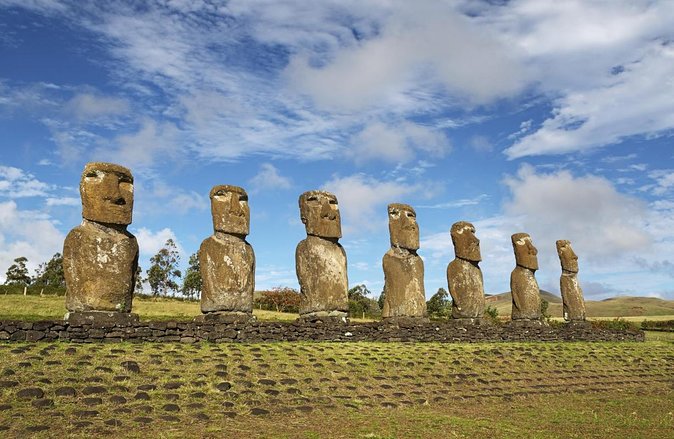
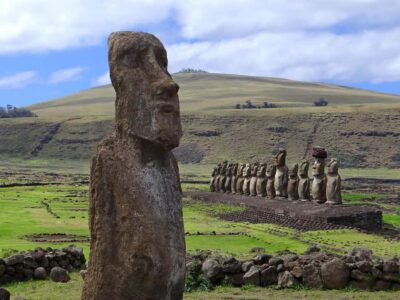
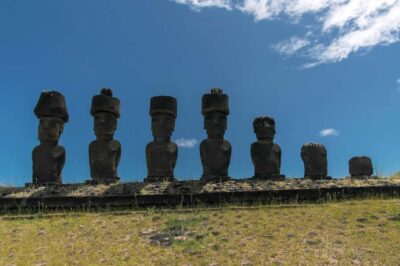
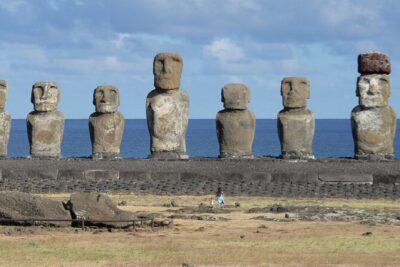
Next up is Ahu Akivi, a restored site with seven moai. The key detail I would not skip is this: these are the only group of statues noted as looking out to the sea.
That single design choice gives the site a different feeling from the more inland or road-adjacent platforms you might see elsewhere on the island. Your guide explains what the statues represent, said to be representations of the first seven explorers who came to the island.
This is also a good moment to slow down. If you have been moving fast through cliffs, craters, and caves, the sea-facing statues bring the visual payoffs together, while your guide keeps the meaning clear.
Ana Te Pahu lava tubes, how underground spaces supported daily life
Later in the day, you’ll visit Ana Te Pahu, one of the island’s lava-tube networks. Easter Island is riddled with tubes, but this one is described as a more extensive network you can explore with a guide.
This is a stop I recommend if you like the everyday side of history. You learn how the Rapa Nui people used these cave systems to:
- live in underground spaces
- collect water
- plant vegetables
- hide from aggressive visitors from outside in the 18th and 19th centuries
Even if you only get partial views of what is inside, the explanation changes how you experience the cave. It is no longer just a cool place underground, it is an answer to real problems, water access, safety, and food.
Lunch, food stops, and the one thing you must budget separately
Lunch is not included. The good news is that the tour includes opportunities to stop and buy food along the way if you get hungry. I’d still plan for this in your own head, because you do not want to lose time negotiating meals mid-route.
If you are sensitive to heat, timing can matter on Easter Island. The tour starts at 9:30 am, so you likely will not be eating late in the day, but you should still think like a planner and have a simple snack strategy.
Price and park fees, and where the value actually comes from
The tour costs $230 per person and includes private guiding, driver/guide, live commentary, and round-trip hotel transport. The big value question is how much you’ll use that human guidance across the many different site types.
You are paying for more than driving. You are paying for someone who can connect:
- roof paintings to conflict and meaning
- crater geography to how people lived
- ceremonial sites to leadership and risk
- quarries to statue materials
- a restored moai platform to exploration stories
- lava tubes to survival tactics
That is a lot of interpretation in one day, and the private format makes it easier to ask questions without feeling rushed.
One line-item caution: the national park fee is not included. The tour info recommends buying an $80 USD national park pass either when you arrive at the airport, or online, valid for 10 days after purchase. If you are going to pay it anyway, do it early so you do not get stuck trying to solve that problem mid-trip.
If you want a simple test for value, ask yourself this: would I rather rent time with a guide for multiple sites in a single day, or do I want to manage navigation and interpretations on my own? If you want context and comfort, this private option makes sense.
Guides, pacing, and the one downside to know about
The quality of the guides shows up again and again in the feedback tied to this experience. People highlight guides like Patricio, Yoyo, Tuhii, Marc, Mark, and Pauline for being friendly, careful, and able to answer questions in a way that makes the sites click.
I also like the way this tour can feel custom even with a set route. One note included that sightseeing can be done at your own pace, which matters because Easter Island rewards looking longer, not just moving on.
The main drawback to be aware of is access. In one experience, a park workers strike meant that some areas were closed, even though the guide still did what they could to get into parts that were open. This is not something you can fully control, so I treat it like this: if you want zero surprises, keep a bit of flexibility in your expectations and allow time for rethinking a day if access changes.
Who should book this private Easter Island full-day tour
This tour is a strong fit if you:
- want one guide to connect major monuments, production sites, and daily-life spaces
- like cave and underground experiences, not just open-air platforms
- prefer a private group size and hotel pickup over DIY logistics
- care about history in plain language, with stories that help the island make sense
It may be less ideal if you:
- are strictly budget-first and do not want to add the national park pass on top
- are on a very tight schedule with no flexibility, since access can be affected by site closures
- are a cruise traveler, because this specific tour is not compatible with cruise excursions
Should you book this Easter Island private tour?
I’d book it if your goal is to see the island’s key sites with context, not just photos. The route hits the “big names” plus the underground side of Rapa Nui life, and the private format up to 6 people keeps the day workable.
If you do book, plan for the park pass before you hit the road, and build in time for lunch since it is not included. Also reserve early. With an average booking lead time of 66 days, you’ll have a better shot at the date you want.
If your ideal day is a guided conversation with the island’s history while you travel from cave to crater to quarry to moai to lava tubes, this one is a solid choice.
FAQ
How long is the private Easter Island full-day tour?
The tour is about 7 hours (approximately), with the sightseeing described as roughly 6.5 hours of touring time. It includes hotel pickup and drop-off.
What time does the tour start?
The start time is 9:30 am.
What’s included in the price?
The price includes hotel pickup and drop-off (not available for cruisers), a driver/guide with live commentary, and the private tour format.
Do I need the national park pass?
The national park fee is not included in the tour price. The tour recommends purchasing an $80 USD national park pass upon arrival at the airport (valid for 10 days after purchase) or online at www.rapanuinationalpark.org.
Is lunch included?
No. Lunch is not included, but you will have opportunities to stop and buy food along the way if you get hungry.
How big is the group for this private tour?
It is a private tour for your group only, with a maximum of 6 people per booking. A minimum of 2 people per booking is required.
Can I cancel and get a full refund?
Yes. You can cancel for free up to 24 hours in advance for a full refund. If you cancel less than 24 hours before the experience start time, the amount paid is not refunded.
Freshly reviewed in Hanga Roa
- Astronomical Tour on Easter Island★ 3.5 · 3 reviews
- Full day Private Tour: Poike Walk through the abandoned area★ 4.5 · 3 reviews
- T1-THE GRAND TOUR (non-cruise visitors)★ 5.0 · 3 reviews
- 4-Days Trip to Discover Easter Island★ 4.0 · 3 reviews
- Private 2 Days Essential Tour of Easter Island★ 5.0 · 4 reviews
- T2-THE MUST-HAVES OF RAPA NUI (non-cruise visitors)★ 4.5 · 4 reviews
- Private Tour: Easter Island Caves★ 4.5 · 4 reviews
- Private Tour: The Highlights of Easter Island★ 5.0 · 4 reviews
Easter Island Tours, compared.
Two days of Full Day Tour of Rapa Nui + Sunrise in Tongariki
Read our review →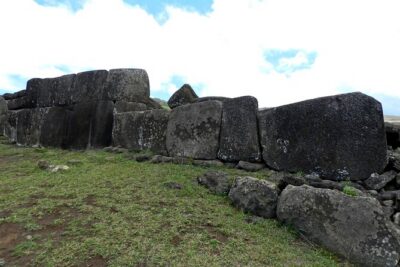
2-Day Private Tour Easter Island Highlights Complete Discovery
Read our review →
Private Tour: Full Day Easter Island Highlights
Read our review →
Browse the lists this tour appears in