
Reviewed · EASTER ISLAND TOURS
Private Tour: Easter Island Caves
If you’re the type who likes geology with a side of real human stories, the Easter Island caves around Hanga Roa are a great pick. I love how the volcanic spaces are not just scenery, they connect to how the Rapa Nui lived, cooked, sheltered, and performed ceremonies. I also love that you get hotel pickup and drop-off and a local guide who keeps the walking grounded in place-based history.
The main thing to know up front is comfort in enclosed spaces. Some of these caves have tighter spots, and one stop in particular can feel small at the entrance, so bring a clear sense of what you’re comfortable with before you step inside.
Key things you’ll notice on this Easter Island cave route
- Ana Te Pahu, the cave of the bananas, with lava channels and evidence of old umu kitchen use
- Ana Te Pora, entered about 100 meters from the parking area, with shelter and ceremonial use
- Ana Kakenga, the cave of the two windows, formed by lava reaching the sea and leaving cliff openings
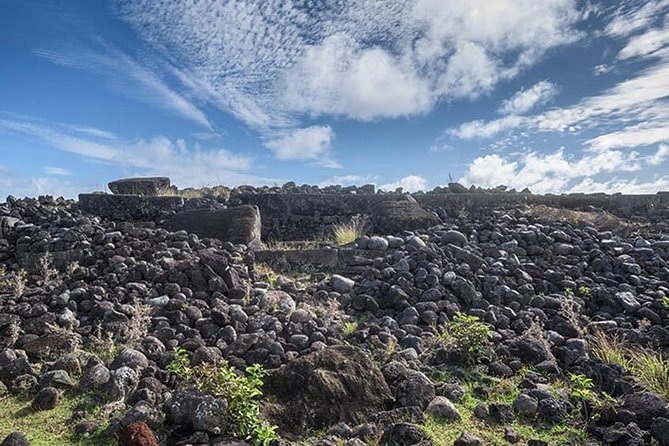
- Ahu Te Peu, an unrestored archaeological area where you can see moai toppled by internal conflict
- Tore Tahuna, the long boathouse at Ahu Te Peu, tied to tradition and Rapa Nui leadership
Volcanic caves and Rapa Nui meaning, not just a walk in the dark
This tour is interesting because it treats caves like community infrastructure. You’re not only seeing lava formations. You’re moving through spaces that once mattered for daily life, refuge, and ceremony. That mindset changes the whole experience, even if you only come for the dramatic visuals.
You’ll also get a private setup, which matters on an island where time and heat are real issues. Hotel pickup and drop-off keeps the day simple, and it lets your guide handle the route. In other words, you can focus on the caves instead of the logistics.
Still, this is an active, outdoor route. Even when the walking is described as manageable, you’re dealing with sun exposure and uneven cave entrances, so wear what you’d wear for a warm hike with some crouching.
A few more Hanga Roa departures to weigh up
- From Hanga Roa: Rapa Nui Culture Sightseeing Tour
★ 4.6 · 307 reviews - From Hanga Roa: Easter Island Highlights 2-Day Tour
★ 4.3 · 205 reviews - Full Day Tour in Rapa Nui
★ 4.5 · 122 reviews
Your private 4-hour itinerary, Ana Te Pahu to Ahu Te Peu
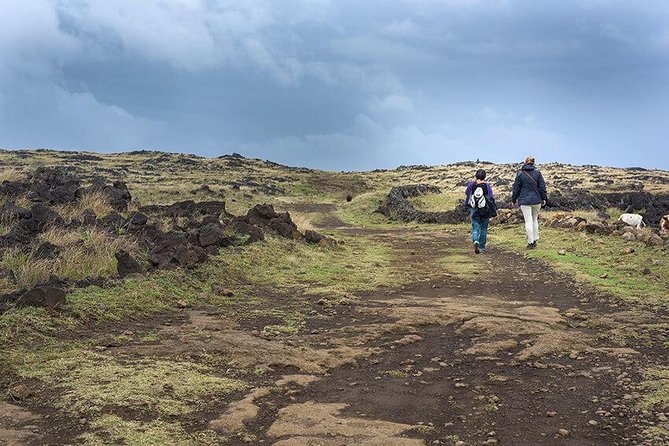
The tour runs about 4 hours starting at 9:00 am, with stops built around a mix of cave exploration and an archaeological viewpoint. It’s designed as a sequence: you begin with the biggest cave, then move through smaller volcanic spaces, then finish at an ahu area where the stone story is visible on the ground.
The planned stop order is:
- Ana Te Pahu (about 30 minutes)
- Ana Te Pora (about 20 minutes)
- Ana Kakenga (about 30 minutes)
- Ahu Te Peu (about 20 minutes)
Two practical notes. First, the National Park ticket is mandatory, and it covers sites for 10 days from your first entry. Second, admission for the individual stops is not included in the tour price, so you should plan that cost into your budget.
Because it’s private, your guide may adjust how things feel in real time. One traveler experienced a route that felt incomplete, which is why I suggest you confirm your four named stops at the start. That way, you’re not left wondering what was skipped.
Ana Te Pahu, lava chambers and the cave of the bananas
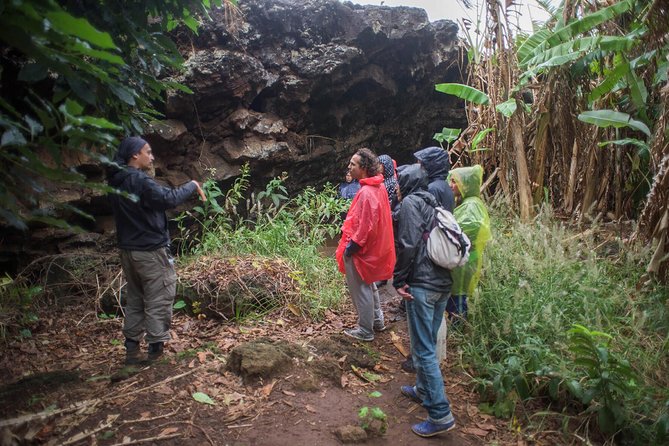
Ana Te Pahu is the biggest cave in the area, and the scale is part of the point. Lava channels run through important territory, and several underground chambers connect beneath it. It’s an easy place to sense how people could use a large protected space long before modern lighting and paths.
You’ll also see the practical side of ancient use. There are umu remnants, old kitchen systems that suggest this cave helped with preparing food. It’s a reminder that “cave tour” does not mean “mystery only.” Here, the cave reads like a tool people relied on.
Another feature is the “cave of the bananas” detail. There can be a big amount of banana tree growth at the entrance, and it makes the transition from bright outdoors to dark interior feel more natural. If you like plant life mixed with archaeology, this stop is a satisfying opener.
Time in the cave is roughly 30 minutes. That means you should treat it as an active exploration, not a quick photo stop.
Ana Te Pora, volcanic shelter and ceremonial space
Ana Te Pora is a volcanic cave with the main entrance roughly 100 meters from the parking lot. That short approach is helpful on a hot morning, especially if you want energy left for the cave itself.
This cave is described as both shelter and ceremonial ground in ancient times. The value for you is that it adds another layer to the story. After Ana Te Pahu’s kitchen-and-chambers feel, Ana Te Pora shifts toward protection and ritual use.
Drawback to watch for: the tour day can still feel warm depending on your pacing. In at least one experience, the walk felt longer than expected in strong sun. You cannot control the weather, but you can control your preparation, and that means water and sun protection.
The other half of a Hanga Roa week:
- 2-Day Private Tour Easter Island Highlights Complete Discovery
★ 5.0 · 110 reviews - Private Full-Day Easter Island Highlights North and West
★ 5.0 · 84 reviews - From Hanga Roa: Journey from Orongo to Ana Te Pahu
★ 4.3 · 75 reviews - Journey of the Ancestors: Tongariki, Rano Raraku & Anakena Beach
★ 4.5 · 70 reviews
Ana Kakenga, the two windows and why the entrance matters
Ana Kakenga is one of the most dramatic formations on the route. Lava flowed into the sea and left two mouths, sometimes called windows, that lead directly to the cliff. Visually, that makes the cave feel connected to the ocean in a way that’s hard to get from land-only viewpoints.
This is also known as a “kionga” type place, a refuge site in ancient times. That theme is what makes it more than a scenery stop. You’re standing in a space that fits a survival logic, not only a sightseeing logic.
Now for the key practical consideration. The entrance can be very small, and at least one person specifically flagged that if you have fear of small spaces, you should think twice. The tour is not presented as extreme, but a tight entrance changes the emotional experience fast.
My advice: if you’re even slightly uncertain, bring a calm mindset and don’t force yourself into a panic. Choose shoes with grip and plan on moving slowly. Good comfort habits matter more here than speed.
Ahu Te Peu and Tore Tahuna, moai you can see down close
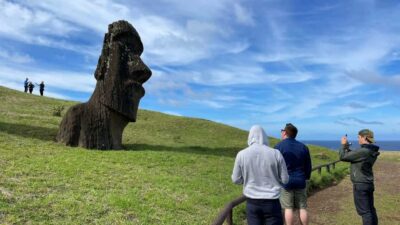
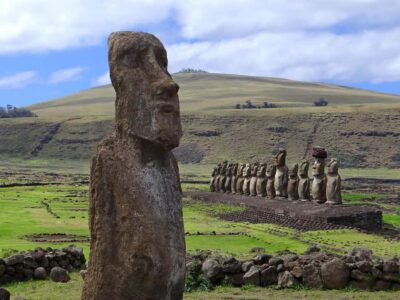
The finish at Ahu Te Peu is where the day turns from geology to visible archaeology. This site has high archaeological value and is noted as not restored, so you can observe it as it was after conflict on the island. In particular, you can see moai that were knocked down and left in place.
There used to be a village here, and you can also see the island’s biggest boathouse, called hare paenga. It’s the Tore Tahuna boathouse, about 43 meters long, and tradition links it to famous Ariki Tu’u Ko Ihu. Even if you don’t know the names yet, this is the kind of detail a good guide can connect to the physical layout you’re standing in.
One of the most praised parts of the experience is the chance to get close to fallen moai without the press of lots of other visitors. On Easter Island, that kind of quiet access can make the stone feel more human.
The stop time is about 20 minutes. That’s enough to look, absorb, and ask questions without rushing you out.
Price and logistics, including the National Park ticket reality
The tour price is $250 per person for a private, guided 4-hour experience. That’s not cheap, so you’re really paying for two things: a guide who can interpret what you’re seeing, and hotel pickup plus transport by private vehicle.
But the biggest budget piece is that the National Park ticket is mandatory. It costs $100 per person, valid for 10 days from your first entry and for all park sites. Admission tickets for the stops are not included, which means you should factor that into your total cost right away.
In practical terms, I’d add the numbers before you get excited:
- Tour: $250 per person
- Park ticket: $100 per person
So you should expect around $350 per person before you add lunch or snacks.
The “value” question comes down to your preferences. If you love caves with context, and you want a guided route with pickup, this can be worth it. If you’re hoping for a long, varied day with lots of walking, you might find other options better match your style and your budget.
Also note: this tour is not available for cruise ship passengers. Port pickup is not offered, so you’ll want to be staying on the island proper.
Tips that make the difference in cave comfort and cave enjoyment
This tour is rated as requiring moderate physical fitness, and that’s fair. Even if you don’t feel like a hardcore hiker, you should be ready for sun, uneven ground near cave entrances, and some tight sections.
Here’s what I’d do to stay comfortable:
- Wear good walking shoes with grip. One praised comment specifically recommended them.
- Bring more water than you think you need, especially for a 9:00 am start that still may turn hot by the time you’re moving.
- Use sunscreen and a hat, then carry them if the route is more than a short walk. One traveler left items behind and pointed out how hard the sun can be.
- Plan for tighter space at Ana Kakenga. If you’re uneasy in small entrances, treat this stop as the deciding factor for the whole day.
- Go at a calm pace. A guide can walk ahead, but you should never feel pressured to rush into cave areas.
Language matters too. One person mentioned their guide suggested Spanish even though the group wanted English, and the site explanations felt light. Since the tour offers English, I’d still start the day by checking your language preference and asking that you get explanations at the level you want.
Who this private Easter Island caves tour suits best
This tour fits best if you want a tight route with strong interpretation. You’ll like it if you enjoy volcanic landscapes, archaeology you can touch and see up close, and a guide who connects place names like Ana Te Pahu, Ana Te Pora, Ana Kakenga, and Ahu Te Peu to how people used the island.
It may not be your best choice if:
- You’re highly uncomfortable with small enclosed openings
- You dislike midday heat walking or want a very slow, low-effort day
- You need extra flexibility in the schedule if something feels unsafe or uncomfortable
Because it’s private, you can also suit it to your comfort level if you communicate early. Ask about how tight each entrance is likely to feel and whether you can pause or take it slower.
Should you book the Easter Island caves tour with hotel pickup?
Book it if you want a guided private cave route that mixes volcanic formations with real Rapa Nui use, from kitchens and refuge spots to an unrestored ahu area with moai down close. The Ana Te Pahu and Ana Kakenga stops are the big draws, and Ahu Te Peu is a strong way to end the story.
Skip or rethink it if small cave entrances make you anxious, or if your priority is a long list of stops with a fast pace. In that case, you’ll likely prefer a different style of tour that matches your walking and comfort level more closely.
If you do book, do one smart thing: confirm at the start that you’ll cover all four named sites in the order provided, and bring water plus sun protection. That small prep turns a good day into a great one.
FAQ
How long is the Easter Island caves tour?
It runs about 4 hours.
Where does the tour start and is pickup included?
The start time is 9:00 am, and hotel pickup and drop-off are included. You’ll need to share your hotel name on the island.
Is this tour private, and how many people are in the group?
It’s a private tour, and only your group participates.
Is the National Park ticket included in the price?
No. A National Park ticket is mandatory and costs $100 per person. It is valid for 10 days from your first entry and for all park sites.
What stops are included on the itinerary?
The tour includes Ana Te Pahu, Ana Te Pora, Ana Kakenga, and Ahu Te Peu.
What level of fitness do I need?
The tour notes a moderate physical fitness level.
Is the tour available for cruise ship passengers?
No. The tour is not available for cruise ship passengers, and port pickup is not available.
Is the tour offered in English?
Yes, it is offered in English.
One last decision helper before you go
If your idea of fun is volcanic caves with context, and you’re comfortable with a few tighter cave spots, this private route is a solid value for your time on Easter Island. If you’d rather avoid claustrophobic entrances or want a more open-ended itinerary, you might feel happier choosing a different cave-focused option.
Freshly reviewed in Hanga Roa
- Astronomical Tour on Easter Island★ 3.5 · 3 reviews
- Full day Private Tour: Poike Walk through the abandoned area★ 4.5 · 3 reviews
- T1-THE GRAND TOUR (non-cruise visitors)★ 5.0 · 3 reviews
- 4-Days Trip to Discover Easter Island★ 4.0 · 3 reviews
- Private 2 Days Essential Tour of Easter Island★ 5.0 · 4 reviews
- T2-THE MUST-HAVES OF RAPA NUI (non-cruise visitors)★ 4.5 · 4 reviews
- Private Tour: The Highlights of Easter Island★ 5.0 · 4 reviews
- Sunrise in Tongariki on Easter Island Rapa Nui★ 3.5 · 5 reviews
Easter Island Tours, compared.
Two days of Full Day Tour of Rapa Nui + Sunrise in Tongariki
Read our review →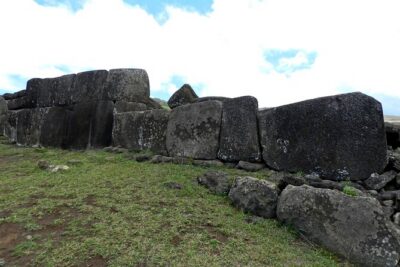
2-Day Private Tour Easter Island Highlights Complete Discovery
Read our review →
Private Tour: Full Day Easter Island Highlights
Read our review →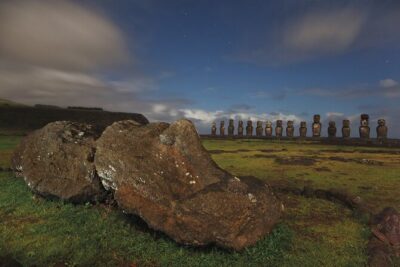
Browse the lists this tour appears in