
Reviewed · 2-DAY EXPERIENCES
2-Day Private Tour Easter Island Highlights Complete Discovery
Easter Island is big, weird, and beautiful, and this 2-day private loop turns it into a paced, no-drama learning trip. I love the way it hits the main moai hits like Tongariki and Rano Raraku without rushing, and I love the chance to see the island through real Rapa Nui storytelling. One caution: it is not a budget tour, especially once you add the required entrance ticket.
The private format is the real win. You get your own driver/guide in an air-conditioned minivan, and you can set the pace when you want photos, questions, or a longer look at one ahu. The tradeoff is simple, expect real driving time and some uneven walking.
You start at 9:30 am in Hanga Roa, so plan a calm morning and keep your tickets ready. Most stops are around 20 to 45 minutes, which means you get time to see details, not just pose in front of statues. If you want a proper swim at Anakena Beach, save that for outside the tour since the focus there is archaeology and history.
Key Highlights to Expect
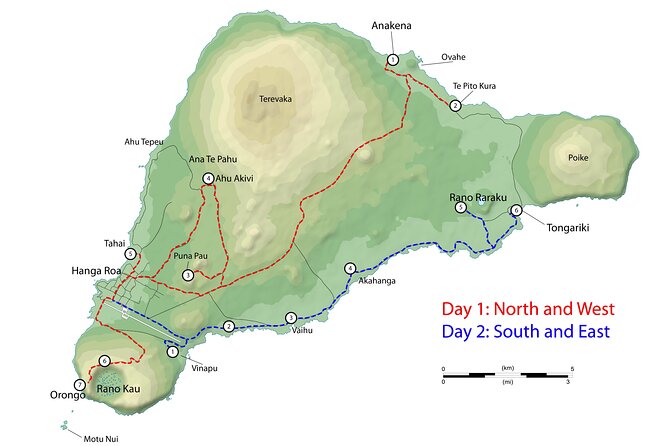
- A full moai circuit over two days, from Anakena to the 15 statues of Tongariki, with time to actually look.
- Orongo and Rano Kau crater views, including the ceremonial ground tied to the birdman tradition.
- Puna Pau quarry context, so you understand where the red pukao topknots came from.
- Engineering and “how did they do that?” stops, including Vinapu’s tight stone fitting at Ahu Tahira.
- Hanga Poukura’s lava coast drama, with a blowhole that can spurt when the ocean is right.
- Private guiding with island voices, with guides including Gabriel, Yeni, Joaquin Soler Hotu, Andres, and Alberto (among others).
How the Private Tour Runs (And Why That Matters)
This is a private tour, meaning it is only your group. That matters on Easter Island because your time is limited, and your attention is your best souvenir. In a private setup, you can slow down at the spots you care about and skip the ones you just want to glance at, instead of being dragged along on someone else’s tempo.
You also get hotel pickup and drop-off, plus an air-conditioned minivan and bottled water. That sounds practical, and it is. With Easter Island’s long distances, cutting down on logistics is not a small thing. It helps you stay present for the sites instead of constantly thinking about transport, timing, and where the next entrance line starts.
The schedule is designed to spread the island’s big stops across two days. That is exactly what you want here, because trying to cram everything into one day turns archaeology into sprinting. The best version of this tour feels like a string of “aha” moments, where one stop explains the next.
A few more Hanga Roa departures to weigh up
- From Hanga Roa: Rapa Nui Culture Sightseeing Tour
★ 4.6 · 307 reviews - From Hanga Roa: Easter Island Highlights 2-Day Tour
★ 4.3 · 205 reviews - Full Day Tour in Rapa Nui
★ 4.5 · 122 reviews
Price and Tickets: What You Pay, What You Still Need
Let’s talk value in plain terms. The tour price is $560 per person, for about 13 hours total across two days, with pickup, a driver/guide, air-conditioned transport, and bottled water included. That is premium pricing, but Easter Island is remote, and the island’s guiding and driving costs add up fast.
Then budget for the required entrance ticket: $80 per person, valid for all tours and sites, bought online beforehand. On top of that, you must have your national park ticket. The info is clear that you should buy it upon arrival at the airport, and keep it with you.
Lunch is not included in the listed inclusions. That said, you may find that the day-to-day rhythm leaves room for a local meal, but do not assume it is included in the base price. If food is part of your travel plan, confirm what is covered and what you will pay separately.
So is it worth it? If you want an organized path through the island’s archaeology without piecing together multiple rentals or half-day tours, this is a strong deal. If you are traveling on a tight budget or you prefer to move entirely on your own, it can feel expensive. You are paying to trade money for time, comfort, and guided context.
Anakena Beach and Ahu Te Pito Kura: The Postcard Coast With Real History
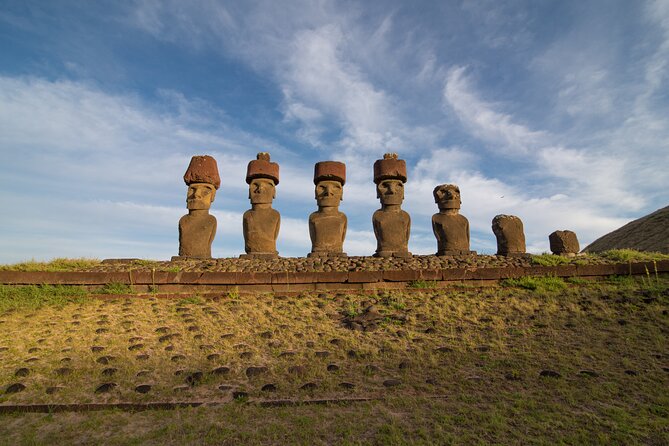
Your day starts with a place that instantly changes your mood. Anakena Beach is where the ancient society’s capital was located, and it feels like you landed in a beach movie with moai built into the scenery. There is also a monument in the sand with some of the best preserved restored moai on the island, which were dug up after centuries underground.
Time here is 35 minutes, and the focus is archaeology and history. If you came for beach time, plan to come back on your own. During the tour, you will mostly be learning, not lounging.
Next up is Ahu Te Pito Kura for about 25 minutes. This is where you see the tallest moai that was successfully transported to its ahu, listed at 9.9 meters. It is unrestored and still toppled, so it tells the truth of what happened in the past, not just what people later rebuilt.
There is also a round magnetic rock nearby. Some people attribute magical properties to it, and even if you treat that as folklore, it is a fun mental hook. It is one of those small details that turns a site visit into a story you remember later.
Puna Pau, Ahu Akivi, and Ahu Tahai: Follow the Materials and the Meaning
After the beach and the big moai, you switch from seeing artifacts to understanding how the whole system worked.
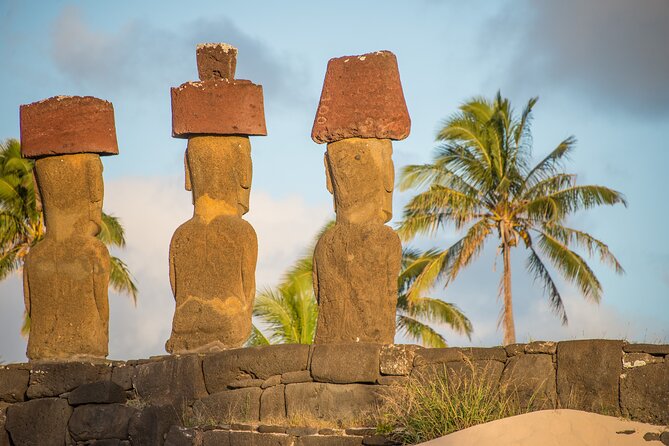
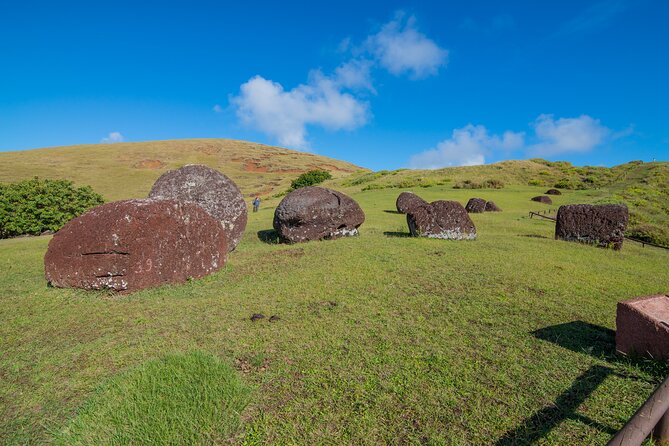
Puna Pau is a quick stop at about 20 minutes, but it is a key one. This small volcano is where the red scoria stone was quarried for the moai topknots, called pukao. Once you see Puna Pau, the island’s moai details stop being random decoration. You start thinking like the builders, where each material had a place and a purpose.
Then you move to Ahu Akivi for about 20 minutes. This ahu is famous for moai that face the sea. The idea is that the statues were built to represent the first seven settlers who arrived roughly a thousand years ago. Even if you weigh the legend differently than the facts, it gives you a lens to watch how these carvings communicate with the horizon.
Next is Ahu Tahai for about 30 minutes. This area is tied to a village story about ambitious, hard-working tribesmen. You can see several statues at three different ahu platforms, plus a ramp that was made to enter the ocean from inside the area. That ramp is the kind of detail that makes you realize these were not just monuments. They were built environments for daily life and ceremonial movement.
If you like your travel with a little cause and effect, this cluster is a winner: quarry leads to topknots, sea-facing statues lead to settlement stories, and ramps hint at how ritual and routine might overlap.
The other half of a Hanga Roa week:
- Private Full-Day Easter Island Highlights North and West
★ 5.0 · 84 reviews - From Hanga Roa: Journey from Orongo to Ana Te Pahu
★ 4.3 · 75 reviews - Journey of the Ancestors: Tongariki, Rano Raraku & Anakena Beach
★ 4.5 · 70 reviews - Full Day Private Tour: Factory of the Moai the stone giants
★ 4.5 · 63 reviews
Rano Kau and Orongo: Crater Views and the Birdman Ceremony Ground
Rano Kau is one of the island’s most stunning natural backdrops. The crater and its lake were important as a source of drinking water in ancient times. Expect about 20 minutes here, and use that time for the big view, not just the quick photo. The crater shape and the way it sits above the coast help everything else on the island click.
Then comes Orongo for about 45 minutes. Orongo is the ceremonial stone village linked to the birdman competition, located on the ridge of the Rano Kau area. From Orongo, you get fantastic views of the crater itself, which is exactly what makes the location work. You are not just standing near old stones, you are standing in a spot built for looking, watching, and performing.
This is also one of the places where a guide can really change your experience. With the right explanations, you stop thinking Orongo is a pile of rocks and start understanding it as a stage. Even the time spent facing the crater becomes part of the story.
Vinapu, Hanga Poukura, and Vaihu: Tight Stone Fitting and Lava Weirdness
Now you get a different kind of “how did they do that?” excitement.
Ahu Vinapu is part of about 30 minutes. The star detail here is the perfectly fitted rock wall, associated with Ahu Tahira. The engineering skill is such that some people connect it to contact with the Inca Empire. Whether you accept that specific theory or treat it as a historical hypothesis, the main point is that the stonework is extremely precise. Your eyes will naturally search for how the fit works.
Not far from there is Hanga Poukura, also around 30 minutes. This is a coastal area of rough lava formations with some striking features. There are several statues arranged in a line in a strange, mysterious way, with only the backs visible. It is eerie in a good way, the kind of sight that makes you pause longer than you planned.
Hanga Poukura also has a blowhole, and it can be one of the best on the island. When ocean conditions are right, water will spurt up as waves hit. It is one of those “wait, look, and be ready” moments. If you are the type who loves weather and timing effects in travel, you will appreciate it.
Finally, Ahu Vaihu for about 30 minutes brings you back toward everyday life. This area has replicas of an ancient village built up in modern times. You can see examples of plantation techniques and you have the chance to enter replicas of ancient boat houses used hundreds of years ago. It gives the whole tour a grounding, so the moai do not float in your head like museum pieces.
Akahanga, Rano Raraku, and Tongariki: The Island’s Big Three Payoffs
If Easter Island is a movie, these are the final scenes.
Ahu Akahanga is about 30 minutes and is one of the largest ancient villages on the island. You walk among ruins with boat-shaped house foundations, earth ovens, and a massive ceremonial platform where moai statues still lie toppled. There is also a second, unrestored ahu nearby that holds 13 statues of varying sizes. That contrast hits hard: restored versus not restored, curated memory versus raw archaeological presence.
There is also a legend that this sacred site is connected to the burial place of the island’s first king, Hotu Matu’a. Legends are not blueprints, but they do show what the site meant to the people who kept the stories alive.
Next is Rano Raraku for about 1 hour 30 minutes. This is the volcano that became a mass-production area for gigantic megaliths. Most statues were carved here, and then one day the workers stopped. The hundreds of statues left behind have not moved since. This is your chance to see carving and unfinished history in one place. It is also the longest stop on the route, and it deserves that time.
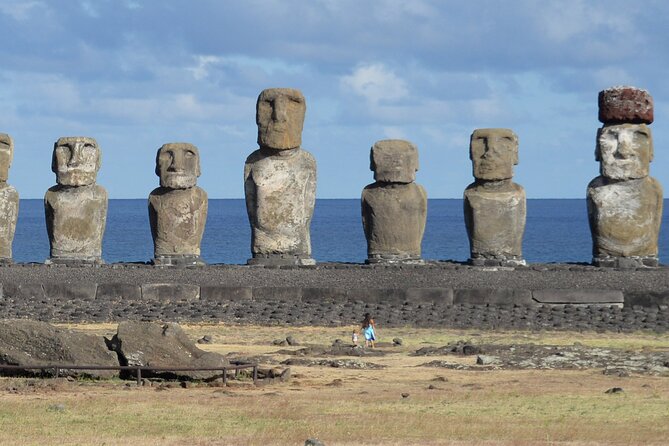
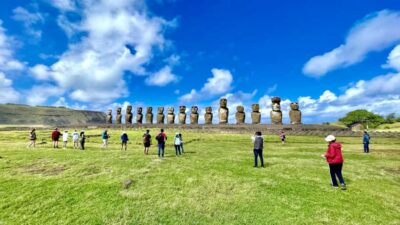
Last is Ahu Tongariki for about 45 minutes, the island’s largest monument. You see 15 massive moai against the ocean backdrop. These giants were toppled by an earthquake and later swept inland by a tsunami, then restored. Seeing the restoration story next to the raw power of the location is emotional, even if you are a practical person like me.
Who This Tour Fits Best (And Who Might Skip It)
I think this tour is ideal if you:
- Want to see the island’s top archaeology sites without building your own route.
- Care about context, not just photos. The stops are connected by materials, engineering, and ceremony.
- Prefer a guided day because you are likely to ask questions and get direct answers on the spot.
- Value comfort, with hotel pickup and an air-conditioned minivan.
It may not be your best choice if you:
- Are traveling very budget-first, because $560 plus required tickets adds up fast.
- Want maximum beach time and free roaming. The Anakena stop is more about the archaeological core than swimming.
- Are hoping for an entirely gentle walk. Expect rough, uneven ground and some steep stretches, so bring sturdy shoes.
Should You Book This Private Easter Island Highlights Tour?
Book it if you want a smart, guided path through Easter Island’s most important places, spread over two days so you do not feel like you are sprinting. The combination of moai monuments, quarry logic at Puna Pau and Rano Raraku, and the ceremonial ground of Orongo gives you a storyline instead of a checklist.
Skip it if your dream Easter Island day is mostly about wandering solo and you do not care much about explanations. In that case, the private guide is expensive for what you want.
If you do book, one simple tip makes a big difference: bring a charger and wear shoes you trust. Easter Island rewards attention, and when you can walk comfortably, you will remember the details.
FAQ
How much does the 2-day private Easter Island highlights tour cost?
The price is $560.00 per person.
What is included in the tour price?
It includes hotel pickup and drop-off, a driver/guide, transport by air-conditioned minivan, and bottled water.
What is not included?
Lunch is not included, and the entrance ticket for the tour and sites is not included. The tour is also not available for cruise ship passengers.
Do I need tickets for Easter Island sites?
Yes. You need a national park ticket, which you should buy upon arrival at the airport. There is also an entrance fee of $80.00 per person, bought online beforehand, valid for all tours and sites.
What time does the tour start?
The start time is 9:30 am.
Is this tour private?
Yes. It is a private tour/activity, so only your group will participate.
What is the cancellation policy?
You can cancel for a full refund up to 24 hours in advance of the experience start time. If you cancel less than 24 hours before, the amount paid is not refunded.
More 2-Day Experiences in Hanga Roa
- Two days of Full Day Tour of Rapa Nui + Sunrise in Tongariki
★ 4.8 · 55 reviews - 2 Days Highlights Tour in Easter Island Moai and Nature
★ 4.0 · 55 reviews - 2 Day Private Tour: Easter Island’s Cultural Heritage
★ 5.0 · 40 reviews - 2 Day Small Group Tour in Moai Monuments and Historic Pathways
★ 5.0 · 22 reviews
Freshly reviewed in Hanga Roa
- Astronomical Tour on Easter Island★ 3.5 · 3 reviews
- Full day Private Tour: Poike Walk through the abandoned area★ 4.5 · 3 reviews
- T1-THE GRAND TOUR (non-cruise visitors)★ 5.0 · 3 reviews
- 4-Days Trip to Discover Easter Island★ 4.0 · 3 reviews
- Private 2 Days Essential Tour of Easter Island★ 5.0 · 4 reviews
- T2-THE MUST-HAVES OF RAPA NUI (non-cruise visitors)★ 4.5 · 4 reviews
- Private Tour: Easter Island Caves★ 4.5 · 4 reviews
- Private Tour: The Highlights of Easter Island★ 5.0 · 4 reviews
2-Day Experiences, compared.

Cable Car, Funicular and Sightseeing Bus in Santiago two days
Read our review →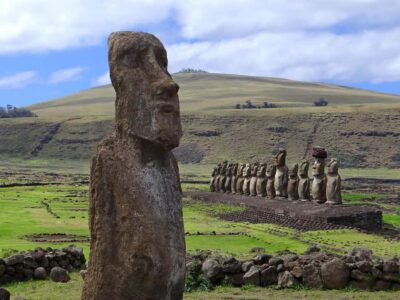
Two days of Full Day Tour of Rapa Nui + Sunrise in Tongariki
Read our review →Two days of Full Day Tour of Rapa Nui + Sunrise in Tongariki
Read our review →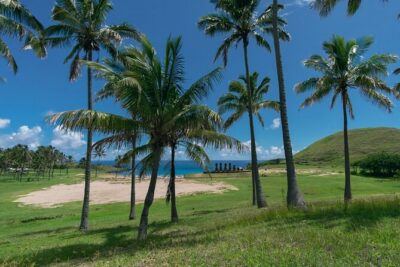
2 Days Highlights Tour in Easter Island Moai and Nature
Read our review →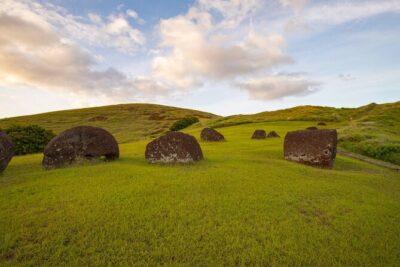
2 Day Private Tour: Easter Island’s Cultural Heritage
Read our review →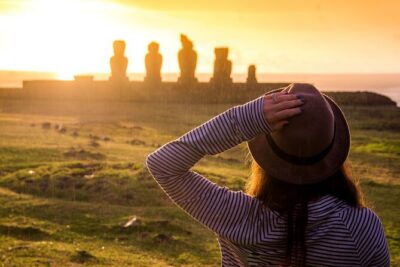
2 Day Small Group Tour in Moai Monuments and Historic Pathways
Read our review →Browse the lists this tour appears in