
Reviewed · EASTER ISLAND TOURS
Easter Island: The Moai Trail Private Archeological Tour
Easter Island is interesting because the moai feel both monumental and handmade, like you are watching history freeze in stone. I love that this private format keeps the day moving without big-crowd chaos, and you get close enough to notice details, not just silhouettes. You will also spend serious time at the Rano Raraku quarry, where many moai were carved in place.
I love the balance of stops here: ceremonial ahu platforms, the carving quarry, and then the beach at Anakena where the island’s origin story is tied to Hotu Matua. One possible drawback is that it is a full day tour with a lot of walking and driving over uneven terrain, so comfortable shoes really matter.
Key highlights worth your attention
- Ahu Tongariki with 15 moai: the biggest platform visit is long enough to take in the scale.
- Rano Raraku for 3.5 hours: you can see moai at different stages of carving in the quarry itself.
- Te Pito Kura and the navel stone: you’ll hear the legend tied to Hotu Matua’s arrival and the spherical stone.
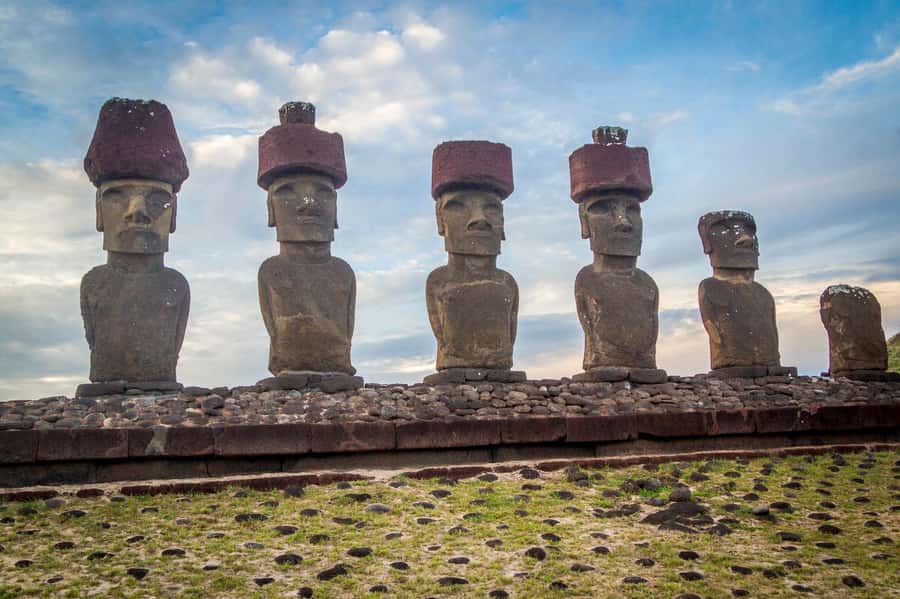
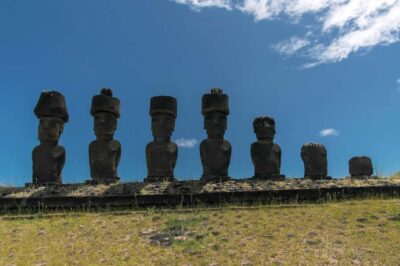
- Anakena beach and Ahu Nau Nau: white sand, plus moai with pukao and petroglyphs on the back.
- Ahu Akahanga and hare paenga: you’ll connect ceremonial sites to everyday ancient building types.
- Private guide storytelling: the guiding style matters here, and the tour has strong praise for guides like Sol, Isa, Hugo, Miguel, and Yoyo for clear historical storytelling and humor.
Entering Moai Country From Hanga Roa, Without Rushing
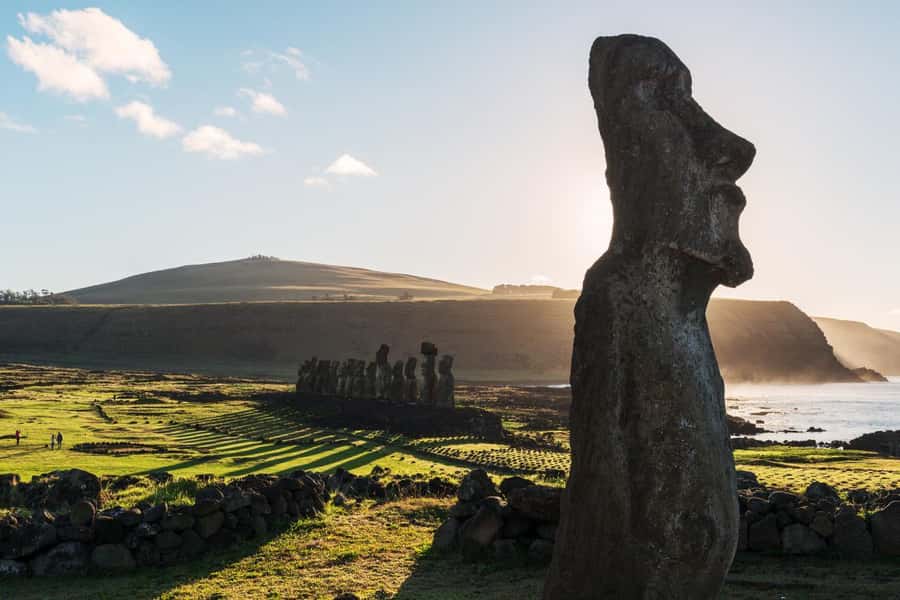
This tour is built around the island’s core moai zones in one efficient circuit, starting with pickup in Hanga Roa. With a private vehicle and a guide just for you, you can ask questions and pause when something catches your eye, instead of timing your curiosity to a group schedule.
The day lasts 6 hours, but that time does not feel wasted because the stops are chosen for what you can learn in each place. You will move from an ahu near Akahanga, to the quarry at Rano Raraku, to major platforms like Tongariki, and finally to Anakena for the island’s softer side.
If you want a moai tour that feels like you are building a story as you go, this one does that. If you prefer a slow stroll with minimal walking, you might find it a bit full. The good news is that you control how closely you follow each stop with the guide, and your guide can pace the walk based on the group.
A few more Hanga Roa departures to weigh up
- From Hanga Roa: Rapa Nui Culture Sightseeing Tour
★ 4.6 · 307 reviews - From Hanga Roa: Easter Island Highlights 2-Day Tour
★ 4.3 · 205 reviews - Full Day Tour in Rapa Nui
★ 4.5 · 122 reviews
Hotel Pickup, Private Vehicle, and How to Plan Your Day
Pickup is from your hotel in Hanga Roa, and you return to the same area at the end. That matters on Easter Island because time is precious and the driving distances between sites can add up.
The tour is described as a private group, which usually means you are not crammed into a long line waiting for everyone to catch up. Your guide will be there in English or Spanish, so you can follow the historical context without relying on guesswork.
This is also a tour where timing and clothing make a real difference. Bring comfortable shoes because you will be walking at multiple archaeological areas, and bring warm clothing because Easter Island weather can shift quickly.
Ahu Akahanga: Ceremonial Center Energy Plus Hare Paenga Clues
You begin near Ahu Akahanga, with a guided visit of about 30 minutes. This ahu area is presented as a significant ceremonial center, which is the key idea to understand before you even look at the moai. Think of it less like a museum display and more like a place where community life, authority, and ritual would have been visible.
What I like about starting here is that it sets the tone early. You are not just hunting for statues, you are learning how people organized their world around these platforms.
You also learn about conflict on the island, including how some moai were knocked down during tribal wars. That kind of context changes how you look at ruined stone. The day stops feeling like a neat postcard route and starts feeling like a human story with consequences.
The tour route also includes the remains of hare paenga, the boat-shaped stone houses built by the island’s ancient inhabitants. Even if the remains look like stones now, the form helps you picture how people lived, not only how they commemorated.
Rano Raraku Quarry: Seeing the 400 Moai in the Making
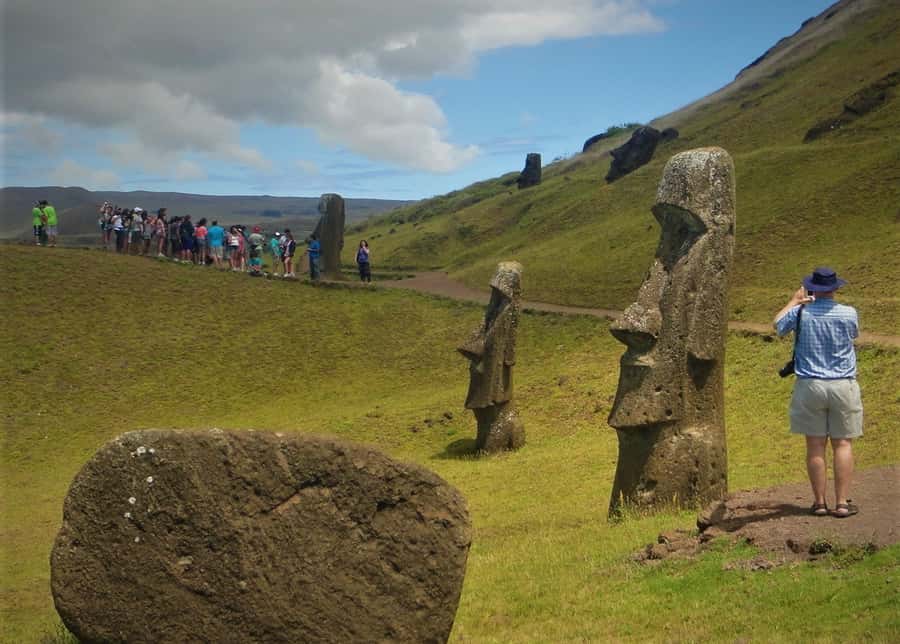
Rano Raraku is the heart of the “how” behind Easter Island moai. This stop is the longest on the itinerary, with a guided visit of 3.5 hours, and it is where the quarry explains the carving process in a way you cannot get from moai-only views.
You will visit the quarry where the volcanic rock was sourced for carving and spend time among moai in different stages of creation. The itinerary highlights around 400 moai across various stages, so you can literally watch the range between rough work and finished forms.
This is where the tour earns its keep. A lot of moai tourism shows completed statues on platforms. Here, you see the workshop side of the culture, which makes the stone feel less like magic and more like skilled labor plus belief.
You also get a strong sense of scale and labor. When you stand inside a quarry setting, you can understand why sourcing, carving, and moving stone would have required organization. That also gives more weight to the stories you hear later about authority and community conflict.
The other half of a Hanga Roa week:
- 2-Day Private Tour Easter Island Highlights Complete Discovery
★ 5.0 · 110 reviews - Private Full-Day Easter Island Highlights North and West
★ 5.0 · 84 reviews - From Hanga Roa: Journey from Orongo to Ana Te Pahu
★ 4.3 · 75 reviews - Journey of the Ancestors: Tongariki, Rano Raraku & Anakena Beach
★ 4.5 · 70 reviews
Ahu Tongariki: The Island’s Largest Platform and 15 Moai
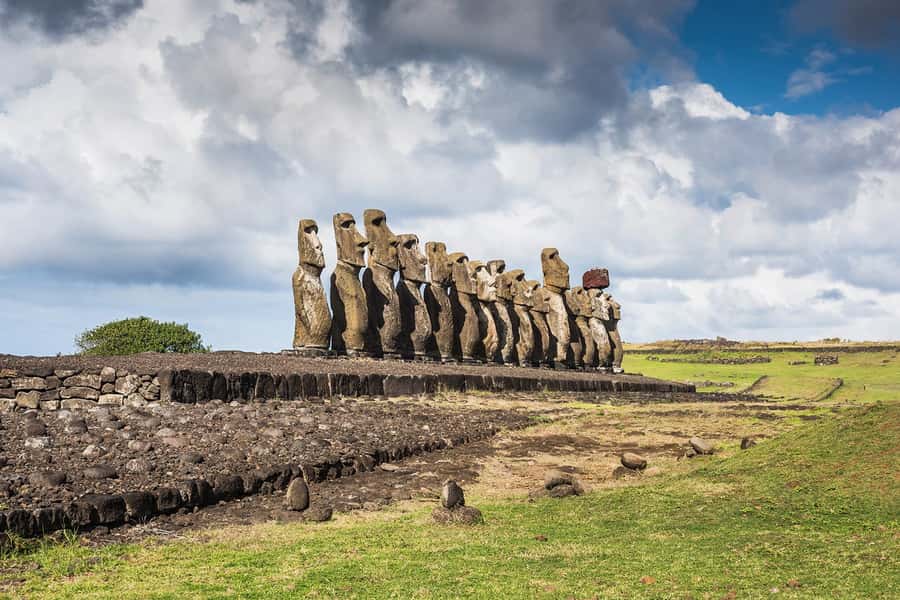
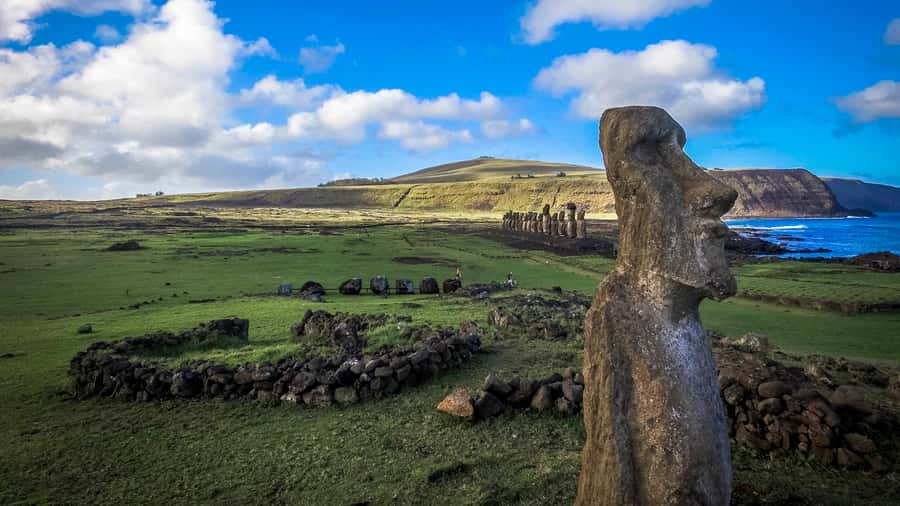
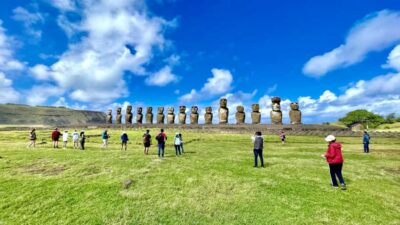
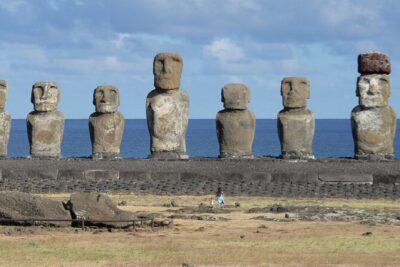
Next comes Ahu Tongariki, visited for about 2 hours. This is the largest ahu on the island and the itinerary notes 15 moai in this platform. It is a “wow” site, but it is not just about the number. Tongariki is where you grasp the visual language of moai lines and platform placement.
The longer time here helps you do something important: compare. You can look at how the moai relate to one another, how the platform setting frames them, and how the space changes your sense of monumentality.
This stop is also a good place to listen closely to how your guide explains the cultural meaning. Moai are not random sculptures placed for decoration. They are linked to community memory, status, and ritual, and Tongariki is one of the clearest expressions of that.
One practical consideration: it is a popular area, so plan to move with your guide and don’t treat this like a “quick photo” stop. If you rush, you miss the patterns that make the site intellectually satisfying, not just visually big.
Te Pito Kura, Paro Moai, and the Navel of the World Legend
After Tongariki, you head to Ahu Te Pito Kura for about 30 minutes. This is where the itinerary gets mythical, in the best way: you’ll hear about the highest statue on the island, the Paro moai, and a spherical stone next to the ahu.
The spherical stone is described in legend as the navel of the world, called Te Pito or Te Henua. The story includes that it was brought to the island on Hotu Matua’s boat. Even if you treat legends as meaning more than literal travel logs, the legend still helps you understand why a specific object mattered so much.
What I like about this segment is that it turns the tour from “facts about structures” into “why people attached meaning to particular places.” That is the difference between seeing moai and understanding them.
This is also a shorter stop, so if you tend to get impatient with quick visits, you might want to arrive mentally ready to listen first and photograph second. Your guide can usually point out details fast, then let you settle into the quiet.
Anakena Beach and Ahu Nau Nau: White Sand Meets Pukao and Petroglyphs
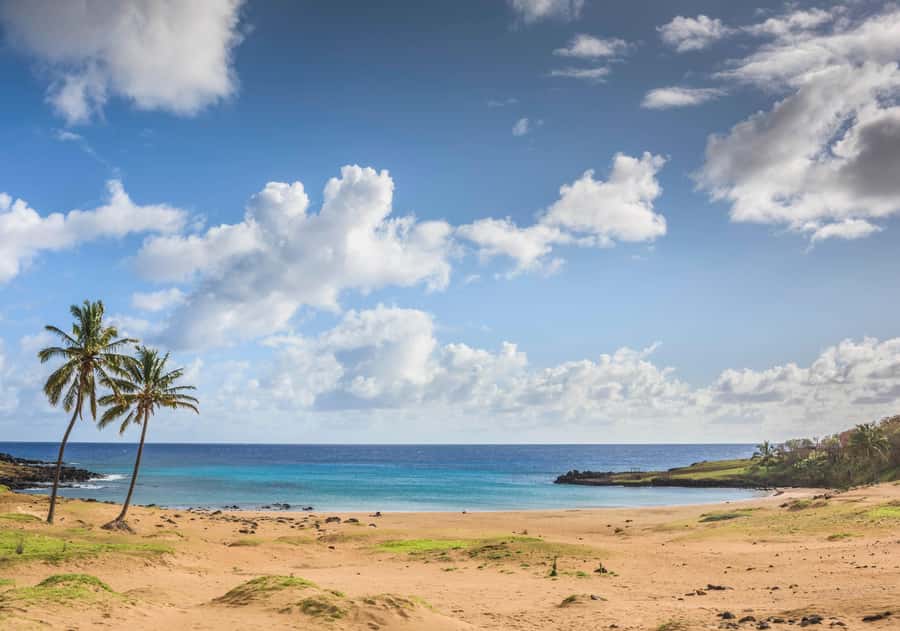
The day finishes with Anakena, guided for about 1.5 hours. Anakena is the white sand beach tied to arrival stories, including that Ariki Hotu Motua and his sister Avareipua arrived here.
I like ending at a beach because it balances the stone intensity. After hours of platforms and quarry rock, you get open sky and a calmer feeling. It also makes the island seem livable, not only archaeological.
At Anakena, you will also visit Ahu Nau Nau, described as the archaeological site of an ancient complex construction. The itinerary notes 5 moai here with pukao, and it adds a special detail: petroglyphs on the back of the statues.
That back detail is the kind of thing you might easily miss if you are only photographing faces. In this case, the tour format and guide explanation help you notice it. If you like details, this stop will reward you.
You will also see parts of the island’s natural side, including references to Rano Kau volcano in the tour highlights. Even when volcanoes are not the main “artifact,” they matter because they explain the volcanic rock sources and the island’s dramatic terrain.
Rapa Nui History, Tribal Wars, and Why the Ruins Matter
A good moai tour has two jobs. First, it helps you identify places. Second, it helps you understand why those places were built and sometimes destroyed.
This tour explicitly covers conflict, including tribal wars and moai that were knocked down during fighting. I find that context essential because a toppled moai is not just a damaged object. It is evidence of community shifts, power struggles, and changing beliefs.
The same idea applies to hare paenga remains. The tour links ceremonial ahu spaces to the boat-shaped houses that represent daily life. When you connect ritual and housing, Easter Island feels less like a single topic and more like a whole society that had to survive, plan, and adapt.
Your guide role here is big. Guides like Sol, praised for engaging storytelling, and Hugo, praised for humor and broad historical context, are exactly the kind of guide experience that makes the ruins feel human again.
Price and Value: What $200 Per Person Means Once You Add Entrance Fees
The tour price is listed as $200 per person, with entrance fees of $80 per person not included. So plan on about $280 per person total for the core tour plus site fees.
Is it good value? For me, the answer is yes when you want a private, single-day route that hits the island’s most meaningful moai areas without cutting corners. You are paying for transportation in a private vehicle, pickup and drop-off in Hanga Roa, and a professional guide.
If you are traveling solo or in a small group, private pricing is usually higher than joining a larger group. But the trade often works out because you get more flexible pacing and clearer explanations at the most important stops, like Rano Raraku and Tongariki.
If you are on a very tight budget, you should compare against group tours. But if your goal is depth in a limited time window, this one is built to deliver it.
What to Bring and Practical Tips for a Comfortable Moai Day
This tour is simple on paper, but your comfort depends on your choices.
Bring:
- Comfortable shoes for uneven ground
- Warm clothing for changing island weather
- A light layer you can adjust as the day shifts from open beach to archaeological sites
Also, plan to keep your camera handy, but do your listening first at key points. A good guide will point out details quickly at Rano Raraku, and you will enjoy the visuals more if you know what you are looking for.
If you are sensitive to walking distances, ask yourself honestly whether you can handle multiple archaeological stops in one day. This tour is not designed for a low-mobility pace.
Who This Tour Suits, and Who Should Rethink It
This private tour is a strong match if you want:
- A structured route through the moai highlights
- More time at the quarry and the largest ahu than a quick stop version
- Explanations in English or Spanish from a professional guide
It is not suitable for people with mobility impairments and it is not for wheelchair users. If you need accessibility support, you should look for a different format that is designed for reduced walking.
It is also not available for cruise ship passengers, so if you are arriving via ship, check other tour options.
If you love history but also like nature, you get both, including the island’s natural scenery elements referenced in the tour highlights like Rano Kau volcano, plus Anakena’s beach finish.
Should You Book This Private Moai Trail Tour?
Book it if you want a moai day with real context, not just a checklist of photos. The route is concentrated in the places that explain the culture behind the statues, especially the Rano Raraku quarry and the big platform at Ahu Tongariki.
Pass or reconsider if you want minimal walking, have mobility constraints, or you are looking for a cruise-style half-day condensed tour. This is a 6-hour archaeology and moai route, so it rewards energy and curiosity.
If you care about the guide, this tour has a track record of strong guide impressions, with names like Sol, Isa, Hugo, Miguel, and Yoyo highlighted for clear storytelling and humor. That makes a difference on Easter Island, where the stone is only half the experience.
FAQ
How long is the Easter Island Moai Trail Private Archeological Tour?
The tour duration is 6 hours.
Where does the tour start and where do you end up?
Pickup and the start point are from your hotel in Hanga Roa, and you return back to Hanga Roa at the end.
What’s included in the price?
Included are hotel pickup and drop off, transportation in a private vehicle, a professional guide, and a private tour.
Are entrance fees included?
No. Entrance fees are listed as $80 per person and are not included.
What sites are visited during the tour?
The tour includes Ahu Akahanga, Rano Raraku Quarry, Ahu Tongariki, Ahu Te Pito Kura, and Anakena, including Ahu Nau Nau.
Does the guide speak English and Spanish?
Yes. The live tour guide is available in English and Spanish.
Is this tour private?
Yes. It is described as a private group and a private tour.
Is it suitable for wheelchair users or people with mobility impairments?
No. The tour is not suitable for people with mobility impairments and wheelchair users.
Is this tour available for cruise ship passengers?
No. It is noted that the tour is not available for cruise ship passengers.
Freshly reviewed in Hanga Roa
- Astronomical Tour on Easter Island★ 3.5 · 3 reviews
- Full day Private Tour: Poike Walk through the abandoned area★ 4.5 · 3 reviews
- T1-THE GRAND TOUR (non-cruise visitors)★ 5.0 · 3 reviews
- 4-Days Trip to Discover Easter Island★ 4.0 · 3 reviews
- Private 2 Days Essential Tour of Easter Island★ 5.0 · 4 reviews
- T2-THE MUST-HAVES OF RAPA NUI (non-cruise visitors)★ 4.5 · 4 reviews
- Private Tour: Easter Island Caves★ 4.5 · 4 reviews
- Private Tour: The Highlights of Easter Island★ 5.0 · 4 reviews
Easter Island Tours, compared.
Two days of Full Day Tour of Rapa Nui + Sunrise in Tongariki
Read our review →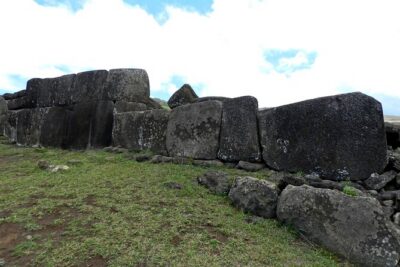
2-Day Private Tour Easter Island Highlights Complete Discovery
Read our review →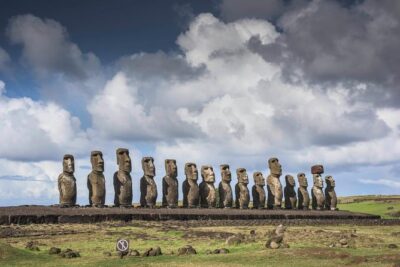
Private Tour: Full Day Easter Island Highlights
Read our review →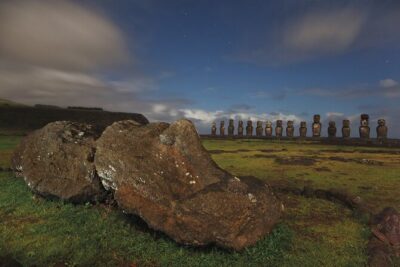
Browse the lists this tour appears in