
Reviewed · HISTORICAL TOURS
2 Day Small Group Tour in Moai Monuments and Historic Pathways
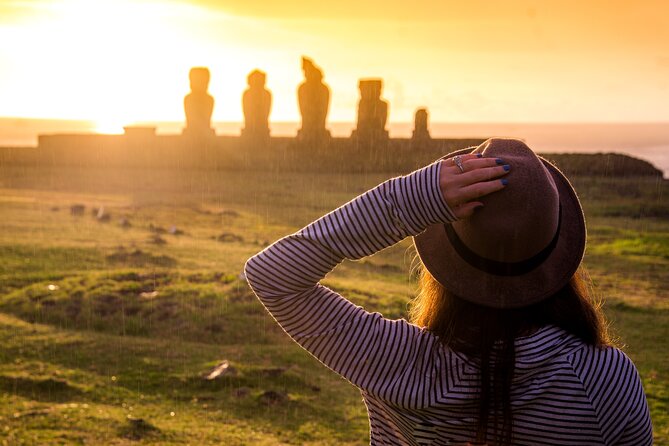
Rapa Nui moves fast and feels big, so this 2-day plan is interesting because it traces the moai story in the order your brain expects: carving, building, and then the places where people watched, governed, and lived. You spend day 1 on the monumental circuit, then day 2 follows the island’s volcanic logic into crater views and lava-tube shelter.
I love the way this tour strings together major sites like Ahu Tongariki and Rano Raraku without rushing you through them. I also like the small-group feel, with a maximum of 12 people, so your guide can answer questions and keep an easy pace.
One possible drawback: it is a full two days on island roads and sites, and the tour asks for moderate physical fitness, so if you dislike walking on uneven volcanic ground or want a super relaxed schedule, you may prefer fewer stops.
Key Things You’ll Notice Right Away
- Small group size (max 12) keeps the day from feeling like a bus tour.
- A tight moai storyline runs from quarry to topknots and restored platforms.
- Real local guiding with named guides like Yoyo and Hekii, plus quick pre-trip communication from Paulina.
- All the big stops are covered, including Orongo and the lava-tube network at Ana Te Pahu.
- Admission is listed as free for the stops, so you are not stacking extra ticket costs.
- Pickup and drop-off at your lodging is included, but cruise port pickup is not.
Why This 2-Day Moai and Historic Pathways Route Works So Well
If your first goal on Rapa Nui is to get oriented fast, this is one of the better formats. You start at signature ahu and beach-adjacent viewpoints, then you move toward the island’s “why” sites, like the moai quarry at Rano Raraku and the making-of area at Puna Pau. By day 2, you are also looking beyond the statues, at how Rapanui people managed ceremonies and even daily survival using volcanic terrain.
The other big strength is pacing. Most stops give you about an hour, and the big quarry stop gets closer to two hours. That matters because Rapa Nui rewards time spent looking. You notice stonework details, how the platforms sit in the land, and how certain groups of moai are oriented, not just what they look like from a distance.
Finally, this route is set up for photos and for questions. The guide can help you decide where to stand, what lines of sight to watch, and which legends are tied to particular stones or platforms, like the magnetic circular stone at Ahu Te Pito Kura.
A few more Hanga Roa departures to weigh up
- 2 Day Private Tour: Easter Island’s Cultural Heritage
★ 5.0 · 40 reviews - Santiago: Guided Walking Tour of the Historical Old Town
★ 4.8 · 459 reviews - Tour Viña Santa Rita: History, Wine and Picnic Outdoors
★ 4.5 · 141 reviews
Getting There: 9:30 Start, Lodging Pickup, and What Not to Assume
The tour starts at 9:30 am, with pickup and drop-off at your lodging in Hanga Roa. That means you avoid the hassle of figuring out where to meet and which direction to head first.
Two practical notes to plan around:
- Cruise port pickup is not available, so if you are arriving by ship you’ll need separate transportation to Hanga Roa.
- The itinerary involves walking around moai platforms and uneven volcanic ground. The tour asks for moderate physical fitness, which is fair for most visitors, but you should still expect some uneven steps and trails.
Also, admission at the listed sites is marked free for this experience. That is a nice value add because Rapa Nui can nickel-and-dime you elsewhere.
One more thing: this tour is commonly booked well in advance, with an average booking window of 87 days. If you have set travel dates, it is smart to book early instead of hoping space appears.
Day 1 in Rapa Nui: From Anakena’s Morning Light to the Moai Quarry at Rano Raraku
Day 1 is built like a classic Rapa Nui arc. You begin with iconic ahu, then you work your way through what remains of earlier platforms, you hit the restored showpiece, and you end at the moai birthplace.
Ahu Nau Nau: Anakena and the Morning Photo Setup
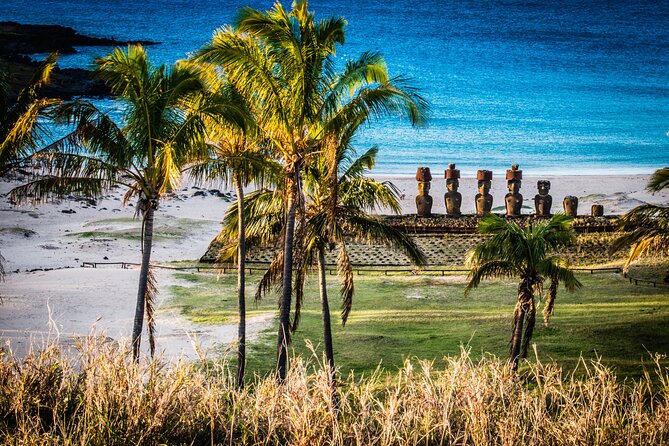
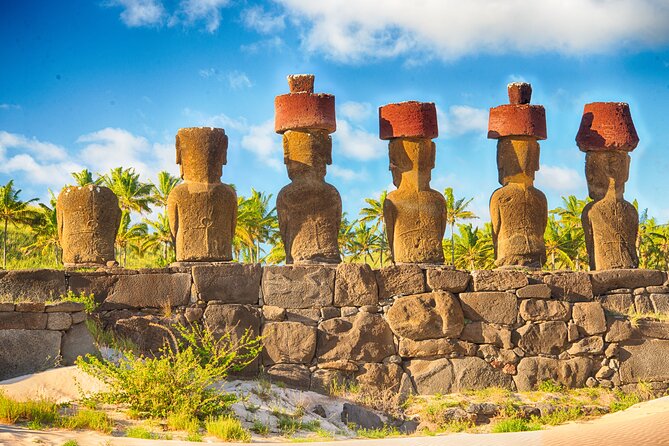
You kick off at Ahu Nau Nau, and the timing matters. Clear morning light is great for photos, especially with the nearby Royal beach at Anakena. This is a good first stop because it gives you scale. You can see how the ahu sits near the coastline and how the beach setting changes the mood compared with the interior sites.
If you like photography, start here with the expectation of quick back-and-forth framing: the beach gives you a softer background, while the moai platform gives you strong structure.
The other half of a Hanga Roa week:
- From Hanga Roa: Rapa Nui Culture Sightseeing Tour
★ 4.6 · 307 reviews - From Hanga Roa: Easter Island Highlights 2-Day Tour
★ 4.3 · 205 reviews - Full Day Tour in Rapa Nui
★ 4.5 · 122 reviews - 2-Day Private Tour Easter Island Highlights Complete Discovery
★ 5.0 · 110 reviews
Ahu Te Pito Kura: Towering Moai and the Magnetic Legend
Next is Ahu Te Pito Kura, where a towering moai still reaches about 10 meters tall. Around it, you also get the famous magnetic circular stone. The legend ties it to the idea that it came from the ancient homeland of Hiva with the first king, Hotu Matuʻa.
Even if you do not care about legends, this stop is still worth your time because the setting helps you understand how meaning attached to objects could shape where people gathered and what they believed the past meant.
One Makihi: Unrestored Platforms and the Story of Change
Then you visit One Makihi, described as an unrestored conglomerate of ahu platforms. The key idea here is the interruption in tradition. This place has been sitting for over 200 years, since islanders began toppling many of the moai after traditions shifted.
For many visitors, this is where the emotional weight increases. Instead of only restoration and survival, you see evidence of conflict and change in what people chose to keep, or what they rejected.
Ahu Tongariki: The Restored Wall of Moai Faces
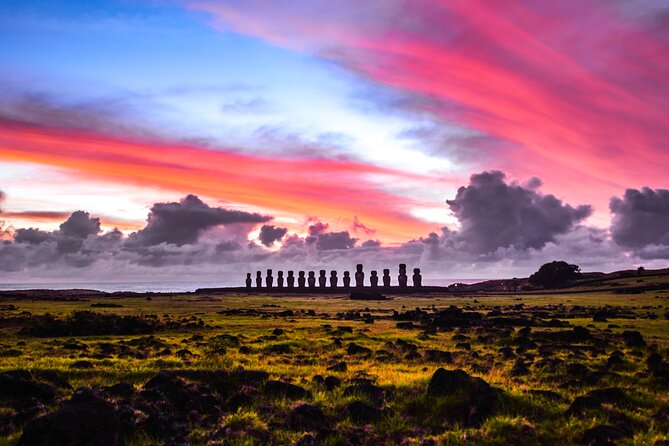
After that, the day hits a highlight at Ahu Tongariki. It was restored between 1992 and 1996, and it is famous because 15 of the largest moai face out in a dramatic line. The description is spot on: the stones look like flint, and they face the setting sun, while tourists feel small in the frame.
If you only have one moai stop on day 1, this is the one that tends to deliver the strongest “wow.” It is also a great place to pause longer because you can compare angles, notice how the spacing affects the overall pattern, and take in how the island’s geography shapes sightlines.
Rano Raraku: The Quarry That Explains Everything
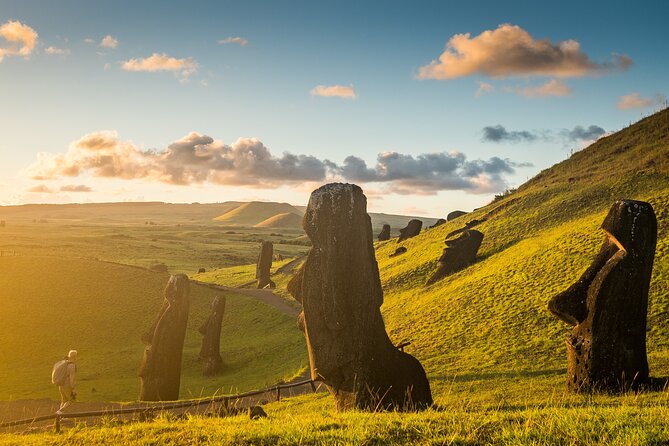
You finish day 1 at Rano Raraku, the birthplace and quarry of moai. This is where you see hundreds of heads and torsos in different stages of carving, still waiting to be transported to their ahu.
This stop changes how you interpret the whole trip. Before Rano Raraku, moai can feel like a finished product you view from afar. Here, you understand the process: the scale of labor, the “in progress” nature of the stone, and why these monuments look the way they do.
It also gives you time to slow down. Expect to spend effort looking at carving styles and the way the work varies across pieces.
Day 2 on Rapa Nui: Topknots at Puna Pau, Inca-Like Stonework at Vinapu, and Orongo’s Cliffside Ceremony
Day 2 turns from moai creation and placement into how people organized life and ritual on a volcanic island.
Puna Pau: Where the Topknots Were Made
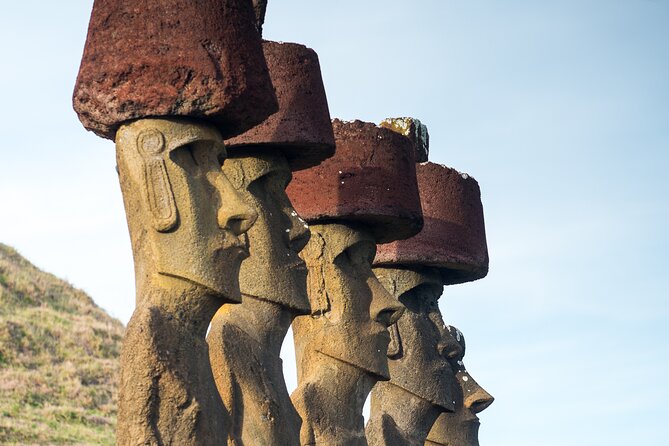
At Puna Pau, you focus on the scoria topknots that were fitted onto moai heads. This is described as the small crater where those adornments were made. It is short, about 40 minutes, but it is dense in meaning.
If you have ever wondered why moai look so iconic from far away, this is where that answer starts. You see that the statue look was not only about the head shape, but also about the materials and attachments that completed the head.
Ahu Vinapu: Beautiful Stonework and Masonry Comparisons
Next is Ahu Vinapu, known for some of the island’s most beautiful stonework. The description compares it to legendary Inca masonry in South America.
Even if you do not buy every theory about cultural connections, the stones themselves are worth your attention. Look for tight-fitting blocks and how the walls manage stability and shape. This is also where you appreciate that Rapanui engineering was practical, not only ceremonial.
Rano Kau: The Crater and the 200-Meter Drop to the Lake
Then you head to Rano Kau, a large volcanic crater with a beautiful lake and a drop of about 200 meters. The best part is the panoramic view across the island.
This stop gives your legs a change of pace. You are still on the tour, but the crater helps you take a step back and see Rapa Nui as a whole, not just as a sequence of sites.
Orongo: The Ceremonial Village and the Tournament for Leadership
At Orongo, you get the ceremonial village and the political event tied to it. The story here is clear: during the 18th and 19th centuries, different tribes competed each year, with a leader chosen through a daring set of challenges.
The description frames it like a sports event involving climbing down cliffs, swimming out to the islets off the coast, and returning with the proof needed to win. It is one of the most human sections of the tour because it shows how risk, skill, and geography drove power.
Even if you are not into politics, this place helps you understand why Rapa Nui’s dramatic terrain mattered in daily life.
Ahu Akivi: Seven Moai Facing the Sea
Next is Ahu Akivi, a restored site with seven moai. The description says these represent the first seven explorers who came to Easter Island. The key visual detail: these moai are the only group looking out to the sea.
This is a great “breather” stop after Orongo’s cliffside story. Instead of chasing narratives about ceremony, you can focus on the posture of the statues and the calm, forward-facing attention they have toward the ocean.
Ana Te Pahu: Lava Tubes, Water Use, Farming, and Hiding
Finally, you visit Ana Te Pahu, an extensive network of lava tubes. The description explains how Rapanui people used these cave networks for living, collecting water, planting vegetables, and hiding from aggressive visitors in the 18th and 19th centuries.
If you care about survival and adaptation, this is the stop that tends to stick. Moai are impressive, but lava tubes remind you that people also built systems for food, safety, and shelter.
The tour description says the network is extensive. That usually means you will likely spend time walking and looking at the cave spaces. Bring your sense of adventure, but also listen to your guide about footing and where to stand.
Small Group Size and Local Guides: Why This Tour Feels Like Real Island Time
This experience is capped at 12 travelers, which is big deal on a small island. You get room for questions, and you are not forced into a rigid stampede from stop to stop.
The guide factor is consistently strong. Yoyo and Hekii show up by name in feedback, with a clear pattern: they connect the sites to Rapa Nui culture and not just the basics. In practical terms, that means you get answers when you look at stonework and orientation, not only generic explanations you forget after the van turns the corner.
I especially like that families and mixed-age groups seem to get real attention. One couple noted that their children were entertained with little moments, and that the guide was patient. That sort of flexibility usually makes the day smoother, because you are not watching time get swallowed by “kids are bored” energy.
Communication is another standout. Paulina is mentioned for quick, responsive messaging, and the operator sends details ahead of the mornings. If you like knowing what to expect, that reduces stress when you are dealing with an island schedule.
One more value point from my perspective: when guides are comfortable answering questions, you get to choose what matters to you. Some people want moai engineering angles, others want ceremony and the human story. This style of guiding supports both.
Price and Value on a $300 Two-Day Tour
At $300 per person, the question is not whether it is cheap. The question is whether you feel it was worth it for what you get.
Here is the math that matters:
- You get a full two-day rotation through major sites, including the quarry and the volcanic crater areas, not just a handful of quick viewpoints.
- All listed site admissions are free for the stops on this route, which reduces the common “surprise” costs.
- Pickup and drop-off at your lodging is included, which saves time and reduces logistics headaches.
- The group size max is 12, which supports a more personal pacing than larger group formats.
Where your planning needs to be realistic: the price covers the tour and the scheduled stops, but the data does not say meals or drinks are included. So I recommend you assume you will cover your own snacks and water needs between stops, especially on day 1 when you can have several hours of touring.
Also note cruise port pickup is not available. If your plan involves a cruise stop, your total travel time could be different, and you may have to arrange your own transfer.
Bottom line: if your priority is seeing the island’s big ideas in two days, not just checking off names, this price looks reasonable.
Best Fit: Who Should Book This Moai Monuments and Historic Pathways Tour
This tour is a great match if:
- You want a strong overview of both moai monuments and the island’s living, volcanic, and ceremonial side.
- You like guided context, like why Rano Raraku matters after you have seen the restored platforms.
- You would rather spend your time looking than figuring out routes and timing.
It may not be the best fit if:
- You are hoping for a very light day with minimal walking. Ana Te Pahu and some terrain around volcanic sites can be more physical than people expect.
- You dislike group energy even when groups are small. It is small, but it is still a shared day.
Should You Book This 2-Day Moai Monuments and Historic Pathways Tour?
Yes, if you want the cleanest “two days, big story” introduction to Rapa Nui. The itinerary makes sense in sequence, and the guide-driven approach helps you connect places that would otherwise feel like separate photo stops.
I would book it early because availability can be limited and this route is popular. If you care about moai beyond the postcard images, this tour gives you the quarry, the topknot-making area, the restored platforms, and then the people-focused sites like Orongo and Ana Te Pahu.
If you want a Rapa Nui plan that feels like it respects your time, your questions, and the island’s real terrain, this is a smart choice.
FAQ
What time does the tour start?
The meeting time is 9:30 am.
How many people are in the group?
This tour has a maximum of 12 travelers.
Is pickup available from a cruise port?
Cruise port pickup is not available. Pickup and drop-off are provided at your lodging.
What is included in the price?
Pickup and drop-off at your lodging are included. The tour also lists admission tickets for the stops as free.
How physically active is the tour?
The tour requests moderate physical fitness, since it includes walking around varied terrain and sites.
Can I cancel for a full refund?
Yes, you can cancel for a full refund up to 24 hours in advance of the experience’s start time.
More 2-Day Experiences in Hanga Roa
- 2 Days Highlights Tour in Easter Island Moai and Nature
★ 4.0 · 55 reviews - Two days of Full Day Tour of Rapa Nui + Sunrise in Tongariki
★ 4.8 · 55 reviews - Private 2 Days Essential Tour of Easter Island
★ 5.0 · 4 reviews - Cable Car, Funicular and Sightseeing Bus in Santiago two days
★ 5.0 · 1,747 reviews
Freshly reviewed in Hanga Roa
- Astronomical Tour on Easter Island★ 3.5 · 3 reviews
- Full day Private Tour: Poike Walk through the abandoned area★ 4.5 · 3 reviews
- T1-THE GRAND TOUR (non-cruise visitors)★ 5.0 · 3 reviews
- 4-Days Trip to Discover Easter Island★ 4.0 · 3 reviews
- Private 2 Days Essential Tour of Easter Island★ 5.0 · 4 reviews
- T2-THE MUST-HAVES OF RAPA NUI (non-cruise visitors)★ 4.5 · 4 reviews
- Private Tour: Easter Island Caves★ 4.5 · 4 reviews
- Private Tour: The Highlights of Easter Island★ 5.0 · 4 reviews
Historical Tours, compared.
Tour Viña Santa Rita: History, Wine and Picnic Outdoors
Read our review →
Elqui Valley Tour: History and Flavors (NOT FOR CRUISES)
Read our review →
Viña Del Mar and Valparaiso world heritage site.
Read our review →
Walking Tour Valparaiso, History & Art – Private Optional
Read our review →
Essence of Santiago : History, Flavors and Panoramic Views
Read our review →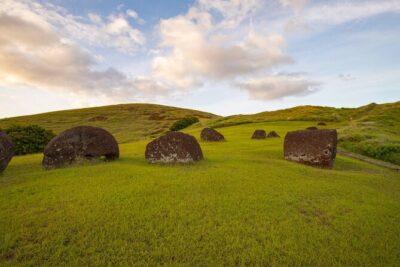
2 Day Private Tour: Easter Island’s Cultural Heritage
Read our review →
Browse the lists this tour appears in