
Reviewed · 2-DAY EXPERIENCES
Private 2 Days Essential Tour of Easter Island
A private 2-day Easter Island tour works because you get the whole story in motion, moai quarry to ceremonial platforms to the volcanic sites tied to ritual life. Starting from Hanga Roa with hotel pickup at 9:00 am, it’s built to help you see Rapa Nui as one connected place instead of a checklist of famous statues.
I love the moai-making storyline you can actually follow, from the quarry at Rano Raraku to the biggest rebuilt platforms like Tongariki. I also like the private pacing and guide quality, with English explanations that stay clear and practical, and guides people describe as fun, passionate, and calm about time, including Thais, Isabell, and Akahanga.
One consideration: you’ll pay extra for the National Park ticket, which is mandatory for the park sites and not included. Also, because this island runs on weather, the tour depends on good conditions, so keep your schedule flexible if the forecast looks iffy.
The Big Highlights You Actually Come For
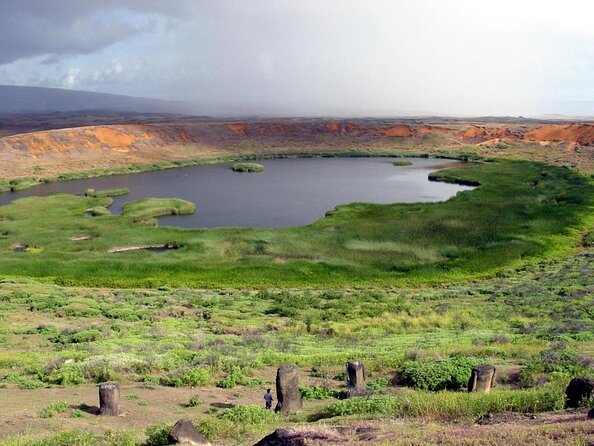
- Rano Raraku, the moai quarry where the stonework story starts and you can see where statues were made
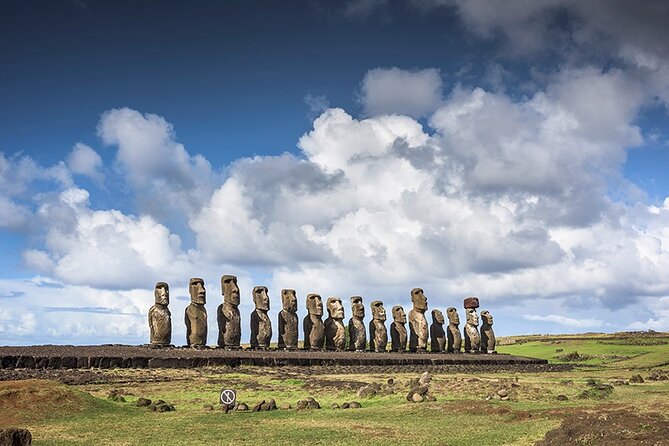
- Ahu Tongariki with its imposing view over the Pacific and the feel of standing before a ceremonial centerpiece
- Orongo and Birdman ceremony country on Rano Kau volcano, a key spiritual site beyond the moai
- Puna Pau red stone and Pu Kao hair ideas for how the moai were finished and styled
- Ahu Akivi’s unusual inland placement with moai oriented for astronomical guidance toward the setting sun
- Hotel pickup plus private transport so you lose less time on the island’s roads
Hitting Rapa Nui’s Main Threads in Just 2 Days
Easter Island can feel like two different worlds: the moai sites that grab your eyes, and the volcanic places that explain the island’s survival and ceremonies. This 2-day private tour is interesting because it links both, with stops that move you from stone sources to ceremonial platforms, then to Birdman-era territory and crater views.
The practical win is how the route is organized. Instead of bouncing randomly, you follow a logic: where the stone came from, where the moai were set up, and how later sites like Orongo fit into the island’s broader ritual calendar.
You also get a professional local guide and private transportation. That combination matters on Rapa Nui, where distances take longer than you’d guess and the best moments often come from understanding what you’re looking at.
A few more Hanga Roa departures to weigh up
- From Hanga Roa: Rapa Nui Culture Sightseeing Tour
★ 4.6 · 307 reviews - From Hanga Roa: Easter Island Highlights 2-Day Tour
★ 4.3 · 205 reviews - Full Day Tour in Rapa Nui
★ 4.5 · 122 reviews
Day 1: From Village Layout Ideas to Tongariki’s Pacific-Facing Moai
Day 1 is about seeing the moai world in layers. You start with a site that helps you read the island’s ceremonial planning, then you hit the quarry where the moai were built, then you move through the most dramatic reconstructed platforms and end with the island’s iconic beach.
Ahu Akahanga, reading how space shaped ceremony
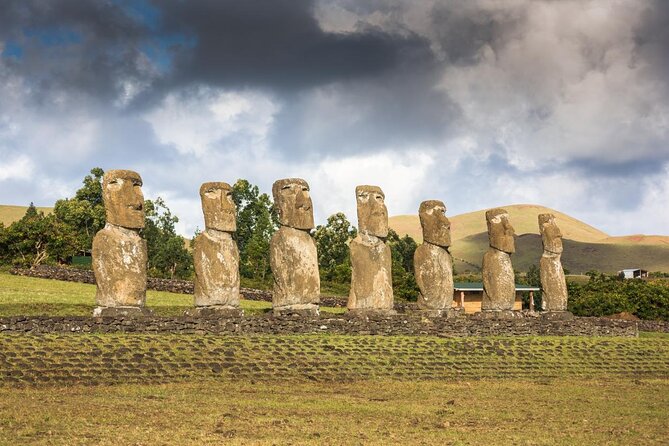
Ahu Akahanga sits on the southeast coast and it’s a strong first stop because it’s about arrangement. You’ll focus on how a village related to the ceremonial center, and you’ll also see moai laid down in a way that makes the scale and movement of these monuments feel real.
The effect is not just visual. It helps you understand that the moai weren’t floating museum objects, they were once part of a lived layout of land, houses, and sacred space.
Rano Raraku, the quarry where moai were built
Next comes Rano Raraku, the volcanic cone tuff quarry that made large-scale moai possible. This is where the tour gives you the “wait, that’s where they came from” moment, because you can connect the stone’s origin to the statues you’ll later see standing on platforms.
Rano Raraku is special because it’s not only about finished moai. It’s also about the worksite feel of a place where statues were carved and then moved.
The other half of a Hanga Roa week:
- 2-Day Private Tour Easter Island Highlights Complete Discovery
★ 5.0 · 110 reviews - Private Full-Day Easter Island Highlights North and West
★ 5.0 · 84 reviews - From Hanga Roa: Journey from Orongo to Ana Te Pahu
★ 4.3 · 75 reviews - Journey of the Ancestors: Tongariki, Rano Raraku & Anakena Beach
★ 4.5 · 70 reviews
Ahu Tongariki, the largest reconstructed platform in a Pacific-facing line
Ahu Tongariki is a show-stopper, and you feel it even before you fully process the meaning. It’s described as the largest platform among the reconstructed sites, with fifteen standing statues visible, their backs oriented toward the Pacific Ocean.
What I like here is that the site forces a viewpoint. You’re looking at monuments meant to face an audience and a worldview, not just to be photographed from one angle.
Ahu Te Pito Kura, big transport, and the rounded sacred stone
From Tongariki, you move to Ahu Te Pito Kura, where the tour focuses on sheer size. You’ll find reference to a massive moai that was transported from Rano Raraku, plus the famous rounded stone called Te Pito ’o te Henua.
That stone brings in tradition, tied to ancestors in local storytelling. Even if you don’t catch every nuance, you’ll feel how the island connects objects, ancestry, and sacred meaning.
Anakena Beach, turquoise water and a royal-family connection
You end the day at Anakena Beach, the island’s main beach with warm turquoise water and coral sand. It’s also tied to Miru Araki royal family residency in ancestral times, so you’re not just finishing with a swim stop, you’re ending in a place that’s part of the island’s memory.
The ahu Nau Nau here is singled out for refinement of its moai, giving you a satisfying final visual before Day 2 shifts gears toward Orongo and volcano country.
Day 2: Orongo and Rano Kau, then back to town for Tahai, Puna Pau, and Akivi
Day 2 moves away from the “classic moai platforms only” feel and toward the island’s volcanic ritual sites. You’ll hit Orongo and crater territory, then return toward town for Tahai, Puna Pau’s red stone, and Ahu Akivi’s unusual sky-tied orientation.
Orongo, Birdman ceremony village on the crater side
Orongo village sits on one side of the Rano Kau crater and it’s one of the island’s two main sites tied to the Birdman ceremony. This stop changes the tone. Instead of only moai silhouettes, you get a sense of a living competition, a ritual season, and a community focused on a different kind of sacred meaning.
You’ll spend enough time here to shift from “look at stone” to “picture the people,” which is the mental change that makes a tour feel worthwhile.
Rano Kau, crater size, endemic plants, and ancient water use
Rano Kau is the crater area tied to Orongo. You’re told it’s about 1.5 km in size and it holds endemic flora, plus a lake that served as drinking water in ancient times.
This stop is short, but it matters. It helps you connect ritual geography to survival geography, which makes Orongo feel less like an isolated attraction.
Ahu Vinapu, precision stonework and an Inca-style theory
Ahu Vinapu is highlighted for the fine work of ancient builders. There are theories about how construction style might relate to Inca building, and the tour keeps that idea in the realm of possibility rather than certainty.
Vinapu is a good mid-day mental reset because it’s about technique. If moai scale can make you feel small, Vinapu’s stone precision makes you realize someone cared deeply about fit and finish.
Ahu Tahai, Mulloy’s restoration and an easy sunset viewpoint near town
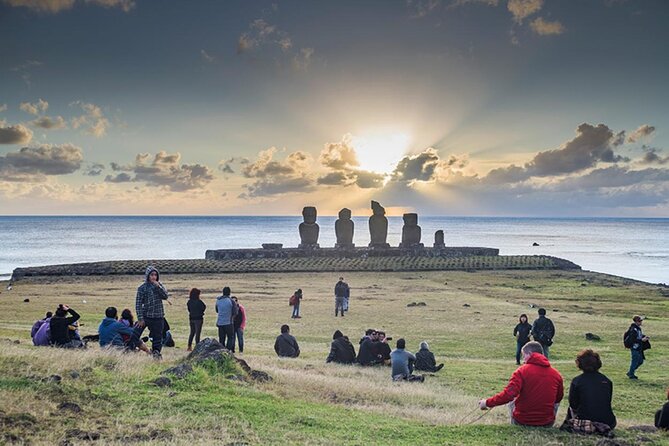
Tahai is restored from 1974 by American archaeologist Dr. William Mulloy. The focus here is on three principal ahu from north to south, including Ko Te Riku, Tahai, and Vai Ure.
Because it’s close to Hanga Roa, this is a practical place for sunset photos. More importantly, it gives you a calmer, less remote stop after the bigger out-on-the-road sites.
Puna Pau, quarrying the red stone for Pu Kao hair
Puna Pau is where the red volcanic stone was extracted for carving Pu Kao, the moai’s hair. The tour also points out early-stage Pu Kao prototypes, including 23 cylindrical forms, showing how shaping could support transportation to the ahu.
I like how this stop explains finishing touches. Many visitors see only the carved stone faces and forget that moai had styling elements, even if you can’t always see the full effect today.
You also get privileged views over Hanga Roa from this area, which helps you orient yourself at the end of a full day.
Ahu Akivi, inland moai and astronomical guidance toward the setting sun
Ahu Akivi is one of the few ceremonial platforms not located by the sea. It features seven moai restored to standing position, with the tour describing astronomical positioning guidance and an orientation toward the setting sun.
The practical value here is context. You end the tour with moai that are not just placed for drama, they’re placed as part of a sky-related plan. Even if you don’t do any astronomy, you leave with the feeling that these monuments responded to observation, time, and ritual cycles.
Price and What You’re Really Buying at $624 Per Person
At $624 per person for a private 2-day essential tour, you’re paying for two things: a local guide’s interpretation and private transportation that keeps the day moving. On Easter Island, that combination often saves more time and stress than you expect, since getting from site to site takes effort.
Two cost notes matter. Lunch is included on Day 1, but lunch on Day 2 is not included. And the National Park ticket is mandatory, sold separately for $100 per person, valid for 10 days from first entry and for all park sites.
So the real total cost in practice is your tour price plus the park ticket, and you’ll want a small lunch budget for Day 2. If you already planned to hire a guide and arrange transport anyway, this starts to look like a tidy package rather than an extra splurge.
Guides Make or Break the Pace: Thais, Isabell, and Akahanga
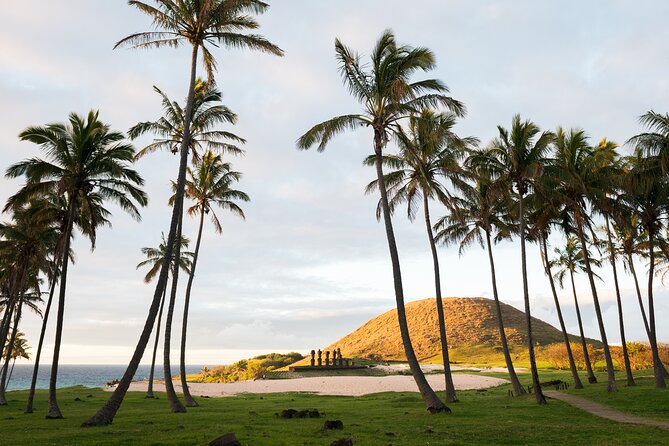
This is one of those tours where the guide presence actually changes the day. The strongest praise clusters around English delivery, clear explanations, and staying unhurried about stop time.
Guides like Thais are described as arriving promptly and speaking excellent English. Isabell is also described as fun, informative, and passionate about the island. Akahanga stands out for a patient style, not rushing people through viewpoints, letting you linger when you want photos or a moment of silence with the sites.
That matters because Easter Island is not a “five minutes per stop” place. The monuments reward attention, and the best guides help you notice what’s important without turning it into a lecture.
Practical Notes That Help You Enjoy It More
Most stops are outdoors on coasts, crater edges, and archaeological platforms. That means the tour’s success depends on weather, and it also means comfort is worth prioritizing. If conditions are windy, bring a way to manage sun and dust, and plan to wear shoes you trust on uneven ground.
You’ll also want to remember the park system. The National Park ticket is mandatory and valid for 10 days from first entry, so it’s worth buying early enough to cover both days without panic.
Finally, this is not for cruise ship passengers, and port and tender pickup is not available. If you’re staying in Hanga Roa hotels, pickup is offered at most hotels, and the start time is 9:00 am.
Should You Book This Private 2-Day Tour?
Book it if you want your Easter Island visit to feel connected, not random. The route is built to help you understand moai creation and ceremonial placement, then shift toward Orongo and volcano sites that expand the story beyond statues alone.
Skip it or rethink it if you are budget-sensitive, because the National Park ticket adds a meaningful extra cost. Also, if you hate being tied to a schedule, note that this is an organized private tour with set stops and set durations.
If you’re the kind of traveler who likes explanations that fit in your head and still leave time for photos, this one is a strong match. And based on the guide names most often associated with great outcomes, you’re likely to get a calm, clear companion for two full days on Rapa Nui.
FAQ
What time does the tour start?
The tour starts at 9:00 am.
Where does pickup happen?
Pickup is offered at most hotels in Hanga Roa. Port and tender pickup is not available.
Is lunch included?
Lunch is included on Day 1. Lunch on Day 2 is not included.
Do I need to buy the National Park ticket?
Yes. The National Park ticket is mandatory for all park sites, valid for 10 days from first entry, and it costs $100 per person. It is not included in the tour price.
Is this tour available for cruise ship passengers?
No. The tour is not available for cruise ship passengers.
What language is the tour guide?
The tour is offered in English.
Is this a private tour?
Yes. It is private, and only your group participates.
Is the tour dependent on weather?
Yes. This experience requires good weather, and if it is canceled due to poor weather, you will be offered a different date or a full refund.
What is the cancellation policy?
Free cancellation is available up to 24 hours in advance for a full refund. If you cancel less than 24 hours before the start time, the amount paid is not refunded.
Freshly reviewed in Hanga Roa
- Astronomical Tour on Easter Island★ 3.5 · 3 reviews
- Full day Private Tour: Poike Walk through the abandoned area★ 4.5 · 3 reviews
- T1-THE GRAND TOUR (non-cruise visitors)★ 5.0 · 3 reviews
- 4-Days Trip to Discover Easter Island★ 4.0 · 3 reviews
- T2-THE MUST-HAVES OF RAPA NUI (non-cruise visitors)★ 4.5 · 4 reviews
- Private Tour: Easter Island Caves★ 4.5 · 4 reviews
- Private Tour: The Highlights of Easter Island★ 5.0 · 4 reviews
- Sunrise in Tongariki on Easter Island Rapa Nui★ 3.5 · 5 reviews
2-Day Experiences, compared.

Cable Car, Funicular and Sightseeing Bus in Santiago two days
Read our review →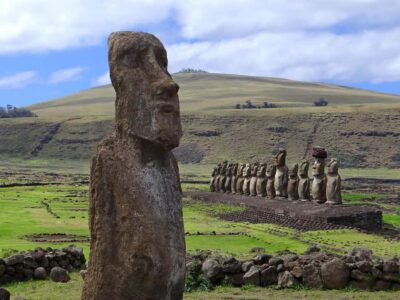
Two days of Full Day Tour of Rapa Nui + Sunrise in Tongariki
Read our review →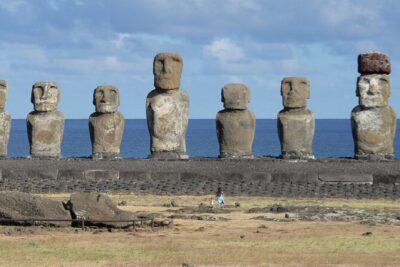
2-Day Private Tour Easter Island Highlights Complete Discovery
Read our review →Two days of Full Day Tour of Rapa Nui + Sunrise in Tongariki
Read our review →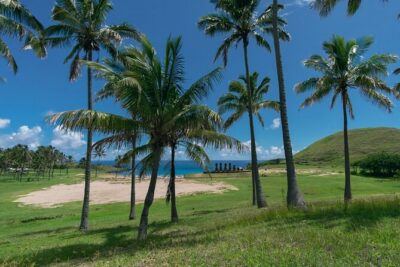
2 Days Highlights Tour in Easter Island Moai and Nature
Read our review →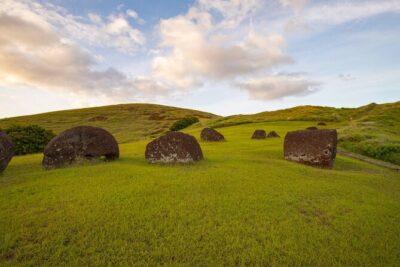
2 Day Private Tour: Easter Island’s Cultural Heritage
Read our review →Browse the lists this tour appears in