
Reviewed · HALF-DAY
Easter Island: Half-Day Archaeology Tour
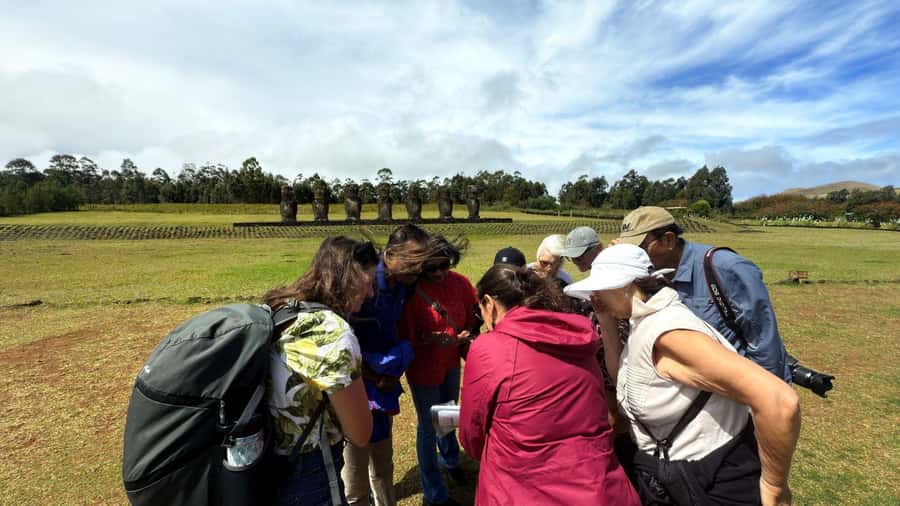
Easter Island feels like a real-life puzzle, and this half-day archaeology tour helps you read the pieces. In just a few hours, you’ll move through Rapa Nui National Park and get a guided sense of how the moai and ceremonial platforms connect to ancestors, power, and purpose.
Two things I really like here are the quick hit of major sites, and the way the guide ties each stop to a bigger idea. You also get a small group experience, limited to 15 participants, which makes it easier to ask questions without shouting over a crowd.
One consideration: the park entrance fee is not included (USD 100), so you’ll want to budget for that on top of the tour price.
Key highlights worth planning around
- Small-group pacing for a short, focused 3-hour visit
- Ahu Tahai with a moai that is oddly arranged, plus a clear explanation of its setting
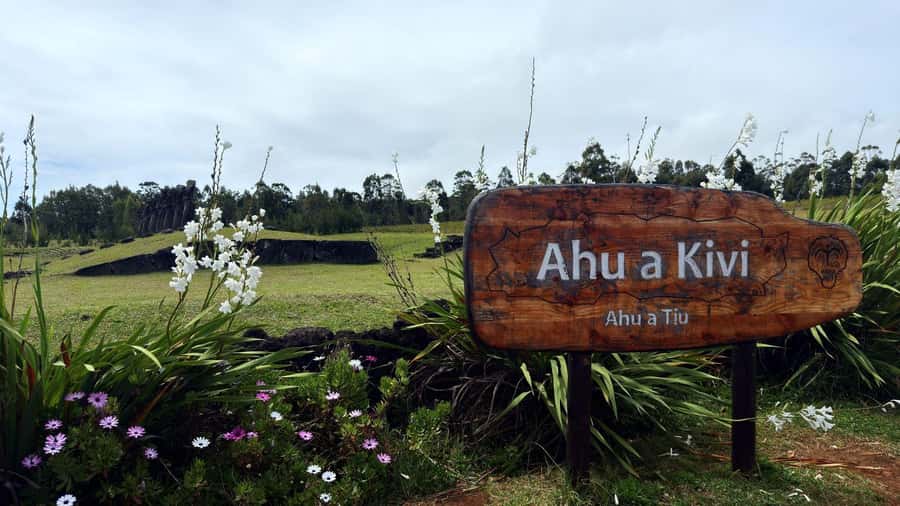
- Puna Pau Quarry and the red scoria pukao topknots, with the story of why red mattered
- Ahu Akivi’s seven ocean-facing moai, plus the theory about the Hiva explorers
- Ahu Huri a Urenga in the interior, showing how moai culture connects to farming land
A short tour that makes sense of Easter Island in 3 hours
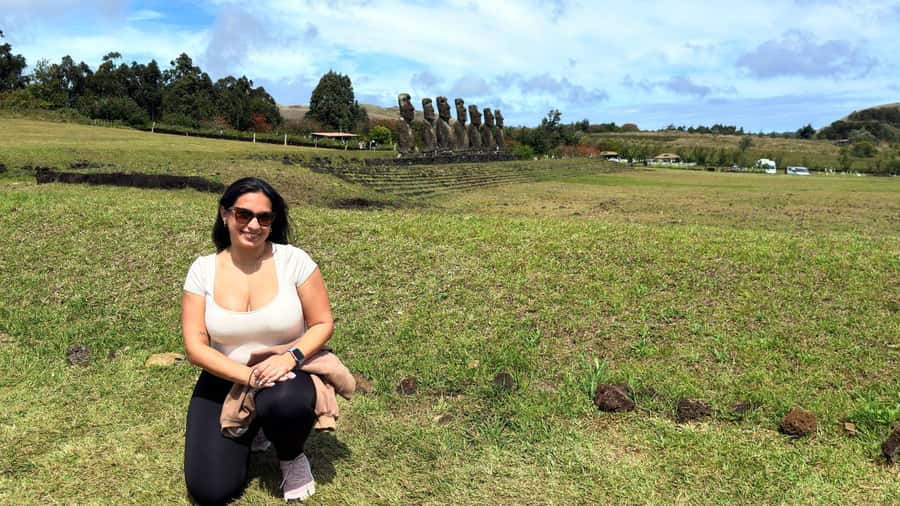
Easter Island can be overwhelming at first. You see moai everywhere, but it is not obvious why each one is positioned the way it is. That is why I like this format: it is short enough to stay sharp, but packed enough to connect the dots.
Over about 3 hours, you start with pickup in Hanga Roa and then head into the park. Your guide keeps the route moving, but you still get enough time at each stop to notice details you would miss on your own. Also, because the group is limited to 15, you can actually hear the explanations without constant jostling.
If you only have a morning or an afternoon free, this is a strong way to get your bearings fast and leave you with questions worth pursuing later.
A few more Hanga Roa departures to weigh up
- From Hanga Roa: Rapa Nui Culture Sightseeing Tour
★ 4.6 · 307 reviews - From Hanga Roa: Easter Island Highlights 2-Day Tour
★ 4.3 · 205 reviews - Full Day Tour in Rapa Nui
★ 4.5 · 122 reviews
What you learn about moai and ahu before you start walking
Before you even feel tired from the tour, you get the key basics that make the moai readable. The park covers most of Easter Island and contains about 900 moai and around 300 ahu. Those ahu are the ceremonial platforms where the carved figures were placed.
The tour also explains a core idea behind the carving. The statues are made from solidified volcanic ash, and they are believed to represent the spirits of ancestors and high-ranking members of each tribe. Once that clicks, you start seeing the moai as more than big stone faces. They become political and spiritual signals, placed with care.
This is also where the guide’s value really shows. A guide like Daniela, for example, is often praised for explaining the history clearly and in a personable way. If you learn better with plain language and good storytelling, you will likely appreciate that style.
Hanga Roa pickup, then south into Rapa Nui National Park
You will start with hotel pickup and drop-off from Easter Island hotels. Plan to be ready in the lobby about 10 minutes before your scheduled pickup. The driver waits no longer than 5 minutes after the pickup time, so arriving late can cost you your spot.
From there, your group travels with your guide into Rapa Nui National Park, the UNESCO World Heritage site that protects both the moai and the living ecology around them. Even on a half-day schedule, this matters because the park context changes how you see the platforms. You are not just looking at artifacts. You are looking at sites in the environment they were built for.
You will move through the route south first, then back north later. That direction shift helps because it sets up a contrast between different platform styles and different “messages” the moai were meant to deliver.
Ahu Tahai: a moai arranged differently, with a 13-foot-plus protector
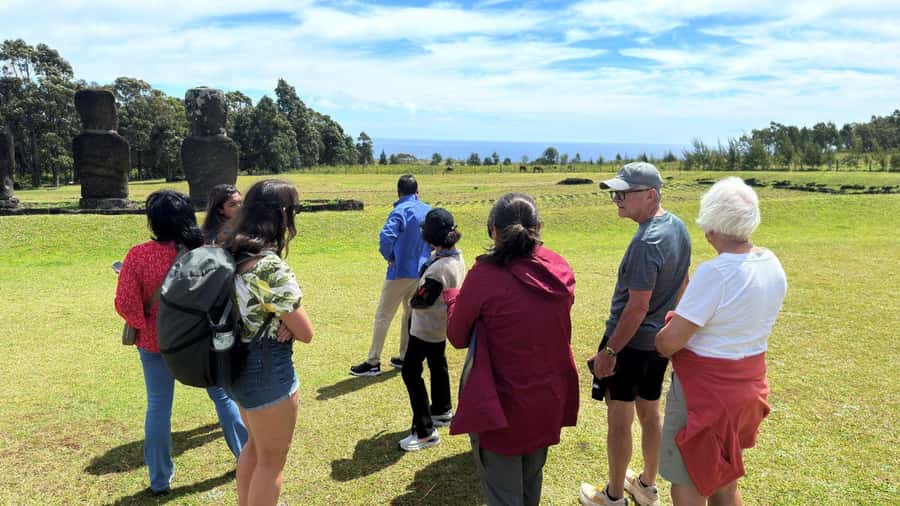
Ahu Tahai is often the first stop where the tour feels real. This is not a random scatter of stones. The guide points out a unique feature: a moai that stands alone, with an imposing figure protecting it. That guardian is more than 13 feet tall.
This matters because it gives you a quick lesson in how placement and framing work on Easter Island. Ahu Tahai lets you see how one figure can still feel “supported” by the way the platform is set up. Instead of treating moai as identical statues, you start noticing the choreography around them.
Also, you are still early in the tour, so your eyes stay fresh enough to catch the small differences in stonework and layout. By the time you reach the next sites, you will be more prepared to spot what is intentionally unusual.
The other half of a Hanga Roa week:
- 2-Day Private Tour Easter Island Highlights Complete Discovery
★ 5.0 · 110 reviews - Private Full-Day Easter Island Highlights North and West
★ 5.0 · 84 reviews - From Hanga Roa: Journey from Orongo to Ana Te Pahu
★ 4.3 · 75 reviews - Journey of the Ancestors: Tongariki, Rano Raraku & Anakena Beach
★ 4.5 · 70 reviews
Puna Pau Quarry: pukao topknots and the red scoria story
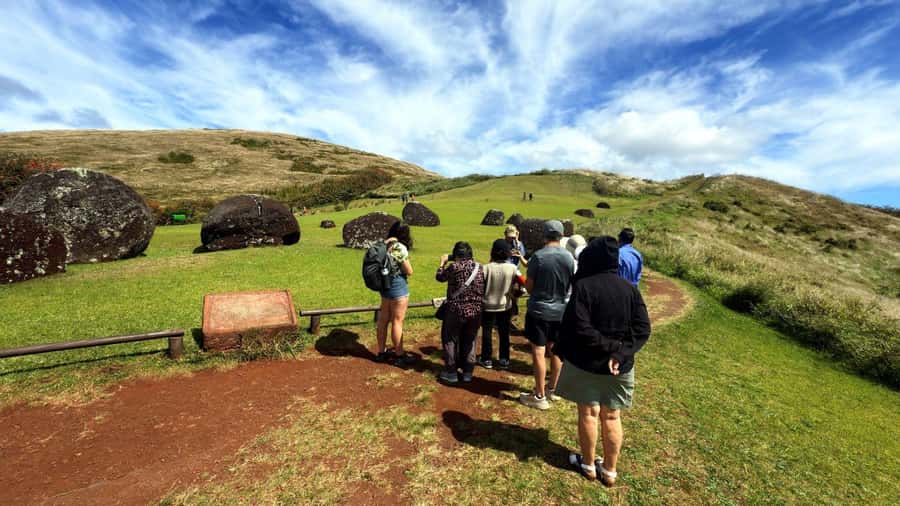
Next comes Puna Pau, where the focus shifts from the standing figure to what was placed on top. Here, some moai have pukao, the topknots made from red scoria.
This is one of my favorite parts of the experience because it turns a visual detail into a historical clue. You are not just seeing red stone. You are learning how that material likely carried social meaning, including the idea that the volcanic rock was used to impress rival tribes.
The tour also connects that symbolism back to the source. Approximately 30 pukao are located in or near the quarry. That means you can often connect the “thing on the head” to the “place the material came from,” which makes the whole story feel more grounded.
If you are a person who likes to understand the why behind the what, Puna Pau is where this tour really delivers.
Ahu Akivi: seven ocean-facing moai and the Hiva theory
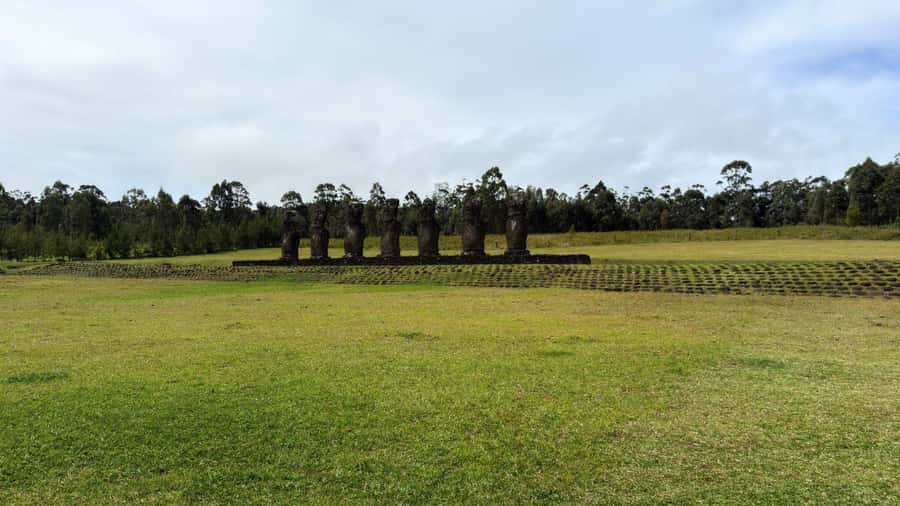
Then you reach Ahu Akivi, a stop that can hit you emotionally because it feels so intentional. Instead of moai that face the way most ahu are oriented, Ahu Akivi has a line of seven moai looking out toward the ocean.
The numbers help you grasp the scale. Each moai is about 16 feet tall and weighs roughly 18 tons. When you picture that much stone being positioned to face the sea, you start understanding why this site is famous for its mystery.
One theory the guide discusses is especially memorable: these ocean-facing moai may symbolize seven explorers from the Polynesian homeland of Hiva, sent by a chief to find Rapa Nui. In that hypothesis, the statues face the ocean in the direction the explorers came from.
Even if you do not treat any one theory as certainty, you will leave with a better framework for asking questions. You will notice how rare this sea-facing arrangement is compared to other moai placements in the park.
Ahu Vianpu: a ceremonial stop that fills in the bigger picture
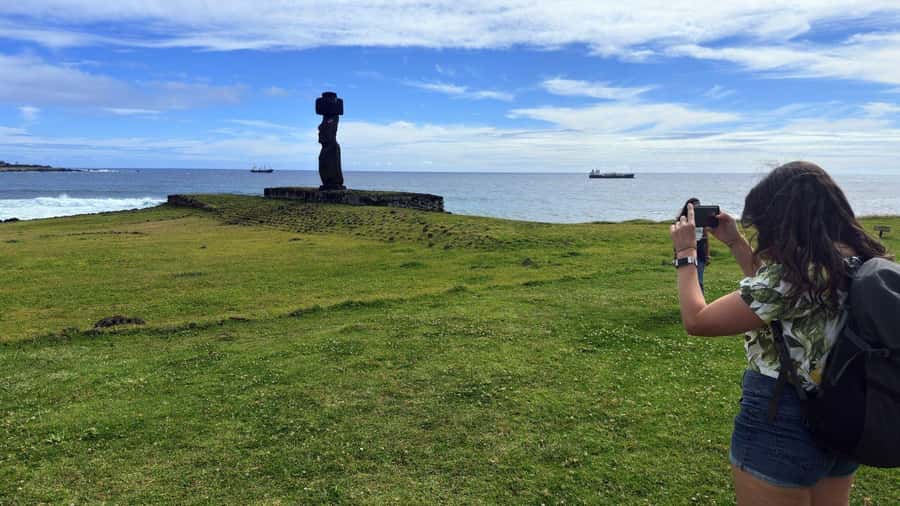
The tour also includes Ahu Vianpu. Even when a platform name is new to you, it helps to have a guide connect it back to what you already learned about ahu.
Think of Ahu Vianpu as part of the network of ceremonial spaces that make the park feel like a system rather than a set of isolated attractions. It reinforces the idea that moai culture was not only about the statues themselves. It was also about where communities gathered, how authority was displayed, and how spiritual meaning was anchored in place.
Since this tour is only half-day, you will not get endless time at every stop. But adding Ahu Vianpu keeps the route from becoming a checklist. It keeps the story going.
Ahu Huri a Urenga: why not every platform sits on the coast
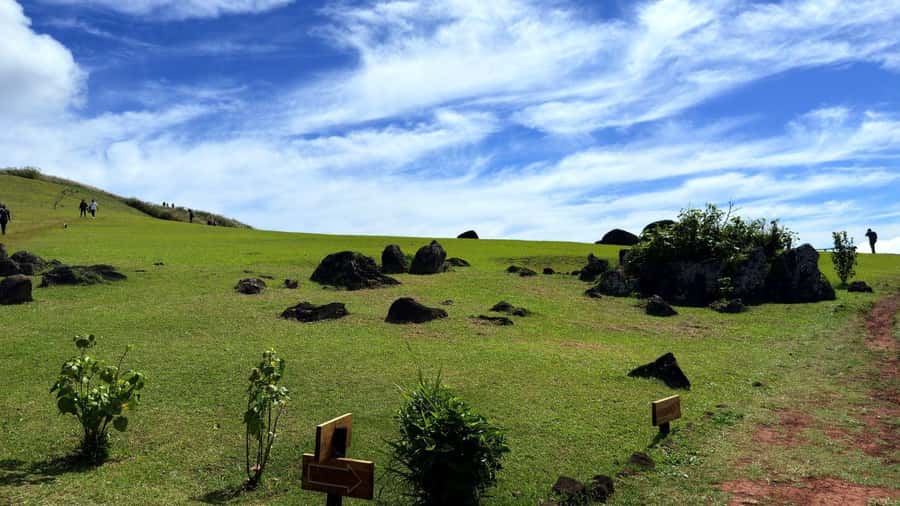
Your last stop is Ahu Huri a Urenga, which is different in a useful way. This one corresponds to an agricultural area and is not on the coast. It sits in the island’s interior.
That interior location matters because it challenges a simple assumption. It is easy to imagine everything important happened near the sea, since many moai face the ocean or are closely tied to coastal settings. But when you visit an interior platform tied to agriculture, you start seeing how daily life, land use, and ceremonial power likely intersected.
This is also a nice end to the route because it gives you a final lens. After seeing quarry materials and ocean-facing imagery, you end with a practical connection to the land.
Then you head back to your hotel for a simple finish.
Price and park fee: what you really pay for the experience
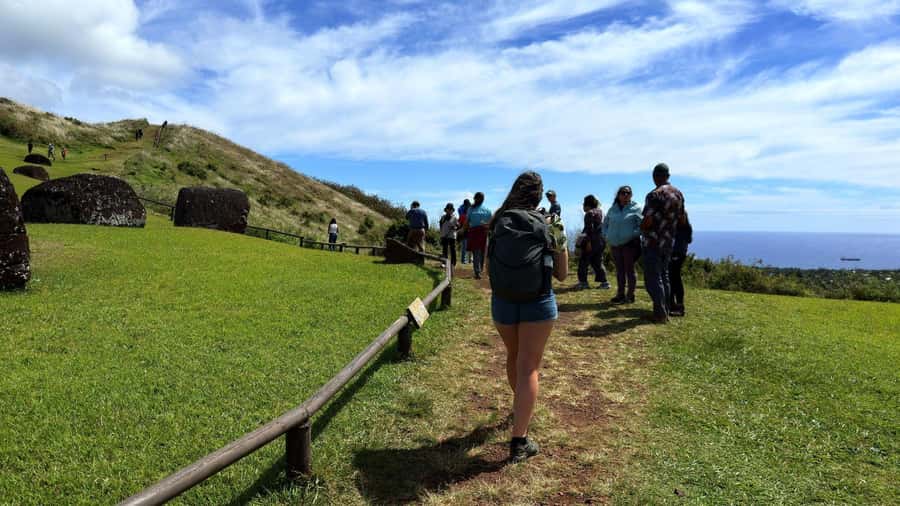
The tour price is $91 per person, and it includes hotel pickup and drop-off plus a guided tour in English and Spanish. It is also a small group (up to 15 participants), which is a big part of the value on Easter Island when roads and viewpoints can feel crowded.
But you should plan for the Rapa Nui National Park entrance fee, which is USD 100 and is not included. So the real cost is tour price plus the park fee. That may sound like a lot, but it is also what allows the park to function and protect the sites.
In value terms, I like this setup because it is not trying to do everything on the island. You get a structured selection of key locations connected by themes: platform purpose, statue orientation, and materials like red scoria.
If you want to squeeze maximum meaning out of limited time, this is a fair deal. If you are already planning to pay for the park anyway, this tour becomes even more attractive because it gives you expert guidance for that admission.
Practical details that affect your comfort
This is not a complicated tour, but a few rules matter:
- Bring comfortable shoes. You will be moving around ceremonial sites in a park setting.
- Baby strollers are not allowed.
- Luggage or large bags are not allowed. Keep your load light.
- Alcohol and drugs are not allowed.
- It is not suitable for wheelchair users.
Also, note the cruise limitation: this tour is only considered for passengers staying in hotels, so cruise guests typically need a different plan.
On timing, you are looking at a half-day duration of about 3 hours, with starting times that depend on availability.
Who this tour suits best
This works well if you:
- Want a guided introduction without spending the whole day driving.
- Prefer explanations that connect moai placement to meaning.
- Like a small group setting where questions are easy to ask.
It might be less ideal if you:
- Need wheelchair access.
- Are hoping for a super long, slow visit at one single site.
- Want to travel with a stroller, large bags, or other restricted items.
If you like structure and clarity, you will likely enjoy the pace. If you prefer total freedom with no scheduled stops, this might feel a bit tight.
Should you book this half-day archaeology tour?
If you are trying to make the most of limited time on Easter Island, I think this one is a smart booking. The sequence of sites creates a logical story, starting with core platform context, then moving into moai arrangement quirks, then into materials like pukao, and finally ending with a platform tied to agriculture inland.
The biggest reasons to book are the guided explanations, the small group size, and the fact that you cover multiple major sites in a manageable 3-hour window. Just remember to budget for the USD 100 park entrance fee.
If you have the time to add one more day later, you will. But for getting oriented fast and understanding what you are looking at, this tour earns its spot.
FAQ
How long is the Easter Island half-day archaeology tour?
It lasts about 3 hours.
What is the price per person?
The price is $91 per person.
What is included in the tour price?
Hotel pickup and drop-off from Easter Island hotels, plus a guided tour in English and Spanish.
Is the Rapa Nui National Park entrance fee included?
No. The park entrance fee is not included, and it is listed as USD 100.
What languages is the guide available in?
The tour guide speaks Spanish and English.
How big is the group?
The group is limited to 15 participants.
What should I bring, and what is not allowed?
Bring comfortable shoes. Baby strollers, luggage or large bags, alcohol, and drugs are not allowed.
Is this tour suitable for cruise ship guests or wheelchair users?
It is not suitable for cruise ship guests and it is not suitable for wheelchair users. Also, for cruise passengers, the tour is only considered for passengers staying in hotels.
Freshly reviewed in Hanga Roa
- Astronomical Tour on Easter Island★ 3.5 · 3 reviews
- Full day Private Tour: Poike Walk through the abandoned area★ 4.5 · 3 reviews
- T1-THE GRAND TOUR (non-cruise visitors)★ 5.0 · 3 reviews
- 4-Days Trip to Discover Easter Island★ 4.0 · 3 reviews
- Private 2 Days Essential Tour of Easter Island★ 5.0 · 4 reviews
- T2-THE MUST-HAVES OF RAPA NUI (non-cruise visitors)★ 4.5 · 4 reviews
- Private Tour: Easter Island Caves★ 4.5 · 4 reviews
- Private Tour: The Highlights of Easter Island★ 5.0 · 4 reviews
Half-Day, compared.
Santiago Half-Day Walking Tour with Hotel Pick up & Food Sample
Read our review →
Santiago Half-Day Walking Tour with Hotel Pick up & Brunch
Read our review →
Half-Day Small-Group Rafting Experience in Petrohué River
Read our review →
Half-Day Sightseeing City Tour with Chauffeur and Guide
Read our review →

Half-Day Small Group Undurraga Vineyard Tour – Winetasting Included
Read our review →
Browse the lists this tour appears in