Reviewed · HALF-DAY
Half-Day Small-Group Panoramic Santiago Tour
This half-day Santiago tour is interesting because it functions like a fast city map, built around big viewpoints and major landmarks, without turning the morning into chaos. I like the small-group feel, where you get real face time with the guide, and the route is panoramic enough to help you understand how Santiago is laid out.
Two things I especially like: the option to visit San Cristóbal Hill or Santa Lucía Hill, and the chance to cover downtown power sites plus artsy Bellavista in one go. You also get hotel pickup and drop-off, so you skip the early-morning logisitics.
One thing to keep in mind is that this experience depends on weather and a smooth morning pickup. If that part goes wrong, you lose the main advantage, which is maximizing sightseeing in just about 4 hours.
Key highlights worth knowing
- Small-group size: listed up to 8 travelers for the activity, with a short-boat feel even on a busy day
- Choose your hill: San Cristóbal for huge city-and-mountain views, Santa Lucía for a historic volcanic hill and park design
- Downtown in one loop: La Moneda, civic plazas, and major architecture stops without long gaps
- Bellavista plus Pablo Neruda: street-level context for Santiago’s creative side
- Central Market stop: a top food market for browsing and snacking at your own pace
- Strong guide energy: several guides mentioned by name, including Daniel, Giovanni, Christian, Consuelo, and Ignacio
A Half-Day Santiago Loop That Actually Teaches You the City
Think of this tour as a guided shortcut through how Santiago works. You start in the morning, then you zigzag from downtown authority buildings to hilltop viewpoints, and finally down into Bellavista, where the city gets more artistic and less formal.
The payoff is perspective. From the hills, you can see why locals care about direction, elevation, and neighborhoods, and you can later recognize the same areas from street level. For a first visit, this is one of the smartest ways to spend half a day, because you leave with a mental map, not just photos.
A few more Santiago departures to weigh up
- Valparaiso Port and Viña del Mar with Casablanca Wine Tasting
★ 5.0 · 6,110 reviews - Santiago: Cajon del Maipo/Embalse del Yeso Tour with Picnic
★ 4.3 · 3,789 reviews - Santiago: Vina Del Mar, Valparaiso, Casablanca & Reñaca Tour
★ 4.2 · 2,838 reviews
Hotel Pickup, 4 Hours of Real Momentum, and the Small-Group Advantage
Hotel pickup and drop-off are included, and the tour meets you at your hotel lobby. That matters because Santiago traffic and walking distances can turn “just a few stops” into a time sink if you’re doing it on your own.
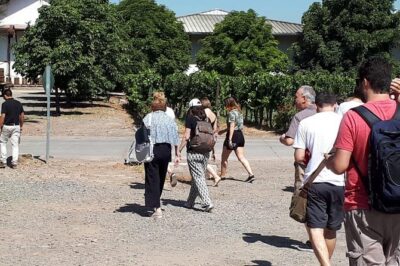
This is designed for speed with breaks. You’ll do a mix of short walks and driving between clusters of sights, so you’re not stuck doing one long slog. And with a small group, you’re less likely to feel like a number, which helps when you want a little extra time at a viewpoint or photos.
One small practical note: wear comfortable shoes. Even when the walking segments are short, downtown streets add up quickly, especially if you choose the hill option and want time at the top. Bring a light layer too, since hills can feel cooler than the streets below.
Club Hípico Santiago and the Old-Elite District: Architecture With a France Connection
Early on, you visit the Club Hípico de Santiago, a striking equestrian facility that’s tied to French inspiration. That architecture detail is more than trivia. It’s a window into how Santiago’s wealthy classes wanted the city to look and feel in certain eras.
After that, you move into one of Santiago’s oldest and wealthiest areas with an architecture-themed narrative. This is a nice reset from the usual “here’s the cathedral, here’s the square” routine. You start noticing styles, layouts, and the way the city’s elite history shows up on the street.
Paseo Ahumada and the Metropolitan Cathedral: Downtown on Foot
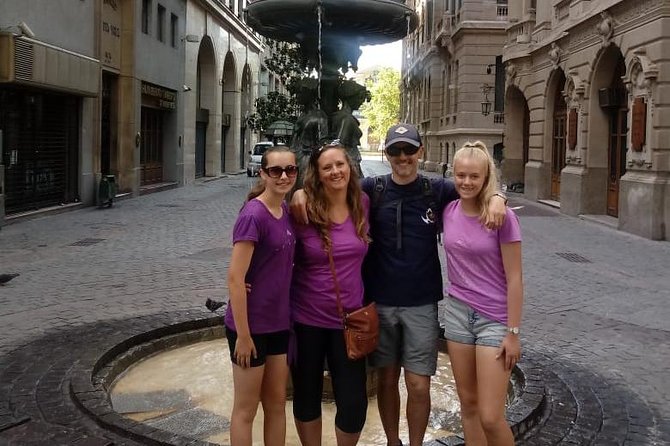
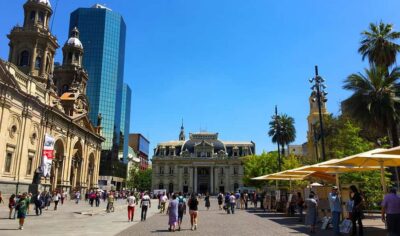
In central Santiago, you begin with Paseo Ahumada, a four-block shopping street that runs from Plaza de Armas metro station toward Universidad de Chile metro station. It’s a simple stop, but it gives you a feel for the city’s pedestrian rhythm and the classic downtown pattern of shops at street level.
Then comes Metropolitan Cathedral, the seat of the Archbishop of Santiago de Chile. Construction started in 1753 and finished in 1799, and the work is associated with Italian architect Gioacchino Toesca. The cathedral is free to enter, so this is a high-value stop.
Practical tip: even if you keep it to a quick interior look, take 5 minutes to compare the cathedral’s scale with the tight downtown streets around it. It makes the city feel more real, less like a postcard.
The other half of a Santiago week:
- Cable Car, Funicular and Sightseeing Bus in Santiago one day
★ 5.0 · 2,325 reviews - Small-Group Cajón del Maipo Full-Day Tour and Picnic
★ 4.5 · 2,277 reviews - Tour to Valparaíso, Viña del Mar, Pablo Neruda Museum and Vineyard
★ 5.0 · 2,273 reviews - Maipo Valley Wine Tour with 4 vineyards from Santiago.
★ 5.0 · 1,983 reviews
La Moneda and the Civic Zone: Chile’s Power Center Without the Lectures
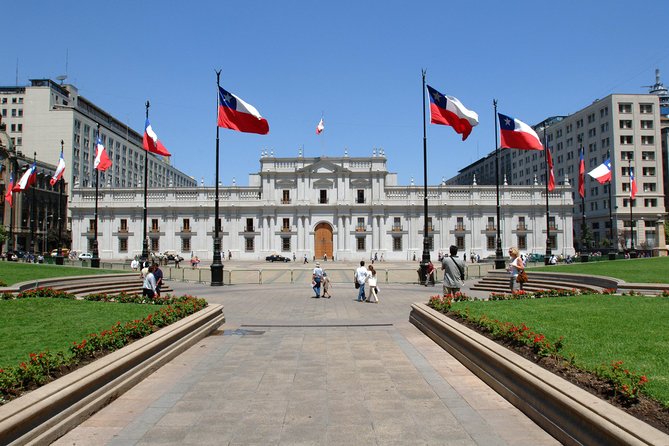
From here, you move to Chile’s political heart: La Moneda, the presidential seat and a hub for multiple government offices. This is one of those places where just standing in the area helps you understand what the country puts center stage.
Right outside, you’ll also spend time at Plaza de La Constitución, a full square block surrounded by key civic buildings. These are the kinds of spots where a guide’s timing can make the experience more interesting, especially if you’re watching for ceremonial moments around La Moneda.
You also see historic government-adjacent architecture like the Central Post Office Building, a landmark near Plaza de Armas. It’s tied to early Santiago land history, with associations to Pedro de Valdivia. Even if you don’t go inside, it’s a great “I get where I am now” stop.
The tour also includes the former home of Chile’s Congress, which met there until the 1973 overthrow of Salvador Allende’s socialist government. During the Pinochet dictatorship, Congress moved to Valparaíso, and the building later gained monument status. That’s heavy history, but the tour keeps it grounded in what you can see in front of you.
Centro Cultural Palacio de La Moneda: A Museum Stop That Still Feels Local
Under Plaza de la Ciudadanía, you visit Centro Cultural Palacio La Moneda. It’s described as a glass-roof space that brings natural light into a vaultlike setting, with ramps leading down through the central atrium past the Cineteca Nacional, a state-run art-house cinema.
Even when you’re not a museum person, this stop works because it’s not a dusty lecture hall. It’s a “Chile lives here” cultural space that connects today’s art programming to a building with political weight.
If you’re short on time, you don’t need a long museum-style visit. Just walk the atrium ramps, take in the layout, and check any temporary exhibition info signs at your own pace.
Castillo Hidalgo and the Big Choice: San Cristóbal or Santa Lucía
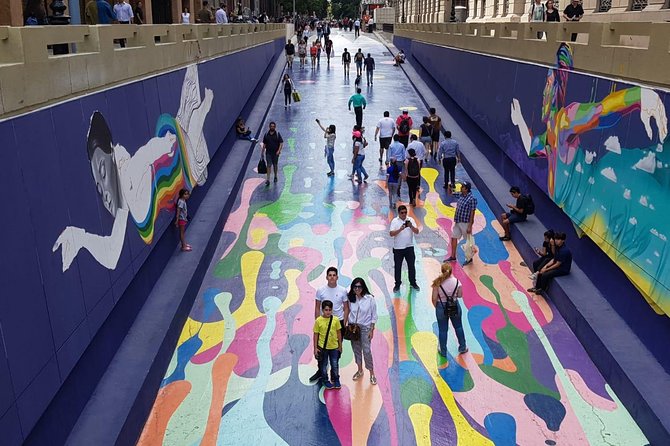
This is the heart of the tour. You choose between two major hill experiences, and both come with admission included.
Cerro San Cristóbal: Maximum View Energy
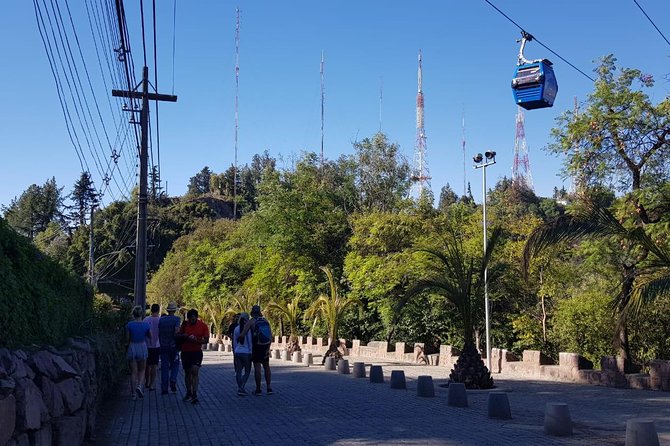
Cerro San Cristóbal gives some of the strongest panoramic options in the city. From the hilltop, you can orient Santiago with views toward the Andes Mountains and the Cordillera de la Costa. That orientation effect is huge, especially if your first day in Santiago feels like a blur of streets and traffic.
The park area connected to San Cristóbal is Parque Metropolitano de Santiago, created in April 1966 and linked with the zoo and services on the hill. Many guides emphasize the panorama itself, and some visitors call out enjoying the funicular or other ride element up to the viewpoints.
Plan for time to look around. Don’t treat it like a quick photo stop. The value is in understanding where everything sits.
Santa Lucía Hill: Volcano History and the Birth-Of-Santiago Story
If you pick Cerro Santa Lucía, you get a more historic, park-styled experience. It’s a remnant of a volcano about 15 million years old. Conquistadors used it as a lookout during conquest, and it’s tied to Pedro de Valdivia declaring the founding of Santiago in 1541.
In 1872, Governor Benjamín Vicuña Mackenna turned the hill into a commemorative park. Today it includes bronze gates, metal stairways, and fountains across about 65,300 square meters. In short, it’s not just a viewpoint. It’s a designed historical setting.
A related stop on this hill is Castillo Hidalgo, built in 1816 during the Reconquest by order of the last Spanish Governor of Santiago, Casimiro Marco del Pont. It’s one of the important structures in the city’s history, and it helps connect the scenery to the story.
Fine Arts Museum in Parque Forestal: Art in a Beaux-Arts Package
Next you head into culture mode at the Chilean National Museum of Fine Arts, a major center for Chilean art and South American art. The museum traces its establishment to 1880, which is noted as the oldest in South America.
The current building, called the Palace of the Fine Arts, dates to 1910 and was designed by Chilean architect Emile Jéquier in a Beaux-Arts style. It sits in Parque Forestal, which means you get a bit of green break inside the city without needing extra transit.
Even if you only skim the highlights, this stop is worth it because it changes the tone of the morning. The tour stops you in three different worlds: government power, panoramic city logic, and then the art and design of independence-era Chile.
Bellavista: Where Santiago Turns Bohemian
After you’ve done government and viewpoints, you’ll go to Bellavista, described as Santiago’s bohemian quarter between the Mapocho River and San Cristóbal Hill. This is where you find restaurants, boutiques, avant-garde galleries, antique mansions, and cutting-edge bars and dining.
The tour connects Bellavista to literature and artists, including Pablo Neruda and his house, La Chascona. That context matters here. Bellavista is fun to walk through, but understanding why it attracts writers and intellectuals makes it more meaningful.
You’ll also stop at a traditional Chilean craft shop before heading to the next big food-and-life stop. This is a good chance to look at locally made items without turning the morning into a shopping marathon.
Central Market: National Geographic Style Food Browsing
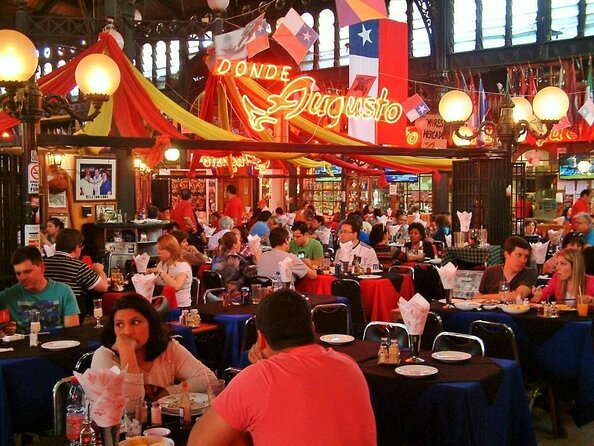
The day ends with the Central Market (Mercado Central). It’s been named as one of National Geographic’s top ten food markets worldwide, a big credential for a place that’s still very much alive and everyday.
This is not a formal tasting tour where food is included. Instead, you use the time to browse fresh produce and see what local vendors do when the doors open. If you want a snack, you can buy at your own pace.
Practical tip: go with light expectations and a curious mindset. A market is meant to be used, not just stared at. If you treat it like a food museum, you’ll miss the point.
Price and Value: What You Actually Get for $39.50
At $39.50 per person, this tour is priced like a serious value option for visitors who want a full circuit. You’re not just buying a bus ride.
What you get included:
- Small-group tour with professional and live commentary, plus a bilingual guide
- Hotel pickup and drop-off
- Hill admission tickets for whichever option you selected (San Cristóbal or Santa Lucía)
- Most major downtown stops are either free or quick to access, with some major exceptions like La Moneda listed as not included
What you do not get included:
- Food and drinks unless specified, so budget for snacks if you want them
If you’re visiting for a short time, the value comes from stacking sights you would otherwise spread across several days and multiple transit hops. Even the admission pieces help the math, since hilltop time is a core part of the experience.
One more thing that can improve value: if your guide is the type to pace you well, you actually see more. Some guides mentioned by name, like Daniel and Ignacio, were praised for adapting the pace and keeping the tour feeling smooth rather than rushed.
What to Watch For on Your Tour Day
A few practical things can make or break the day. First, check that you know which hill you selected, since the experience changes. Second, wear shoes that handle uneven sidewalks and quick walking segments.
Also, keep your expectations realistic for a half-day. You will cover a lot, but that’s the trade-off. If your goal is hours in one museum, you’ll likely want a longer standalone visit later.
Finally, this is weather dependent. That matters in Santiago because hills and viewpoints can feel different when visibility drops. If weather is poor, the tour can be rescheduled or refunded, so you should be prepared to adjust.
Should You Book It? My Decision Guide
Book this tour if you want:
- A first-day orientation to Santiago that covers La Moneda, a major hill viewpoint, and Bellavista
- A small-group guided morning with hotel pickup
- A tour that helps you understand why neighborhoods feel the way they do, not just what to photograph
Skip it if:
- You only care about one museum or one neighborhood and prefer slow, deep time
- You hate any weather dependency at all, since hill visibility is a big part of the payoff
If you fall in the middle, this is an excellent starter tour. It’s the kind of half-day plan that leaves you thinking, I get this city now, and that usually makes the rest of your trip easier.
FAQ
How long is the Half-Day Small-Group Panoramic Santiago Tour?
It’s about 4 hours, approximately.
Does the tour include hotel pickup and drop-off?
Yes. You get pickup from your hotel lobby and then a return drop-off at the hotel.
How many people are in the group?
It’s listed as a small group, with a maximum of 8 travelers for the activity, and the booking limit noted as up to 15 per booking.
Which hilltop options are available?
You can pre-select either San Cristóbal Hill or Santa Lucía Hill, and the tour includes admission for the option you choose.
Are admission tickets included?
Admission is included for the selected hill option (Cerro San Cristóbal or Cerro Santa Lucía). Some other major sights are listed as free, while others like La Moneda and the Central Post Office are listed as not included.
Is food included in the tour price?
No. Food and drinks are not included unless specified.
Can I cancel, and what happens if the weather is bad?
You can cancel for free up to 24 hours in advance for a full refund. The tour requires good weather, and if it’s canceled due to poor weather, you’ll be offered a different date or a full refund.
Freshly reviewed in Santiago
- Colchagua Full Day Wine Tour: Casa Silva & L’Apostolle Wineries★ 4.0 · 3 reviews
- Santiago De Chile Highlights Walking Tour with a Guide★ 5.0 · 3 reviews
- Portillo & Laguna del Inca with Lunch at the Hotel Portillo★ 5.0 · 3 reviews
- Santiago de Chile: Half-Day City Tour with Local Cuisine★ 4.5 · 3 reviews
- Cajon del Maipo & Embalse El Yeso Tour from Santiago★ 3.5 · 3 reviews
- Full day hike to the viewpoint of Condores, Cajon del Maipo★ 5.0 · 3 reviews
- Kayaking Day Trip in the Andes from Santiago★ 5.0 · 3 reviews
- Private Transportation from Santiago or Santiago Airport AMB to Valle Nevado★ 3.5 · 3 reviews
Half-Day, compared.
Santiago Half-Day Walking Tour with Hotel Pick up & Food Sample
Read our review →
Santiago Half-Day Walking Tour with Hotel Pick up & Brunch
Read our review →
Half-Day Small-Group Rafting Experience in Petrohué River
Read our review →
Half-Day Sightseeing City Tour with Chauffeur and Guide
Read our review →
Half-Day Small Group Undurraga Vineyard Tour – Winetasting Included
Read our review →