
Reviewed · CRUISES & BOAT TOURS
T2-THE MUST-HAVES OF RAPA NUI (non-cruise visitors)
Rapa Nui is not just about seeing Moai. This kind of day-long loop is interesting because it strings the island’s most meaningful places together, so the stories and geography click into place. With a private guide such as David, you get history explained in plain language, not a rushed lecture.
I especially like the mix of sites: you start with an early living area at Ahu Tahai, then you move through crater views, cliff rituals, and the big restored platforms that make Easter Island famous. The one drawback to plan for is that the ticket cost is separate, and it adds up on top of the tour price.
Key highlights I’d bookmark before you go
- Private guide, private ride so you can keep your pace and ask questions as you go
- 7 standout stops across the island, built for a full day without feeling random
- A Rapa Nui ticket plan that works: pay once for all sites over 10 days
- Rano Kau is free while most other stops require that entrance ticket
- Ahu Tongariki and Rano Raraku are the big visual anchors of the day
- An inland stop (Ahu Akivi) that changes the feel, not just the scenery
Why this Rapa Nui “must-haves” day feels efficient for non-cruise visitors
If you’re staying in Hanga Roa, you’re often deciding between “see the big ones fast” and “go deep slowly.” This 8-hour format hits the sweet spot for me because it’s structured, but not cookie-cutter. You’re moving across the island to cover multiple zones, so you don’t spend half your day just getting oriented.
The best part is how the stops connect. You’ll go from ancient settlement traces to volcanic geography (crater sites), then into the ritual world of Orongo, and finally to the restored platforms and the Moai quarry. That order matters, because each place makes the next one easier to understand.
There is a catch: you’re packing a lot in. If you prefer slow mornings and long lingering, you’ll have to accept a brisk rhythm.
More boat trips from Hanga Roa:
- T3+T4-RAPA NUI ARCHAEOLOGICAL SITES (non-cruise visitors)
★ 5.0 · 8 reviews - Tour to the Motus: Boat trip and snorkeling in Rapa Nui
★ 5.0 · 8 reviews - T1-THE GRAND TOUR (non-cruise visitors)
★ 5.0 · 3 reviews
Price, what’s included, and the entrance-ticket reality
The tour price is $257.63 per person, and it runs about 8 hours. What you’re really paying for here is not just a driver. You get private transportation plus a private guided tour in English, French, or Spanish.
The separate part is the official entrance ticket. It’s 80 USD per person (and 40 USD for ages 7 to 17), valid for 10 days for all sites. Most stops on this itinerary are marked as not included, so budget for that ticket as a day-planning requirement.
Is it worth paying both? For me, yes, if you’re the type who wants to leave each site with meaning, not just photos. If you’re traveling on a tight budget, consider whether you’ll actually revisit other sites during your 10-day ticket window. That ticket is designed to reduce repeat costs.
Pickup and timing: how the day usually flows
This starts with pickup around 09:00, and the tour start time is 9:30 am. You can be picked up from wherever you’re staying in Hanga Roa, including hotels, residences, guesthouses, and campsites.
An 8-hour day usually means you’ll get just enough time to take in the big visuals, plus a guided explanation that helps you read what you’re seeing. You’re also likely to appreciate the private setup if you don’t want to share the vehicle with strangers or wait around for a group.
The practical move: plan your morning tightly. If you’re up for this kind of island day, you’ll want breakfast done early, water ready, and sun protection packed.
Stop 1: Ahu Tahai, the royal residence start with a bay view
Your first major stop is Ahu Tahai. This is described as a royal residence and one of the first human settlements on the island. What I like here is the “before the big hits” feeling. You get context early, so later Moai and platforms land with more weight.
Expect a restored ancestral living space, shaped over centuries. The view across Hanga Roa Bay is also part of the payoff, and it helps you clock where the island’s town sits relative to the rest of the coast.
Time on site is about 1 hour 30 minutes, and the entrance ticket is not included. If you want a calmer start, this stop is your friend. It’s often a better warm-up than jumping straight to the biggest platforms.
A few more Hanga Roa departures to weigh up
- From Hanga Roa: Rapa Nui Culture Sightseeing Tour
★ 4.6 · 307 reviews - From Hanga Roa: Easter Island Highlights 2-Day Tour
★ 4.3 · 205 reviews - Full Day Tour in Rapa Nui
★ 4.5 · 122 reviews - 2-Day Private Tour Easter Island Highlights Complete Discovery
★ 5.0 · 110 reviews
Stop 2: Rano Kau, a crater panorama that includes no extra ticket
Next up is Rano Kau, and it’s one of the standout “wow, that’s a volcano” moments. You’re looking at a crater of an extinct volcano and its indentation on the vast South Pacific.
The key detail for your brain: this stop is about scale and isolation. The guide framing here is meant to make you feel how far removed Easter Island is, not just how it looks on a postcard.
You only get about 20 minutes, but the stop is marked as free, so you’re not losing paid time to a ticket check. Keep it simple: get your best viewpoints quickly, then move on.
Stop 3: Orongo, the Bird-Man ritual village on the cliffside
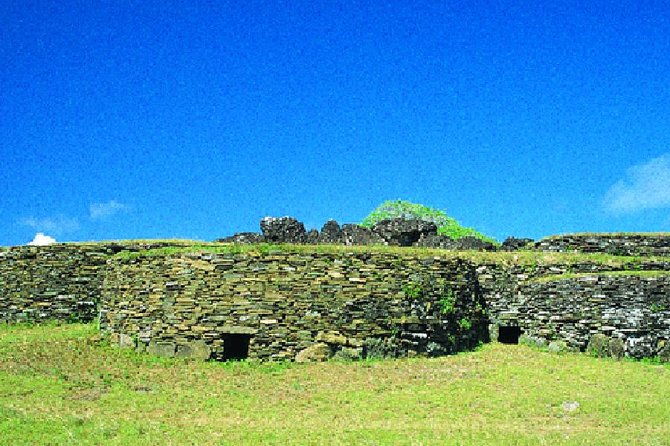
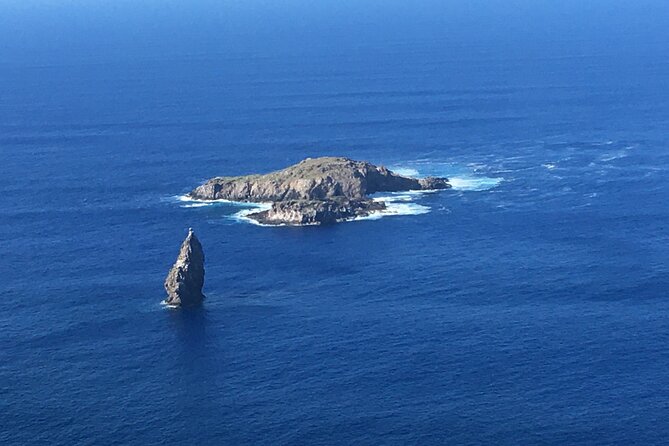
Then you shift from geology to ritual at Orongo, the setting for the Tangata Manu, or Bird-Man cult. This is the ceremonial village built on a cliff. The site faces the islets that shelter seabirds that come during the southern spring to lay eggs.
What I find especially useful is the way the annual quest works. The first egg did not just signal a seasonal event. It determined religious authority for the year. That detail turns Orongo from “nice ruins on a cliff” into a place with a clear purpose.
You’ll have about 1 hour here, and the entrance ticket is not included. Since this stop is cliffside, you’ll want to pay attention to footing and take your time with the viewpoints the guide points out.
Stop 4: Anakena Beach, where Moai and arrival stories meet
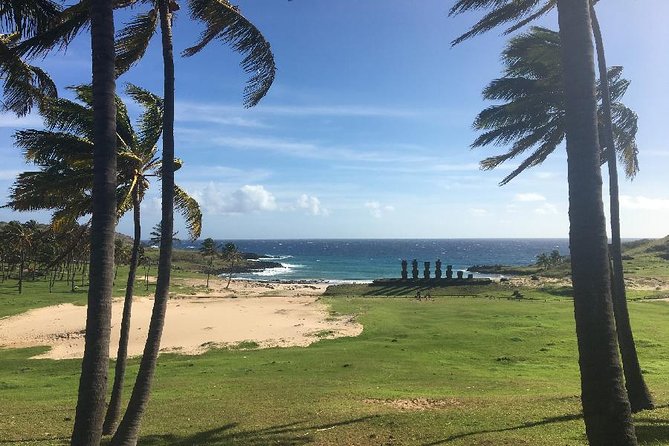
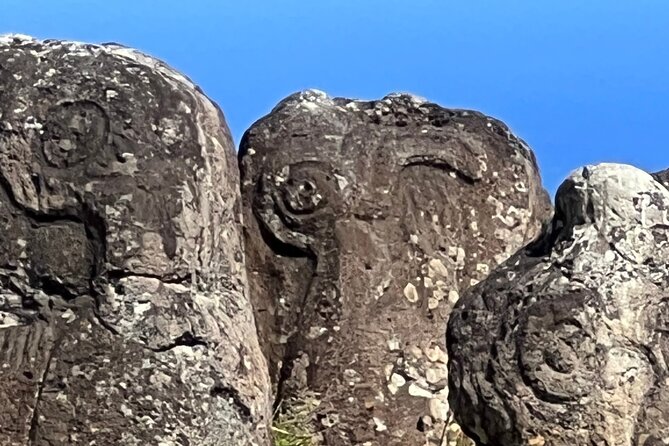
On the north side of the island you’ll reach Anakena Beach, the famous white sand stretch that you see on many Rapa Nui photos. It’s also described as the arrival point for the first Polynesian settlers. That means you’re not only looking at scenery, you’re standing at a “beginning” moment.
There’s also the coconut grove connection, which makes this beach feel distinct from other coastal spots. And importantly for Moai lovers, the site has been restored, and its Moai are noted as the best preserved you can still admire.
Time is about 1 hour 30 minutes, with the entrance ticket not included. The beach element is why this stop works for almost everyone. You get history, yes, but you also get a break from the more “monument” feeling of the platforms.
Stop 5: Ahu Tongariki, the biggest restored lineup of Moai
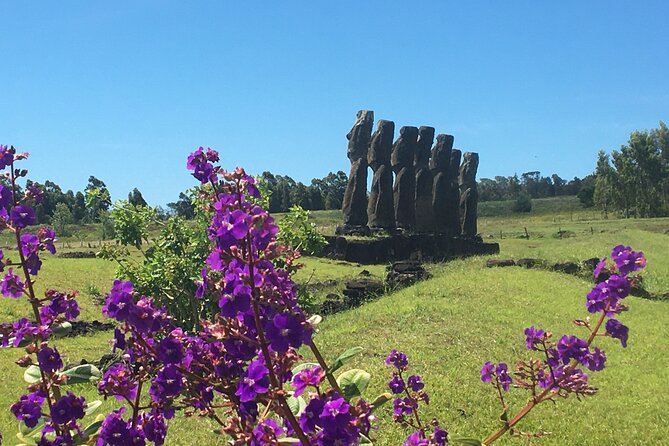
If you want the loudest visual punch of the day, Ahu Tongariki is it. This is described as one of Polynesia’s architectural gems and the island’s most important and remarkable restored site. The platform faces visitors with 15 Moai.
You’ll also hear about astronomy. The platform is described as having a supposed astronomical alignment, and the sunrises give the place a special atmosphere. You might not always be there at sunrise in a day tour, but even in daylight the alignment concept changes how you look at it.
Plan about 1 hour here. Entrance ticket not included. This is the stop where photos are easy, but where a good guide makes the difference. Look past the “Moai faces” and focus on how the platform itself is designed.
Stop 6: Rano Raraku, the Moai quarry where the statues still wait
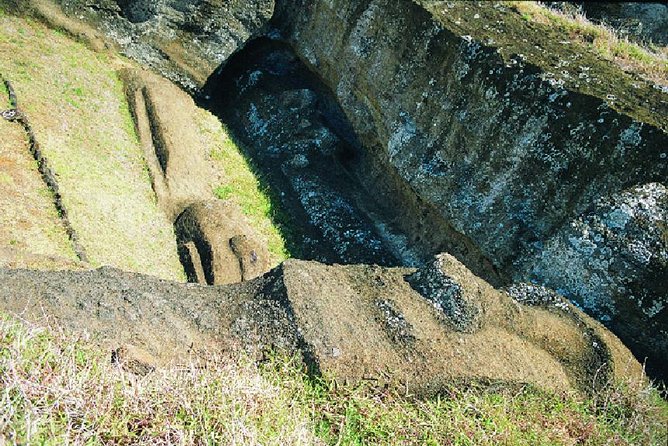
Now you go to Rano Raraku, and this is where the Moai story becomes physical. Almost all the stone giants of Easter Island have been carved here, and the Moai quarry is the site that fascinates visitors most.
You’ll see hundreds of statues still in place. That means you’re not only looking at Moai as finished icons. You’re seeing them as work-in-progress, or at least as objects created in a specific place for a specific purpose.
Time is about 1 hour 30 minutes, entrance ticket not included. This is also a great stop for questions, because the guide can connect what you’re seeing to the bigger island timeline.
If you’re tempted to rush through, don’t. This is the stop where you usually come closest to understanding how the island’s “production” of Moai worked, even if you’re not getting into technical stone-working details.
Stop 7: Ahu Akivi, the inland platform with a celestial twist
The final stop is Ahu Akivi. Unlike the others, it’s located inland, which changes both the feel and the views. The platform’s celestial orientation is noted as part of what makes it specific.
That inland location matters for your mental map. By the time you reach Ahu Akivi, you’ve already been across coastal and cliff zones. This one changes the rhythm, so the day ends with variety instead of repeating the same kind of scene.
Time is about 30 minutes, and entrance ticket not included. This is shorter than the quarry or Anakena, so it helps if you come here ready to focus. If you save your best questions for the end, this is a good place to ask them.
What the private guide adds, beyond facts and photos
A private guided day is not automatically better. But on Rapa Nui, it often is. The island sites can look similar from a distance, and the details matter. The difference between a quick walk and a meaningful visit is usually interpretation: why the place mattered, what it connected to, and how it fits the larger island story.
This tour offers private guidance in English, French, or Spanish, and that flexibility is genuinely useful if you’re traveling as a mixed group. Also, because it’s only your group in the vehicle, you’re less likely to feel squeezed by strangers’ pace.
One more thing I’d highlight from what you can expect with a guide like David: the style is described as passionate and able to answer questions from start to finish. That matters because Rapa Nui is one of those places where you will naturally want to ask why things are arranged the way they are.
Practical fit: who should book this Rapa Nui essentials day
This tour fits best if you want a solid “top sites” loop without the stress of planning the route and timing yourself. You’ll also like it if you’re the type who enjoys guided context, not just standalone photos.
It’s a good choice for couples, small families, and anyone staying in Hanga Roa who has a limited number of days. The inclusion of pickup from wherever you stay reduces friction, which is a big deal on islands.
One consideration: it’s a full day. If you prefer resting more than touring, this might feel like too much. You’ll still see a lot, but you won’t have a slow-browse schedule.
Should you book this non-cruise Rapa Nui tour?
Yes, if you want your day to be guided, structured, and focused on the island’s headline sites. The value isn’t just transportation. It’s the chance to connect Ahu Tahai, Orongo, Anakena, Ahu Tongariki, Rano Raraku, and Ahu Akivi into one coherent experience.
I’d book it especially if you’re paying for the official entrance ticket anyway. Since the ticket is valid for 10 days for all sites, you can treat this as your main “big day” and decide what to revisit afterward.
Skip it or consider a lighter option if you hate long days, or if paying the entrance ticket on top of the tour price feels too steep. Also, check that your timing works with your other Rapa Nui plans, because this itinerary is built as a full circuit.
FAQ
Is pickup included for this Rapa Nui tour?
Yes. Pickup is offered, and you can be picked up from where you are staying. The pickup time is noted as 09:00.
What time does the tour start?
The tour starts at 9:30 am, with pickup beginning at 09:00.
How long is the tour?
The duration is approximately 8 hours.
Is this a private tour?
Yes. It is private transportation and private guided tours, and only your group participates.
What languages are the guides available in?
Private guided tours are offered in English, French, or Spanish.
What is included in the price?
The price includes private transportation and private guided tours.
What is not included?
Entrance tickets are not included. Lunch is also not included (you can choose a restaurant lunch on site or a picnic on a developed area).
How much is the entrance ticket for Rapa Nui?
The entrance ticket is 80 USD per person, and 40 USD for ages 7 to 17. It is valid for 10 days and for all sites.
Is any stop free of entrance tickets?
Rano Kau is listed as free.
What is the cancellation policy?
This experience is non-refundable and cannot be changed for any reason. If you cancel or request an amendment, the amount you paid will not be refunded.
Can most travelers participate?
The information provided says most travelers can participate.
Freshly reviewed in Hanga Roa
- Astronomical Tour on Easter Island★ 3.5 · 3 reviews
- Full day Private Tour: Poike Walk through the abandoned area★ 4.5 · 3 reviews
- T1-THE GRAND TOUR (non-cruise visitors)★ 5.0 · 3 reviews
- 4-Days Trip to Discover Easter Island★ 4.0 · 3 reviews
- Private 2 Days Essential Tour of Easter Island★ 5.0 · 4 reviews
- Private Tour: Easter Island Caves★ 4.5 · 4 reviews
- Private Tour: The Highlights of Easter Island★ 5.0 · 4 reviews
- Sunrise in Tongariki on Easter Island Rapa Nui★ 3.5 · 5 reviews
Cruises & Boat Tours, compared.

Torres del Paine: 3-Hour Scenic Boat Tour to Grey Glacier
Read our review →
San Antonio after Cruise tour to Valparaiso and Casablanca Drop off in Santiago
Read our review →
Magdalena Island Penguin Tour by Boat from Punta Arenas
Read our review →
Transfer to San Antonio port prior cruise with tour in Valparaiso and Casablanca
Read our review →
Balmaceda & Serrano Glaciers Boat Tour and traditional lunch.
Read our review →Magdalena Island Penguin Tour by Boat from Punta Arenas
Read our review →
Private Cruise Transfer : Santiago → Valparaiso or San Antonio
Read our review →
Balmaceda and Serrano Glaciers Sightseeing Cruise from Puerto Natales
Read our review →Browse the lists this tour appears in