
Reviewed · VALPARAíSO DAY TRIPS
Pre or Post Valparaiso Cruise with Santiago City Tour and optional Vineyard
If you are in Chile for a cruise and want a day that actually makes sense on the calendar, this Santiago city tour is interesting because it connects classic downtown sights with big viewpoint stops, all timed for pre or post cruise days. You get hotel or port pickup, then a guided loop that helps you understand how Santiago is laid out from the center to the hills.
I especially like two parts. First, the route moves quickly through iconic central spots like Paseo Ahumada and La Moneda, with short stops that keep the day on track. Second, the hill visits give you a real sense of place, particularly the views from Cerro San Cristóbal and Cerro Santa Lucía, which makes the city feel less like a blur and more like a map you can read.
One consideration: timing and logistics can be the weak link on any long, big-day tour. On some departures, pickup started later than expected, and audio quality can vary, so I recommend keeping your cruise or dinner plans flexible if you are booking last minute.
Key things that matter before you go
- Short stops, big payoff: lots of landmarks in one day, without long museum marathons.
- Hilltop orientation: viewpoints on Cerro San Cristóbal and Cerro Santa Lucía help you understand Santiago fast.
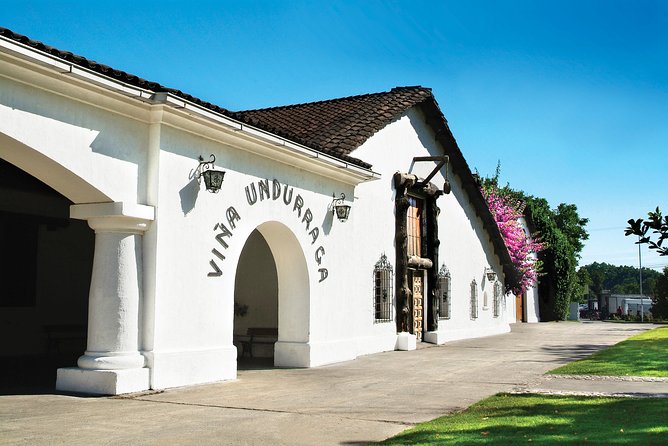
- Optional Viña Undurraga: about 1 hour on the grounds plus a tasting of four reserve wines.
- Small group size: maximum 15 travelers, which usually means less crowd pressure.
- Some admissions included, some not: several attractions are listed as included or free, while others are not.
- Language is English: great if you want history explained clearly, not just see photos.
Why this Santiago day fits your Valparaíso cruise
Santiago is one of those cities where the center is dense, but the scale only hits once you see the surrounding hills and the mountain backdrop. This tour is built to do that in a single stretch of time. You are not just “going to downtown,” you are going to downtown, then to viewpoints, then to a few cultural and park stops that connect old Santiago, government Santiago, and modern Santiago.
If you are cruising out of Valparaíso, you often face a simple problem: how do you get a worthwhile city day without dealing with transfers, schedules, and parking? This format aims to solve that with pickup and drop-off tied to where you stay or where your ship docks.
More City Tours in Valparaíso
- Valparaiso: Street Art, Funiculars and Port City Tour
★ 4.8 · 214 reviews - Valparaiso 4-Hour City Tour by Van and Funicular
★ 4.9 · 45 reviews - Private City Tour of Valparaiso and Vina del Mar
★ 5.0 · 25 reviews
Price and value: what $97.90 buys (and what it doesn’t)
At $97.90 per person, this is in the “middle of the road” category for a guided day tour that includes transportation and (optionally) a winery. The biggest value is not a single attraction, it is the combination: guided route, air-conditioned minivan, and a plan that tries to hit the major anchors of Santiago without wasting your time.
Here is the practical value math:
- You are paying for a professional guide and a pre-planned route that strings together multiple neighborhoods.
- You get hotel or port pickup and drop-off. That alone can save you headaches, especially on cruise days.
- Admission tickets are mixed: some are listed as free, some are included, and others are not included.
- If you choose the vineyard option, you should expect guided winery time plus wine tasting.
What you should budget separately is food and drinks beyond what is specified. Most days in Santiago require some sort of snack or sit-down lunch, and this tour does not list a lunch inclusion.
The flow of the day: from Plaza de Armas to viewpoint Santiago
Even if the stop order changes slightly by day, the route is designed to build in layers. It starts in the historic core near Plaza de Armas, then moves outward to major government landmarks and historic buildings. After that, you pivot into the hill viewpoints that let you see the city’s sectors and geography, and only then do you shift to parks and cultural stops.
This structure matters. If you do hills first, you can spend the rest of the day feeling lost. If you do hills last, you walk out with a clearer mental model. That is why the viewpoint stops are so valuable, even if they are not your main reason for being in Santiago.
Downtown Santiago stops you can actually use: markets, streets, and power sites
Your day begins with the kind of Santiago you can only really catch by walking through it with someone who knows the story behind the stones.
More days down on the Valparaiso coast:
- From Santiago: Valparaiso and Viña del Mar Day Tour
★ 4.3 · 643 reviews - Tour in Valparaiso: Street Art, funiculars and port
★ 5.0 · 111 reviews - 2 Hour Walking Tour in Valparaiso
★ 5.0 · 109 reviews - Famous Valparaíso! Premium Walking Tour with a Native Guide
★ 5.0 · 80 reviews
Mercado Central and the food market feel
One of the route anchors is Mercado Central, highlighted as one of National Geographic’s top ten food markets worldwide. The point here is not “a perfect photo,” it is the texture of daily life: fresh produce, seafood culture, and the sense that this city eats like a place that has seasons and traditions, not just restaurants.
Practical tip: even if you just browse for a few minutes, treat it like an orientation stop. You are learning where local food energy lives in the center.
Paseo Ahumada: downtown’s straight-shot street
Next comes Paseo Ahumada, a four-block retail street connecting Plaza de Armas metro area toward the Universidad de Chile metro side. It is an easy “feel the city” walk because it is compact and surrounded by shopping and street-level activity.
If you enjoy people-watching, this stop is a good warm-up before the bigger landmarks.
Metropolitan Cathedral: neoclassical Santiago in 10 minutes
At Catedral Metropolitana, you get a quick look at the neoclassical cathedral that began in 1753 and finished in 1799. You are also seeing the seat of the archbishop, so it functions as both architectural landmark and active religious center.
Admission is listed as free, which is always a win in a time-limited tour.
La Moneda and the government square atmosphere
Then you reach La Moneda, the seat of the Chilean presidency and related government offices. This is a short stop, and it is not about going inside. It is about understanding how power sits in the urban heart.
If you want an easy way to remember Santiago, focus on this visual. La Moneda tells you where the civic center is, and it gives context for why the next plaza matters.
Plaza de la Constitución: government blocks in full view
In front of La Moneda is Plaza de La Constitución, described as a full square block surrounded by major government institutions. It is one of those places where the architecture and the layout do the storytelling.
Admission is listed as free, so the best way to make this stop count is to stand for a minute, then look around and identify the buildings you are seeing.
Central Post Office: history in a classic colonial-era setting
The Central Post Office Building sits near Plaza de Armas. This is a historic building adjacent to the Palacio de la Real Audiencia de Santiago, and it is linked to Pedro de Valdivia’s early land holdings.
Even if you do not go inside, this kind of stop helps your guide’s narrative click, because it ties the city’s early phases to what you see today.
Historic government buildings beyond the postcard: Congress and the Senate story
There is also a stop connected to the former Chilean Congress building, the one that hosted Congress in Santiago until the events of September 11, 1973. After the coup, Congress was moved to Valparaíso, and the old building later became a national monument.
Why this matters for you: Santiago is easy to treat like just shops and viewpoints. A quick stop like this reminds you it is also political history, and that history is not abstract. It lives in specific buildings and specific street corners.
Cerro Santa Lucía and Cerro San Cristóbal: viewpoints that give you a real map
If your schedule is tight, the hill stops are the part of the day that most reliably helps you feel like you learned something, not just moved through time.
Cerro San Cristóbal: the big panorama stop
Cerro San Cristóbal is likely the most “wow” moment, and it is listed as admission included when selected. The key value is orientation. From here you can connect the city to the Andes and the Cordillera de la Costa, and you start recognizing districts rather than seeing only rooftops.
This is a great moment to slow down. You do not need a long hike, but you do want enough time to look, then ask your guide what you are seeing.
Cerro Santa Lucía: history plus a city compass
Cerro Santa Lucía is also listed as admission included when selected. The site is the remnant of a 15-million-year-old volcano, used as a lookout point in early conquest history. It is also described as where Pedro de Valdivia declared the founding of Santiago in 1541.
Then, in the 19th century, Benjamin Vicuña Mackenna transformed it into a park, and today it includes bronze gates, metal stairways, and fountains and statues across the landscaped area.
If you like city walks with a story, this is the hill that feels like a compact living history lesson.
Parque Bicentenario and Santiago’s modern sectors, also called Sanhattan
Not all Santiago viewpoints are old-world. The tour also points you toward modern park space and the financial district area nicknamed Sanhattan.
Parque Bicentenario
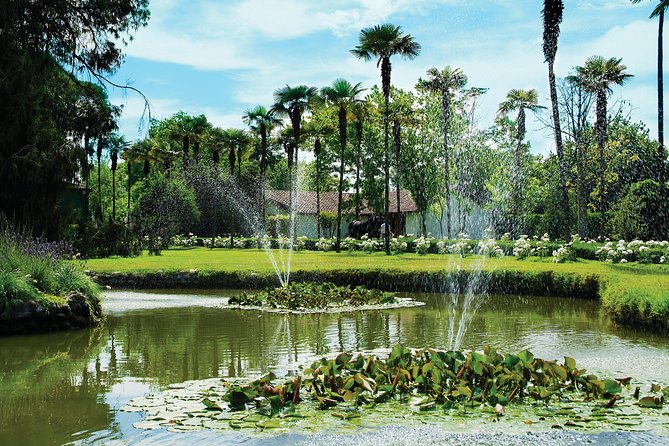
Parque Bicentenario is described as a well tended nature park set beside the financial district. You get a chance to walk and enjoy the landscaped space, and it is listed as admission included when selected. There are artificial lagoons, and you can watch swans and other birds.
This is a nice pause in the day because it lets your brain reset after government buildings and hill views.
Sculpture Park and Mapocho River context
The route also includes Parque de las Esculturas, an open-air art park created to beautify an area damaged by a Mapocho River flood. It is not only about sculptures, it is about how Santiago uses public space to recover and reframe tricky urban realities.
Cultural stops: Palacio de La Moneda, arts, literature, and the Gabriela Mistral thread
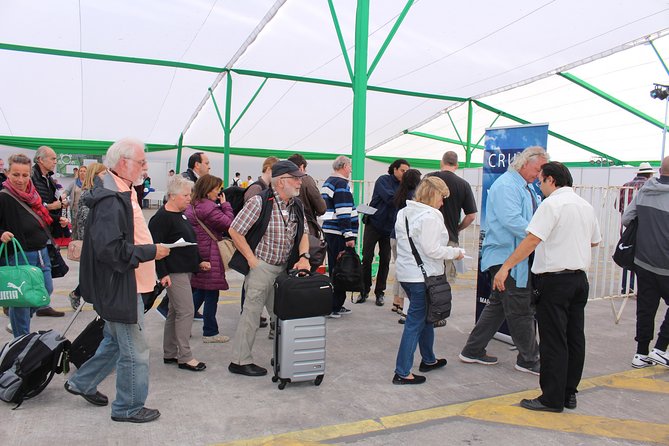
The tour includes time around cultural institutions connected to the Palacio de La Moneda area and other city art and literature sites.
Centro Cultural Palacio de La Moneda
The Centro Cultural Palacio De La Moneda is a cultural center beneath Plaza de la Ciudadanía with a glass-slab roof that brings natural light into the interior spaces. The tour notes ramps down through an atrium and two temporary exhibition areas, plus the Cineteca Nacional, a state-run art-house movie theater.
Admission is listed as free for this stop. For a time-limited tour, a cultural stop like this is a smart way to add depth without committing to a full museum day.
Fine Arts museum and other cultural anchors
You may also see or stop near the Chilean National Museum of Fine Arts, established in 1880, noted as the oldest in South America. Other stops in the route include areas tied to literature and major public institutions, like the Biblioteca Nacional and government court-related buildings.
A practical note: these are typically short stops. If you are the type who likes to read every plaque, plan on doing the rest at your own pace later.
The optional vineyard: Viña Undurraga and what the tasting really is
If you add the vineyard option, the day changes in the best way: you trade one more city view for a guided wine experience.
Viña Undurraga schedule and what you do there
The vineyard visit is listed as about 3 hours, including:
- approximately 1 hour guided tour of the winery grounds, including the park and themed areas like Aliwen, plus Mapuche totem poles that recognize Mapuche culture
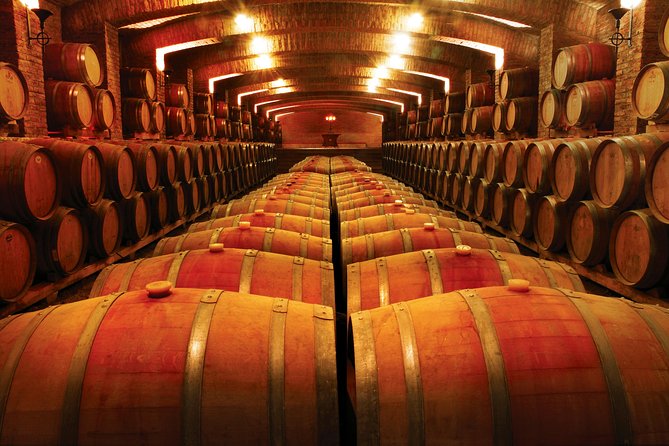
- then wine tasting with four reserve wines
This is the kind of winery visit that works well because it is not only about tasting, it is about seeing how the vineyard tells a story. You are also more likely to understand why Chilean wine can taste different from region to region when you see the landscape and winemaking setup.
A quick reality check
One thing to keep in mind is that vineyard experiences can vary in feel depending on how the day is run. I would ask the operator ahead of time what parts of the experience are prioritized for your departure, especially if wine tasting is your main reason for adding the option.
Comfort and common gotchas: audio, heat, and lunch expectations
A good tour can still feel frustrating if the basics go wrong. This one can be a great use of limited time, but you should know what can trip people up.
- Audio can be an issue: one account described no microphone, making it harder to hear the guide. If you rely on clear explanations, try to sit where you can hear best.
- Heat and AC matter: there is mention of weak air-conditioning in at least one experience. Chilean sun can be strong, so wear breathable layers and bring a light water bottle if allowed.
- Lunch might not be built in: there are notes about not getting a lunch stop. If you hate making food decisions on the fly, carry a snack and plan for lunch outside the tour.
The upside is that guides seem to focus on history and city context. Guides named Luis and Diego came through clearly in the accounts shared, with praise for strong explanations and organized pacing.
Who should book this Santiago plus vineyard day
This tour is a good fit if:
- you want a guided overview of Santiago in limited time
- you care about history and city layout, not just quick photo stops
- you are traveling as a couple, small group, or family where a structured itinerary reduces decision fatigue
- you like the idea of an optional wine stop without having to plan a separate outing
It might not be ideal if:
- you want lots of free time to wander independently
- you are picky about long stops at a single attraction
- you need robust hearing conditions, because audio setups can vary by vehicle and group
Should you book this tour?
If your goal is a smart, guided Santiago day with built-in orientation from the hilltops, I think this is worth considering, especially for cruise schedules. The value comes from the route structure, the small group size, and the way the day connects downtown power sites to viewpoint stops.
That said, if you are booking very close to your cruise time, I would be extra careful about your expectations for pacing. Confirm what is included in your exact departure, and if you add the vineyard option, double check that the wine tasting component is part of your purchased package.
Overall, this tour shines when you treat it as a guided framework for Santiago, then use the rest of your time in Chile to slow down and explore what you like most.
FAQ
How long is the Santiago city tour?
The tour runs about 7 to 8 hours.
What is the price per person?
The price is $97.90 per person.
Is pickup offered?
Yes. Pickup is offered from listed hotel locations in Santiago, San Antonio, Viña del Mar, and Valparaíso, plus the San Antonio Port and Valparaíso Port.
Where do I get dropped off?
Drop-off is available back to hotels in Santiago, San Antonio, Viña del Mar, and Valparaíso, plus Santiago Airport. San Antonio Port and Valparaíso Port drop-offs apply only when the service starts from Santiago.
Is the tour in English?
Yes, the tour is offered in English.
What’s included in the cost besides the guide and transport?
Included items list professional guide, small-group tour, transport by air-conditioned minivan, alcoholic beverages, and wine tasting.
Is the vineyard visit included?
The vineyard stop at Viña Undurraga is optional. It includes a guided tour and wine tasting of four reserve wines when selected.
What are the wine and alcohol rules?
Minimum drinking age is 18.
Are there limits on luggage?
Yes. Each traveler is allowed a maximum of 2 suitcase. Oversized or excessive luggage may have restrictions, so you should ask the operator if you have items like surfboards, golf clubs, or bikes.
Can I cancel for a refund?
Free cancellation is available up to 24 hours before the experience’s start time for a full refund.
Can service animals travel with me?
Yes, service animals are allowed.
More Boat Trips from Valparaíso
- Post-Cruise Valparaíso & Viña del Mar Tour to Santiago 4-Pax Deal
★ 4.0 · 39 reviews - Cruise Pick up + Tour Valparaiso Viña del Mar Drop off at Hotel in Santiago
★ 4.5 · 32 reviews - PRIVATE TOUR: Pre-Post Cruise Viña del Mar Valparaiso and Casablanca Winery tour
★ 4.0 · 25 reviews - Post Cruise Tour Valparaiso and Winery drop off Airport or Hotel
★ 4.5 · 23 reviews
Freshly reviewed in Valparaíso
- Valparaiso: Chilean Cooking Class with Fresh Market visit★ 5.0 · 3 reviews
- Private Transport in Valparaiso to Airport or Hotel in Santiago★ 5.0 · 3 reviews
- Valparaíso y Viña del Mar full day★ 4.6 · 3 reviews
- Valparaíso to Casablanca: wine tour with premium tasting and transportation★ 4.4 · 3 reviews
- Valparaíso: city tour and ticket to the house of Pablo Neruda★ 5.0 · 3 reviews
- Valparaiso: Guided Walking Tour with Ascensor Rides★ 4.5 · 3 reviews
- Valparaíso: Private Full Day Sightseeing Tour★ 5.0 · 3 reviews
- Gastronomic Tour in Valparaiso★ 5.0 · 4 reviews
Valparaíso Day Trips, compared.

Valparaiso Port and Viña del Mar with Casablanca Wine Tasting
Read our review →
Vina Del Mar, Valparaiso, Casablanca & Reñaca Tour
Read our review →
Tour to Valparaíso, Viña del Mar, Pablo Neruda Museum and Vineyard
Read our review →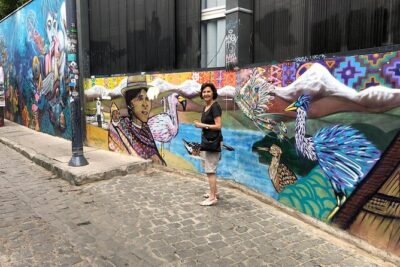
Valparaiso -Casablanca -Reñaca-Oceanic Rock-Concon
Read our review →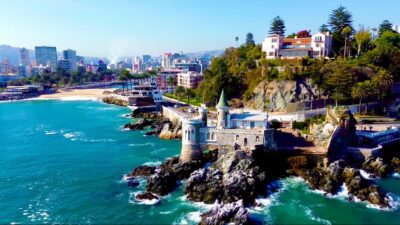
Valparaiso, Viña del Mar, & Casablanca Valley Tour
Read our review →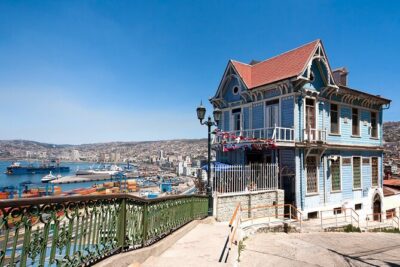
Valparaíso & Viña del Mar Tour – Colors and Charm on the Coast!
Read our review →
Viña del Mar, Valparaiso & Casablanca Valley Tour
Read our review →Viña del Mar, Valparaiso & Casablanca Valley Tour
Read our review →Browse the lists this tour appears in