
Reviewed · VALPARAíSO DAY TRIPS
Tour in Valparaiso: Street Art, funiculars and port
Valparaíso is an easy city to love if you start with the right angle: it moves. This tour gives you the full visual story, from the port’s working energy to the steep cerros covered in street art and passageways. What I like most is that it’s compact and well paced, and you still get multiple “wow” moments without burning half a day. One drawback to consider is that it is still a walking tour in a hilly city, with quick stops on stairways and promontories.
You’ll finish near Cerro Alegre at Ascensor Reina Victoria, which is a smart way to end because it leaves you positioned for lunch and browsing. The group stays small (up to 10), and the guides often bring city-level context that helps you understand what you’re seeing, whether you meet someone like Grex, Alex, Maria, Benjamin, David, Rex, or Christoval. If you prefer museum interiors over viewpoints and exteriors, note that most of what you see is outside.
Key highlights to look for
- Port dynamics at Muelle Prat and Empresa Portuaria Valparaíso for real context
- Plaza Sotomayor and the Chilean Navy area to anchor the city’s built history
- Ascensor El Peral and Ascensor Reina Victoria to understand Valparaíso’s “vertical transport” culture
- Cerro Alegre passage circuit like the Yugoslav Walk and Templeman Staircase viewpoints
- Pasaje Gálvez Arte Callejero and Paseo Dimalow where street art meets daily life (cafés, galleries, crafts)
- Small-group pacing that makes it easier to ask questions and move at a human speed
Valparaíso’s Port-to-Cerro Route (and Why It Feels Like the Real City)
Valparaíso can look like pure chaos at first: hills, staircases, painted walls, and elevators every few blocks. This route helps you make sense of it. You start low, watching how the city relates to the port, then you climb into the cerros where art, architecture, and neighborhoods all overlap.
That “from work to art” sequence is the secret sauce. It turns what could feel like random mural spotting into a story you can follow. And since the tour runs about two hours, you get an efficient introduction that also sets you up to explore after.
It’s not trying to do everything. Instead, it hits a smart set of anchors: squares, promontories, iconic elevators, and the passageways where Valparaíso actually reveals itself.
More days down on the Valparaiso coast:
- From Santiago: Valparaiso and Viña del Mar Day Tour
★ 4.3 · 643 reviews - Valparaiso: Street Art, Funiculars and Port City Tour
★ 4.8 · 214 reviews - 2 Hour Walking Tour in Valparaiso
★ 5.0 · 109 reviews
Starting at Muelle Prat Errázuriz: You Get Oriented Fast
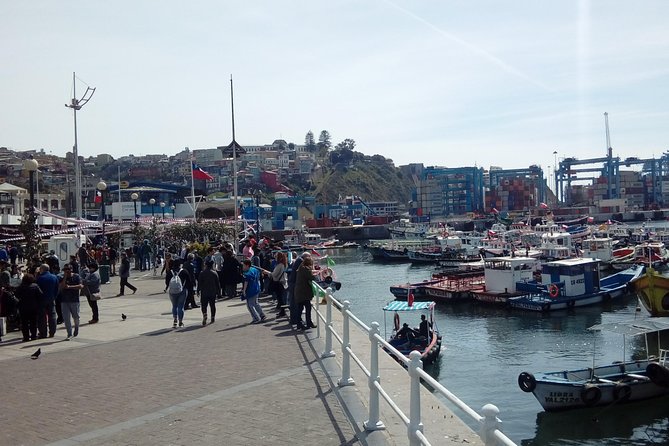
The meeting point is Muelle Prat Errázuriz in Valparaíso. From there, the tour quickly moves you into the city’s maritime setting at the Empresa Portuaria Valparaíso stop.
This matters because Valparaíso’s identity is not only artistic. The port shaped the economy, the movement of people, and the growth of the city. Even a short viewing stop (about five minutes, with admission free) gives you something you can carry into the rest of the walk: when you later see the old houses and international-style influences up on the cerros, you’ll understand why they appeared.
Practical tip: start your day with comfortable shoes. You’ll be walking and stepping up and down frequently, even if the stops are short.
Empresa Portuaria, Plaza Sotomayor, and Navy Buildings: The City’s Backbone
After the port, you move to Plaza Sotomayor. Expect a focused explanation of the monument and the surrounding buildings. It’s an easy stop to miss if you’re wandering alone, but it’s a great way to get historical and architectural context without turning the day into a classroom.
Next comes the Armada de Chile / Comandancia En Jefe / 1 Z Ona Naval area. The stop is brief, but it connects you to the idea that Valparaíso grew as a strategic port city. You’ll also start noticing patterns: where formal institutions sit, how the city’s power is expressed in architecture, and how the cerros later become more informal and personal.
These early stops work best if you let your guide “teach your eyes.” You’re not just looking at buildings. You’re learning what kind of city you’re standing in.
Funicular Strategy: Ascensor El Peral Shows You How Valparaíso Moves
Valparaíso’s elevators are not a gimmick. They are transportation, and they are also part of the town’s identity. This tour includes Ascensor El Peral, with history explained on the way.
It’s a short stop (about five minutes, admission included), but it can make the rest of your self-guided exploration feel easier. Once you understand how the elevators stitch the city together, you’ll stop thinking of the cerros as a maze. You’ll start thinking of it as a connected network.
If you’re planning to use funiculars on your own later, this kind of orientation is gold. You learn what direction matters and where viewpoints and passageways tend to “collect.”
A few more Valparaíso departures to weigh up
- Street Art in Valparaiso and Wines in Casablanca from Santiago
★ 5.0 · 126 reviews - Santiago Barrio Yungay Street Art Walking Tour Experience
★ 5.0 · 19 reviews
Cerro Alegre First Taste: Yugoslav Walk, Baburizza Exterior, and Casa Crucero
Once you reach Cerro Alegre, the tour shifts into neighborhood scale. You’ll get access to the Yugoslav Walk area, then continue through key exterior stops like Palacio Baburizza (you’ll see it from outside) and Casa Crucero.
These stops are short, but they build a theme: Valparaíso’s beauty isn’t only on walls. It’s also in the way the city’s older buildings show wealth, trade connections, and changing eras.
A practical way to think about this section: you’re learning the “canvas.” Street art works best when you understand the underlying architecture and neighborhood mood. The guide’s explanations help you see why certain buildings and passageways became natural stages for murals and creative spaces.
Pasaje Gálvez Arte Callejero and Paseo Gervasoni: Where Art Gets Specific
Now you’re in the part you came for: Pasaje Gálvez Arte Callejero Valparaíso. This stop is longer (about 15 minutes) and it’s easy to see why it’s often a favorite. You’ll enjoy murals and painted stairs, art galleries, and street musicians.
This is one of those stops where you should slow down just a little. Don’t treat it like a quick photo stop. Look at how the artwork sits on the stairs, how the lanes funnel foot traffic, and how local music and galleries turn the passage into daily life, not just a postcard.
From there, the tour goes to Paseo Gervasoni, including the Lukas Museum context. Expect history tied to the promenade and views. Even if you do not go inside a museum on this tour, a viewpoint and narrative stop like this makes your later wandering more purposeful.
Paseo Atkinson and the Lutheran Church Area: Quiet Streets, Big Context
You also pass through Paseo Atkinson and then a stop tied to the Lutheran Church of Valparaíso. These are smaller moments, but they matter because they show Valparaíso’s cultural layers.
You’ll get a history explanation at each of these areas (admission free), and that helps you avoid a common trap. A lot of visitors only see street art as decoration. Here, you’re getting cultural context so you understand why different communities shaped the city’s look and social map.
If you like walking tours that connect place to people, this section usually lands well.
The UNESCO Touch: Old English Residents’ Houses
The tour includes a viewpoint of old houses of English residents in the UNESCO Heritage Zone. This is a key contrast against the mural-heavy cerros.
Even though you’re not touring interiors here, the visual idea is clear: Valparaíso has international influences, and you can still see them in the built fabric. When the tour is working well, you’ll notice how those older styles sit near newer creative scenes.
This stop is short, but it gives you a stronger mental map for why some corners feel “formal” while others feel like art studios, cafés, and informal galleries.
Cerro Concepción: German School, Anglican Church, and Paseo Pierre Loti
Next is Cerro Concepción, with multiple story stops: the German School, an Anglican Church, and Paseo Pierre Loti. There’s a lot packed into a few minutes, but the goal is simple: show how different communities and institutions shaped the cerros’ identities.
This part of the tour is also useful for food and rest planning later. Cerro Concepción and Cerro Alegre are both places where you can find cafés and places to pause, and your guide’s route helps you see where those clusters tend to happen.
If you’re tired after earlier stair climbs, take the mindset shift. You’re not “behind.” You’re in the middle of a planned route that cycles viewpoints, architecture, and art.
Ascensor Concepción and Cerro Alegre Views: Templeman Staircase and Café Life
You’ll stop by Ascensor Concepción, with history and the idea of how Cerro and elevator connections work. Then the tour shifts back into the Cerro Alegre atmosphere.
There’s a viewpoint stop focused on the dynamics of Cerro Alegre, including the concentration of places like cafés, ice cream parlors, and restaurants. This is more than scenery. It tells you where the neighborhood energy flows, and it makes your later independent time more comfortable because you’ll know where to aim.
The tour also includes Templeman Staircase (about 10 minutes). Staircases are a Valparaíso specialty, and Templeman is one of the places where the city feels like it’s in constant motion.
As a traveler, I love this part because it helps you understand how people live on slopes. Street art is not staged for tourists only. It’s part of the neighborhood’s vertical architecture.
Paseo Dimalow and the Graffiti-Plus Mix: Food, Crafts, and Nightlife Leaning
Paseo Dimalow is a longer stop (about 20 minutes) and it’s where the tour leans into street-level browsing. Expect graffiti, restaurants, galleries, bars, and crafts options.
This is the perfect stop to do two things:
- pick out one or two places you want to return to later
- slow down for photos that include stairs, storefronts, and painted walls together
Because you’re also near food and rest options, this segment is a good bridge between “tour mode” and “explore mode.” If your guide can suggest where to eat or what to look for, this is typically the moment to ask. You’re already in the right area.
Ascensor Reina Victoria Finish: The View Locks the Day in Place
The tour ends at Ascensor Reina Victoria at P.º Dimalow, Cerro Alegre. You’ll visit and learn the elevator’s history (about 10 minutes, included).
Finishing here is smart. It gives you one last funicular moment, and it ends close to where you’ll likely want lunch, a cold drink, and more wandering. It also means you’re not hauling yourself back across the city after the tour.
For travelers, elevators are often the difference between enjoying Valparaíso and suffering through it. This last stop helps you close the loop, so the city feels navigable instead of random.
Price and Value: What $40 Actually Buys You in Valparaíso
At $40 per person for about two hours, this tour is strong value if you want a tight introduction. The reason is simple: you get multiple structured stops for history and context, plus elevator time where admission is included for Ascensor El Peral and Ascensor Reina Victoria.
Most other stops are free admission, so you’re paying primarily for guidance, pacing, and the narrative that connects the port, squares, cerros, and street art. With a maximum group size of 10 travelers, you’re not lost in a crowd, and you can usually ask questions in a real way.
Also, it’s often booked about 15 days in advance. That’s a good sign you should plan ahead, especially if you’re traveling in peak weeks.
What the Tour Feel Is Like Day-to-Day: Pace, Groups, and Practical Comfort
This is a walk-heavy route in a hilly city. The upside is that stops are frequent but not long. You’re rarely stuck for 30 minutes in one spot. Instead, you get a sequence of quick context moments, then art or views, then another short segment.
That pacing tends to work for:
- first-time visitors who want to orient themselves fast
- couples who like history plus street life
- families who can handle stairs and want frequent breaks
- solo travelers who prefer a guide over trial-and-error navigation
A small group also helps with questions. Guides on this route often go beyond facts and talk about how to read murals, how to approach the passageways, and what to look for next when you keep walking.
If you’re sensitive to steep stairs or long uphill climbs, you may want to pace yourself more than you think. The route is designed for “most travelers,” and that’s encouraging, but you should still be realistic about physical effort.
Who Should Book This Valparaíso Street Art and Funicular Tour
I’d book it if you want:
- a street art and elevator orientation that makes later wandering easier
- port context, not just murals
- a planned route that ends in Cerro Alegre where you can keep exploring
I might skip it if you already know Valparaíso well and you’re hunting for deep museum time or long, interior-focused visits. This tour is more about outside walls, viewpoints, passageways, and the city’s street fabric.
If you’re traveling with a service animal, note that service animals are allowed, and the tour is near public transportation, which adds flexibility if you need to hop on and off the route.
Should You Book This Tour or Build Your Own Walk?
If it’s your first time in Valparaíso, I recommend booking. The biggest payoff is getting your bearings fast and understanding the city’s vertical logic. You’ll see more in two hours than you would trying to piece together port views, cerro art, and elevator history on your own.
If you’re the kind of traveler who loves street art but also wants meaning behind what you see, this route fits your style. And if you want to end with options for food and rest, finishing near Ascensor Reina Victoria is exactly where you want to be.
FAQ
How long is the Valparaíso street art, funiculars, and port tour?
It lasts about 2 hours.
What does the tour cost?
The price is $40.00 per person.
Which parts include admission tickets?
Admission is included for Ascensor El Peral and Ascensor Reina Victoria. The other listed stops have free admission tickets.
Where does the tour start and end?
It starts at Muelle Prat Errázuriz, Valparaíso and ends at Ascensor Reina Victoria, P.º Dimalow, Valparaíso (Cerro Alegre).
How big is the group?
The tour has a maximum of 10 travelers.
What is the cancellation policy?
You can cancel for a full refund up to 24 hours before the experience start time. If you cancel within 24 hours, you will not get a refund.
Freshly reviewed in Valparaíso
- Valparaiso: Chilean Cooking Class with Fresh Market visit★ 5.0 · 3 reviews
- Private Transport in Valparaiso to Airport or Hotel in Santiago★ 5.0 · 3 reviews
- Valparaíso y Viña del Mar full day★ 4.6 · 3 reviews
- Valparaíso to Casablanca: wine tour with premium tasting and transportation★ 4.4 · 3 reviews
- Valparaíso: city tour and ticket to the house of Pablo Neruda★ 5.0 · 3 reviews
- Valparaiso: Guided Walking Tour with Ascensor Rides★ 4.5 · 3 reviews
- Valparaíso: Private Full Day Sightseeing Tour★ 5.0 · 3 reviews
- Gastronomic Tour in Valparaiso★ 5.0 · 4 reviews
Valparaíso Day Trips, compared.

Valparaiso Port and Viña del Mar with Casablanca Wine Tasting
Read our review →
Vina Del Mar, Valparaiso, Casablanca & Reñaca Tour
Read our review →
Tour to Valparaíso, Viña del Mar, Pablo Neruda Museum and Vineyard
Read our review →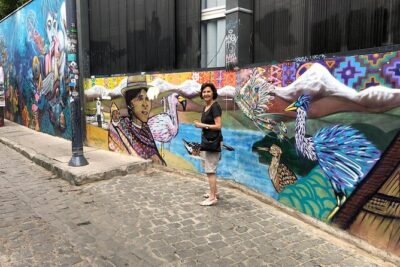
Valparaiso -Casablanca -Reñaca-Oceanic Rock-Concon
Read our review →
Valparaiso, Viña del Mar, & Casablanca Valley Tour
Read our review →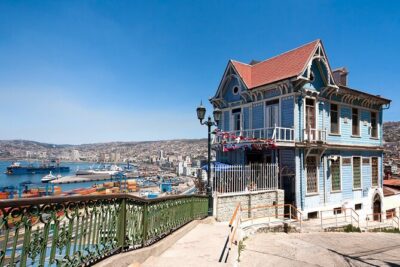
Valparaíso & Viña del Mar Tour – Colors and Charm on the Coast!
Read our review →
Viña del Mar, Valparaiso & Casablanca Valley Tour
Read our review →Viña del Mar, Valparaiso & Casablanca Valley Tour
Read our review →Browse the lists this tour appears in