
Reviewed · HISTORICAL TOURS
6 Hour Tour of Culture, History and Flavors from Santiago
This is an interesting Santiago tour because it connects the political story of modern Chile to the day-to-day city life you can actually see on the street. I love the 6-hour pacing because it gives you time to taste and look, not just rush past famous names. I also love that the route includes both the Central Market food stop and a serious history ending at the Museum of Memory. One thing to consider: it is a lot of walking and viewpoints in one day, so plan for comfort shoes and take the breaks when your guide gives you space.
If you want a city tour that feels human, this one fits. The group cap is 8 travelers, and guides work in English, Spanish, and Portuguese. A possible drawback is that lunch is on your own, so you’ll want to decide ahead of time how you want to eat, especially around market time.
Key highlights you should care about
- Progressive 6-hour format: more time on each stop, including markets, so you can experience Santiago instead of speed-reading it
- Central Market focus: seafood specialties like ceviche and caldillo de congrio, plus nearby fruit and veggie sampling at Mercado Tirso de Molina
- Bellavista with culture: street art around Patio Bellavista, with La Chascona available but not ticket-included
- Cerro San Cristobal views: funicular included, with a local sip of mote con huesillos on the hill
- Built-in historical stop: the Museum of Memory and Human Rights ends the day with context that ties earlier stops together
- Small group energy: up to 8 travelers, and some tours can effectively feel private when the group is tiny
Why the extra 2 hours changes everything in Santiago
A lot of Santiago city tours feel like a hit list. You stop, you look, you keep moving. This one is longer on purpose, and that matters.
The idea is simple: if you only have a short window, you pass through places like the Mercado Central instead of letting them work their magic. Here, you get a full market block, so you can slow down and pay attention to the food, the vendors, and the rhythm of the neighborhood. It is the difference between seeing a market and understanding why Chileans treat markets like daily life.
You also get a better flow between themes. The morning starts with government and power, then shifts to colonial-era history and the present-day mix of people in the Plaza de Armas area. Later, the tour moves into Bellavista and finishes high above the city with the Museum of Memory. That story arc helps the day feel connected, not random.
And the price is not just paying for “a guide saying facts.” It includes the funicular ride up Cerro San Cristobal and admission for the Museum of Memory and Human Rights. Those are real, scheduled components, not optional add-ons.
A few more Santiago departures to weigh up
- Santiago: Guided Walking Tour of the Historical Old Town
★ 4.8 · 459 reviews - Tour Viña Santa Rita: History, Wine and Picnic Outdoors
★ 4.5 · 141 reviews - Viña Del Mar and Valparaiso world heritage site.
★ 4.5 · 89 reviews
Getting picked up, finding your guide, and the small-group advantage
The tour starts at 9:00 am, runs for about 6 hours, and can include pickup. You’ll use a mobile ticket, and the group stays at a maximum of 8 travelers. That small size changes what a guide can do. You get more chances to ask questions, and the route can breathe a little.
You also have multilingual guide support, with licensed guides in English, Spanish, and Portuguese. This is a plus if your group has mixed language comfort levels.
I should also call out what the reviews hinted at, without turning this into a “wow” story. When groups are tiny, the tour can act like a private outing. One guide named Hightower was described as picking up a hotel guest and adapting the day based on what they wanted to see. Another guide, Daniel, was praised for a personalized, history-to-today approach, including small tastes as the day went on.
That kind of flexibility is usually what you want from a city tour anyway, and it fits Santiago well because the city rewards curiosity.
Parque Bicentenario: modern Santiago, strong Andes photo ops, zero rush
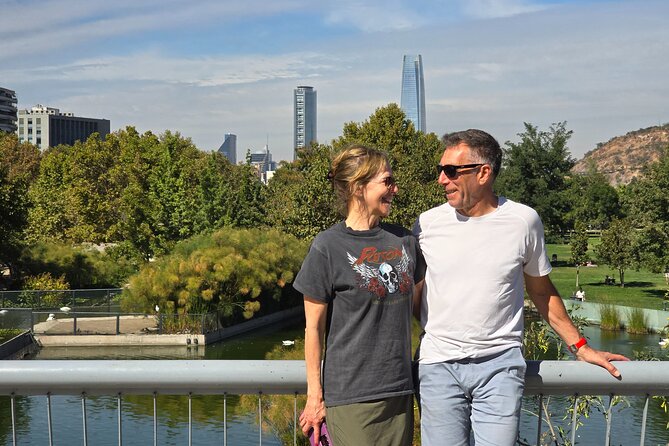
You start with Parque Bicentenario in Vitacura, a district that feels more modern and polished than the historic core. The park itself is a designed green space, with paths and sculptures that are made for walking and photos. There’s also a lake, so it’s not just “a flat park with a view.”
The practical value here is the reset. Santiago can hit you with traffic noise and big intersections once you’re downtown. This stop gives you a calmer start while still keeping the Andes in your frame. If you’ve never seen the Andes near a major city, this is the easiest way to register it visually before your day fills up.
Time on this stop is about 30 minutes, and admission is free. That means you’re not stuck somewhere too long, but you’re also not rushed enough to miss what you came for.
La Moneda and Plaza de Armas: politics, Pinochet, and the Mapuche in one walking day
After the park, the tour shifts hard toward Chile’s power story.
The other half of a Santiago week:
- Valparaiso Port and Viña del Mar with Casablanca Wine Tasting
★ 5.0 · 6,110 reviews - Santiago: Cajon del Maipo/Embalse del Yeso Tour with Picnic
★ 4.3 · 3,789 reviews - Santiago: Vina Del Mar, Valparaiso, Casablanca & Reñaca Tour
★ 4.2 · 2,838 reviews - Cable Car, Funicular and Sightseeing Bus in Santiago one day
★ 5.0 · 2,325 reviews
La Moneda: government and the country’s turning points
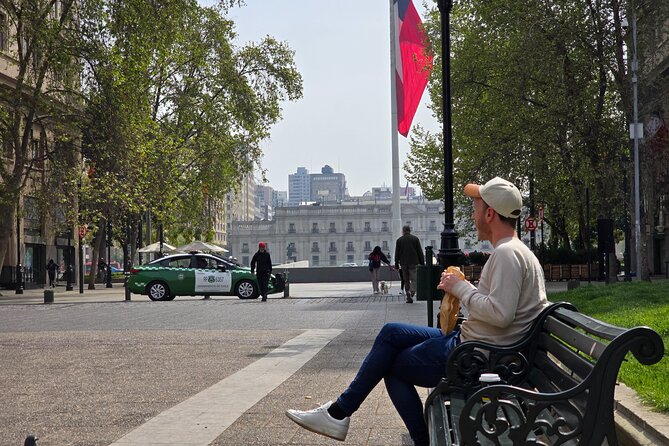
At La Moneda, you’ll walk near the palace of government and the cultural center. Your guide uses this as a place to explain Chile’s political situation and key historical moments, including the coup executed by Pinochet, plus an overview of the Chilean economy.
This is the kind of context that helps later. When you reach plazas, monuments, and even museums, you’ll understand what you’re looking at instead of treating it like just another stop with plaques.
Expect about 45 minutes, with admission listed as free.
Plaza de Armas: colonial roots, immigrants today, and cathedral time
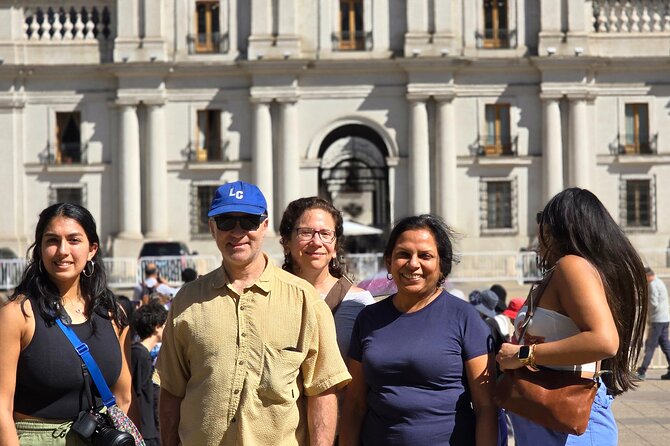
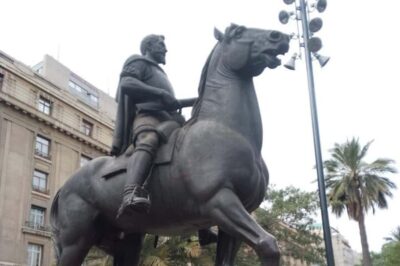
From La Moneda you go to Plaza de Armas de Santiago, and this is where the tour gets personal and human. You’ll talk about the colonial past tied to Spanish conquest, the resilience and heritage of the Mapuche people, and how the square has become a crossroads of cultures, including immigrants from Central and South America.
You also get some free time to visit the cathedral, roughly 45 minutes total at this stop. That free chunk is important because it gives you space to react to what you care about. If you only want photos, you can. If you want quiet inside, you can do that too.
Admission at this part of the tour is free.
One tip that I use in every city: pick one thing you want to understand at plazas, not ten things. A guided story plus one close look is more satisfying than trying to master everything in passing.
Mercado Central and Mercado Tirso de Molina: the food part that actually takes time

Now we get to the part most people came hungry for.
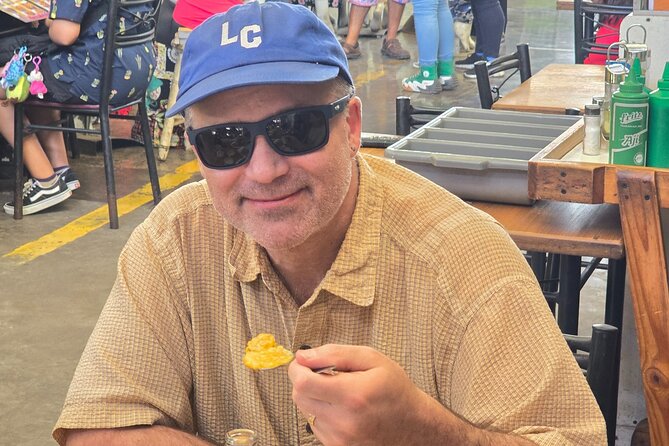
The tour ends its downtown market segment at Mercado Central, a fish market where you’ll learn about Chile’s seafood traditions. You’ll be able to taste iconic dishes like ceviche and caldillo de congrio. And instead of just walking by counters, you get the time to wander stalls and pay attention to what’s fresh and what people are buying.
The tour is explicit about not treating the market as a photo backdrop. That’s why this segment feels different from a “quick lunch stop.” The pacing lets flavors lead the story, and you’re not forced to eat instantly to keep the schedule moving.
Nearby, Mercado Tirso de Molina is also mentioned, especially for fruits and vegetables. If you like snack-style sampling, this kind of market stop works perfectly because you can choose small bites instead of committing to a full meal on a tight timeline.
This entire market block is about 45 minutes, with admission listed as free.
Two practical notes:
- Bring water or buy it when you need it. Markets are hot and active, and you’re walking through seafood areas.
- Think about lunch as part of the tour, even though lunch isn’t included. You’ll have a good sense of what you want once you’ve seen the stalls and heard what dishes matter.
Bellavista: street art, Patio Bellavista, and a Neruda house option
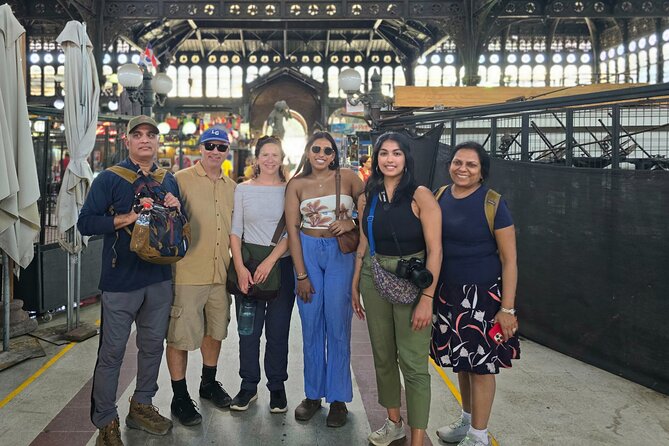
After the market, you head into Bellavista, a neighborhood known for creative energy and colorful street scenes.
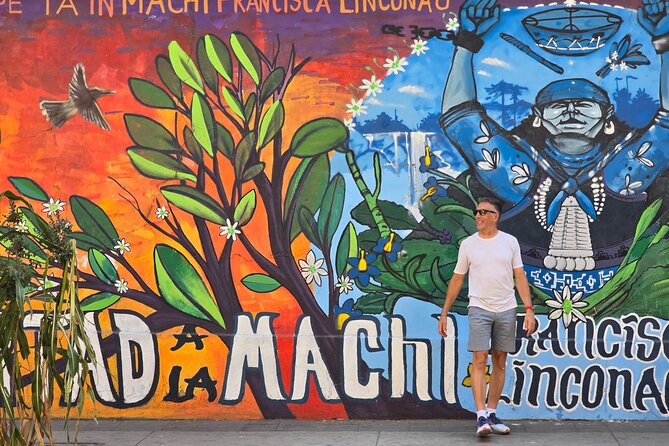
You start with a stroll through Patio Bellavista, a hub with restaurants, bars, and shops that reflect the area’s artsy personality. Your guide also shows you the neighborhood’s street art culture, including murals and installations that connect Chilean life with contemporary themes.
Then you get the La Chascona stop, one of Pablo Neruda’s houses. Here’s the key detail: it’s mentioned as part of the visit, but the admission ticket is not included. So you can’t assume the house itself is covered in the tour price. If you care a lot about Neruda, this is worth budgeting for separately.
This stop is about 30 minutes. Admission is listed as not included.
If you want a fun way to close the city-tour loop, Bellavista does it well because it shows modern Santiago culture right in the street. You’ll finish the day with views and museums, but this is the part where you get to feel the city’s mood.
Cerro San Cristobal by funicular: big views, one classic drink
Next is Cerro San Cristóbal, and you go up via the funicular. The funicular itself is included, so you’re not spending time figuring out schedules or paying for transit separately.
At the summit, you get panoramic views of Santiago, with the Andes and nearby mountains in the background. This is the payoff stop for first-time visitors. It helps you understand the city’s scale and where everything sits, even if you never use a map again.
Your guide also gives you a smart travel rule that works anywhere: when you reach a new city, find a viewpoint so the place becomes real in your mind. This is that viewpoint.
About 45 minutes are allocated to this stop, and mote con huesillos is included. That drink is made with wheat and dried peaches, and it’s a local tradition tied to the hill.
You can expect the drink to be a fun, low-effort cultural moment. You don’t need to hunt for a café with a menu you cannot read. It’s part of the experience.
Museum of Memory and Human Rights: history that turns the day serious
After the views, the tour finishes at the Museum of Memory and Human Rights. This is where the morning themes return, but with more weight and less surface-level storytelling.
The museum is described as well designed and informative, focused on Chile’s recent history. This end point works because you already talked about government, power, and historical trauma earlier in the day. Now you get a space to understand it in a structured way.
Admission is included, and the time here is about 30 minutes.
One practical caution: this museum stop is reflective. If you’re traveling with teens who want only entertainment, you might want to prep them for a serious half hour. For most adults, though, it’s a satisfying close that makes the city tour feel meaningful instead of just scenic.
Price and value: why $75 makes sense for this exact mix
The price is $75 per person for about 6 hours.
What you get that’s clearly built into the day:
- Licensed guides in English, Spanish, and Portuguese
- Pickup offered
- Funicular ride included
- Museum of Memory admission included
- Stops with free admission at Parque Bicentenario, La Moneda, and Plaza de Armas
- Market time where you can taste well-known seafood dishes like ceviche and caldillo de congrio
What you pay for on your own:
- Lunch is not included
- La Chascona admission ticket is not included
So the “value math” is mostly about whether you’d otherwise spend money on the funicular and museum tickets and pay for a guided history and city route. If you plan to visit both Cerro San Cristobal and the Museum of Memory anyway, this price becomes more reasonable fast.
Also, the tour is capped at 8 travelers, and a small group often means a better experience per minute. In cities like Santiago, where distances are manageable but time gets eaten by traffic and transit, the structure matters.
If you want a bigger-picture view plus a food-and-neighborhood day, I think this is a solid use of a half-day.
Who should book this tour, and who might skip it
I’d book this if you want:
- a single 6-hour route that mixes history, politics, neighborhoods, and food
- market time that is long enough to actually eat and notice
- a viewpoint plus a museum without booking separate tours
I might skip it if you:
- hate walking or prefer a slower, more lounge-style schedule
- only want one neighborhood and do not care about politics or museums
- cannot handle a serious museum stop at the end of a fun day
Best fit: first-timers who want orientation and context, and also repeat visitors who want a different angle than a pure “sightseeing loop.”
Should you book this Santiago city tour?
Yes, if you’re looking for a smart half-day that connects the dots between Chile’s past and Santiago’s present. The most convincing part is the time allocation. You get the market experience instead of a quick pass, plus the Cerro San Cristobal funicular and the Museum of Memory close the loop.
Before you book, just remember two things: plan for comfortable shoes, and expect that lunch and La Chascona ticket are on you. If you can do those two basics, this tour is a very practical way to get a lot of Santiago in one go.
FAQ
How long is the 6-hour Santiago tour?
The duration is about 6 hours.
What time does the tour start in Santiago?
The tour starts at 9:00 am.
Is pickup included?
Pickup is offered.
Is there a mobile ticket?
Yes, the tour uses a mobile ticket.
Are the funicular and Museum of Memory included?
Yes. The funicular and the Museum of Memory and Human Rights are included, and the museum admission is listed as included.
Is lunch included?
No, lunch is not included.
Is Pablo Neruda’s La Chascona included?
La Chascona is not included (the admission ticket is not included).
What food stops are included, and is tasting part of the day?
The tour includes a visit to Mercado Central, where iconic seafood dishes like ceviche and caldillo de congrio are mentioned, along with market sampling nearby at Mercado Tirso de Molina.
How big is the group?
There is a maximum of 8 travelers.
What is the cancellation policy?
Cancellation is free up to 24 hours in advance for a full refund.
Freshly reviewed in Santiago
- Colchagua Full Day Wine Tour: Casa Silva & L’Apostolle Wineries★ 4.0 · 3 reviews
- Santiago De Chile Highlights Walking Tour with a Guide★ 5.0 · 3 reviews
- Santiago de Chile: Half-Day City Tour with Local Cuisine★ 4.5 · 3 reviews
- Portillo & Laguna del Inca with Lunch at the Hotel Portillo★ 5.0 · 3 reviews
- Cajon del Maipo & Embalse El Yeso Tour from Santiago★ 3.5 · 3 reviews
- Full day hike to the viewpoint of Condores, Cajon del Maipo★ 5.0 · 3 reviews
- Kayaking Day Trip in the Andes from Santiago★ 5.0 · 3 reviews
- Private Transportation from Santiago or Santiago Airport AMB to Valle Nevado★ 3.5 · 3 reviews
Historical Tours, compared.
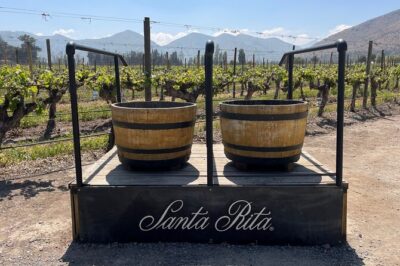
Tour Viña Santa Rita: History, Wine and Picnic Outdoors
Read our review →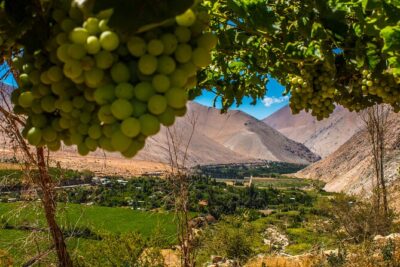
Elqui Valley Tour: History and Flavors (NOT FOR CRUISES)
Read our review →
Viña Del Mar and Valparaiso world heritage site.
Read our review →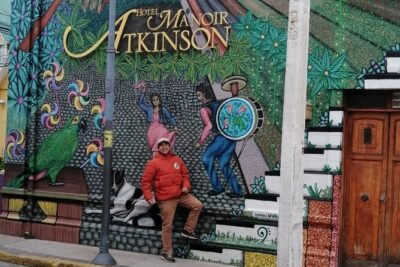
Walking Tour Valparaiso, History & Art – Private Optional
Read our review →
Essence of Santiago : History, Flavors and Panoramic Views
Read our review →
2 Day Private Tour: Easter Island’s Cultural Heritage
Read our review →
Browse the lists this tour appears in