
Reviewed · SAN CRISTóBAL HILL & FUNICULAR
Tour in Santiago with Pass to Funicular, Cathedral Cable Car and More
This experience is interesting because it mixes Santiago’s big city planning with old school views from the hills. You cover the neighborhoods you actually want, then you climb up to San Cristobal for city panoramas using the cable car and funicular systems.
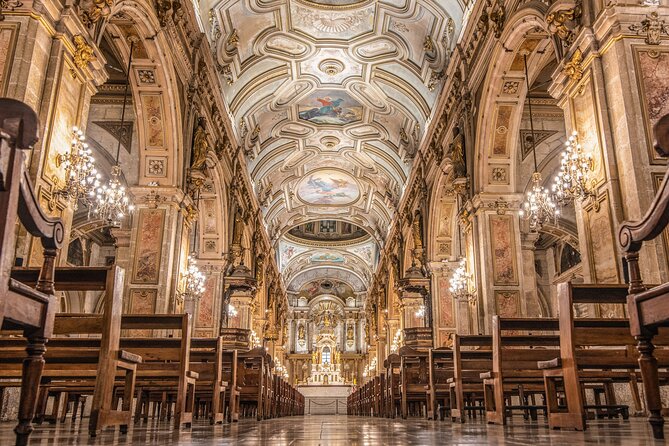
I like two things a lot. First, the 2 day Hop On Hop Off format is practical, so you can move at your pace instead of marching on a fixed schedule. Second, the ride to the top of Cerro San Cristobal gives you that classic Santiago skyline moment, and it’s paired with a fun, quick stop at the Metropolitan Cathedral where you can climb the bell tower.
One thing to consider: this is a “do it all” style pass. If you like slow, deep neighborhood wandering without transfers or timed entries, you may feel rushed trying to fit in everything the ticket offers.
Key highlights you’ll feel quickly
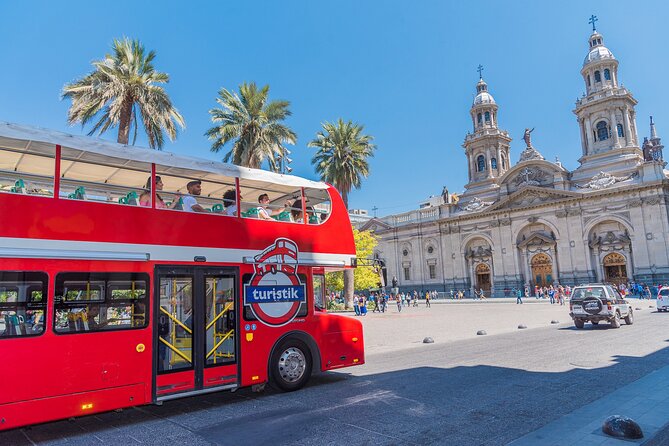
- Hop On Hop Off for 2 days so you can repeat routes or spend extra time where you care
- Cable Car to San Cristobal Hill with major photo viewpoints plus the Bellavista Terrace area
- Funicular cars and the heritage Nono style climb, including stops tied to Parquemet and the zoo area
- Historic Santiago anchor stops like Plaza de Armas, La Moneda, and Cerro Santa Lucia
- Cathedral bell tower access with a 360 degree view time window (short, but memorable)
Starting at Parque Arauco, then riding the Big Bus to get oriented fast
Your day kicks off near Las Condes at Av. Pdte. Kennedy Lateral 5059, and you start at the Parque Arauco area. That first stop matters more than it sounds. When you’re new to Santiago, dropping you in a neighborhood with obvious landmarks and easy transit makes it simpler to plan your next moves.
From Parque Arauco, you hop onto a Big Bus route, and the idea is straightforward: see where things are, then decide what you want to return to later. Parque Arauco is a major shopping center with an outdoor boulevard vibe, plus a Turistik info point near the boulevard entrance. That info desk is handy if you want to map out your day before you start skipping between stops.
I also like that this start puts you close to nature without feeling like you’re escaping the city. Nearby Parque Araucano is a big green space where you can take a breather, walk, or just reset your brain after bus time.
Potential snag: if your group is arriving spread out, you’ll want to arrive close to the 9:30 am start so you don’t waste your first hours waiting. Once you’re rolling, though, the loop setup makes it easy to stay efficient.
Other ways up San Cristobal:
- Cable Car, Funicular and Sightseeing Bus in Santiago one day
★ 5.0 · 2,325 reviews - Cable Car, Funicular and Sightseeing Bus in Santiago two days
★ 5.0 · 1,747 reviews - Santiago Skyline: Cable Car & San Cristobal Walking Tour
★ 5.0 · 142 reviews
Parque Bicentenario and Providencia parks, where Santiago slows down
One of the best “value per minute” stops is Parque Bicentenario. It’s in Vitacura and runs along the Mapocho River corridor, which means you get open-air space inside a modern part of the city. This park is designed with different landscapes, play areas, statues, sports zones, and lagoons, so it works for couples, families, and solo travelers.
What makes it more than a generic green patch are the lagoons. You can spot black-necked swans, flamingos, herons, and fish living together in the water areas. If you’ve got 1 to 2 hours between bus rides, this is the kind of stop where you can walk, pause, and still feel like you used your time well.
It’s also surrounded by stuff you can add on easily. Nearby you’ll find Alonso de Córdova Street, known for luxury brand stores and exclusive dining, and the stop area sits near the Mestizo international restaurant. Even if you don’t eat there, you get a feel for how Santiago balances upscale city life with public outdoor space.
Later, you’ll hit the Providencia side at Plaza a La Aviación, an extension of Balmaceda Park. This area ties into Santiago’s park history, including a reference to an old Japanese Park concept and a fountain inaugurated in 2005. In plain terms, you get a good walkable stretch along the Mapocho River slope with access to green areas like Balmaceda Park and Uruguay Park, plus Providencia Avenue for shops and cafes.
This is where I’d schedule a lighter pace day part. If you’re doing the big hill views and historic center the same day, break it up with a park block so your legs stay happy.
San Cristobal Hill by cable car, then ride the funicular for the view loop
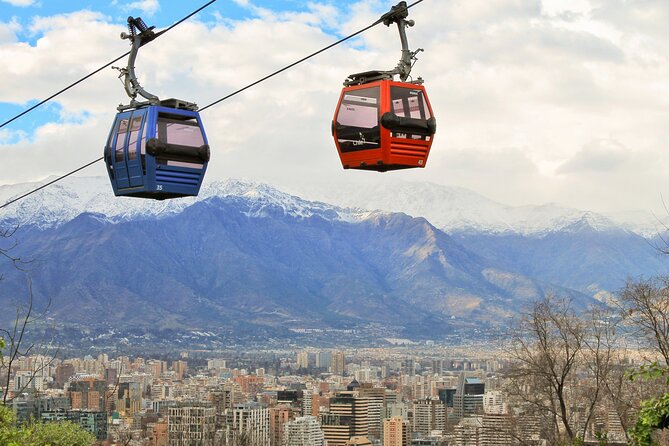
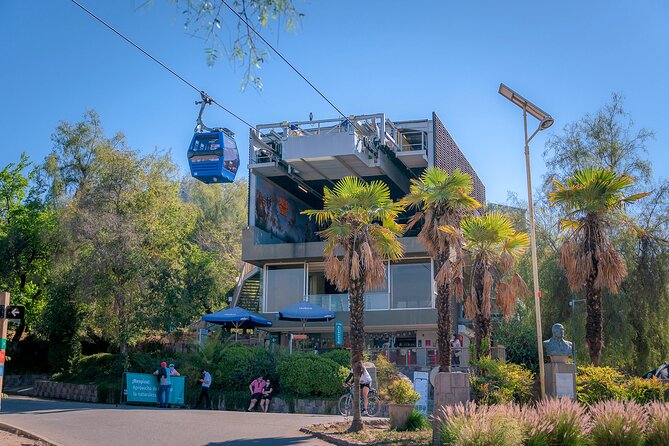
The headline in Santiago is how fast you can rise above the city. The cable car stop uses a station called Oasis Station, reached via access at Pedro de Valdivia, and it’s minutes from the Hop On Cable Car connection area along Av. Pedro de Valdivia Norte.
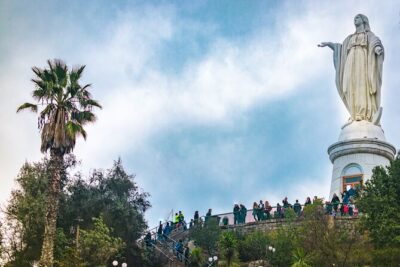
Once you ride up, your top point is tied to San Cristobal Hill, with Cumbre Station as your anchor. You’ll find the Virgin of the Immaculate Conception and the Bellavista Terrace viewpoint area. Even if you’ve seen lots of cities from above, this one hits because Santiago’s geography makes the skyline feel layered, not flat.
There’s also practical value in what the cable car connects to. At the summit you can link with the funicular or panoramic buses so you can keep moving without backtracking. That means less time fighting transit and more time actually looking around.
At the top, you’ll be in Parquemet territory, which includes features like a Japanese Garden, viewpoints, and iconic squares. The point is simple: you’re not just transported to a photo spot, you’re placed into a mini world where you can walk around before heading toward the next ride.
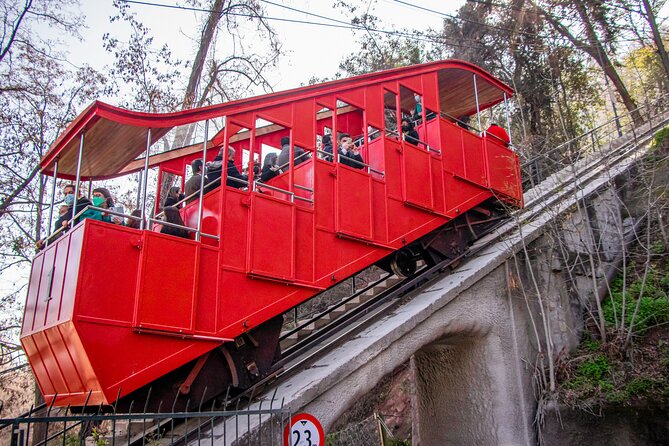
Then you switch to the Funicular de Santiago. This is more than a second transportation method, it’s a heritage climb. The funicular is declared a Historical Monument in 2000, and the style is described as neo-Gothic, with the Nono cars and a designer credit to Luciano Kulczewski. The cars are also recently restored, so the ride feels purposeful rather than sketchy or worn out.
The funicular connects to meaningful stops too. There’s an intermediate station linked to the National Zoo, and the next one is at the summit station with the Mirador Terraza Bellavista and the Sanctuary of the Virgin of the Immaculate Conception. If you want the cleanest “view then move” flow, plan to ride up, spend time near the summit viewpoints, and then continue onward using the connection options back into the Hop On route.
You might care about one more detail: this hill area is ideal for photos and also for a weather check. If the morning is clear but afternoons cloud over, start your ascent early in your day. If it’s the opposite, you can reverse your order, because the ticket gives flexibility across days.
Plaza de Armas, La Moneda, and Cerro Santa Lucia in one historical arc
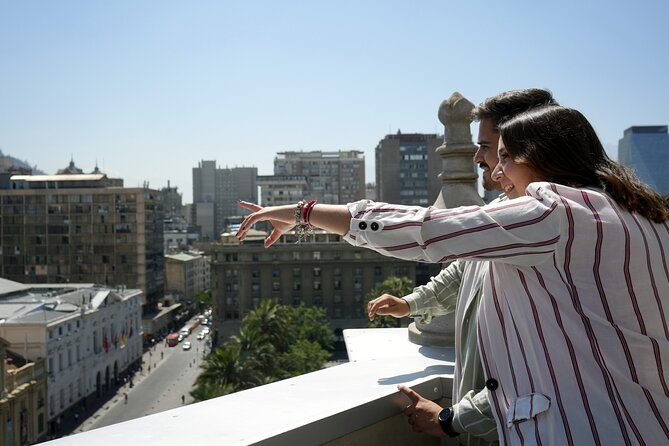
The historic center stops are the part of the pass that gives Santiago context. If you only do parks and skyline rides, you’ll miss the way the city was built on a grid around old political and social hubs.
Plaza de Armas is the starting block of that story. The plaza was founded in 1541 by Pedro de Valdivia and functions as Santiago’s heart in the historic center. The key idea you’ll get here is how the Spanish city plan works: the plaza is the axis of the grid, and that planning logic still shapes what you see around you.
From this stop you can visit major landmarks around the square, including the Metropolitan Cathedral, Santiago Municipality, Central Post Office, and the National Historical Museum. Even if you don’t go inside every building, the surrounding architecture gives you a feel for where power and public life concentrated.
Then you move to La Moneda and the Plaza de la Constitución in the Civic Neighborhood. This is where Santiago’s executive power lives. The Palacio de la Moneda was built between 1784 and 1805 by an Italian architect, Joaquín, originally as a Royal Mint. The square also has statues of major political figures like Diego Portales, Pedro Aguirre Cerda, Jorge Alessandri, Eduardo Frei Montalva, and Salvador Allende.
I like La Moneda for one reason: it’s not just a building. It’s a whole civic corridor with nearby sites such as the La Moneda Cultural Center, Metropolitan Municipality, Stock Exchange, Club de la Unión, Universidad de Chile, and Paseo Bulnes, plus Barrio Dieciocho nearby. That makes it easy to turn one Hop On stop into a longer walking loop.
Finally, Cerro Santa Lucía adds the dramatic “old meets designed gardens” feel. The monumental neoclassical entrance was completed in 1902, and the complex includes curved staircases, pools, a large terrace, and a triumphal arch topped with a dome. There’s a Neptune sculpture element that gives the hill an almost theatrical vibe.
From the Santa Lucía area you can also reach the National Library, Paris-London neighborhood, San Francisco del Monte church, and the Gabriela Mistral Cultural Center. Nearby Lastarria is a natural add-on for galleries, restaurants, bookstores, and crafts, so this can be your evening choice if you want atmosphere without the chaos.
A few more Santiago departures to weigh up
- Valparaiso Port and Viña del Mar with Casablanca Wine Tasting
★ 5.0 · 6,110 reviews - Santiago: Cajon del Maipo/Embalse del Yeso Tour with Picnic
★ 4.3 · 3,789 reviews - Santiago: Vina Del Mar, Valparaiso, Casablanca & Reñaca Tour
★ 4.2 · 2,838 reviews - Small-Group Cajón del Maipo Full-Day Tour and Picnic
★ 4.5 · 2,277 reviews
Modern Santiago on the same ticket: Costanera Center and Barrio El Golf
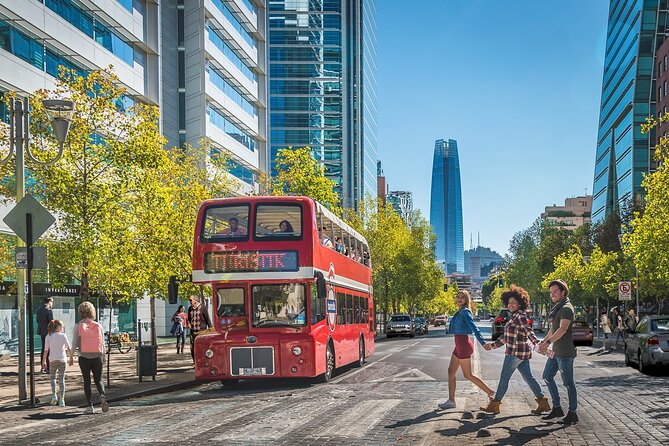
A good pass should cover the old and the new. This one does, mostly through two stops that feel like different worlds.
At Costanera Center, you’re headed for modern scale. The building is described as the tallest building in Latin America at 300 meters, and it anchors Santiago’s big shopping and office district. The mall itself is a major time sink in a good way, with hundreds of stores, plus cinemas and a wide culinary offering. There’s also Sky Costanera, a viewpoint option, so you can get a second kind of skyline look without hiking up Cerro San Cristobal again.
What I like about Costanera Center is that it’s easy to use as a planning tool. If you need a late lunch, a coffee break, or a restroom and a place to regroup, this is that stop. Also, being near the financial neighborhood nicknamed Sanhattan, you get the sense of how Santiago’s business district is stretching upward and outward.
Then you transition to Barrio El Golf, which is tied to older wealthy mansions from the mid-20th century and modern office and restaurant life now sharing the same blocks. The area includes Plaza Perú, Las Condes Municipal Theater, and the Las Condes Interactive Museum, which offers audiovisual space and time travel in 3D format.
Even if you are not a museum person, El Golf tends to work because it’s practical for food and pacing. You’ll find national and international restaurants and cafes close by. It also helps that this neighborhood has enough going on to avoid the feeling that you’re just waiting for your next bus.
Metropolitan Cathedral bell tower: a short stop with a big payoff
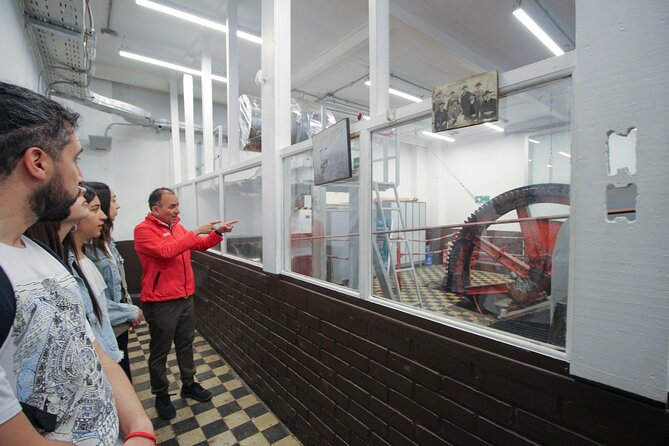
The Metropolitan Cathedral stop is the pass’s most time-specific piece. You get a dedicated cathedral tour with the unique chance to climb to the bell tower and enjoy a 360 degree view of the Historic Center.
The visit is listed as 35 minutes, so treat it like a focused appointment, not a wander-through. The climb and viewpoint are the reason this stop is worth protecting in your schedule.
There are set time slots for the bell tower experience, Tuesday to Saturday at:
10:30 am, 11:30 am, 12:30 am, 2:30 pm, 3:30 pm
This is where your planning matters. If you want the bell tower, you should build your historic center timing around one of those windows. If you miss the time slot, you might still visit the cathedral area on your own, but the included guided climb is tied to those scheduled times, so don’t gamble if the view from above is your priority.
I also like that this stop balances the hill views. You get a city panorama from above, but this one is over the historic grid and civic buildings, not over the park and hillside. It’s a different kind of Santiago.
How this 3 day pass fits together, and the smartest way to use your time
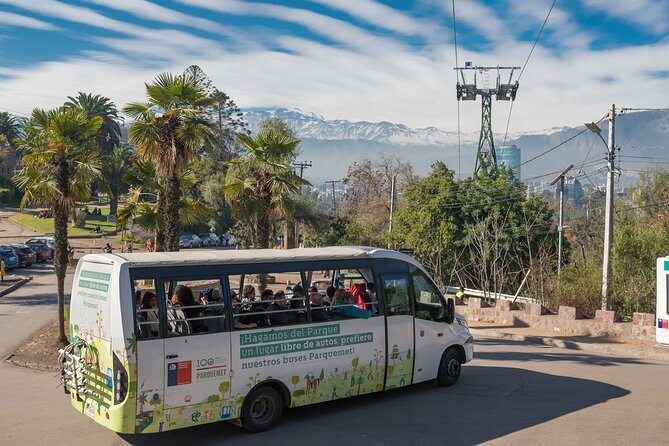
The overall duration is listed as about 3 days, but the included mobility is split into two layers. You get unlimited Hop On Hop Off access for 2 days, and you also get a ticket to travel in the cable car, funicular, and panoramic buses for 1 day.
That setup is helpful because it nudges you toward a simple plan:
- Pick 1 day for the San Cristobal ascent and connected viewpoints
- Use the 2 Hop On days to hop between neighborhoods and historic stops, including time at parks and city viewpoints
Each Hop On stop description mentions about 2 hours, but you control your pace because it’s hop on, hop off. Still, the 2 hour suggestion is a clue. It’s usually enough time to walk around the area, grab a snack if you want, and reposition before the next ride.
For logistics, the tour is run by Turistik, with a maximum group size of 100 travelers. That number matters, because it means you’re not dealing with a giant crowd wave every time you switch vehicles or stations.
Meeting point and start time are fixed at 9:30 am at the Av. Pdte. Kennedy Lateral 5059 location in Las Condes. The activity ends back at the same meeting point, so plan to end your day back in that zone rather than expecting a free-form drop somewhere else.
One more planning note from the guide praise: Ignatious, also known as Natcho, and Juan come up for doing a good balance of history and sightseeing while keeping the trip moving. That kind of guiding style helps you get more meaning from the stops without it becoming a lecture marathon.
Also, lunch is not included. That’s normal for city sightseeing passes, but it’s still important. Build your route so you can eat during a Hop On window, especially if you’re targeting the hill rides plus cathedral timing the same day.
Price and value at $81, who it suits best
At $81 per person, this pass is a value play if you will actually use both components: the Hop On Hop Off for 2 days and the cable car plus funicular plus panoramic buses for 1 day, along with the cathedral tour.
Here’s how I’d judge it in real terms. Santiago has a lot of sights spread across the map, and the cable car and funicular are not quick, and they can be hard to coordinate if you’re bouncing between taxis and private rides. Paying once for transit options plus a guided cathedral climb makes the overall cost easier to justify, as long as you’re disciplined about time slots and ride days.
This fits best if you:
- Want flexibility, not a rigid schedule
- Like mixed city styles, historic center plus modern districts plus hilltop views
- Plan to do at least one big “views and viewpoints” day at San Cristobal
- Appreciate a guided stop at the cathedral instead of just passing by
It may not fit as well if you’re the type who hates planning. You’ll want to keep an eye on the cathedral’s climb times and decide which day you want to handle cable car plus funicular so you aren’t rushing.
Also, accident insurance is not included. That’s a small line item on the data sheet, but it’s worth noting if you’re traveling without separate coverage.
Should you book this Santiago pass?
Book it if you want a smart, efficient way to see Santiago without locking yourself into one walking circuit. The pass is especially strong for pairing the big hill views with the historic center, and the cathedral bell tower time slot is the cherry on top.
Skip it only if you’re set on doing Santiago slowly with no hopping and no scheduled climbs. Otherwise, this is one of the more practical ways to get a broad mix of the city in a short stay, while keeping your day choices in your hands.
FAQ
What is included in the $81 ticket?
You get a free map, unlimited Hop On Hop Off access for 2 days, and a ticket to travel in the cable car, funicular, and panoramic buses for 1 day. You also get a tour of the Metropolitan Cathedral.
How long is the experience?
The duration is listed as approximately 3 days.
Where does the tour start?
The meeting point is Av. Pdte. Kennedy Lateral 5059, 7560994 Las Condes, Región Metropolitana, Chile, and the start time is 9:30 am.
How long is the Metropolitan Cathedral tour and when can I climb the bell tower?
The Metropolitan Cathedral tour is listed as 35 minutes. The bell tower climb is scheduled Tuesday to Saturday at 10:30 am, 11:30 am, 12:30 am, 2:30 pm, and 3:30 pm.
Is lunch included?
No. Lunch, food, or snacks are not included.
What is the cancellation policy?
Free cancellation is available. You can cancel up to 24 hours in advance for a full refund. If you cancel less than 24 hours before the experience start time, the amount paid is not refunded.
Freshly reviewed in Santiago
- Colchagua Full Day Wine Tour: Casa Silva & L’Apostolle Wineries★ 4.0 · 3 reviews
- Santiago De Chile Highlights Walking Tour with a Guide★ 5.0 · 3 reviews
- Portillo & Laguna del Inca with Lunch at the Hotel Portillo★ 5.0 · 3 reviews
- Santiago de Chile: Half-Day City Tour with Local Cuisine★ 4.5 · 3 reviews
- Cajon del Maipo & Embalse El Yeso Tour from Santiago★ 3.5 · 3 reviews
- Full day hike to the viewpoint of Condores, Cajon del Maipo★ 5.0 · 3 reviews
- Kayaking Day Trip in the Andes from Santiago★ 5.0 · 3 reviews
- Private Transportation from Santiago or Santiago Airport AMB to Valle Nevado★ 3.5 · 3 reviews
San Cristóbal Hill & Funicular, compared.
Cable Car, Funicular and Sightseeing Bus in Santiago one day
Read our review →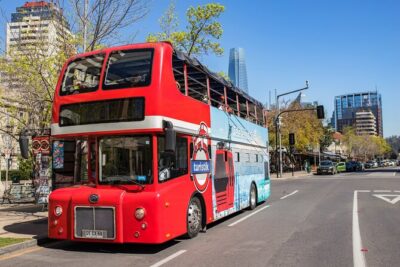
Cable Car, Funicular and Sightseeing Bus in Santiago two days
Read our review →
Santiago Skyline: Cable Car & San Cristobal Walking Tour
Read our review →
Valparaiso 4-Hour City Tour by Van and Funicular
Read our review →
Private San Cristobal Hill & Metropolitan Park Santiago Bike Tour
Read our review →
Private Santiago City Tour including Cerro San Cristobal
Read our review →
City Tour Santiago Walking + Typical Tastings + Teleférico and Funicular
Read our review →Browse the lists this tour appears in