
Reviewed · WALKING TOURS
Santiago Walking City Tour
Santiago is interesting because this tour threads it together street by street, from art and culture to government and faith, with plenty of time for real conversation. I love the private-group setup (up to 4), which makes it feel like a focused hangout with a guide rather than a cattle-call. I also like that the big stops are paired with free admission options, so you spend your time looking instead of budgeting for ticket lines.
One thing to plan for: access can be limited on Mondays and on any day with strike or maintenance issues. You will also climb and walk on uneven stone paths at Cerro Santa Lucía, so comfortable shoes and a steady pace matter.
Quick hits before you lace up
- Private, up to 4 people, so your guide can steer the pace and questions
- Free entry sites are built into the route for real value
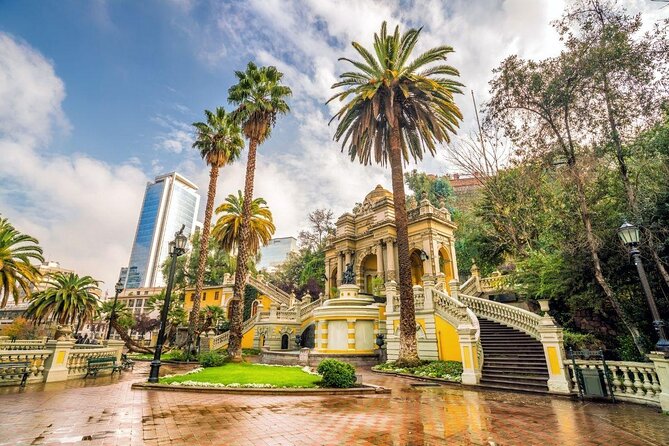
- Cerro Santa Lucía gives you a downtown break from traffic, with uneven trails
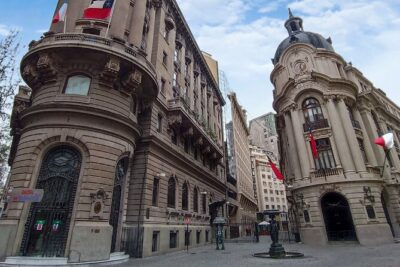
- Civic Santiago stops at La Moneda, Plaza de la Constitución, and Plaza Montt Varas
- Cathedral etiquette matters here, with quiet rules and no flash inside
A 3.5 to 4 hour walk that actually helps you understand Santiago
This is a straight walking city tour that stays concentrated in central Santiago. The total time runs about 3 hours 30 minutes to 4 hours, which is long enough to connect the dots between neighborhoods, but not so long that you feel cooked by the end.
You’ll start at Monjitas and Mosqueto and finish in Barrio Lastarria, a smart layout because it drops you right where you can keep eating, wandering, or grabbing a drink after the tour. The route is designed for moderate physical fitness, and while it is mostly manageable, there is real uneven ground at Cerro Santa Lucía.
Because it is private, you are not stuck with a generic script. The guide starts with city context, then takes your questions and pushes the discussion toward what you actually care about, like how daily life feels now, where the city came from, and what has changed over the years.
More City Tours in Santiago
- Private Santiago City Half Day Tour
★ 4.0 · 414 reviews - Santiago: Full day tour to Valparaiso and Viña del Mar city
★ 4.0 · 188 reviews - City tour by Santiago of Chile -A beautiful experience – Half day
★ 4.5 · 176 reviews
Stop 1: Bellas Artes, coffee and conversation before you even hit the museum
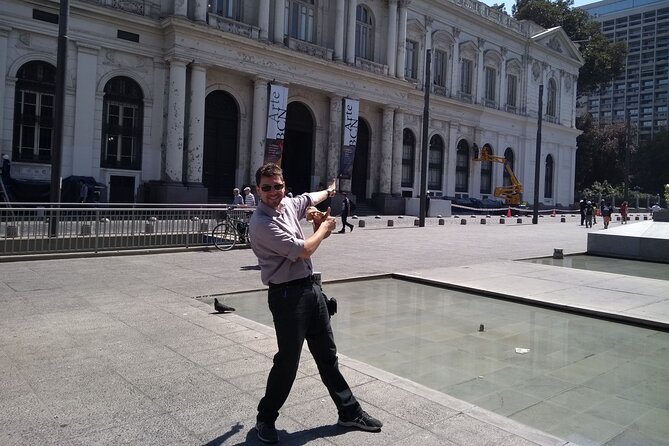
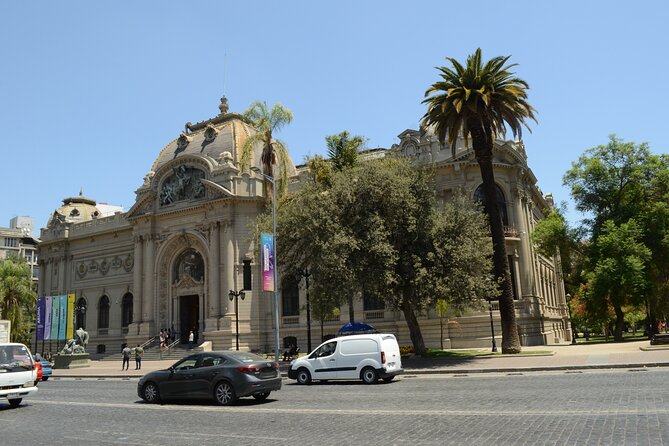
The tour opens near the National Museum of Fine Arts, in the Bellas Artes area, and it is set up like a small barrio moment. Right next to the subway station named Bellas Artes, you get a casual coffee, beer, and chat space that makes the whole tour feel grounded from the start.
If it is not Monday, the museum is typically accessible from 10 AM to 6 PM, assuming there are no strikes or maintenance closures. If it is closed, you still get the layout and architecture from the outside, plus the neighborhood context.
This stop is not just about buildings. It is about how guides teach you to see a city by talking first, then walking. Expect the guide to share the origin and how the area has endured, then toss it back to you with questions about your own urban experience.
Practical tip: If you have anything you want to know, ask here. The tour tends to feed on your curiosity, and early questions steer later stops.
Stop 2: Cerro Santa Lucía, your downtown green pause (with real rocky steps)
Cerro Santa Lucía is the tour’s breathing moment. Unless it is Monday, you can enter the public park through the north entrance. The park feels like a small green lung wedged into downtown, where the city noise fades and conversation becomes easier.
You do not get one single perfect viewpoint. Instead, you find your own patch of interest depending on where you stand, which is honestly a more Santiago way to do things. It turns photos into a personal scavenger hunt.
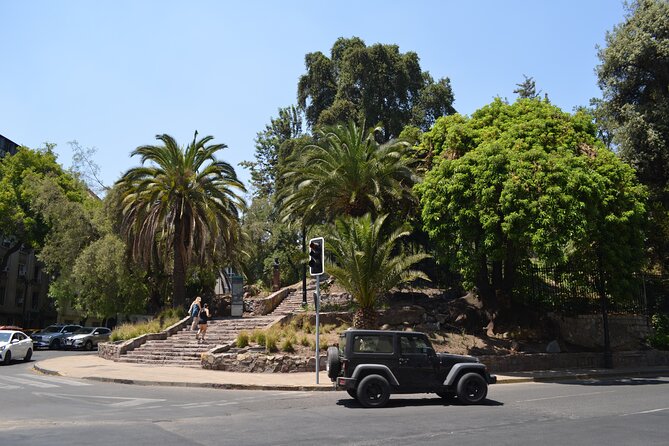
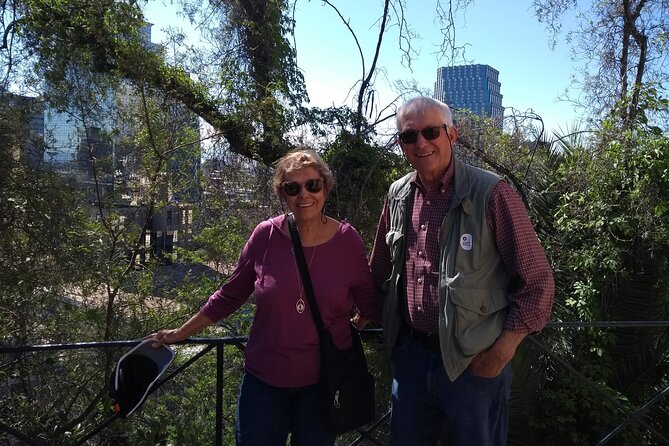
There is a catch, and it is worth respecting: trails are uneven. You are walking on rock, so take your time. You can stop at the main terrace if you want an easier finish, or keep going up toward the tower for more climbing effort.
Practical tip: Bring a little patience here. If you race it, you miss what makes the park enjoyable, the calm break and the chance to watch daily life shift behind the greenery.
Stop 3: Plaza de la Constitución and La Moneda, where Chile’s civic power is on display
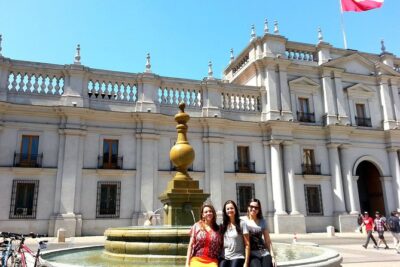
You move into Plaza de la Constitución and the noise level rises again, honking cars and general city chatter making it feel like you are stepping back into the machine room. This is the heart of public administration, centered around Palacio de la Moneda and the surrounding government buildings.
The tour frames the story with a few anchor details. The mint house origins go back to 1804. The construction is tied to architect Joaquín Toesca, who arrived in colonial Santiago in 1780 to oversee the work, yet never saw it completed. That human detail helps the place feel less like a postcard and more like a long project that people fought over and refined.
Around the square are presidential statues, each adding a chapter to government history. Then the tour connects the square to the 1973 coup d’état and the commemorations that remain in place, tying the conversation to human rights, civic duty, and what people hope for next.
Practical note: The tour includes this stop for about 35 minutes, so you are not expected to memorize everything. The goal is perspective, not a classroom exam.
More Walking Tours in Santiago
- The best walking tour in Santiago de Chile
★ 5.0 · 629 reviews - Santiago Half-Day Walking Tour with Hotel Pick up & Food Sample
★ 4.5 · 467 reviews - A Fabulous Walking tour by the Old Santiago of Chile –
★ 5.0 · 466 reviews - Santiago: Guided Walking Tour of the Historical Old Town
★ 4.8 · 459 reviews
Stop 4: Espacio M in the former El Mercurio building, a handy break with structure and style
Espacio M sits in a former facility tied to the newspaper El Mercurio. It is a commercial gallery that opened in 2012, but the point here is the mix: entrepreneurial energy, plus architectural and social life stories from before Chile’s more modern republican era.
This is also a built-in practical moment. You can use it as a bathroom stop, and you may be able to grab coffee. That matters because the rest of the route is mostly outdoors or sacred interiors, where you do not want to be hunting for restrooms at the last minute.
The guide also brings in family context tied to the Larraín and Edwards names, which is part of why this stop works even if you do not care about shopping.
Practical tip: Use this stop to top up energy. A walking tour is only as enjoyable as your ability to stay comfortable.
Stop 5: Plaza Montt Varas, Supreme Court tension and the former National Congress
Plaza Montt Varas is a contrast zone. You have flat fountains, statues, and major government architecture, but you might also spot a lone demonstrator or signs of protest at the gates. The tour uses that energy to talk about justice and public life, and it keeps things factual rather than trying to sell you a single viewpoint.
The Supreme Court of Justice building is described as impressive and controversial, and the guide connects it to the idea that justice rarely feels fair to everyone involved.
Then you get a look at the former National Congress. In earlier times, a temple suffered tragedy on this site. Later, the National Congress building became a key republican institution, but access changed after the 1973 coup. Today, meetings still happen there, although entrance for the public is not always allowed.
The guide talks about how the republic is organized, the three powers of the state, and current public affairs through that lens. The intent is not persuasion. It is useful context for your own thinking.
Practical note: This is a shorter stop, about 15 minutes, so keep an eye on the big-picture explanations more than trying to get every photo.
Stop 6: Catedral Metropolitana, quiet rules, and photo do’s and don’ts
At the Catedral Metropolitana, you switch from civic architecture to sacred space. Construction spans roughly the mid-18th century through the 19th century, with the current building evolving through multiple modifications after earlier temple versions existed on the site.
The tour notes that services happen during the week and on weekends, and it is likely you can visit around noon. Inside, you can take pictures unless specific spots are indicated otherwise.
The rules are clear and worth following. Keep your voice quiet, turn off the flash, and do not eat or drink inside. This is one of those places where your good manners make the experience smoother for everyone.
You’ll also hear about symbols connected to concepts like kindness, martyrdom, patriotism, and other ideas meant for meditation. Two named spaces in the religious complex are the Capilla del Santísimo Sacramento and the Parroquia el Sagrario.
Practical tip: If you want photos, plan to do them after you have a moment to look. The best shots tend to come after you slow down.
Stop 7: Plaza de Armas, the city’s starting block and its constant activity
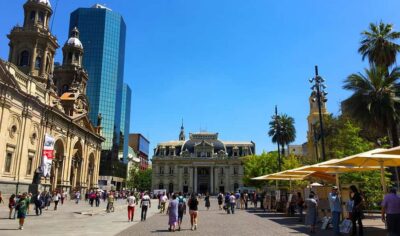
Plaza de Armas is where Santiago’s story gets practical. The tour connects the square to February 12, 1541, when the main square and the governor house were established by Pedro de Valdivia, setting the stage for the colonial operation: horses, weapons, carts, and early fortress functions.
Later, the square hosted the church and viceroy office, plus grim civic tools like gallows and jail. The place also supported community logistics, religious events, and colonial-era sports like jousting.
In the early 19th century, the square became an important civic center for the newly born republic. Today, it operates as entertainment, commerce, and tradition all at once. The key takeaway is simple: even when the political story is heavy, the city life keeps happening here.
The tour wraps this stop by asking you to picture the different eras layered on top of one another, then move on while it is still fresh.
Stop 8: Barrio Lastarria, where the tour ends and Santiago time continues
The walk finishes in Barrio Lastarria, near José Victorino Lastarria and Villavicencio. Before the official end, you pass Mosqueto Street, and the vibe shifts quickly into cafes, bars, street vendors, and occasional performers.
This is the right landing spot if you want an easy next step without much decision fatigue. The area is colorful and noisy in a good way, and it is a place where you can keep roaming after the tour ends.
Practical tip: If you want one last photo spree, do it here. You are out of the heavier civic and religious stops, and Lastarria gives you street-level life shots that feel current.
Why the guide style matters, Juan Pablo and Catalina as proof
The most praised part of this tour is the human factor: guides who explain, then listen. In reviews, Juan Pablo is highlighted for excellent English and the ability to adapt the route to what you care about. Another guide, Catalina, is also described as accommodating and flexible, especially when tours run longer than expected.
That adaptability shows up in the way questions are handled. The guide does not just lecture at you. They bring up how Santiago feels now, then make room for your questions and the way you see cities in your own country.
Even if you do not have a long list of topics, you can still steer the conversation. Want more politics? The tour builds toward the three powers theme in Plaza Montt Varas. Want architecture? Cerro Santa Lucía and the cathedral tell that story. Want culture and daily life? Barrio Lastarria delivers it.
Practical note: You can also get local food suggestions. One review notes a stop for empanada pino, and the tour includes coffee moments that can pair well with a quick bite.
Price and value: $229 per group can work out well
The price is $229 per group for up to 4 people, with the walking duration around 3.5 to 4 hours. On paper, that can sound steep if you compare it to solo group tours. But in practice, the value comes from two things you actually use.
First, the tour is private, so you get one guide for your group, not a shared schedule for dozens of people. Second, many stops are built around free admission ticket sites, and the tour includes all fees and taxes.
If you fill the group, the cost per person drops a lot. At 4 people, it is about $57 per person, and you still get a guided route with major sights plus conversation.
The only clear extra cost is bottled water, which is not included. Grab it before you start and you are set.
Timing, closures, and weather you should respect
A walking tour in Santiago is all about timing. Some key spots are described as regularly closed on Mondays, including the museum area and Cerro Santa Lucía, so plan your day carefully if you want full access.
The itinerary also notes that strike or maintenance duties can affect indoor access. That means you might get architecture and layout viewing from outside instead of full entry at certain times.
Weather matters too. The experience requires good weather, and if it is canceled due to poor weather, you get offered a different date or a full refund.
Practical tip: Wear shoes with grip. Outdoor terrain can be uneven, and Cerro Santa Lucía is not a stroll on smooth sidewalks.
Should you book this Santiago walking city tour?
Book it if you want a focused, walkable introduction to central Santiago that links art, green space, government, and sacred spaces into one coherent story. The private group format is a big deal, especially if your group has questions, kids who need shorter explanations, or you simply hate rushing.
Consider a different option if you are only available on a Monday and you are hoping for the museum or Cerro Santa Lucía entry. Also skip if uneven stone walking is a problem for you, since Cerro Santa Lucía is part of the route.
If you do book, bring comfortable shoes, expect some quiet rules at the cathedral, and come ready to talk. This tour works best when you treat it like a guided walk with context, not a checklist you race through.
FAQ
How long is the Santiago Walking City Tour?
It runs about 3 hours 30 minutes to 4 hours.
How much does the tour cost?
The price is $229.00 per group (up to 4 people).
Is the tour private?
Yes. It is a private tour/activity, with only your group participating.
Where do we meet and where does the tour end?
You start at Monjitas & Mosqueto and finish at José Victorino Lastarria & Villavicencio in Barrio Lastarria.
Are entrance fees included?
All fees and taxes are included, and the itinerary notes admission ticket Free for the listed stops.
What should I know about Monday closures?
The National Museum of Fine Arts area and Cerro Santa Lucía are noted as typically closed on Mondays, with viewing possible from outside if closures are in effect.
Is bottled water included?
No. Bottled water is not included.
What fitness level do I need?
You should have a moderate physical fitness level, because there is uneven walking terrain, especially at Cerro Santa Lucía.
What happens if weather is bad?
The experience requires good weather. If it is canceled due to poor weather, you will be offered a different date or a full refund.
What is the tour like in terms of transportation and timing during the day?
It is a near-public-transportation walking route, with multiple short stops designed to fit into the 3.5 to 4 hour window.
Freshly reviewed in Santiago
- Colchagua Full Day Wine Tour: Casa Silva & L’Apostolle Wineries★ 4.0 · 3 reviews
- Santiago De Chile Highlights Walking Tour with a Guide★ 5.0 · 3 reviews
- Portillo & Laguna del Inca with Lunch at the Hotel Portillo★ 5.0 · 3 reviews
- Santiago de Chile: Half-Day City Tour with Local Cuisine★ 4.5 · 3 reviews
- Cajon del Maipo & Embalse El Yeso Tour from Santiago★ 3.5 · 3 reviews
- Full day hike to the viewpoint of Condores, Cajon del Maipo★ 5.0 · 3 reviews
- Kayaking Day Trip in the Andes from Santiago★ 5.0 · 3 reviews
- Private Transportation from Santiago or Santiago Airport AMB to Valle Nevado★ 3.5 · 3 reviews
Walking Tours, compared.

Walk with Penguins on Magdalena & Marta Island
Read our review →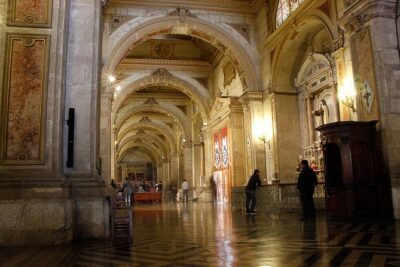
Santiago Half-Day Walking Tour with Hotel Pick up & Food Sample
Read our review →
A Fabulous Walking tour by the Old Santiago of Chile –
Read our review →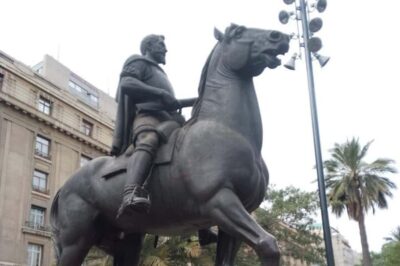
Santiago Half-Day Walking Tour with Hotel Pick up & Brunch
Read our review →
Santiago Skyline: Cable Car & San Cristobal Walking Tour
Read our review →Browse the lists this tour appears in