
Reviewed · CITY TOURS
Santiago Half Day City Tour Private with Vehicle
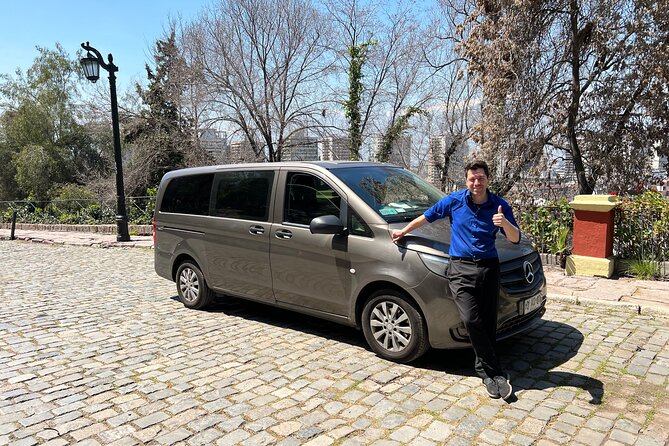
Santiago at street level is noisy, fast, and spread out. This private half-day tour is interesting because it pairs short walks with a comfortable vehicle ride, so you get city highlights without turning your afternoon into a logistics project. You’ll also get a guide who connects what you see on the ground with how Chile thinks about power, rights, and public life.
I especially like the mix of nature and civics. Cerro Santa Lucía gives you a downtown green break and photo angles you cannot get from just standing on the street, and then you shift to La Moneda, Constitution Square, the former Congress area, and the Cathedral to understand how Santiago’s center works. I also like the pacing, it stays long enough to enjoy each stop, but not so long that it drags, which makes it a good option when you’re traveling with kids.
One drawback to plan for: the Cerro Santa Lucía part involves walking on uneven, rocky terrain, and the top has more steps. If you are not comfortable with that, you can still pace it and stop at a lower viewpoint, but you should be ready for a moderate effort.
Key Things That Make This Tour Worth Your Time
- A private vehicle plus a guide, so you spend less time figuring out transit and more time looking
- Cerro Santa Lucía’s rocky paths, with multiple lookout options depending on your comfort level
- La Moneda and surrounding government spaces, explained in plain language with major historic context
- Plaza de la Constitución’s guard change with instrumental music, a small ritual that locals actually use
- Plaza Montt Varas and the Supreme Court area, where you see how institutions shape the feel of a neighborhood
- Metropolitan Cathedral visit rules, including quiet behavior and camera tips that help you enjoy the interior
Why a Private Vehicle Tour Works So Well in Santiago

Santiago can feel big even when you stay in the center. This tour is designed around that reality. You’re not expected to sprint between districts. Instead, you get a vehicle to connect the main sights, then short on-foot moments where walking adds something a car never will.
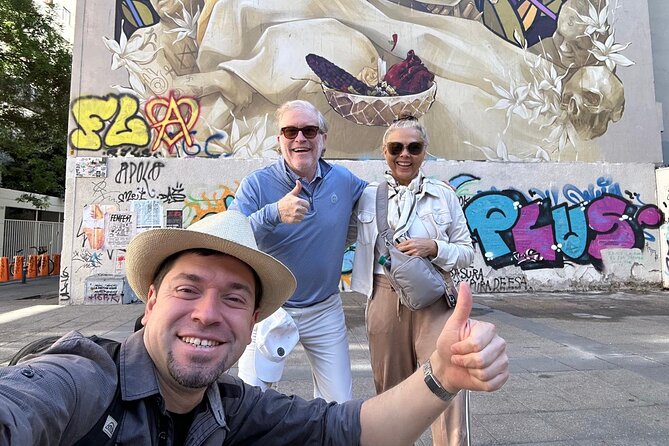
The private format also matters. You can ask questions as you go, and you do not have to time your curiosity to match a large group. If you happen to get Juan Pablo, you may notice a style that blends humor with real answers, including thoughtful discussion about current events in Chile. Even if you get another guide, the overall goal stays the same: help you connect the dots without turning the tour into a lecture.
You should also know the tour is rated for moderate physical fitness. That does not mean it is hard, it just means you should expect some uneven walking and a willingness to climb a bit, especially at Cerro Santa Lucía.
More City Tours in Santiago
- Private Santiago City Half Day Tour
★ 4.0 · 414 reviews - Santiago: Full day tour to Valparaiso and Viña del Mar city
★ 4.0 · 188 reviews - City tour by Santiago of Chile -A beautiful experience – Half day
★ 4.5 · 176 reviews
Cerro Santa Lucía, Downtown’s Small Green Escape and Walk
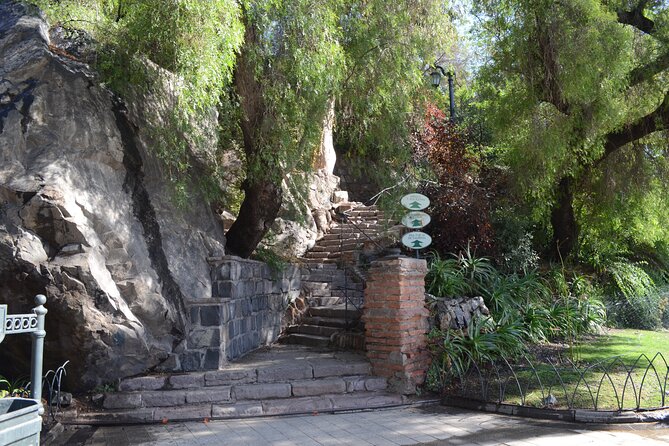
Cerro Santa Lucía is one of those places where your brain has to recalibrate. You start in downtown rhythms, then the air and sound feel different once you step into the park-like area on the hill. It’s a “little jungle” effect, even though it is right in the city.
Here is what makes this stop fun and practical:
- You can choose how far you go. The tour description points out that you can head to the main terrace or keep going toward the tower. That flexibility is great when you are traveling with mixed energy levels.
- The terrain is uneven and rocky, so your shoes matter. You are literally walking on stone, so take your time, watch your footing, and do not rush for photos.
- There is not a single big panorama that solves everything from one spot. Instead, you look for your own angles. That leads to more interesting pictures because you stop thinking like a checklist tourist.
Photo-wise, the best part is that you can take shots while the city noise fades. Conversation gets easier up there. It also gives you a “reset” before the tour shifts into government buildings and formal civic spaces.
Palacio de la Moneda and the Government Core, How History Shows Up in Real Places
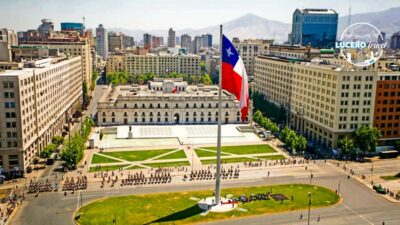
From the hill, you drop back into the civic heart of Santiago at La Moneda, the seat of government. The guide context here is specific and useful because it explains why the building matters beyond postcard views.
A few key details you’ll hear:
- La Moneda was originally built to function as the mint house, inaugurated in 1804.
- It connects to colonial-era craftsmanship led by the Roman architect Joaquín Toesca, who arrived in colonial Santiago in 1780. He did not see the project finished.
- The surrounding square contains presidential statues that act like chapters of Chile’s government story.
- The coup d’état in 1973 took place here, and the reminders in the space set a serious tone. The conversation typically moves toward human rights, civic duty, and what people hope the future will be.
This stop is not only about architecture. It helps you understand how public memory lives in the everyday city. When you look at statues, plazas, and the building itself, you start to see how history is not just in museums. It’s in the geometry of the center.
Practical tip: the tour spends time here and nearby areas, so bring your best “slow look” mode. If you want to ask questions, this is the best place to do it, because the guide will likely tie what you see to larger themes.
Plaza de la Constitución, Small Green Space, Music, and Real Public Life
Plaza de la Constitución is a quieter sort of highlight. It’s a small green area where dogs and families actually move through daily life. That matters because it keeps the tour grounded. You are not only visiting formal monuments, you’re learning how the city’s center breathes.
One detail that makes this stop stand out in a good way: the guard changes about every 48 hours, and there’s instrumental music during the parade. Even if you catch it at a different moment, the plaza still feels like a living stage rather than a static photo stop.
You’ll also hear a grounding point for how to think about Chile now. The guide approach here is practical. You will not get a hard sell. Instead, you’ll get info to share, then prompts to help you form your own conclusions about things like:
- economic indicators
- public opinion
- today’s public agenda
That approach is great for travelers who want context but do not want propaganda.
A smart move at this stop: take a moment to sit down if you can. The tour encourages a breather here, and it’s not just for comfort. Sitting changes what you notice, you start reading the rhythm of the space instead of rushing through it.
A few more Santiago departures to weigh up
- Valparaiso Port and Viña del Mar with Casablanca Wine Tasting
★ 5.0 · 6,110 reviews - Santiago: Cajon del Maipo/Embalse del Yeso Tour with Picnic
★ 4.3 · 3,789 reviews - Santiago: Vina Del Mar, Valparaiso, Casablanca & Reñaca Tour
★ 4.2 · 2,838 reviews - Cable Car, Funicular and Sightseeing Bus in Santiago one day
★ 5.0 · 2,325 reviews
Plaza Montt Varas, Supreme Court Area, Former National Congress, and Ongoing Debate
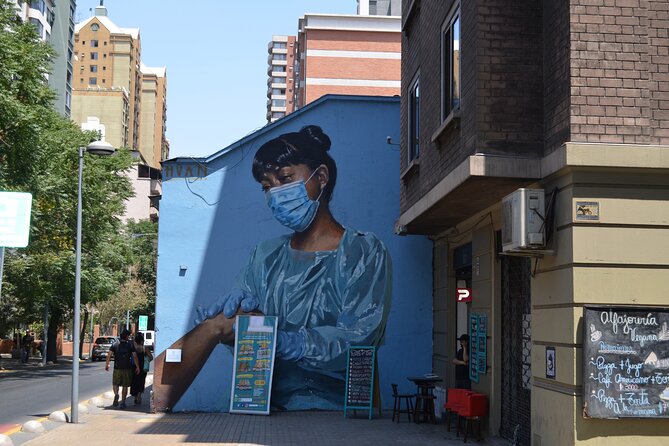
Plaza Montt Varas is where Santiago’s civic system becomes visible in stone. The open space is dominated by fountains and statuary, and the mass of the Supreme Court of Justice anchors the area with a serious, unmoving feeling.
This is also where the tour’s historic layer gets sharper:
- In front of the court sits the site of the former National Congress.
- That building was closed after the coup d’état in 1973.
- Today, relevant meetings take place there, but you are not always allowed to go inside public areas.
The guide will explain the structure of the republic and the three branches of the state. This can feel abstract until you see how the space is organized, then it clicks. You start to connect institutional power with physical location, and you understand why some plazas feel neutral while others feel tense.
You will likely also see demonstrations or at least signs of civic action at the gates, because justice in any country is a complicated subject. The tour frames it in a thoughtful way, not as a dramatic story, but as something that shows up in public behavior.
For timing: the tour spends about 30 minutes here. That is enough to understand the layout and ask questions, but not enough to linger like a researcher. If you get a guide who answers a lot of questions, you might want to manage your time so you still enjoy the Cathedral stop later.
Plaza de Armas, Santiago’s Founding Core and the City’s Daily Energy
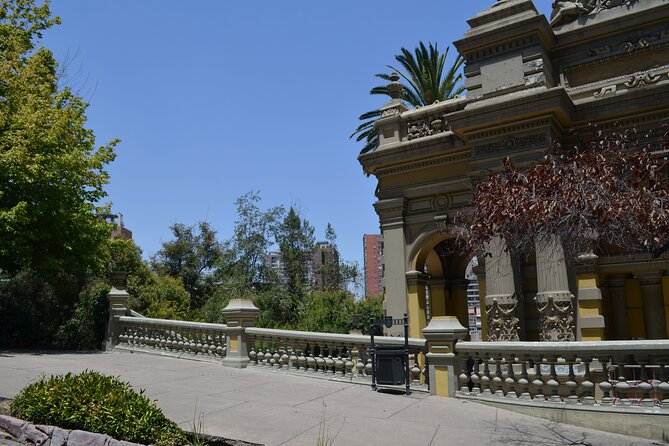
Plaza de Armas is the big starting point for Santiago’s civic story. The idea is that on February 12, 1541, it was established as the main square and the governor’s space, with Pedro de Valdivia linked to the early plan.
What I like about how this stop is described is that it refuses to treat history as dusty. The square has worn many roles:
- logistics for the Spanish colony, including horses, weapons, carts
- early civic life, plus religious and government buildings
- gallows and jail in earlier periods
- commerce, entertainment, and tradition in modern times
Even with debates about the exact origins, the tour presents the square as the commonly agreed starting point of Santiago’s civic life. In practical terms, that means you get a mental map of the city center very fast.
This plaza is also simply where things happen. You will see people moving, commerce around the edge, and regular city noise. The guide often suggests taking a few minutes to observe before moving on. That short pause is worth it because it helps you stop thinking of the center as one neighborhood and start seeing it as layers.
Metropolitan Cathedral, Quiet Respect, Camera Etiquette, and Symbol Interpretation
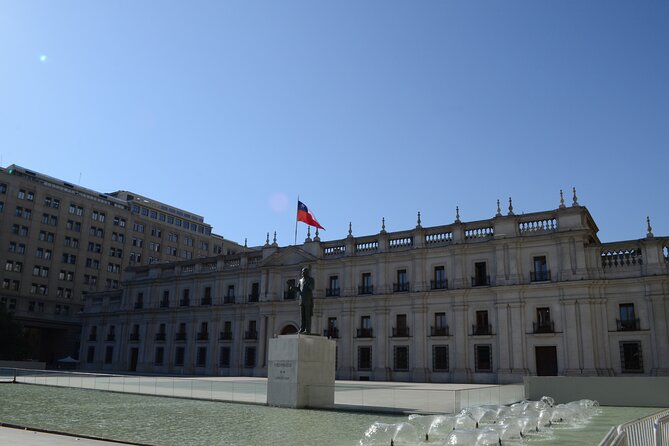
The Metropolitan Cathedral is a strong final stop because it shifts your senses again. You are moving from public power spaces to a religious complex where symbols carry meaning.
The basics you’ll get:
- Construction spans roughly the 18th to 19th centuries.
- The current building reflects modifications over time, with continued changes up until before the 20th century.
- You may see services during weekdays and on weekends, and the tour notes that noon is a likely time for visiting.
What makes this stop rewarding is the guidance on how to behave and how to look:
- You can take photos inside in most areas unless something is indicated otherwise.
- Keep your voice quiet.
- Turn off flash from your camera.
- Do not eat or drink inside.
The guide also points out symbols and themes displayed in the space, including concepts tied to kindness, martyrdom, patriotism, and personal reflection. Two areas highlighted as important and sensitive are the Capilla del Santísimo Sacramento and the Parroquia el Sagrario.
This is a good stop for travelers who like to understand symbolism without needing to be a scholar. You look around, then the guide helps you read what you’re seeing.
What You Pay $150 For, and Where the Value Actually Comes From
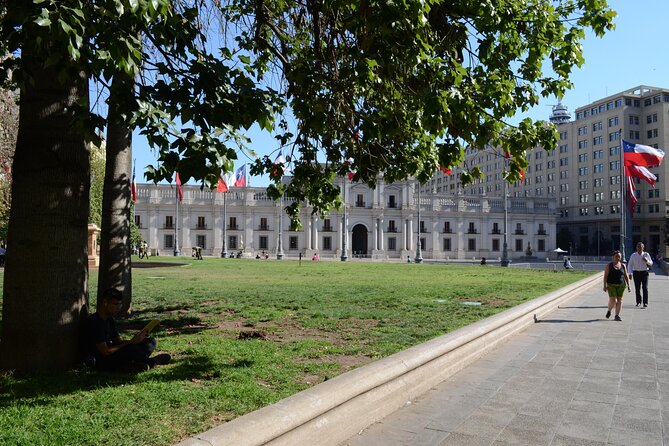
At $150 per person for a tour lasting about 3 hours 30 minutes to 4 hours, you’re not just buying a walk. You’re buying:
- a guide
- a private vehicle for the time it takes to connect downtown locations
- fees and taxes included
- admission tickets for some stops, and free entry at others
That matters in Santiago because distances and traffic can eat time fast if you are relying only on taxis or transit. A private vehicle tour saves energy, and it keeps you on a tight schedule without the constant question of where to go next.
The value gets better if you’re traveling as a family or with a small group. In the reviews, families highlighted that the tour hits the sweet spot: long enough to absorb the highlights, short enough that kids do not stall out. Couples also tend to like this format because it offers context without committing to a full day.
Two practical notes that affect your planning:
- Lunch is not included, so decide where you’ll eat before you start or plan a post-tour meal.
- There is no insurance included for theft or assaults, and no insurance included for strikes or transit accidents. If you care about coverage, consider your own travel insurance before you go out.
Meeting Point, Timing, and How to Prepare
The tour starts back at Bici Las Condes, Reyes Lavalle 3310, 7550121 Las Condes, Región Metropolitana, Chile, and it ends there again. It is also noted as being near public transportation, which helps if you want backup options for getting there on time.
Because the tour includes walking on uneven rock at Cerro Santa Lucía and includes indoor etiquette at the Cathedral, I’d plan for these basics:
- Wear comfortable shoes with good grip.
- Move at a steady pace on stone paths.
- Be ready for quiet time inside the Cathedral.
- Bring any personal comfort item you like, since lunch is not provided.
If you are the type who likes to pause for photos, this tour supports that. The schedule gives you short moments at each stop rather than forcing one long slog at the end.
Who This Tour Fits Best
This is a smart choice if you want:
- a compact city overview that feels meaningful
- a blend of views, plazas, and historic civic spaces
- a guide who answers questions, including current-event topics in Chile
- a tour that is not so long that it burns out your group
It also works well if you are traveling with children, because the pacing stays balanced and the stops are varied enough to keep attention.
It might not be the best match if you are looking for a very long walking tour or if you have limited mobility. The Cerro Santa Lucía terrain is uneven, and while you can choose how far you climb, you should still expect some stairs and rocky ground.
Should You Book This Private Santiago Half-Day Tour?
If you want the center of Santiago in one afternoon, with a guide who connects places to real civic stories, I think this is a strong booking. The private vehicle is a big win, especially if you hate wasting time on transit. The stop sequence also makes sense: you reset at Cerro Santa Lucía, learn history at La Moneda, then keep building with plazas that show how public institutions shape daily life.
Book it if you like asking questions and you enjoy city centers more when someone gives context. Consider another option if you want a lighter, mostly flat stroll, because Cerro Santa Lucía is not a smooth walk.
FAQ
How long is the Santiago half-day city tour?
The tour runs about 3 hours 30 minutes to 4 hours (approx.).
What is included in the $150 per person price?
All fees and taxes are included, along with a tour guide. Admission tickets are included for some stops, while other stops are listed as free.
Is lunch included?
No. Lunch is not included.
Is this tour private?
Yes. It is a private tour/activity, so only your group participates.
Will I need moderate fitness for this tour?
Yes. Travelers should have moderate physical fitness. Cerro Santa Lucía involves uneven trails and walking on rock, and the tour can include going up to terraces or the tower.
Can I cancel and get a full refund?
Yes. You can cancel up to 24 hours in advance for a full refund.
Freshly reviewed in Santiago
- Colchagua Full Day Wine Tour: Casa Silva & L’Apostolle Wineries★ 4.0 · 3 reviews
- Santiago De Chile Highlights Walking Tour with a Guide★ 5.0 · 3 reviews
- Portillo & Laguna del Inca with Lunch at the Hotel Portillo★ 5.0 · 3 reviews
- Santiago de Chile: Half-Day City Tour with Local Cuisine★ 4.5 · 3 reviews
- Cajon del Maipo & Embalse El Yeso Tour from Santiago★ 3.5 · 3 reviews
- Full day hike to the viewpoint of Condores, Cajon del Maipo★ 5.0 · 3 reviews
- Kayaking Day Trip in the Andes from Santiago★ 5.0 · 3 reviews
- Private Transportation from Santiago or Santiago Airport AMB to Valle Nevado★ 3.5 · 3 reviews
City Tours, compared.

Full day tour to Valparaiso and Viña del Mar city
Read our review →
City tour by Santiago of Chile -A beautiful experience – Half day
Read our review →
Half-Day Sightseeing City Tour with Chauffeur and Guide
Read our review →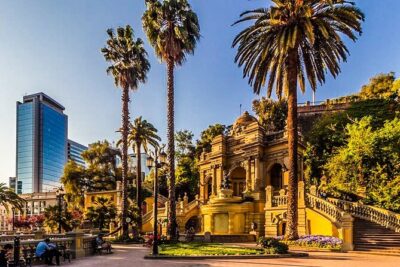
Valparaiso 4-Hour City Tour by Van and Funicular
Read our review →Browse the lists this tour appears in