
Reviewed · CYCLING TOURS
San Pedro de Atacama: Volcano Downhill Bike Tour
San Pedro de Atacama’s Volcano Downhill Bike Tour is interesting because you start high in the Andes, warm up near Licancabur, then roll into a controlled downhill ride that feels otherworldly. I like that the whole thing is led by pros, not a DIY vibe, so you can focus on the trail. I also like that you get a 15-mile descent with supportive stops and clear guidance.
The one real drawback to plan around is weather. This tour depends on Andes conditions, and wind can lead to shifting pickup times or adjusting the schedule. If you’re the type who hates last-minute changes, build in flexibility.
Quick hits before you pedal Cerro Toco
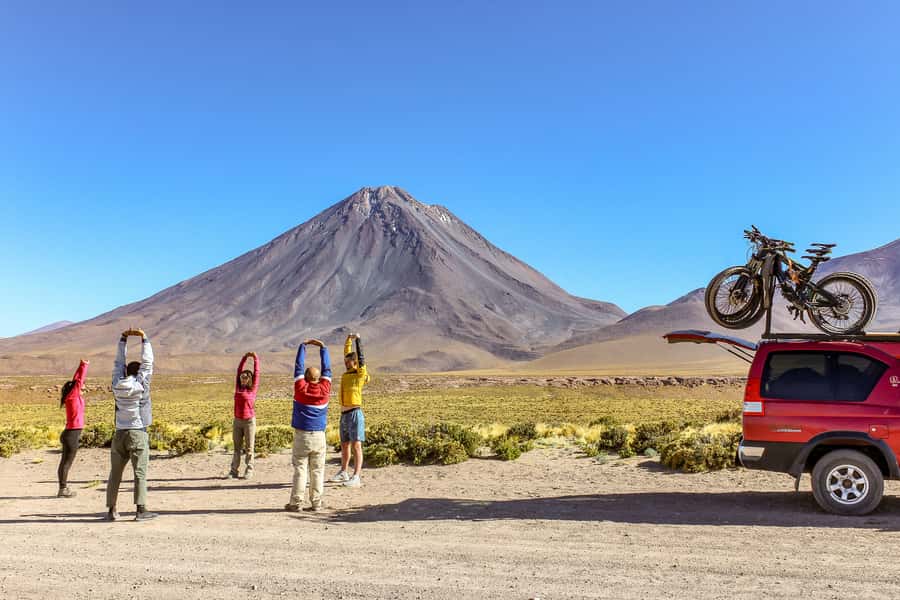
- Altitude start near Licancabur, with a viewpoint stop at about 12,800 feet
- Warm-up, light breakfast, and hot drink before the big drop
- Cerro Toco summit around 17,000 feet, then a safety briefing and bike fitting
- 15-mile downhill with pro guides riding alongside you
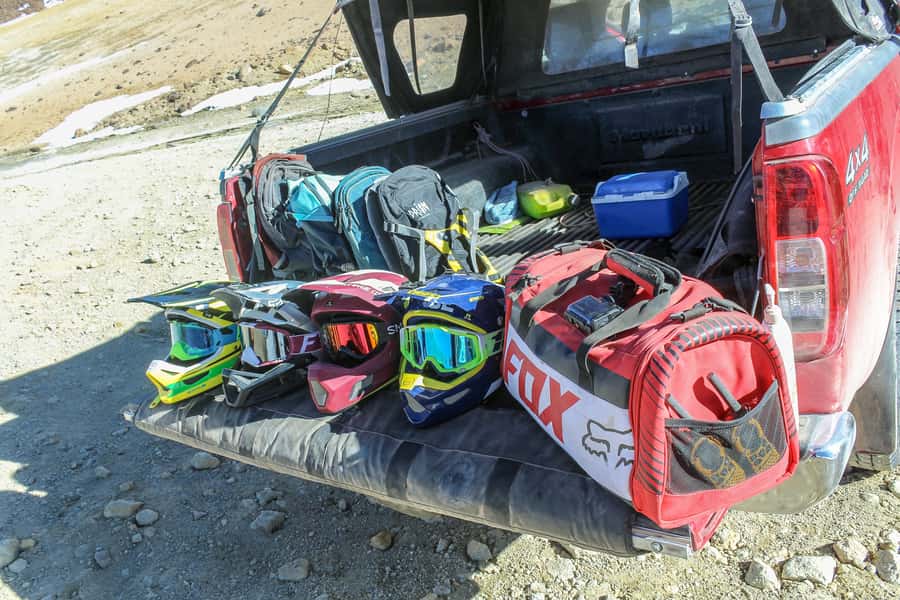
- Full safety kit included: helmet, gloves, elbow/forearm guards, knee/shin guards
- HD photos included, plus a cold Chilean drink at the end
Why this downhill ride from Cerro Toco feels like a different world
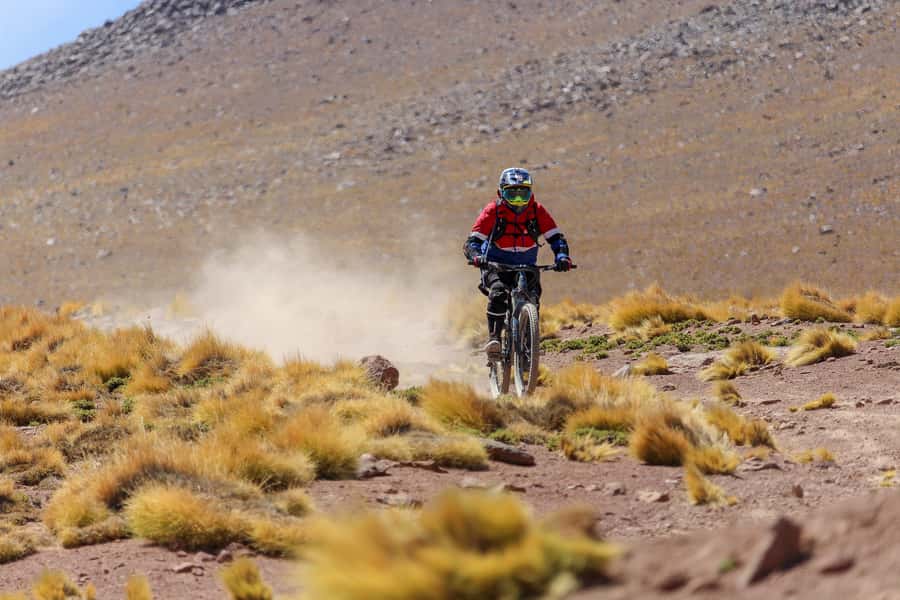
What makes this tour click fast is the feeling of altitude meeting momentum. You’re in one of Chile’s most dramatic high-desert settings, then you drop into a downhill flow that stays fun without turning into a risk circus. The best part is that you’re not just dropped at a trailhead and told good luck, you’re actively managed the whole way.
I also appreciate the way the day is built. You don’t start by screaming downhill cold. You get a short warm-up, a light breakfast, and a couple of high-altitude photo moments first, so your body has a chance to settle. One rider put it bluntly: 5200 m altitude is no joke, and you can feel why once you’re breathing a little heavier even before you ride.
The guides matter here. In this experience, Gary and Sti are mentioned by name, and the guides’ style comes through clearly: they keep an eye on how you’re doing, and they’ll help with pacing. That adds comfort if you’re a newer rider.
A few more San Pedro de Atacama departures to weigh up
- Bike Tour in San Pedro de Atacama – Devil’s Throat
★ 5.0 · 95 reviews - Bike Tour to Garganta del Diablo, includes bike
★ 5.0 · 13 reviews - From San Pedro de Atacama: Moon Valley E-Bike Tour
★ 5.0 · 10 reviews
Morning logistics that start at Casa Quitor and depend on wind
Your day starts with hotel pickup in San Pedro de Atacama, with one listed pickup point being Casa Quitor. After that, you’ll drive toward the Paso Jama route. Expect two short SUV or Jeep transfers, about 30 minutes each, because you’re moving up into the Andes for the right altitude and conditions.
A key planning point: the start time can shift. The tour is explicitly subject to weather, and strong wind is a common reason for delays. One rider described multiple calls and changing pickup windows after the booking was confirmed, even though local weather apps didn’t show it. In other words, don’t schedule something right after your pickup window.
The upside is you’re not guessing. The guides are watching conditions and making the call based on what they see up high. That’s a comfort when you’re dealing with both altitude and downhill riding.
The first viewpoints: Paso Jama route and photo time near Licancabur
Your first major stop is a viewpoint close to the Licancabur Volcano at about 12,800 feet. This is built for two things: photos and acclimation.
You’ll likely get a small warm-up activity first, then time to take pictures and enjoy a light breakfast with a hot drink. That hot drink part is easy to overlook until you’re cold at altitude. Even in a desert, the Andes can bite once you’re up there. This stop also helps you transition from sitting in a vehicle to moving your body at elevation, which makes the summit ride feel less brutal.
Why it’s valuable for you: you’re treating altitude like part of the course, not an obstacle you have to power through. That matters because the ride isn’t only about legs and bike control. It’s also about oxygen.
Cerro Toco summit prep at about 17,000 feet
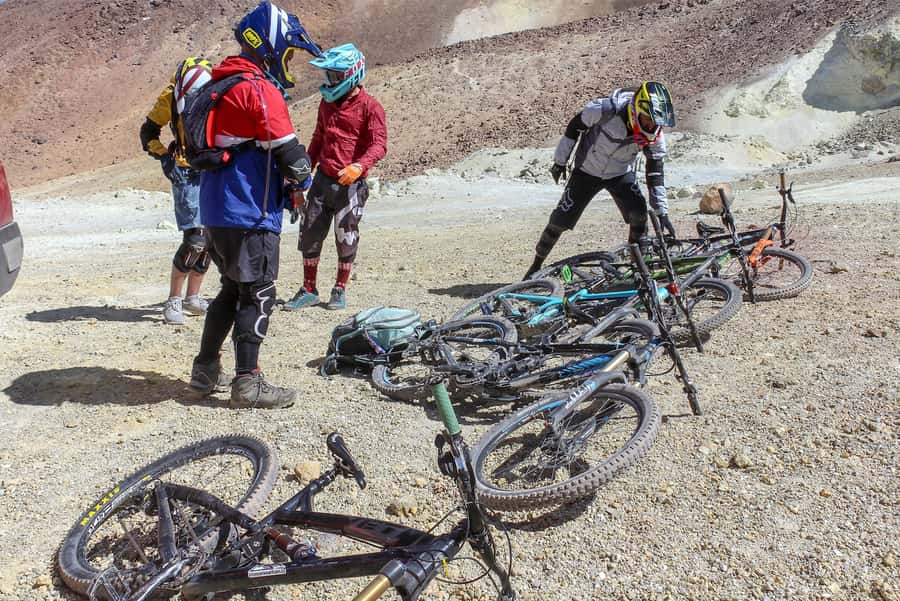
After the Licancabur area, you continue toward the top of Cerro Toco until you reach the highest point, around 17,000 feet. This is where the tour shifts from scenic to serious.
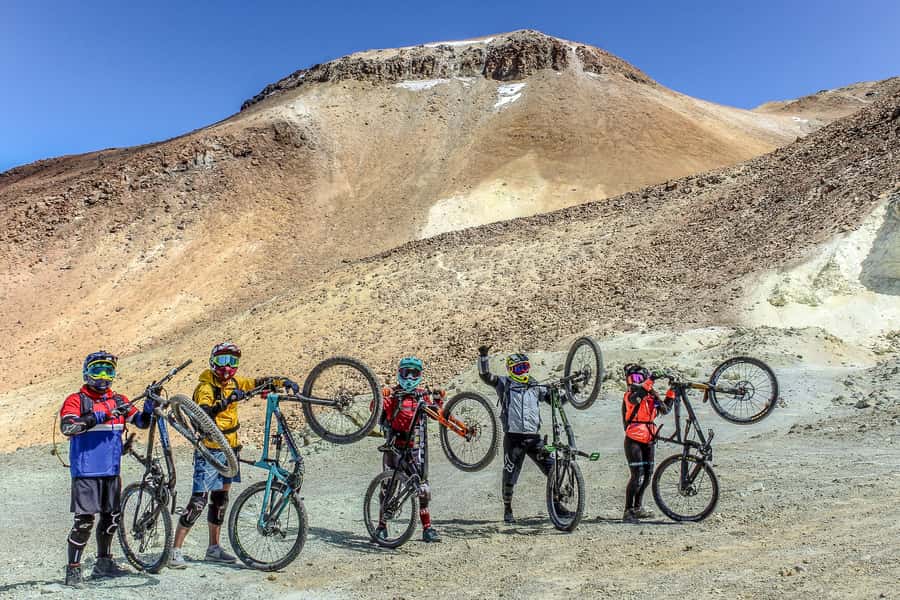
Before you ride, the guides do a safety briefing and kitting stage. Your bike gets adjusted to you, then you’re ready to descend. This is also where the day’s professionalism becomes obvious. You’re not guessing what to wear. You’re handed the gear and you get fit-by-fit support so you can ride securely.
The included safety setup is more than symbolic. You get helmet, gloves, elbow and forearm guards, and knee or shin guards. In one account, the rider noted an integral helmet and called the equipment acceptable. Either way, the point is the tour gives you real protective coverage for a downhill environment.
A practical caution: the summit part is where altitude hits hardest. One rider described how the guides were continuously checking on how they felt. Take that seriously. If you need a slower breath, ask. If you feel lightheaded, say so. This is not the moment to prove toughness.
The other half of a San Pedro de Atacama week:
- San Pedro de Atacama: El Tatio Geysers Tour
★ 4.7 · 943 reviews - Tour to the Hidden Lagoons of Baltinache
★ 5.0 · 694 reviews - San Pedro de Atacama: Etno-Stargazing Tour with Transfer
★ 4.8 · 629 reviews - Piedras Rojas, Altiplanics Lagoons & Salar Full-Day Tour
★ 4.7 · 592 reviews
The descent: a 15-mile downhill with pro guidance and simple terrain options
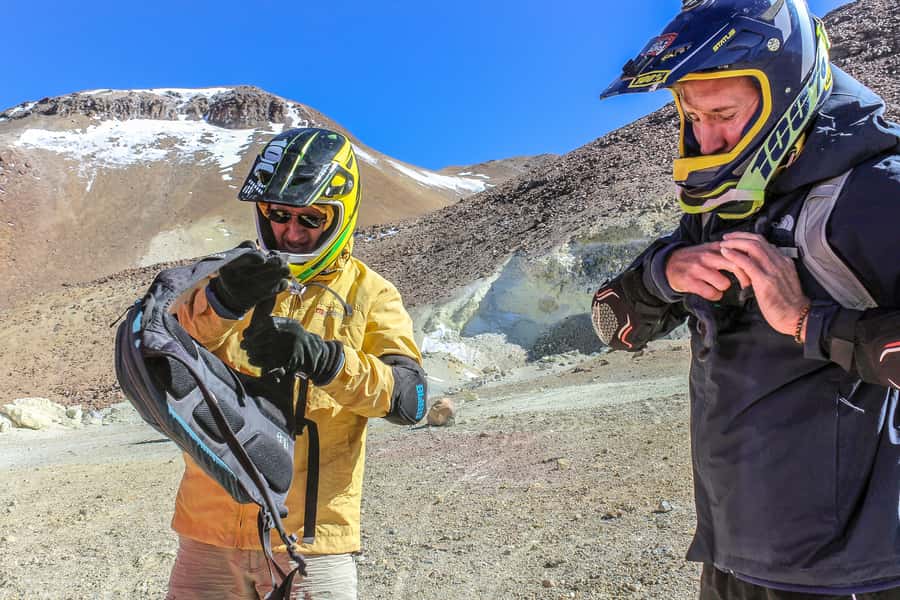
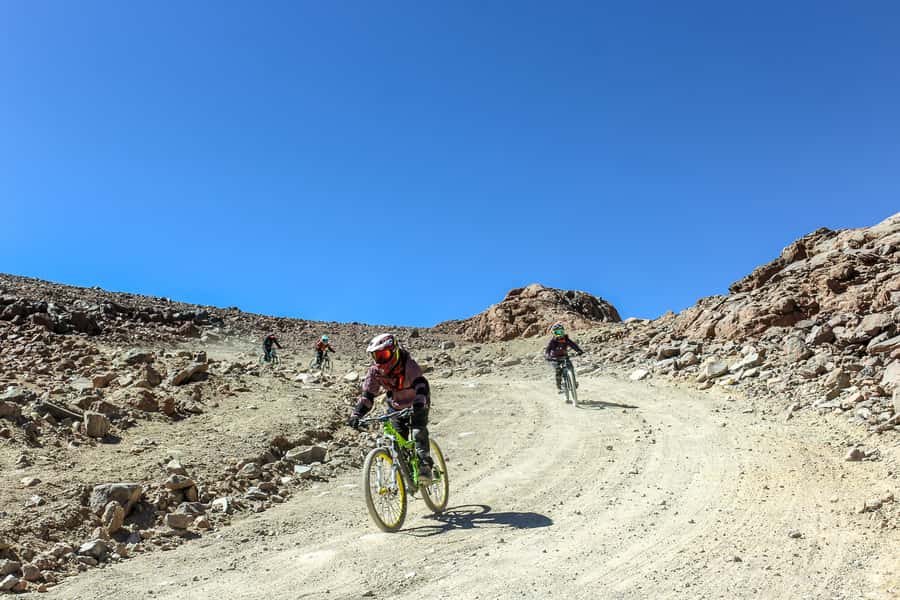
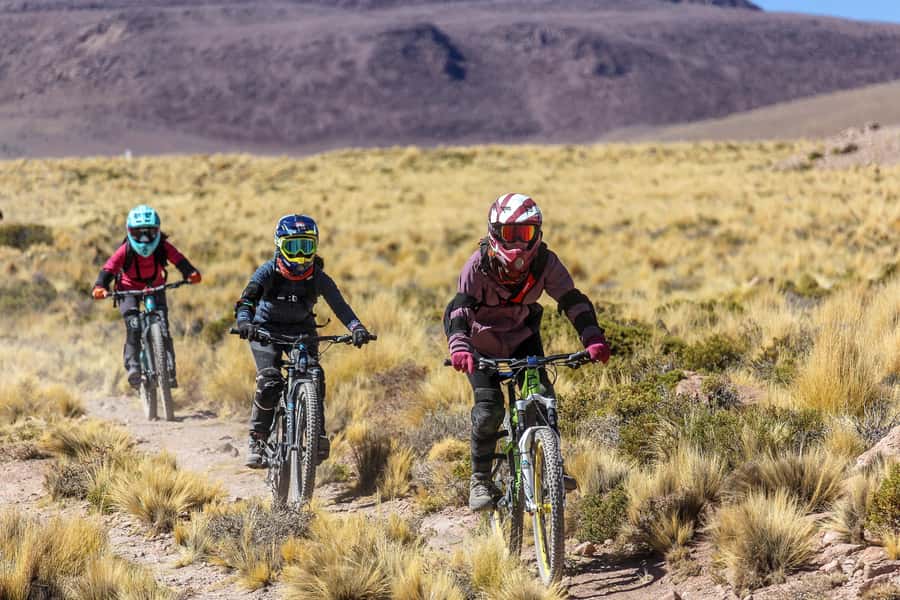
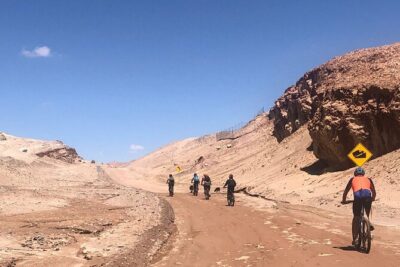
Now for the fun part. You’ll start the real ride: a 15-mile descent on a circuit with mixed terrain. Expect dirt, rocks, and compact ground. You’ll be with professional guides the whole time, and the pace is managed so you can ride hard without losing control.
The terrain isn’t pitched as a nightmare course. One rider described it as technically simple, around S0/S1 style by Swiss standards, which lines up with the tour’s “adrenaline in a safe way” promise. That means if you have at least some mountain biking experience, you’re likely to feel comfortable. Another rider said they had just over a year of mountain biking experience and still enjoyed it a lot.
Here’s what you should mentally plan for on your end:
- You’ll spend a lot of energy at first just stabilizing your breathing at high altitude, not shredding.
- Once the descent starts, you’ll notice your legs working differently, because downhill uses control and braking a lot.
- Because there are rocks and dirt, you’ll benefit from staying loose and letting the bike move under you.
You can also stop for breaks if you need them, to catch your breath and check the scenery. That’s a big deal. This is not a race day. It’s a dramatic ride where you get to look around, too.
One of the most memorable details from accounts is the volcano viewpoint during the ride itself. Look right and you’ll see Licancabur towering. Look left and you’ll get other Andes mountains in the mix, even if you can’t name them on the spot.
The ride support system: safety vehicle, first aid, and guided pacing
This tour includes a professional support vehicle with first aid. That’s not just a safety checkbox. It means the guides can keep the ride moving while still having a backstop.
The guides also bring a “ride with you” approach. Names like Gary and Sti show up in rider notes, and the consistent theme is attention. They check in on how you feel during the descent, and they guide you through the trail. That’s what makes it easier for newer riders to enjoy it without spiraling into stress.
You’ll also feel the difference in how they handle gear. Bikes are adjusted to your needs, and the tour provides the protective kit so you’re not scrambling to find random parts right before the ride.
What you get at the end: cold Chilean drink and the day’s finish
After the descent, you’ll be greeted with a cold drink typical of Chile. It’s a small moment, but it fits the arc of the day. You’ve been high, exposed to wind and cold up top, then you’ve been moving hard. Something cold and familiar at the end is a nice reset.
Then you head back to Casa Quitor. The overall duration is about 6 hours, which includes the transfers and the stops for photos, breakfast, and riding.
One scheduling tip: plan a relaxed afternoon after this. Even if the ride itself feels manageable, altitude fatigue can linger. You’ll probably want water, food, and some downtime.
Price and value: $250 for a full pro downhill package
At $250 per person, this is not the cheapest activity in San Pedro de Atacama. But it’s also not just “bike rental plus a trail.”
The value comes from three things:
- Altitude logistics and guidance: you’re being driven to the right starting zone and guided down the route.
- Safety gear and support: helmet, pads, and a support vehicle with first aid.
- Bikes, fitting, and structure: you’re kitted out, your bike is adjusted, and you ride with pro leadership rather than figuring it out on your own.
When you compare this kind of downhill ride at altitude, the biggest costs are usually the planning and safety side. That’s what you’re paying for here. One rider also praised that newbies can do it, because the guide leads you through and provides support when needed.
If you’re comfortable on a mountain bike and you want a high-drama experience that doesn’t feel chaotic, the price starts to make sense fast.
Who should book, and who should skip this Cerro Toco downhill
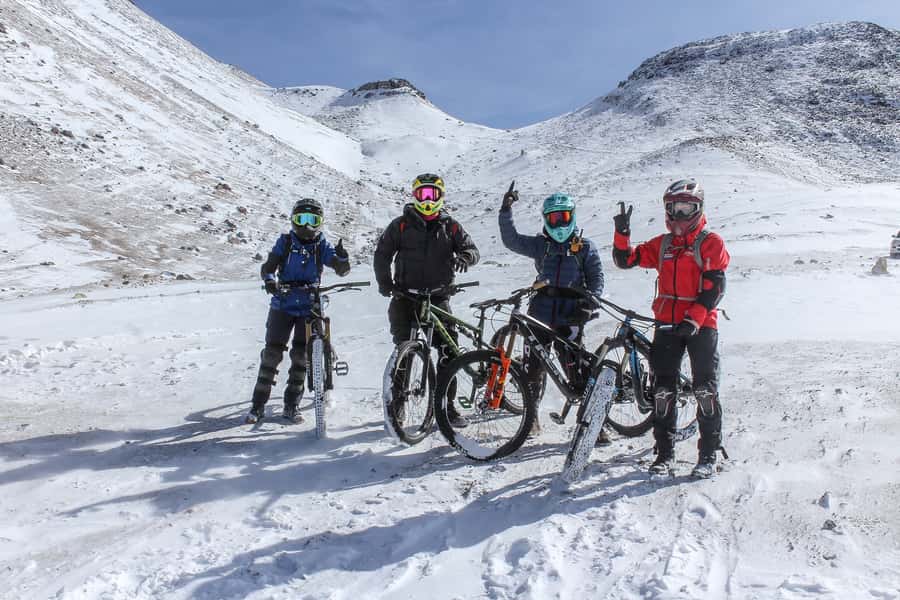
This tour is clearly aimed at people who can handle altitude and downhill riding.
It is not suitable for:
- Children under 12
- People with impaired mobility
It also comes with an implicit “be ready” message. One rider emphasized that your body and health should be in good condition. You’ll be at very high altitude, and you’ll ride a controlled but real downhill. Even if the terrain is described as technically simple, the altitude and the exertion are still part of the challenge.
Who I think fits best:
- You have at least a basic comfort level on a bike, and you like downhill thrills with guardrails.
- You want dramatic volcano scenery without spending the day doing complicated self-navigation.
- You like tours where guides check in and you don’t feel abandoned at the edge of something intense.
Who might struggle:
- You get winded easily at altitude.
- You hate any uncertainty around timing, since weather can affect pickup times and execution.
- You want a purely sightseeing day. This is riding first, photos and views second.
Small practical tips so you enjoy the day more
These points are based on how the tour is structured, and what riders highlight.
- Take altitude seriously. Move slowly at the early stops, use the warm-up, and tell the guide if you feel off.
- Dress for cold and wind at the summit. Even if the desert is warm earlier, the highest points can feel sharp.
- Plan for pace breaks. The tour allows breaks for breathing and scenery checks, so you don’t have to force it.
- Don’t arrive planning to sprint afterward. The ride lasts about 6 hours and altitude fatigue is real.
- Keep your camera battery warm. You’ll be at cold elevations during photo stops.
If you do those things, the whole day turns from a “can I handle this” question into a “wow, this is a wild place” memory.
Should you book the San Pedro Volcano Downhill Bike Tour?
I’d book it if you want a one-of-a-kind San Pedro experience that mixes big altitude views with a guided downhill you can actually enjoy. The tour’s strongest selling points are the pro leadership, the safety gear, and the fact that the descent is structured for real riders, including those who are not expert technical shredders.
I’d skip it if wind and schedule changes will ruin your trip rhythm, or if altitude is an issue for you. The tour depends on weather, and you’ll be dealing with very high elevations no matter what.
If you want my simplest decision rule: if you can handle altitude and you’re excited by the idea of a long downhill ride near Cerro Toco, this is a great pick. If you want guaranteed timing or you’re mobility-limited, look for a different style of tour in the area.
FAQ
What time does the tour start?
Pickup happens in the morning, but the exact time can change based on weather conditions in the Andes. You’ll be informed based on conditions closer to the day.
Where do you get picked up?
Pickup is included from San Pedro de Atacama, and one listed pickup location is Casa Quitor.
How long is the tour?
The duration is about 6 hours, including transfers, photo stops, warm-up, breakfast, and the downhill ride.
What’s included in the tour price?
Included are round-trip transportation, an English- and Spanish-speaking tour guide, a professional mountain bike, all safety gear (helmet, gloves, elbow/forearm guards, and knee/shin guards), a professional support vehicle with first aid, a backpack with snacks and water, light breakfast, and HD pictures.
Do I need to be an expert mountain biker?
The ride is guided and described as technically simple for much of the route, so you don’t need to be a pro. You do need to be in good health and comfortable with the idea of a significant downhill ride at altitude.
Is the tour suitable for kids or people with mobility issues?
No. It is not suitable for children under 12 or for people with impaired mobility.
Freshly reviewed in San Pedro de Atacama
- Route of the Andean salt flats★ 5.0 · 3 reviews
- From San Pedro de Atacama: Tatio Geysers and Machuca Tour★ 4.0 · 3 reviews
- Purilibre Trekking: Disconnection and Nature★ 5.0 · 3 reviews
- From San Pedro de Atacama: The Salt Flats Route, Full Day★ 3.7 · 3 reviews
- Valle de la Luna: A Moon-Like Escape in Atacama★ 5.0 · 3 reviews
- Rainbow Valley Tour, Yerbas Buenas Petroglyphs – Half Day Tour★ 3.5 · 3 reviews
- From San pedro de Atacama / Tatio Geyser★ 1.7 · 3 reviews
- Piedras Rojas, Altiplanics Lagoons & Salar Full Day Tour★ 4.4 · 3 reviews
Cycling Tours, compared.
Santiago Highlights, Parks and Politics Bike Tour
Read our review →
Bike Tour in San Pedro de Atacama – Devil’s Throat
Read our review →
Browse the lists this tour appears in