
Reviewed · WINE TOURS
PRIVATE TOUR: Pre or Post Cruise San Antonio Port with Santiago Tour and Winery
This experience is interesting because it stitches together Santiago city highlights and a real winery day in one efficient stretch, built for travelers doing a pre- or post-cruise transition. You get a guide, a comfortable ride, and a route that mixes photo stops with a couple of practical, high-value viewpoints.
I especially like the way this plan uses the morning for core downtown landmarks, then saves your most memorable views for the Cerro San Cristóbal and Cerro Santa Lucía areas. Second, I like that the transport is designed around door-to-door pickup, so you are not wasting cruise-day energy hunting meeting points.
The main consideration is timing and guide language. When rides or specific stops are impacted (like a power issue affecting funicular-style options), you may lose that part of the day with no replacement, and English clarity can vary depending on who is driving and guiding.
Key highlights worth your attention
- Door-to-door pickup from hotels or the San Antonio port, with drop-off options tied to where your service starts
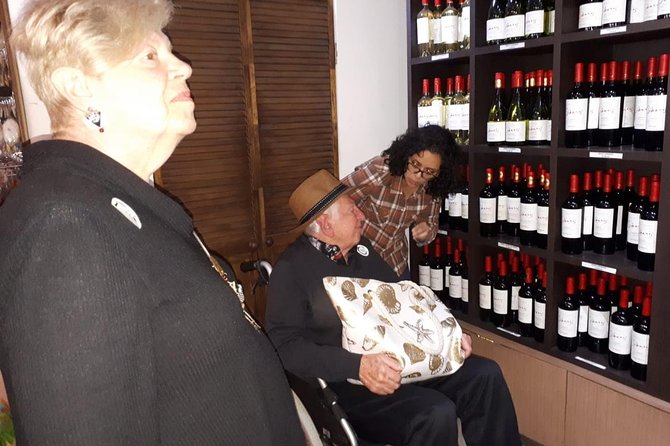
- Undurraga Winery guided visit, including park, vineyards, and cellars
- Reserve wine tasting (the city-to-winery plan includes a winery tasting portion, described as 3 wine tastings and also as four reserve wines)
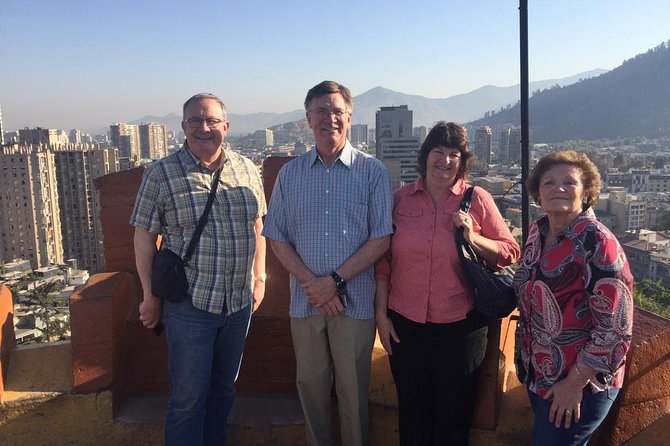
- Hilltop orientation from Cerro San Cristóbal and Cerro Santa Lucía, with big views over Andes and coastal ranges
- A fast but varied Santiago route, using short stops to hit major landmarks and civic areas
- Flexibility is important, since some scenic rides can be affected by operational issues
A smart way to do Santiago plus winery time in one day
If you have one day around Santiago, this is the kind of plan that helps you make it count. You start early, get picked up from your lodging or the port, and you spend the day moving through neighborhoods that explain how the city works, not just where to stand for a postcard.
Santiago can feel spread out, and this tour handles that with a simple rhythm. Morning is for downtown and hilltop orientation, midday is for the winery, and then you roll back out toward your next stop. That structure matters if you are juggling cruise schedules, luggage limits, or tight timing around disembarkation and re-boarding.
The headline experience is the Undurraga Winery stop. It is not just a quick photo opportunity and a pour, it is a guided visit through the winery grounds and production spaces, capped with a reserve wine tasting. For most people, that is the piece that feels most worth slowing down for.
More Boat Tours in Santiago
- Private Cruise Transfer : Santiago → Valparaiso or San Antonio
★ 4.5 · 51 reviews - Transfer in/out cruise to/from Santiago plus tour Valparaiso
★ 5.0 · 14 reviews - Cruise Ship Transfer to Valparaiso Port with 6 Hour tour + Winery
★ 5.0 · 14 reviews
How pickup works for cruise days and hotel stays
This is a private tour, so you and your group are the only ones in the vehicle. The meeting time is 8:30 am, and pickup is offered from: hotels in Santiago, San Antonio, Viña del Mar, and Valparaíso, plus the San Antonio Port, Valparaíso Port, or Santiago Airport (depending on which service you booked).
For cruise passengers, the operator requires specific ship timing details at booking, including ship name, docking time, disembarkation time, and re-boarding time. That matters because delays happen on ship days, and the tour is built around planning around that reality.
Transport is by an air-conditioned minivan. You also get hotel and port pickup and drop-off, and if your service starts in Santiago, drop-off can include San Antonio, Valparaíso, and Viña del Mar. In plain terms, you are not left stuck with the last mile.
Luggage is another practical point. You are allowed a maximum of 2 suitcases, and oversized items like surfboards or bikes may face restrictions, so it is worth asking before travel if you have unusual baggage.
The downtown Santiago route: Plaza de Armas, Paseo Ahumada, and La Moneda
The downtown leg is designed to give you a strong first map of Santiago. You start in the Plaza de Armas area and nearby streets, where civic power, old buildings, and everyday city life sit close together.
One of the first stops is Paseo Ahumada, a four-block shopping and street corridor that runs between Plaza de Armas and Avenida Libertador General Bernardo O’Higgins. It is a good “walk-through” segment because you get a feel for how the city funnels people into the same core area.
Next is the Metropolitan Cathedral (Catedral Metropolitana). Construction started in 1753 and finished in 1799, with major later alterations giving it today’s look. Even if you only have about ten minutes, it is the kind of building that makes you pause, because you can see the neoclassical influence and the scale right away.
Then comes La Moneda, the presidential palace and administrative center. It is described as occupying an entire block in downtown Santiago, and while entry is not included, you still get the orientation value. You get the “this is where decisions happen” feeling, and you connect the dots between Chile’s government district and the surrounding historic core.
Free stops that still feel like a win: cathedral, plazas, and historic offices
A big part of why this day feels efficient is that many stops are free or quick. That keeps the day moving without eating your time on paid entry tickets for every location.
You also pass by or stop at the Central Post Office building near Plaza de Armas. It is a historic structure on the northern edge of the square, adjacent to the area tied to early colonial-era property. Even if you do not go inside, it is a nice “details stop” for architecture lovers.
You will also spend time around Plaza de la Constitución, the civic district square across from the northern facade of La Moneda. The surrounding government buildings give the plaza its character, and you get that sense of Chile’s modern administrative core in one view.
One of the clever parts of the plan is how it mixes “big names” with background context. Even when you only have a few minutes, the guide can usually tie the scene to the city’s political shifts and cultural evolution.
More boat trips from Santiago:
- Pre or Post Valparaiso Cruise with Santiago City Tour and optional Vineyard
★ 4.0 · 11 reviews - Santiago to Cruise Port and Valparaíso Tour – 4-Pax Deal
★ 4.5 · 8 reviews - Private Transfer from Santiago to San Antonio Cruise – Valparaiso
★ 5.0 · 6 reviews - Valparaiso, Viña del M, Vineyard testing, Sea lions, Boat ride
★ 5.0 · 5 reviews
Colonial-era and power shifts: Congress-era building and Castillo Hidalgo
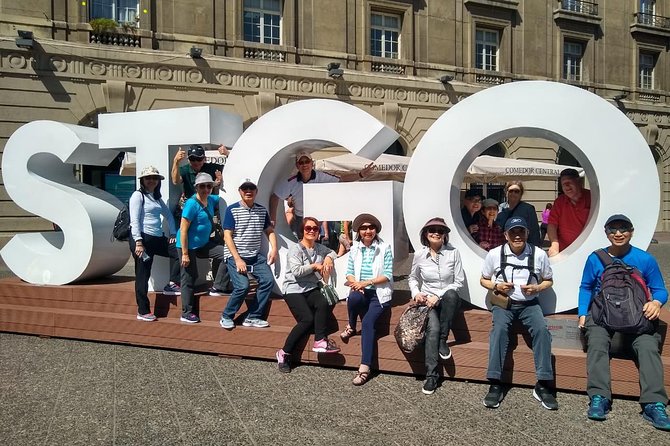
The day includes a stop tied to Chile’s political history: the former home of the Chilean Congress. The building was used until the 1973 coup, when political activity moved to Valparaíso. Later it became a national monument and housed government functions again in different eras, including between 1990 and 2006 as part of the foreign affairs ministry operations.
It is one of those places where the time you spend matters, because the architecture is the quiet witness. You may not get long to explore, but you will walk away with clearer context for how Santiago shifted roles while other cities took over certain political functions.
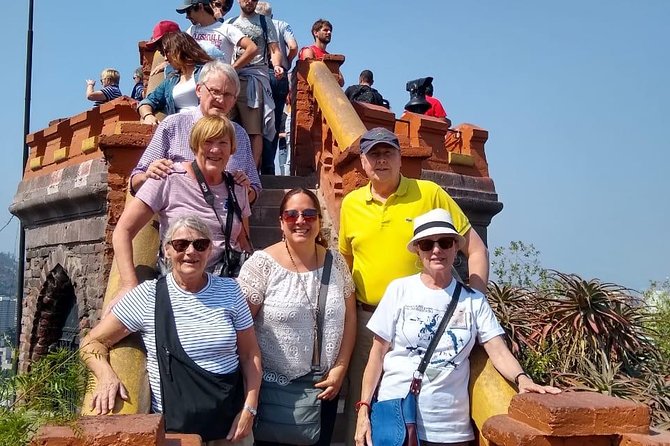
Then you head toward Castillo Hidalgo on top of Santa Lucía hill. It is a historic structure built in 1816 during the Reconquest, ordered by Casimiro Marco del Pont. Again, entry is not listed, so this is mainly a perspective-and-photo stop, but it is a strong “Santiago is layered” moment.
Two hilltop viewpoints: San Cristóbal and Santa Lucía
This is where the tour earns its keep. Santiago is best understood from above, because the city’s neighborhoods stack against the backdrop of mountains and coastal ranges.
On the plan, you have a hilltop stop at Cerro San Cristóbal with an included admission ticket and a longer time window (about 30 minutes). The emphasis here is panoramic orientation, since you can see the Andes Mountains and the Cordillera de la Costa. Even on a cloudy day, you often get enough of a view to understand where the city sits and why.
Then you may also visit Cerro Santa Lucía, another included admission ticket stop with about 20 minutes. This one is not just scenic, it is loaded with story. The hill is described as the remnant of a 15 million-year-old volcano, used as a lookout during the conquest, and tied to Pedro de Valdivia’s declaration of Santiago’s founding in 1541. Later, Governor Benjamín Vicuña Mackenna turned it into a park in 1872, and today the layout includes features like bronze gates and fountains.
One practical note: the schedule includes these hill stops as option-selected segments. If you are picking a version of the tour that includes one but not the other, it changes your view experience. If you care most about maximum scenery and orientation, prioritize whatever version includes both.
Sanhattan, towers, and parks: modern Santiago without the museum-only day
After the historic and viewpoint pieces, the route shifts toward modern Santiago energy. You pass through the civic and financial areas, then into parks and cultural zones where the city feels more open and planned.
One stop is tied to Santiago’s financial district, commonly nicknamed Sanhattan. You also visit Parque Bicentenario, described as a nature park that sits beside the financial district. It includes artificial lagoons where you can watch swans and other birds, plus themed leisure spaces.
The itinerary also references Torre Costanera, designed by César Pelli and listed as 300 meters tall, described as the tallest building in Latin America and second tallest in the southern hemisphere. Even if you are not going inside, just seeing it in context helps you understand how fast Santiago’s skyline has transformed.
You may also encounter Parque de las Esculturas, a sculpture park created after a Mapocho River flood. It is positioned between the Mapocho River and Avenida Santa María. The tour timing suggests short time here, so think of it as an outdoor art stroll, not a full day at a museum.
Bellavista and Parque Forestal: food street energy and riverside walks
The route includes time around the area between the Mapocho River and San Cristóbal hill, described as Santiago’s bohemian quarter with restaurants, boutiques, galleries, and nightlife. The text specifically mentions Pablo Neruda’s house in Santiago, La Chascona, as a highlight of the broader area.
There is also an open-air complex described at the corner of Pío Nono and Constitución, a newer addition to the city’s dining, nightlife, and cultural scene. This is the kind of stop that works well for photos and a quick taste of the neighborhood vibe.
You will also spend time around Parque Forestal, a long park that borders the Mapocho River from Plaza Italia to Estación Mapocho. The tour description connects it with major nearby spots like Mercado Central and La Vega, plus access to cultural sites around Bellas Artes. If you like walking urban green spaces, this segment helps the day feel less like only traffic and stops.
The Undurraga Winery experience: park, cellars, and reserve tastings
Now for the part that usually makes the day feel special: the Undurraga Winery.
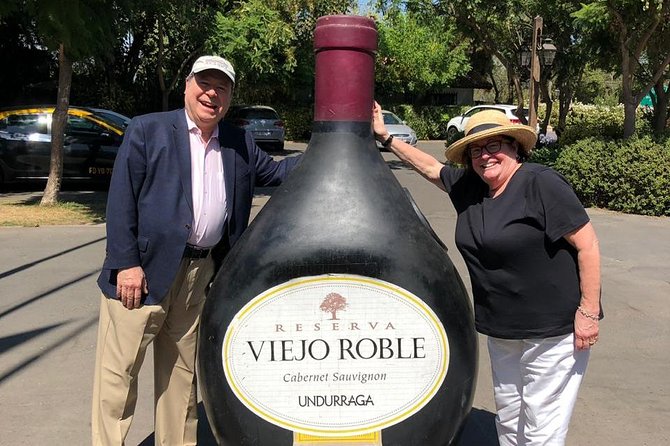
The winery portion includes a guided tour lasting about 1 hour. You start with the winery park, including an area called Aliwen that recreates southern vegetation. You also pass through totem poles associated with the Mapuche people, referenced as cultural recognition. The goal here is not just photos, it is to connect the land and the cultural story to the production spaces.
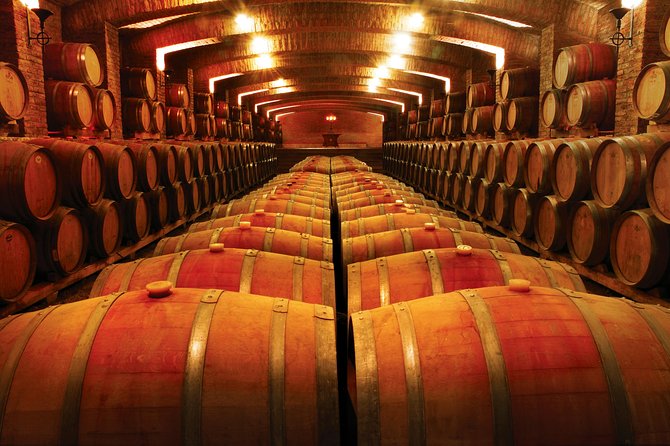
After the park segment, the route continues through the vineyards, so you can see where the grapes grow and understand the visual logic of the property. Then the tour moves into the winemaking cellars, which is where the experience shifts from landscape views to process and production.
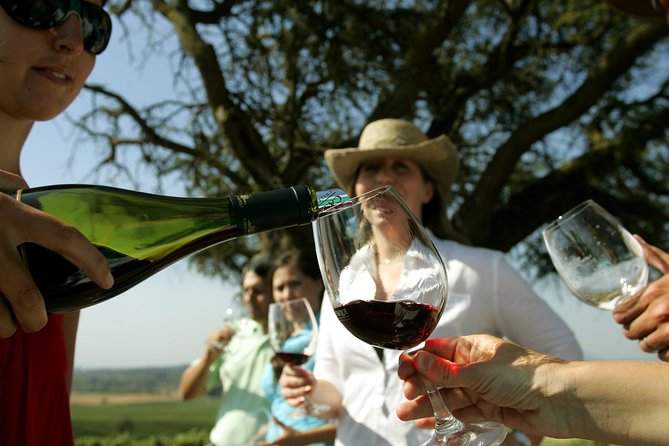
Then comes the tasting. The details provided describe tasting reserve wines, and they appear in two slightly different ways in the information you receive: the tour summary says tasting 3 reserve wines, while the winery schedule also lists tasting four reserve wines. Either way, you are tasting reserve-level offerings as part of the guided winery flow, and that is the main point.
A reminder that helps: the minimum drinking age is 18. If you have teens in your group, confirm how the winery and tasting is handled for underage participants before you go.
What about food during the day?
Food and drinks are listed as not included, unless specified. That means you should plan snacks or a lunch stop on your own, especially since the tour includes a full itinerary of city stops plus winery time.
That said, guides may help point you toward a good place to eat nearby, and you might find the lunch timing lines up with where locals actually go. If you want a sit-down meal, plan on building extra buffer time into your day because the route is tight by design.
If you are the type who gets hungry while moving, pack water and a small snack for the morning leg. You will thank yourself, especially on a longer city day before the winery.
Timing and pacing: a full day that moves
This is listed as 7 to 8 hours, and it feels like it. Many city stops are short, around 5 to 10 minutes, and the hilltop segments give you enough time to get photos and a usable view, but not enough to treat them like a half-day hike.
That pace has value if you like getting the big picture fast. It can feel like a whirlwind if you prefer slower wandering and long museum time. Think of it as a guided highlights sampler, with the winery and viewpoints as your main “slow down” moments.
It is also private, which helps. You can ask small timing questions, but you still need to respect the general flow because the pickup and drop-off are structured around cruise and hotel schedules.
Price and value: $250.50 per person, private and door-to-door
At $250.50 per person, the value comes from what you get bundled together, not from any one stop. You get a professional guide, private transport, and hotel/port pickup and drop-off, plus the winery tour and reserve wine tasting.
For cruise passengers, the door-to-door part can be the deciding factor. On ship days, taxis and transfers can add friction fast, and you can lose time to finding your way. This tour’s structure is meant to reduce that stress, so even if you only remember a few landmarks, the convenience can still be worth it.
If you are a wine lover, the Undurraga segment adds major value, because a guided winery experience plus reserve tasting is typically not just “a sip and out.” Here, you get the park, vineyards, and cellars plus tastings as part of that guided flow.
The one place price can feel less “worth it” is if you end up with a day where specific scenic rides or optional elements are unavailable. In that case, you still get the core city and winery, but the extra sparkle can reduce.
Language can matter: English varies by who is in the driver-seat
Most travelers want this in English, and the offering is listed as English. Still, the practical reality is that some days the person handling the driving and guidance can have stronger or softer English clarity than you might expect from a private booking.
If English is crucial to you, I would treat it as a reason to confirm details during booking. Ask what the guide role looks like and whether the driver also functions as the guide on your specific service.
The good news is that the winery tour portion is where the tasting story usually clicks, because it is a guided process with clear structure. Even if city commentary varies, you should still get the core experience at the winery.
When this tour is the best fit
You should seriously consider booking this if you fit one of these profiles:
- You are doing a pre- or post-cruise day and want port and hotel pickup wrapped into one plan
- You want an efficient mix of Santiago orientation plus a real winery visit
- Your group prefers a private vehicle and short guided stops over long public-transport days
- You care about wine and would like a guided tasting that includes vineyards and cellars, not just a tasting room
When you might want to think twice
This may be less ideal if:
- You want a lot of museum time or long interior visits, because many stops are short by design
- You are counting on specific hilltop ride infrastructure to be operating, since the day can be affected by power or operational issues
- You are very sensitive to English clarity, since it can vary depending on who is guiding and driving
Should you book this pre or post cruise Santiago plus Undurraga tour?
If you have one day to connect cruise timing with a meaningful Santiago experience, I think this booking makes sense. The combination of door-to-door logistics, the hilltop viewpoints, and a guided Undurraga Winery stop with reserve tastings is a strong use of time.
If you are booking with flexibility in your mindset and you are excited about seeing Santiago from street level and from above, this is a great match. If you need a perfectly paced, long walking tour with constant detailed commentary and specific scenic rides guaranteed, then you should add an extra layer of caution and ask questions before you pay.
FAQ
What time does the tour start?
The tour starts at 8:30 am.
Is pickup included, and where can it be from?
Yes. Pickup is offered from hotels in Santiago, San Antonio, Viña del Mar, and Valparaíso, plus the San Antonio Port, Valparaíso Port, and Santiago Airport.
How long is the Santiago and winery day?
It runs about 7 to 8 hours.
Is the wine tasting included, and is there an age limit?
Yes, the winery portion includes reserve wine tasting. The minimum drinking age is 18.
Are any admission tickets included in Santiago?
Yes. Admission tickets are included for Cerro San Cristóbal and Cerro Santa Lucía. Other stops listed are free, and some specific sites are marked as not included.
Can I cancel for a full refund?
Yes. You can cancel for free up to 24 hours in advance of the experience start time for a full refund.
More Wine Tours from Santiago
- Valparaiso Port and Viña del Mar with Casablanca Wine Tasting
★ 5.0 · 6,110 reviews - Maipo Valley Wine Tour with 4 vineyards from Santiago.
★ 5.0 · 1,983 reviews - Marquis de Casa Concha: Wine tasting in Concha y Toro
★ 5.0 · 1,086 reviews - Viña Concha y Toro: Premium Wine Center Tour
★ 5.0 · 714 reviews
Freshly reviewed in Santiago
- Colchagua Full Day Wine Tour: Casa Silva & L’Apostolle Wineries★ 4.0 · 3 reviews
- Santiago De Chile Highlights Walking Tour with a Guide★ 5.0 · 3 reviews
- Portillo & Laguna del Inca with Lunch at the Hotel Portillo★ 5.0 · 3 reviews
- Santiago de Chile: Half-Day City Tour with Local Cuisine★ 4.5 · 3 reviews
- Cajon del Maipo & Embalse El Yeso Tour from Santiago★ 3.5 · 3 reviews
- Full day hike to the viewpoint of Condores, Cajon del Maipo★ 5.0 · 3 reviews
- Kayaking Day Trip in the Andes from Santiago★ 5.0 · 3 reviews
- Private Transportation from Santiago or Santiago Airport AMB to Valle Nevado★ 3.5 · 3 reviews
Wine Tours, compared.

Valparaiso Port and Viña del Mar with Casablanca Wine Tasting
Read our review →
Maipo Valley Wine Tour with 4 vineyards from Santiago.
Read our review →
Marquis de Casa Concha: Wine tasting in Concha y Toro
Read our review →

Andes Range Tour at Inca Lagoon & InSitu Winery Snack Included
Read our review →
Cajon Del Maipo Including Wine with Picnic and Empanada
Read our review →
Maipo Valley Wine Tasting Tour with 4 Vineyards
Read our review →
Browse the lists this tour appears in