
Reviewed · STARGAZING & ASTRONOMY TOURS
Astronomical Guided Tour in San Pedro
San Pedro de Atacama is one of the world’s best places to look up, and this night tour is built around that advantage. After a short ride from town, you get to observe under famously clear skies, with a guide helping you match what you see to the sky above Milky Way season highlights.
I like two things a lot about this tour. First, the private observing site and telescope setup make the night feel organized, not chaotic. Second, the guiding style is practical and beginner-friendly, with a real lesson before you start hunting targets.
One drawback to factor in is that this is a small group shared experience, so you may wait a bit for telescope turns and photos. Also, one observed location sits near a highway, meaning you might catch faint outside lights from time to time, though they should not spoil the sky.
Key Highlights You’ll Actually Care About
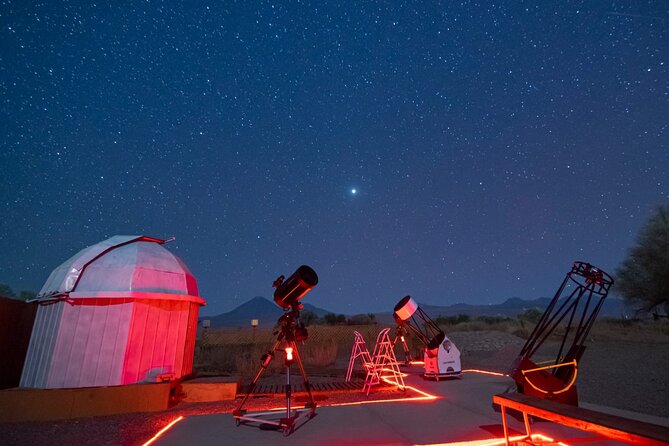
- Private telescopes at an outskirt site with terrain set up for sky viewing
- A guided sky lesson that links constellations, clusters, galaxies, and planets to where Earth is in its orbit
- Beginner-friendly pointers that help you understand what you are seeing, not just stare
- Photo help and tripod options so you can get better night shots even if you are new
- Small group size (max 15), which keeps the experience personal
- Targets you may spot include Saturn, Jupiter, Orion Nebula, Pleiades, and more depending on the night
Why San Pedro Nights Are Made for Telescopes
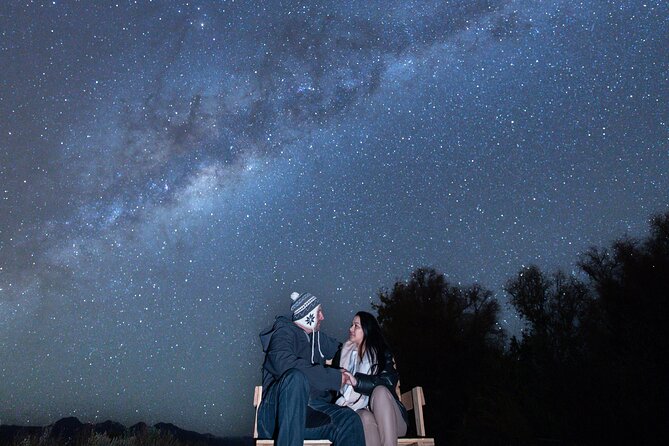
This kind of tour works because San Pedro de Atacama has a huge edge for astronomy. When the air is dry and stable, stars look sharper, and the Milky Way actually shows up in a way that feels physical, not just theoretical. That is what you’re paying for here: time under good sky conditions, guided so you know what to look at.
The biggest value is not the telescopes alone. It is the way the guide uses those telescopes to help you connect points of light to real objects in the sky. If you have ever looked up and felt lost, this style helps you get your bearings fast.
And since the tour runs about 2 hours, you can fit it into a normal trip day without turning your schedule into a full astronomy weekend.
More Stargazing Tours in San Pedro de Atacama
- San Pedro de Atacama: Etno-Stargazing Tour with Transfer
★ 4.8 · 629 reviews - The Roofless Experience San Pedro de Atacama Stargazing Tour
★ 5.0 · 522 reviews - San Pedro de Atacama: Stargazing Experience
★ 4.7 · 489 reviews
Start at Andes Travel, Then Head to a Private Sky Spot
Most nights begin in town with a straightforward meeting. You meet at Andes Travel on Caracoles Street in central San Pedro. Then you transfer by van to the observing site outside the city.
One thing I appreciate is that the operation is built for this exact purpose. The viewing area is described as being arranged for sky observation, with a terrain setup meant for standing, pointing, and swapping telescope turns. You are not just dropped in a random dark corner and told good luck.
Also note the practical detail from an observed departure: the site is near a highway. Translation, you might see small hints of movement or distant light at times. The good news is the core sky viewing should still work well, because the conditions and telescope use are the main event.
Solor Stop: Constellations, Clusters, Galaxies, and Planets Under a Sharp Sky
The heart of the tour is the observing session at the Solor stop. After the short drive, you use the telescopes while the guide walks you through what is visible.
The guide covers the sky in a structured way, including constellations, star clusters, galaxies, and planets, adjusted to the position of Earth. That matters because the night sky is not static. What you can see changes with the season and also with what is high in the sky at that moment.
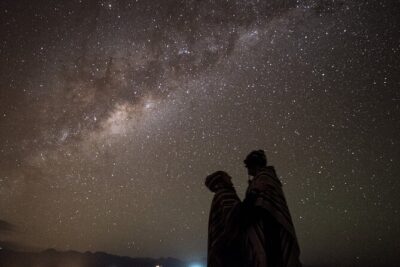
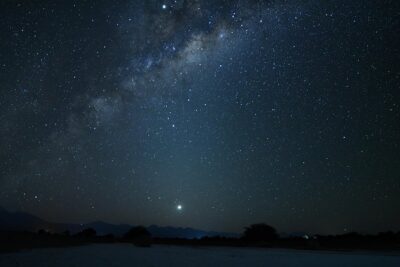
This is where the Milky Way moment usually hits hardest. Several participants describe the Milky Way as clearly visible with the naked eye, not only through equipment. Seeing it that way changes the whole experience. You stop thinking about astronomy as a diagram and start experiencing it as a real sky.
Depending on the night, you may spot bright planets and deep-sky objects. On one observed slot, the group saw Saturn, Orion Nebula, Pleiades, Tarantula Nebula, a globular cluster, and Jupiter with its stripes and four moons. Your exact targets will vary with the date and the sky’s timing, but the tour is clearly geared for both planets and famous nebulae.
What the Guide Does With You (Jared’s Spanish and English, Plus a Bonus Language)
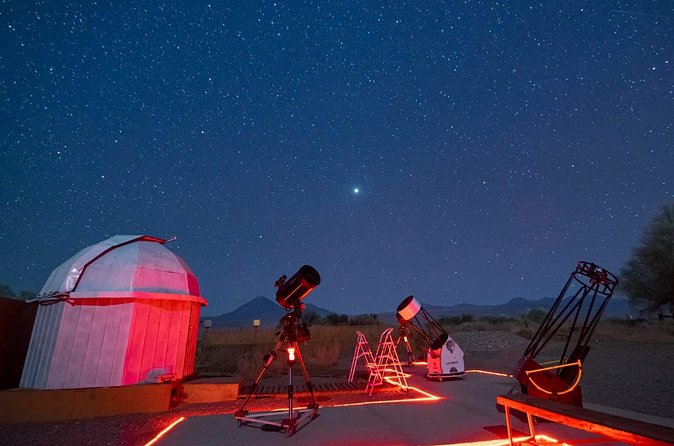
This tour stands or falls on the guide, and the teaching style here is a major strength. In one observed departure, Jared ran the tour in Spanish and English, and he also used Portuguese at times. That is a real help if your group is mixed.
The best part of that approach is the pacing. The first portion is more than pointing. You get an introductory explanation that sets up what you will see: how to interpret the constellations, what kinds of objects you are viewing, and how the Solar System fits into the same sky you are exploring.
Then the group shifts into hands-on observing with telescopes positioned for what you are looking at. In other words, you are not just watching a screen. You are guided through the actual sky, then you get time at the equipment.
If you have little to no astronomy background, this is exactly the kind of structure that makes it work. You will leave knowing what at least a few of the objects were, not just remembering that it looked cool.
Other nights under the desert sky:
- Astronomical Tour “Under the Night Sky”
★ 5.0 · 284 reviews - Stargazing Tour in San Pedro de Atacama
★ 4.5 · 191 reviews - Astronomical Tour with Guide and Pick Up San Pedro de Atacama
★ 4.5 · 145 reviews - “Astronomical Adventure in San Pedro de Atacama”
★ 4.5 · 96 reviews
Telescope Turns, Waiting Lines, and Why That Part Still Works
There is a real, honest tradeoff with any shared astronomy tour: telescope time is limited. When you have a small group, people rotate through the equipment. So yes, you might wait a bit until it is your turn, especially if the guide is juggling explanations and photo requests.
But here is the key point: the waiting has a purpose. While you wait, the guide can keep the group oriented, and you can still observe the sky with your eyes as you learn. That turns the “line” into part of the teaching rather than dead time.
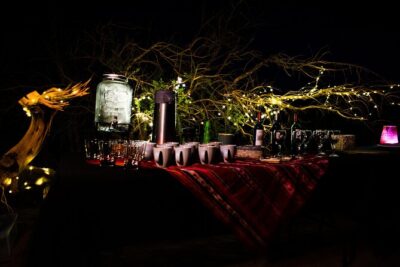
If you are also there for photos, plan for the same rotation pattern. Some participants describe a short break for snacks, then a group split for photos. That kind of rhythm keeps the session moving while still giving people a chance to shoot the stars with help.
One practical detail: there are tripods available for people to use for their own night photography. That is huge for value. You are not only relying on the guide’s camera.
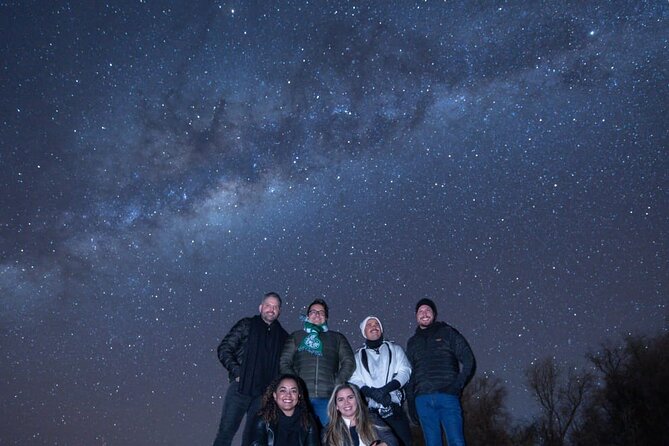
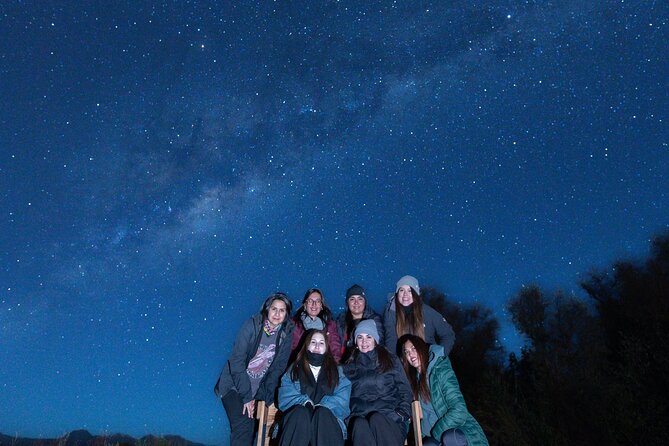
And if you want the social proof version of that, an observed departure included a guide taking photos of participants with the starry sky in the background, then sharing those images the next morning. Having that ready-to-go shot can be a nice buffer if your own photos do not come out perfect on the first try.
Night Photography Tips Built Into the Experience
Stargazing is visual, but night photography is its own skill. What I like about this tour is that it does not treat photography as an afterthought.
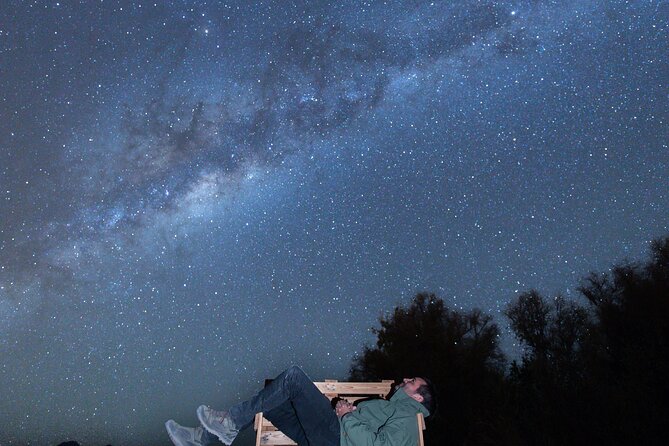
From an observed departure, the guide included instruction on taking night photos, and the group received photo moments with the star field in the background. Even if you skip your own camera, watching the guide set up the look can teach you what matters, like stable support, timing, and framing.
If you bring a camera or phone, this is also where you benefit from having telescope access plus tripod options. A tripod makes a huge difference at night, and having it available removes one barrier.
Now, keep expectations grounded. The tour is only about 2 hours, and you are sharing time with others. So you will likely get a few good chances rather than unlimited shooting time. Still, for many people, that is exactly enough to walk away with both memories and better photos than they would get alone.
Group Size, Timing, and How the Night Feels
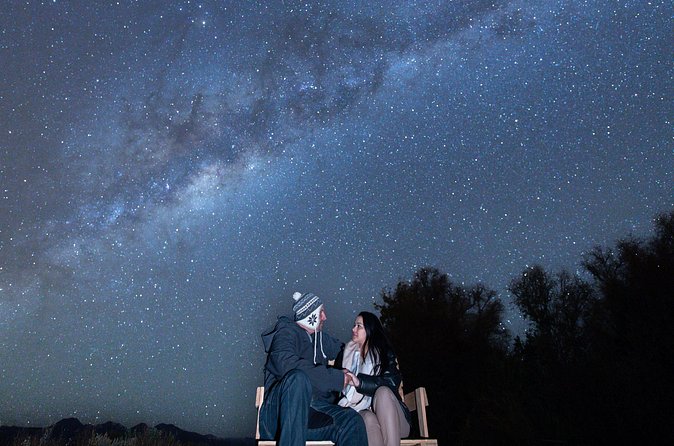
This is set up for a maximum of 15 travelers, which is a sweet spot. You get enough people to make the night fun, but small enough for the guide to keep an eye on everyone’s questions and rotate telescope time without it turning into a long, slow cattle line.
The tour is about 2 hours. In practice, that means the night is compressed into a lesson plus observing plus a photo window. The best way to enjoy it is to treat those two hours like a guided workshop: listen, look, ask a question, then take your turn with the telescope.
Comfort matters too. You are standing outside under dark skies, so bundle up. The tour time is not listed in the base info, but an observed departure ran 21:00-23:00. If yours is similar, you can expect cold conditions typical of high-altitude deserts, even when the day felt pleasant.
Also, one participant noted that the site is near a highway and you may see passing lights at times. That is another reason to dress for comfort, because you cannot control the environment. You can only control your ability to stay warm while you wait for your turn.
Price at About $35: What You’re Really Paying For
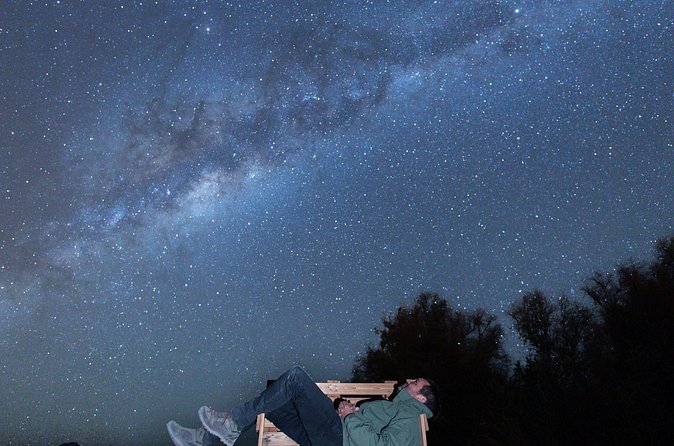
At $35 per person for roughly 2 hours, this tour is priced like a focused, guided activity, not a half-day attraction. What makes it feel like value is that you get multiple layers for the same ticket.
You are paying for:
- A guide who teaches and points out objects in a structured way
- Telescope access, with the equipment positioned for the targets you will see
- Small group size, which helps keep the experience interactive
- Photo help, including a guided moment and tripod availability
- A private-site setup rather than a random public viewing spot
One detail worth noting: the tour includes admission ticket access, described as free. So you are not likely to face extra sky-observation fees once you arrive.
Should you compare to cheaper options? If you want a do-it-yourself stargazing session, you might find less expensive options in the region. But if you want context, telescope guidance, and photo assistance in a compact time window, this is the kind of ticket that often makes sense.
And if you are planning ahead, keep in mind the tour is commonly booked about 24 days in advance on average. In high season, that lead time can help you avoid last-minute scrambling.
Who This Astronomical Tour Suits Best
This is a good match for people who want the sky to come with instructions. If you are a total beginner, the teaching and rotation structure make it easier to enjoy. You are not expected to know star names or astronomy terms before you arrive.
It is also a strong choice for groups and families. One participant described stargazing with family and highlighted that the guide was friendly and approachable. If your group includes different ages or different comfort levels with long explanations, a guided night usually works better than a self-guided walk.
If you are an experienced stargazer, you might still appreciate the telescope access and the clear explanation of what you are seeing that night. Just remember that the session is about 2 hours, so it is not an all-night research program. It is a guided “see the best first” style.
Finally, if photography matters to you, the built-in photo help and tripod options give you a realistic way to improve without needing a full night of trial and error.
Should You Book This Solor Stargazing Tour?
Book it if you want a structured, beginner-friendly guided stargazing session in San Pedro de Atacama, with telescope time and actual help for seeing and photographing the night sky. The strongest reason to go is that the experience is built around guided sky identification, not just telescope access.
Skip it or choose something different if you hate waiting your turn with a group, or if you expect to spend hours shooting without instruction or rotation. This is short by design, and it works best when you treat the night like a guided highlight set.
If your goal is to come away knowing a few real objects you saw, getting photos you can be proud of, and enjoying the magic of a clear high-desert sky, this Andes Travel tour is an easy yes.
Freshly reviewed in San Pedro de Atacama
- Route of the Andean salt flats★ 5.0 · 3 reviews
- From San Pedro de Atacama: Tatio Geysers and Machuca Tour★ 4.0 · 3 reviews
- Purilibre Trekking: Disconnection and Nature★ 5.0 · 3 reviews
- Rainbow Valley Tour, Yerbas Buenas Petroglyphs – Half Day Tour★ 3.5 · 3 reviews
- From San Pedro de Atacama: The Salt Flats Route, Full Day★ 3.7 · 3 reviews
- Valle de la Luna: A Moon-Like Escape in Atacama★ 5.0 · 3 reviews
- From San pedro de Atacama / Tatio Geyser★ 1.7 · 3 reviews
- Piedras Rojas, Altiplanics Lagoons & Salar Full Day Tour★ 4.4 · 3 reviews
Stargazing & Astronomy Tours, compared.
The Roofless Experience San Pedro de Atacama Stargazing Tour
Read our review →
Astronomical Tour with Guide and Pick Up San Pedro de Atacama
Read our review →
“Astronomical Adventure in San Pedro de Atacama”
Read our review →Browse the lists this tour appears in