
Reviewed · SAN PEDRO DE ATACAMA TOURS
ASCENT TO VOLCANO CERRO TOCO OF 5604masl
Cerro Toco is a friendly way to taste high-altitude mountaineering in North Chile, without needing prior rope skills or a big training plan. I love the way the day mixes serious altitude with approachable hiking, and I also love the stop at the Astronomical Park, where the desert feels suddenly futuristic.
The main thing to consider is the height. You start around 5,280m, and the climb is recommended only if you have done previous high-altitude activity, plus you’ll want to take the pace seriously.
Key highlights worth caring about
- Cerro Toco summit at 5,604m, with wide-open Andes views
- Professional guide (U.I.M.L.A), with a pace that respects altitude
- Astronomical Park visit after driving along CH-27 past iconic volcanoes
- Warm mountain clothing included (pants, jacket, boots, gloves, hat)
- Guided, slow uphill push: 1.7 km walking, 330 m elevation gain, about 3 hours up
- Private group format, so you’re not stuck with an incompatible pace
Cerro Toco in a sentence: a beginner climb with real altitude
This is an extinct volcano ascent that’s designed for people stepping into mountaineering for the first time. It’s short, structured, and led by a professional mountain guide, which matters because your body is doing something new. At altitude, you’re not just thinking about legs, you’re also managing breathing, effort, and patience.
What makes it feel like a smart first target is the balance of challenge and support. You walk a defined distance (1.7 km) and gain a defined amount (330 m), then you get a summit view that makes the effort feel worth it. It’s not a marathon hike, but it is a “pay attention to altitude” hike.
A few more San Pedro de Atacama departures to weigh up
- San Pedro de Atacama: El Tatio Geysers Tour
★ 4.7 · 943 reviews - Tour to the Hidden Lagoons of Baltinache
★ 5.0 · 694 reviews - San Pedro de Atacama: Etno-Stargazing Tour with Transfer
★ 4.8 · 629 reviews
Getting there from San Pedro: the 8:00 start and the CH-27 drive
The day starts early, with hotel pickup in San Pedro de Atacama around 8:00 a.m.. You’ll ride out in a 4×4 (Jeep/SUV), and the route takes you along the international road CH-27. That drive is part of the experience because you’re watching volcanoes line up around you before you even lace up boots.
After about 80 minutes of driving, you enter the Astronomical Park. The key idea here is contrast. You’re in an arid, high-desert setting, then you see the kind of infrastructure and work that supports major universe research. It’s a useful reminder that this region is not only about scenery, it’s about science and long-range thinking.
Practical tip: dress for big temperature swings. Even if the morning starts cool, you’ll warm up while driving and moving, then feel cold again when you slow down at altitude.
The Astronomical Park stop: why it’s more than a photo break
This isn’t just “look at a building and move on.” The stop gives you context for the area you’re hiking through. When you’re standing in the desert and then see serious projects tied to studying the universe, it changes how you interpret the emptiness.
Also, it’s a good mental reset before your climb. The ascent portion is about effort and breathing. The Astronomical Park stop gives you something lighter to process, even if you’re still thinking about the altitude waiting for you later.
If you’re the kind of person who likes understanding where you are, you’ll appreciate this part. If you only want hiking time, it still helps because it breaks the day into manageable blocks.
The real workout: starting near 5,280m and climbing 330m up
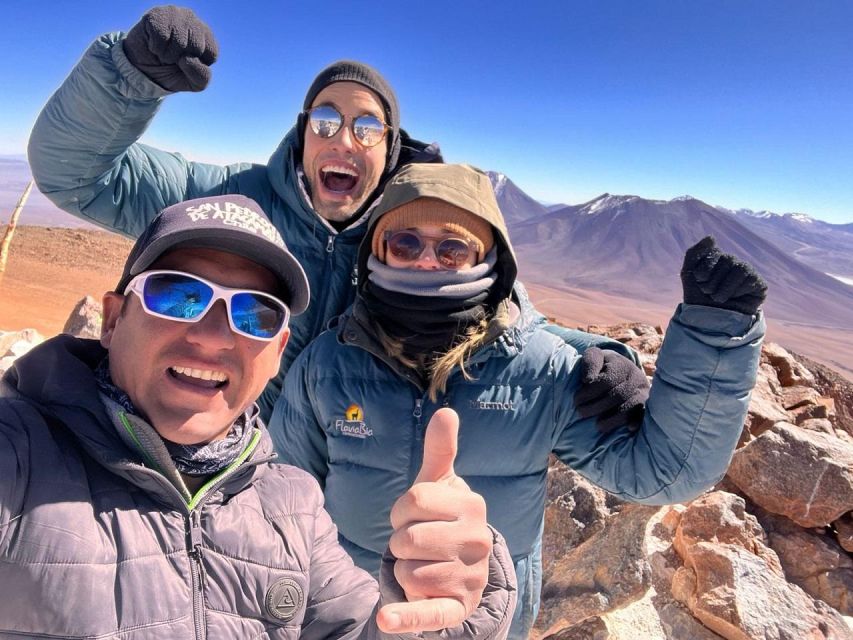
After about an hour by vehicle, you reach the hike starting point at roughly 5,280 meters. From there, the climb is 1.7 km of walking with 330 meters of elevation gain. The average slope is listed at 23°, and you’ll spend about 3 hours moving uphill.
This is where you need to trust the pace. The climb is done at a slow rate with breaks for rest and for looking around. That may feel like “not enough speed,” but at high altitude, it’s exactly the point. You’re giving your body time to adjust and keeping your effort steady instead of spiking too hard early.
What I’d watch for, even if you’re reasonably fit, is the mental temptation to push because the trail is not long. Altitude can turn a short climb into a tough one. Slow and steady wins.
The other half of a San Pedro de Atacama week:
- Piedras Rojas, Altiplanics Lagoons & Salar Full-Day Tour
★ 4.7 · 592 reviews - The Roofless Experience San Pedro de Atacama Stargazing Tour
★ 5.0 · 522 reviews - Half Day Tour to Geysers del Tatio
★ 5.0 · 499 reviews - San Pedro de Atacama: Stargazing Experience
★ 4.7 · 489 reviews
What the guide adds here (and why it matters)
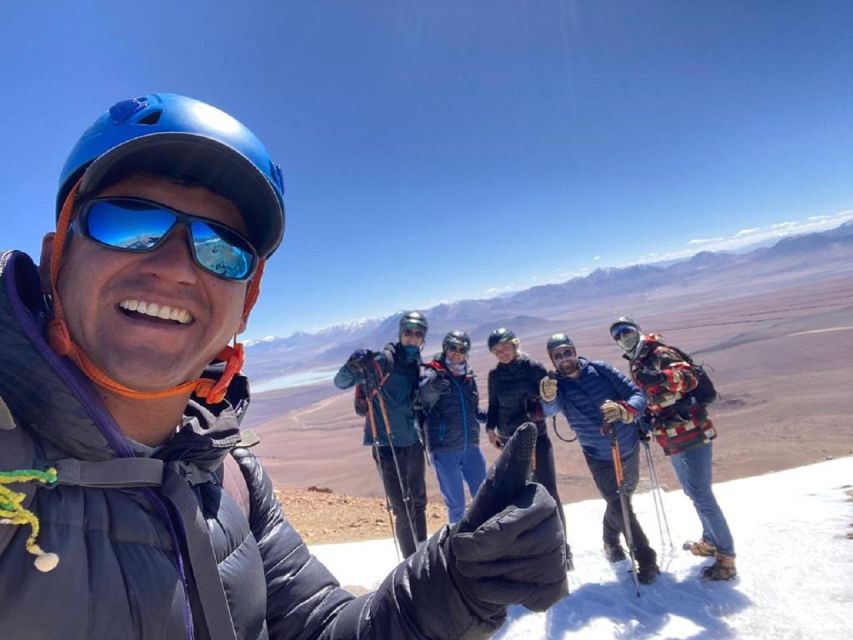
You’ll have a professional mountain guide and, based on the experience feedback, guides are attentive to how you’re doing. In one standout case, the guide Gerardo was extremely attentive, brought the necessary food and equipment, followed the group’s pace, stopped when needed, and encouraged people to keep going.
That kind of in-the-moment support is valuable because it’s not about dramatic rescue situations. It’s about small decisions: when to pause, how to keep the group together, and how to help you finish without rushing.
Summit time: the view you came for at Cerro Toco
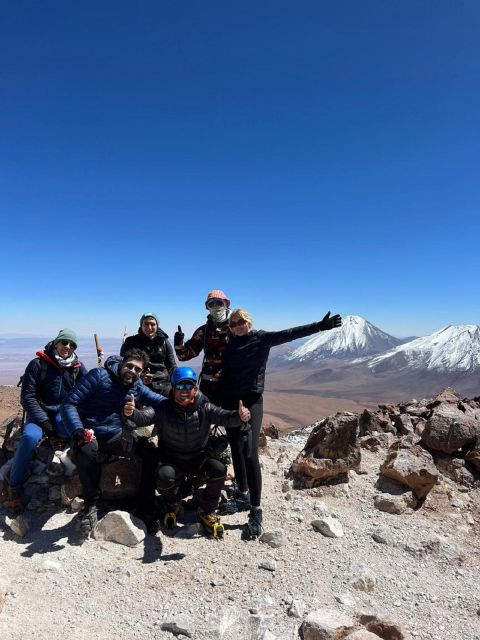
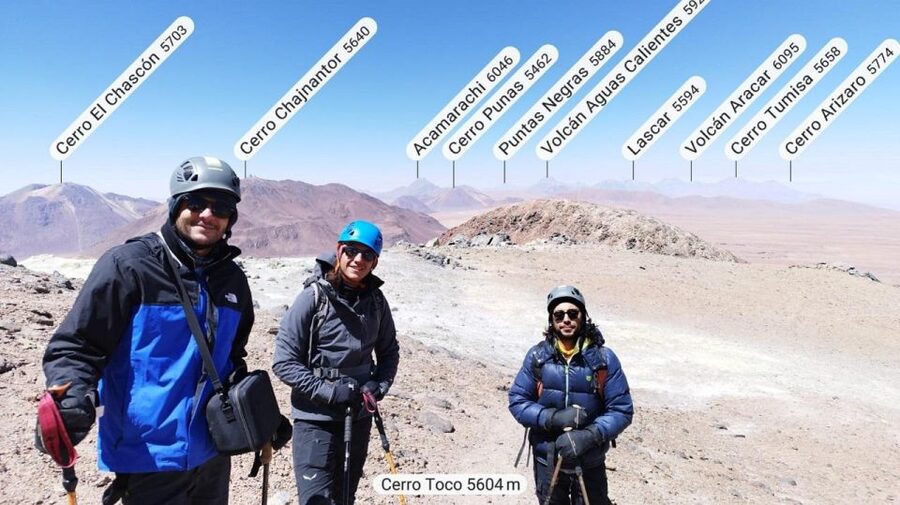
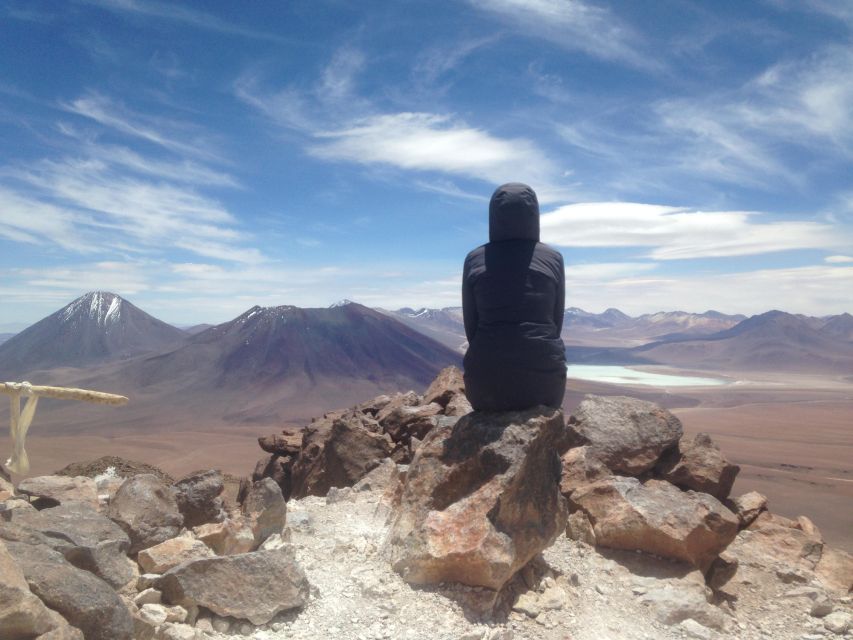
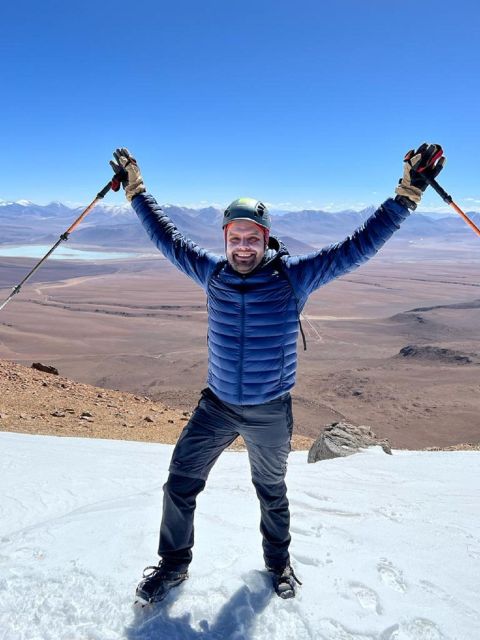
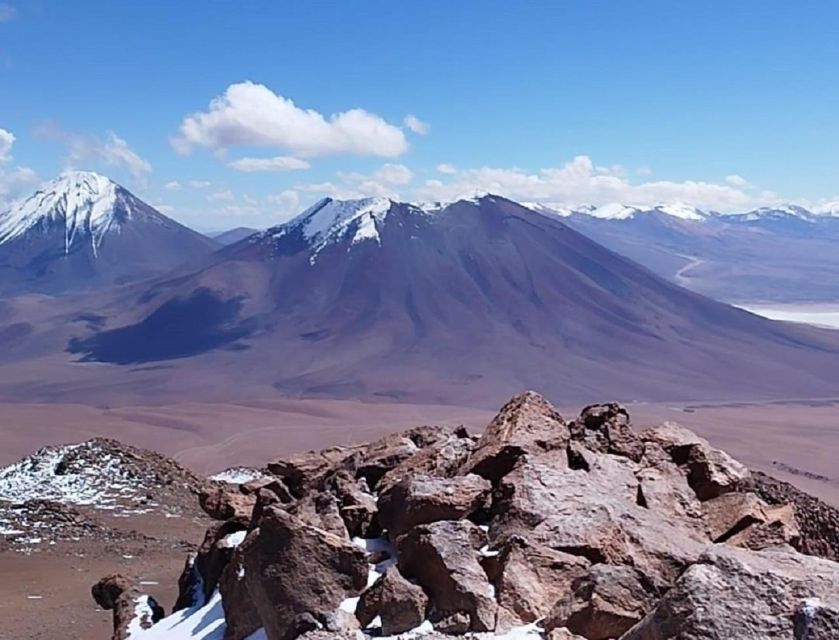
Reaching Cerro Toco’s summit (listed at 5,604 masl) is the payoff moment. From the top, you get panoramic views where the high desert and the Andes stretch out in every direction. This is the part where the climb becomes a memory you’ll replay later.
Notice that the schedule gives you time to actually be there, not just touch the top and sprint back down. The experience description emphasizes rest and contemplation during the ascent, and that same spirit carries into the summit moment.
If you’re sensitive to cold, keep in mind that being at the top typically means you’ll be standing still at altitude. Thermal clothing and the included layers help here, but you still want to treat the summit like a “stand and linger” moment, not a “walk fast through it” moment.
The descent: faster, but still part of the day
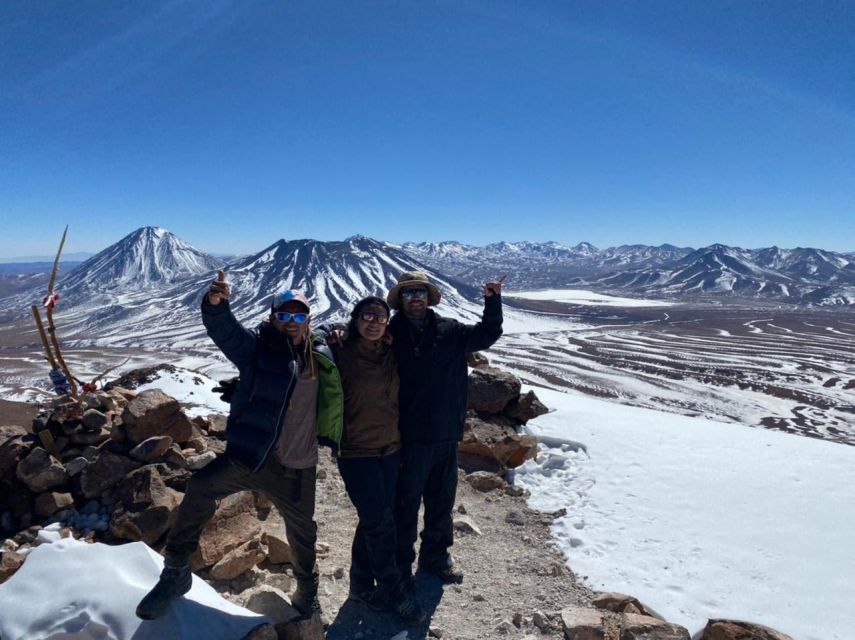
The descent is described as much friendlier and faster, about 1 hour back to the starting point. The good news is that you’re not fighting uphill altitude for that whole stretch.
Still, don’t get careless. Your legs may feel better, but altitude fatigue can linger. Take advantage of the guide’s pacing and stick with the group. Going too fast down a slope can make you feel wobbly even when you think you’re fine.
Once you’re back at the lower point, you reverse the day with the 4×4 and return to San Pedro de Atacama around 3:00 p.m. That timing is nice if you want the afternoon back for exploring town.
What’s included: warm clothing, guide expertise, and food you’ll actually want
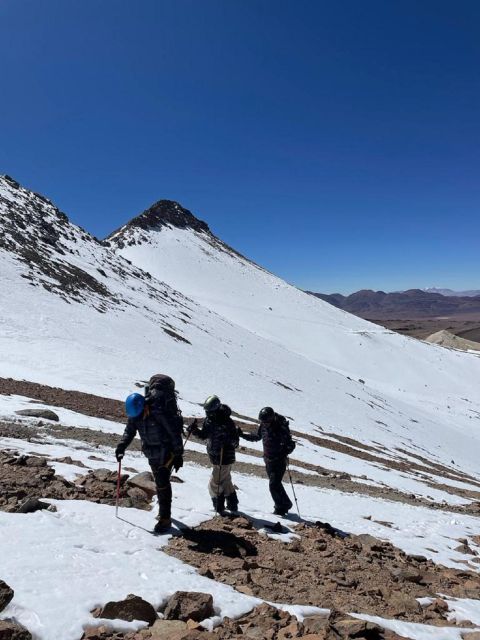
One of the best value points here is the gear. You get mountain clothing included: pants, jacket, boots, gloves, and a hat. For a first-time mountaineer, this is huge. Buying the right cold-weather items just to test whether you like high-altitude hikes can be expensive and frustrating.
Included also means less friction. You can show up without having to guess whether your boots will work on a rocky, high-altitude trail.
You’ll also have hotel pickup and drop-off, 4×4 transport, and brunch and water. That matters because you’re doing a long day starting at 8:00 a.m., with a serious effort portion in the middle.
Guide credentials you can feel good about
The included guide is listed as a U.I.M.L.A. professional mountain guide. That’s a trust signal. It doesn’t remove the need for altitude common sense, but it does mean you’re led by someone trained for mountain conditions and group management.
And the feedback on guide attention, including Gerardo being prepared with food and equipment and encouraging the pace, points to a style that fits beginners well.
Price and value: $270 per group, what you’re really paying for
The price is listed at $270 per group up to 1, and the duration is about 7 hours. If you’re going solo, you should treat this as paying for a complete, guided, high-altitude logistics bundle: transport from your hotel, a professional guide, included cold-weather clothing, and food and water.
Here’s the value angle I like most: the experience doesn’t assume you already own everything. If you were to rent gear and hire guidance separately, you’d often spend similar money, sometimes more, and still feel under-prepared. This setup reduces the guesswork.
If you have a travel partner and can share costs, it may feel even better, but the pricing is shown per group up to 1, so confirm availability for your exact group size.
Who this hike suits best (and who should rethink it)
This climb is built for beginners entering mountaineering, and the experience is described as short and friendly. That said, it’s not for everyone, because altitude is not optional.
You’re a good fit if you
- Want a first mountaineering-style hike with a real summit
- Can handle walking for a few hours with a slow pace
- Have already done some high-altitude activity or feel confident you’ve acclimated well
You might want to skip it if you
- Are bringing children under 16
- Are pregnant
- Have heart or respiratory issues
- Have epilepsy
- Have low fitness levels
- Need to avoid strenuous altitude efforts
Even if you don’t fall into those categories, it’s smart to be honest with yourself about your ability to move steadily at altitude.
What to bring so you feel warm, safe, and comfortable
You’ll get boots and cold-weather items included, but you still need to bring your own baseline. The list is straightforward.
Bring:
- Warm clothing
- Sunglasses
- Sun hat
- Sunscreen
- ID card (copy accepted)
- Thermal clothing
- Trekking gear
Not allowed:
- Weapons or sharp objects
- Smoking
- Alcohol and drugs
My practical take: sunglasses and sunscreen are not optional in bright desert sun, and thermal layers can be the difference between “okay” and “miserable” when you pause.
Language and pacing: private group comfort with a multi-language guide
The guide/instructor languages are listed as Spanish, Portuguese, and English. That’s helpful if you’re more comfortable thinking in one of those languages.
It’s also a private group, which usually means the pace can be tuned to you rather than to the average of strangers. That fits the climb style here, since moving slowly and taking breaks is a core part of the day.
Should you book the Cerro Toco ascent?
Book it if you want your first serious high-altitude hike in Chile with a professional guide, included warm clothing, and a clear, satisfying goal at the summit. The short uphill distance, about 3 hours up, plus a faster descent around 1 hour, makes this feel doable while still delivering that big “we reached the top” feeling.
Skip it if altitude has been an issue for you before, if you don’t have prior high-altitude activity, or if you fall into any of the listed medical or fitness categories. The climb may be beginner-friendly in style, but the altitude is still the altitude.
If you’re ready to work with a slow pace, follow the guide’s lead, and dress for cold and sun, this is one of those trips where you come back tired, proud, and oddly energized for the rest of the day.
Freshly reviewed in San Pedro de Atacama
- Route of the Andean salt flats★ 5.0 · 3 reviews
- Purilibre Trekking: Disconnection and Nature★ 5.0 · 3 reviews
- From San Pedro de Atacama: Tatio Geysers and Machuca Tour★ 4.0 · 3 reviews
- From San Pedro de Atacama: The Salt Flats Route, Full Day★ 3.7 · 3 reviews
- Valle de la Luna: A Moon-Like Escape in Atacama★ 5.0 · 3 reviews
- Rainbow Valley Tour, Yerbas Buenas Petroglyphs – Half Day Tour★ 3.5 · 3 reviews
- From San pedro de Atacama / Tatio Geyser★ 1.7 · 3 reviews
- Piedras Rojas, Altiplanics Lagoons & Salar Full Day Tour★ 4.4 · 3 reviews
San Pedro de Atacama Tours, compared.
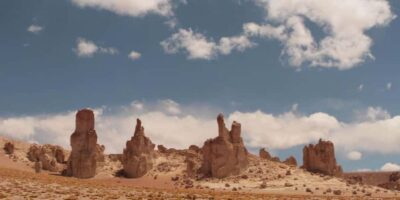
Piedras Rojas, Altiplanics Lagoons & Salar Full-Day Tour
Read our review →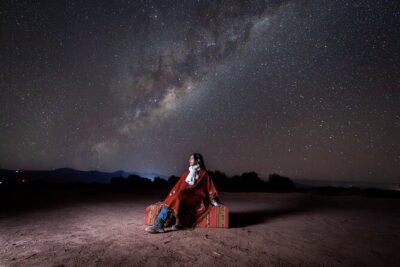
The Roofless Experience San Pedro de Atacama Stargazing Tour
Read our review →
Full Day Tour to Piedras Rojas, Altiplanic Lagoons and Chaxa
Read our review →Browse the lists this tour appears in