
Reviewed · WALKING TOURS
Santiago Walking Tour History, Culture and Local Life
This Santiago route is interesting because it stitches together the city’s big themes in a short walk. You start at Universidad Católica, move through Chile’s civic power zone, then end in the artsy, green stretch around Parque Forestal.
I love the way the tour gives you a structured path with a professional bilingual guide, so you are not just collecting photos, you are understanding what you are looking at. I also like that the pacing is designed for real city time, with major landmarks like Plaza de Armas and a panoramic payoff at Santa Lucía Hill.
One thing to consider is the tour is weather-dependent and includes a hill stop, so if you hate uphill walking, plan for grippy shoes and a steady pace.
Key highlights at a glance
- Private group feel: only your group participates, so questions stay easy and personal
- Bilingual guide support: clear explanations as you move between landmarks
- Civic to cultural route: Presidential Palace, Plaza de Armas, Santa Lucía Hill, and Lastarria
- Optional Pre-Columbian Museum time: add it if you want the deeper roots
- Free admission for the route stops: you can skip paid sites except for the museum ticket if you choose it
- Ends in a good “keep exploring” area: Parque Forestal is a smart finish point
Why This Santiago Route Works So Well in the Real World
Santiago can be confusing at first. The neighborhoods feel far apart, and the street layout can make you think you need a car. This walking tour solves that by doing something simple and smart: it groups together the places that help you understand the city’s story in one morning.
You get a clear arc. First comes the civic center, where you see the machinery of government and law. Next you step into the historic heart at Plaza de Armas, then you climb to Santa Lucía Hill for a fast panoramic view that makes the whole map click. Finally, you finish in Lastarria and Parque Forestal, where the vibe shifts from institutions to culture, parks, and everyday life.
And it is not just theory. The guide support matters. Guides such as Paloma and Joaquin are specifically praised for making explanations stick, and for friendly conversation that goes beyond reciting facts. That is the kind of help that turns a walk into a real understanding of Santiago.
More Walking Tours in Santiago
- The best walking tour in Santiago de Chile
★ 5.0 · 629 reviews - Santiago Half-Day Walking Tour with Hotel Pick up & Food Sample
★ 4.5 · 467 reviews - A Fabulous Walking tour by the Old Santiago of Chile –
★ 5.0 · 466 reviews
Price and Logistics: What $130 Buys You, and How to Plan Your Morning
The price is $130 per person for about 4 hours. That sounds like a “tour price,” but the value comes from what is included: a professional bilingual guide plus 19% VAT. VAT being included removes one little surprise later, and the guide time is doing the heavy lifting.
It also helps that the tour uses a mobile ticket. No printed voucher to hunt down. You also get group discounts, which is useful if you are traveling with friends or family.
Your practical timing is another plus. The start time is 9:00 am, so you beat the late-morning crowds and still have the rest of the day. Because it ends around Parque Forestal, you are not stuck far from things to do after the tour. You can keep going with museums, cafés, or a longer park stroll.
The one “logistics” consideration is simple: you start near Metro Universidad Católica and you finish near Parque Forestal. If you plan to return to your hotel right after, check your route from the end point.
Where You Meet: Universidad Católica, Easy Transit, Clear Start
The tour starts at Metro Universidad Católica, at José Victorino Lastarria 11, 8320165 Santiago. That is a good choice for two reasons. First, you are starting near transit, so getting there is usually painless. Second, it anchors the walk in a real neighborhood rather than a random hotel lobby pickup.
You also get a clear finish location: Parque Forestal (8420488 Santiago, Santiago Metropolitan Region, Chile). That matters more than it sounds. A lot of city tours end somewhere inconvenient. Here, you are finishing near a public space that is easy to move through.
Most importantly, the meeting point is set up for a morning start, not a late lunch shuffle. If you want good daylight for photos and a calmer pace, this is the right time window.
Stop-by-Stop: From Universidad Católica to the Presidential Palace
A few more Santiago departures to weigh up
- Santiago: Guided Walking Tour of the Historical Old Town
★ 4.8 · 459 reviews - Tour Viña Santa Rita: History, Wine and Picnic Outdoors
★ 4.5 · 141 reviews - Viña Del Mar and Valparaiso world heritage site.
★ 4.5 · 89 reviews - Essence of Santiago : History, Flavors and Panoramic Views
★ 5.0 · 45 reviews
Starting at Universidad Católica: get your bearings fast
The walk begins with a straightforward orientation at Universidad Católica. This is where the guide usually sets the tone: what you are looking at, how the city is laid out, and what themes you will see as you go.
This kind of start is practical. Santiago’s center can feel like a maze if you arrive cold. A smart first few minutes helps you notice the big patterns, like where power sits, how plazas function, and how older streets connect to later growth.
Presidential Palace: Chile’s government center in plain sight
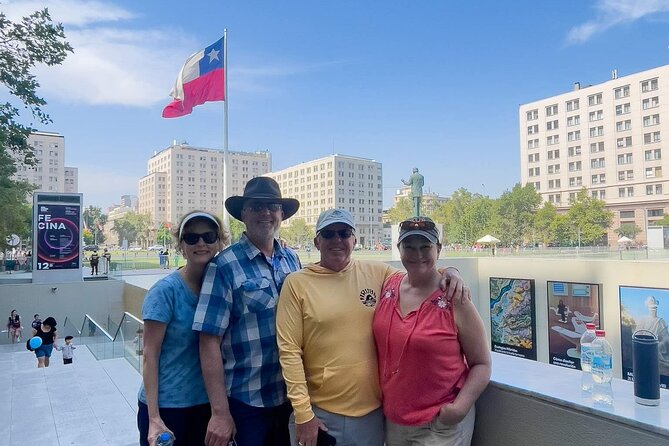
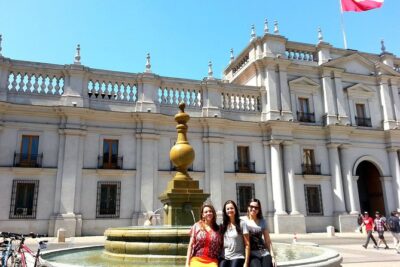
From there, you move toward the Presidential Palace, Chile’s government center. This is one of those places that can feel dramatic even if you know nothing about the details, because the setting and scale do half the storytelling for you.
The guide’s job is to connect what you see to what it means. You are not just looking at a landmark. You are learning how the government’s presence shapes the surrounding civic area, including how people move through the space and what the buildings communicate.
A solid tip here is to slow down for a minute and actually watch. Look at street flow, entrances, and the way the area is organized. That’s part of the lesson.
Former Congress and Supreme Court: Reading the Civic Belt Like a Map
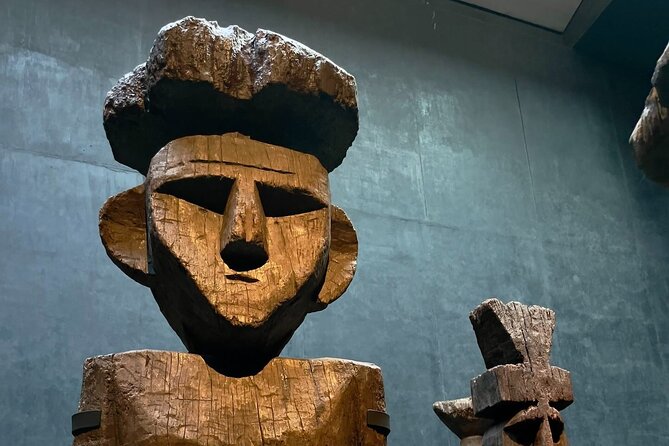
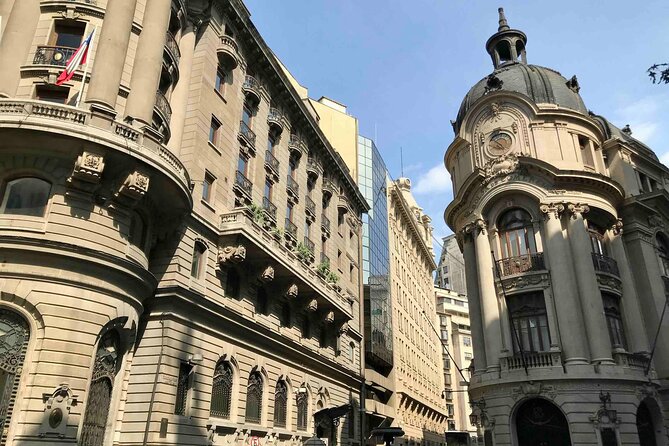
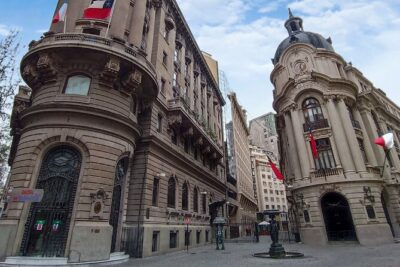
Next you visit the former Congress and the Supreme Court, civic landmarks that help explain how law and politics evolved in the city. Even without going inside, the exterior setting gives you clues about priorities from different eras.
What I like about this part of the route is that it is not random. You are moving through a civic belt that feels cohesive, like a specific “zone” of Santiago rather than a list of unrelated stops. The guide can tie together why these institutions are together, how they influenced the neighborhood, and what you can spot if you pay attention to design and placement.
If you prefer city history that feels functional, not just decorative, this section is for you. It answers the question, why are these buildings here and why do they matter today?
Optional Museum Time: Pre-Columbian Art and the Chile Before Chile Moment
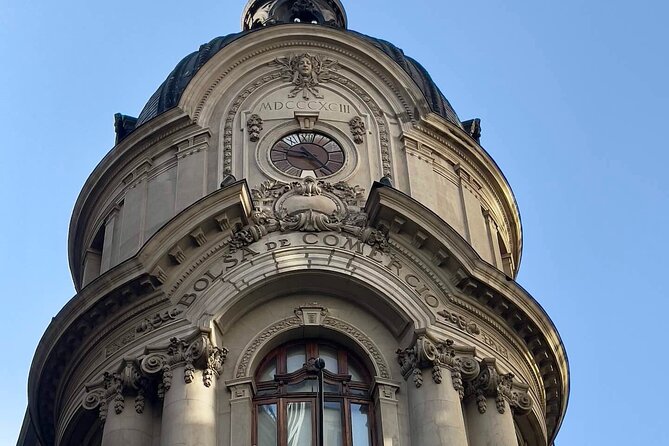
The Museum of Pre-Columbian Art is an optional stop. That flexibility matters, because not everyone wants museum time in a walking tour.
If you do choose it, I’d think of it as your deep roots chapter. One highlight that tends to land well is the Chile before Chile exhibit, which gives you a strong sense of what came before modern national identity. For many people, that context makes later city history feel more meaningful.
Keep one practical detail in mind: museum tickets are not included. So you are adding a cost if you opt in. Also, the tour is built around good walking time, so if you pick the museum, plan to keep your pace efficient inside so you still enjoy the rest of the tour without feeling rushed.
If you skip the museum, you still get the main civic, historic, and viewpoint arc. You just trade museum depth for more time outdoors.
Plaza de Armas and Cathedral: The Historic City Square as a Living Stage
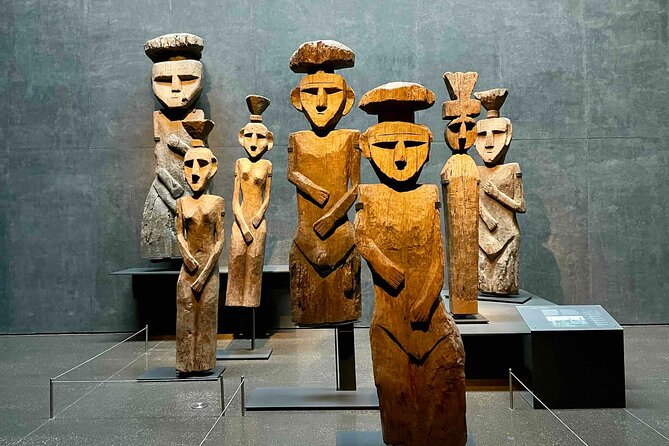
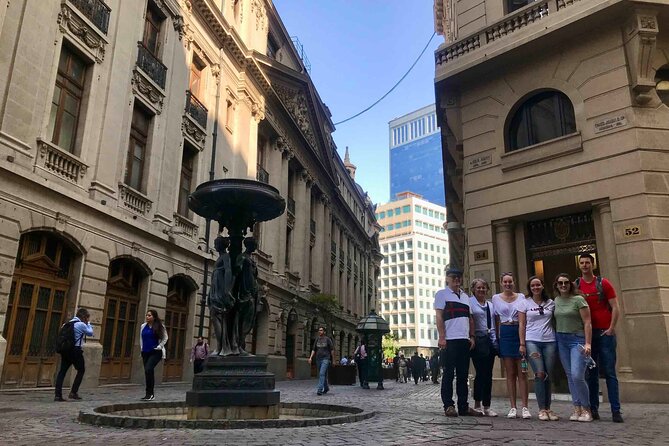
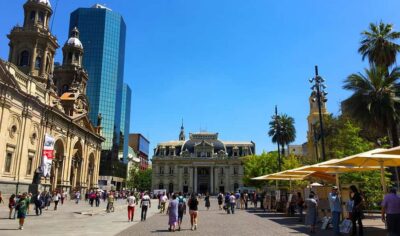
Then you reach Plaza de Armas and the Cathedral. This is Santiago’s classic meeting point, and it works as a reset after the civic buildings. Where the civic zone feels more about institutions, the plaza feels more human.
This stop is valuable because plazas do more than look good. They are social infrastructure. Here you can see how the city’s history continues through daily life, the layout of streets feeding into the square, and why Santiago’s center has always been a place people gather.
The Cathedral adds another layer. It helps you see how religious and cultural life shaped the public center. Even if you do not go deep into architecture, the setting gives you a sense of the city’s long timeline.
This is also a good moment for quick photo pauses, but I’d suggest not treating it like a checklist. Take 3 minutes to just stand and orient yourself. A good guide explanation can turn a plaza from scenery into a way to read the city.
Santa Lucía Hill Views: The Short Climb That Makes the Whole City Make Sense
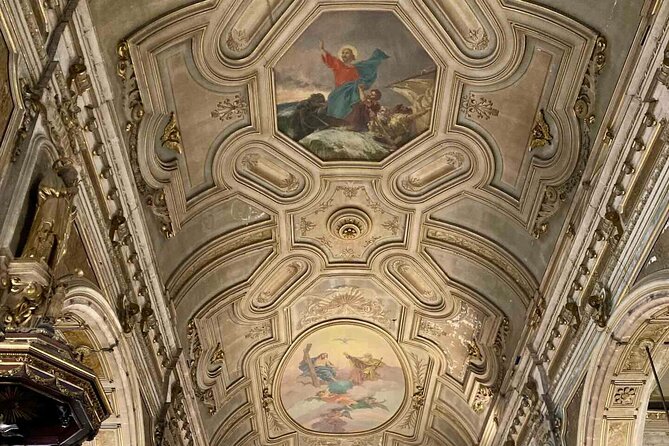
Santa Lucía Hill is where the walk becomes a visual lesson. Climbing a hill in the city can feel tiring, but this stop is worth it because it gives you a panoramic perspective that you just cannot get at street level.
Here is what I think makes it effective. It compresses complexity. From above, you start to see how the historic center connects outward, and how later districts spread. That helps you understand why the earlier stops mattered and where you might want to explore after.
Because the tour is weather-dependent, you want to be a little honest with yourself. If skies are clear, the views are a big payoff. If weather is rough, your timing and sightlines may be affected, so plan for a backup day if this is a top priority for you.
Practical tip: wear comfortable shoes. You will be on foot, and the hill is the only real “effort” moment that could surprise you.
Lastarria and Parque Forestal: Finishing in an Arts and Park Zone You Can Keep Enjoying
The tour ends in the area around Lastarria and Parque Forestal, which is a smart closing move. Lastarria is arts-forward, with a more relaxed feel than the civic center. Parque Forestal adds greenery and breathing room.
This finish works well because it gives you immediate options. If you want lunch, cafés, or a museum follow-up, you are already near where people do that. If you want a slower ending, you can just keep walking the park paths.
One reason I like this ending is that it feels like regular Santiago life, not a staged goodbye. A tour that ends in a real public space lets you adapt after it’s over, instead of feeling trapped by schedules.
Who This Tour Fits Best (and Who Should Consider Alternatives)
This tour is designed for most travelers who want a structured morning walk. It includes the big sights without requiring museum commitment, and the route is paced for a 4-hour experience.
It especially fits if you:
- want a first-time Santiago orientation
- like city history explained in plain language
- prefer walking to a long bus day
- want a guide who can help with conversation and practical suggestions
You might want to think twice if you:
- do not like uphill walking, since Santa Lucía Hill is part of the route
- want a fully ticketed museum experience, since the Pre-Columbian museum is optional and museum tickets are not included
Also note the tour is private in the sense that only your group participates. That is a big plus if you value a calmer pace, easier questions, and less waiting around.
Should You Book This Santiago Walking Tour?
Book it if you want a smart, efficient morning that links Santiago’s civic core, historic square, panoramic viewpoint, and artsy park finish in one coherent route. The guide-driven explanations, plus the fact that VAT and the guide are included, make the $130 feel more like paying for expertise than just paying for motion.
I’d hold off if you are only interested in museums, or if weather and uphill walking are deal-breakers for you. The tour depends on good conditions, and Santa Lucía Hill is the one place where your shoes and energy matter most.
If you are weighing options, this is the kind of tour that gives you the map knowledge you can use all day. You will finish understanding Santiago’s layout, not just having seen it.
FAQ
What is the duration of the Santiago walking tour?
The tour lasts about 4 hours.
How much does the tour cost?
The price is $130.00 per person.
Where does the tour start and what time does it begin?
It starts at Metro Universidad Católica at 9:00 am. The meeting address is José Victorino Lastarria 11, 8320165 Santiago, Región Metropolitana, Chile.
Where does the tour end?
The tour ends at Parque Forestal, 8420488 Santiago, Santiago Metropolitan Region, Chile.
Is the tour private or shared?
It is private in the sense that only your group participates.
What is included in the price?
Included are a professional bilingual guide and 19% VAT.
Are museum tickets included?
Museum tickets are not included. The Museum of Pre-Columbian Art is optional, and if you choose it you would need the museum ticket.
Is the tour suitable for most travelers?
Most travelers can participate.
What happens if the weather is poor?
The experience requires good weather. If it is canceled due to poor weather, you will be offered a different date or a full refund.
Freshly reviewed in Santiago
- Valparaíso Tour with Funicular Ride and small groups★ 5.0 · 3 reviews
- Don Melchor Premium Wine tour★ 5.0 · 3 reviews
- Cousino Macul Private Vineyard Tour with 6 Wine Tastings★ 5.0 · 3 reviews
- Santiago: Guided City Tour through the historic center of Santiago★ 4.1 · 3 reviews
- Private Valparaíso and Viña del Mar + Boat Ride + Sparkling Wine★ 5.0 · 3 reviews
- Small-Group Tour at Matetic Vineyard in Rosario Valley from Santiago★ 5.0 · 3 reviews
- Tour Valle Nevado & Farellones Panoramic view★ 5.0 · 3 reviews
- Colchagua Full Day Wine Tour: Casa Silva & L’Apostolle Wineries★ 4.0 · 3 reviews
Walking Tours, compared.

Walk with Penguins on Magdalena & Marta Island
Read our review →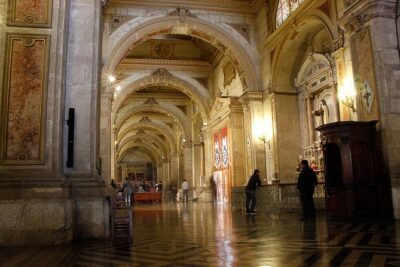
Santiago Half-Day Walking Tour with Hotel Pick up & Food Sample
Read our review →
A Fabulous Walking tour by the Old Santiago of Chile –
Read our review →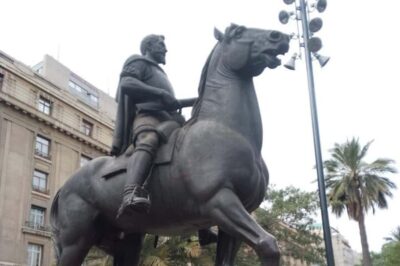
Santiago Half-Day Walking Tour with Hotel Pick up & Brunch
Read our review →
Santiago Skyline: Cable Car & San Cristobal Walking Tour
Read our review →Browse the lists this tour appears in