Reviewed · SANTIAGO TOURS
Learn to Prepare the Famous Chilean Pine Empanada
If you want a real taste of Santiago in a single evening, this small-group cooking class teaches you how Chilean pine empanadas are built, not just watched. I love that it is hands-on, and that Valentina guides you through the masa step by step.
I also like that you make the full meal: the empanada filling plus the pebre that goes on the side. You end by sitting down and tasting your own work, the traditional Peña con Pebre style.
One drawback to plan around, it is not recommended for travellers with gluten intolerance, since the dough is central to the class.
Key things I’d circle before you book
- Small group size (up to 6) means you get real attention while shaping and sealing.
- You cook, you shape, you bake. This is not a passive demonstration.
- You learn both the empanada and the pebre, so you understand the whole flavor equation.
- Classic pine filling details show up, onion, meat, raisins, olives, and egg.
- You can adapt the class for special needs if you ask ahead.
- You may take a few empanadas home, depending on timing and what you bake.
A small-group Santiago cooking class for Chilean pine empanadas
Santiago food experiences can fall into two buckets: quick tastings, or real cooking. This one is squarely in the second bucket. In about 3 hours, you learn the techniques behind the famous Chilean pine empanada, then bake them until golden and eat them on the spot.
What makes the experience feel authentic is the way it is taught. The class is built around a recipe passed down from a grandmother, and the focus stays on the practical steps that make a good empanada. You work the ingredients yourself, and you learn what to look for, not just what to do.
A few more Santiago departures to weigh up
- Valparaiso Port and Viña del Mar with Casablanca Wine Tasting
★ 5.0 · 6,110 reviews - Santiago: Cajon del Maipo/Embalse del Yeso Tour with Picnic
★ 4.3 · 3,789 reviews - Santiago: Vina Del Mar, Valparaiso, Casablanca & Reñaca Tour
★ 4.2 · 2,838 reviews
Meeting point at Av. Gral. Bustamante, near public transport
The class starts at Av. Gral. Bustamante 130, Providencia. It runs from that meeting spot and ends back there, which makes it easy to plug into the rest of your Santiago day or evening.
Also, this pickup point is near public transportation, so you are not stuck hunting for a parking spot. For a class format, that matters. You want to arrive un-rushed so you can focus on dough, filling, and oven timing.
What you actually do in the 3 hours (and why it matters)
This is a full workflow lesson. You are not just mixing ingredients and hoping for the best. The class moves in a logical order, and each step builds on the last.
Ingredients first, then techniques
You start by talking through the core components of the Chilean pine empanada:
- Dough (masa)
- Stuffing (the pine filling) with onion, meat, raisins, olives, and egg
- Pebre, the bright Chilean sauce made from tomato, onion, and coriander
This matters because empanadas are not one flavor. They are a system. If the masa is off, the texture suffers. If the filling is not built correctly, you get dryness or blandness. If pebre is missing, you miss the fresh bite that balances the richness.
The other half of a Santiago week:
- Cable Car, Funicular and Sightseeing Bus in Santiago one day
★ 5.0 · 2,325 reviews - Small-Group Cajón del Maipo Full-Day Tour and Picnic
★ 4.5 · 2,277 reviews - Tour to Valparaíso, Viña del Mar, Pablo Neruda Museum and Vineyard
★ 5.0 · 2,273 reviews - Maipo Valley Wine Tour with 4 vineyards from Santiago.
★ 5.0 · 1,983 reviews
Dough work, cutting, and classic shapes
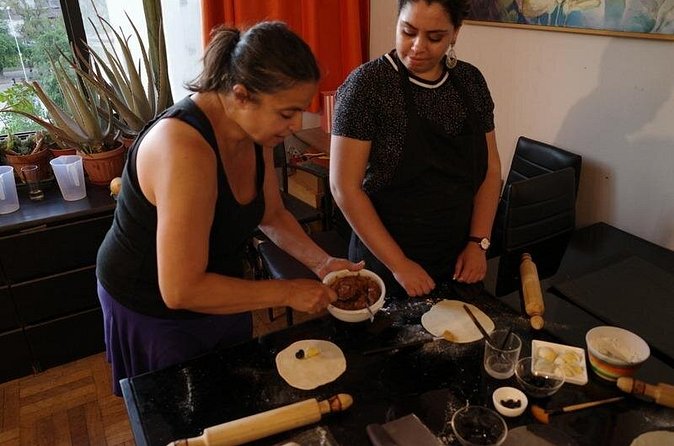
Next comes the part most people love: you get your hands on the dough. The class teaches how to work the masa, how to cut it, and how to form the classic empanada shapes.
In a small group of up to 6 people, you can ask questions while you are actively shaping. That is how you learn the difference between a good fold and a fold that actually holds in the filling when baked.
Filling, portioning, and sealing
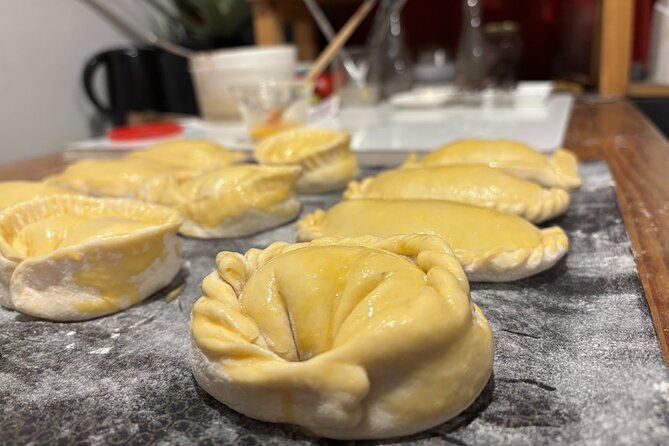
Then you move to the stuffing and assembly. You prepare the filling ingredients and learn how to organize the elements to fill and close the empanadas. Sealing is a skill. The class covers multiple sealing approaches, from simpler to more complex styles, so you can choose a look you feel confident repeating later.
Oven time, then the payoff
Finally, the oven comes in. The class heats to the right temperature and bakes the empanadas until they are golden brown. That is your moment of truth: you get to see whether your dough texture and sealing held up.
Pine filling in plain language: onion, meat, raisins, olives, and egg
The pine empanada filling is where a lot of Chilean character shows up. It is not just meat and onion. You get a mix of sweet, salty, and savory notes that make the bite feel balanced.
Here is what you build into the filling:
- Onion
- Meat
- Raisins (a small touch of sweetness)
- Olives (salty depth)
- Egg (for richness and that classic texture)
The class also teaches you to think about how the filling comes together so it stays flavorful and cohesive. When you taste your final empanadas, you will understand why these ingredients are the standard and not just decoration.
If you like learning through doing, this is a good class for you. You will not be staring at a board the whole time.
Pebre is not optional, and that is the point
Pebre is the sauce that makes the empanada meal feel complete. The class shows you how to make it with tomato, onion, and coriander.
The practical benefit here is timing and balance. Empanadas are baked and rich. Pebre adds fresh acidity and herb brightness. Once you make it, you also start to understand how small Chilean flavor choices keep heavy food from feeling heavy.
You finish by sitting at the table for the traditional Peña con Pebre style meal, which is basically your reward plus your lesson in pairing.
Hands-on teaching style, not a show-and-tell
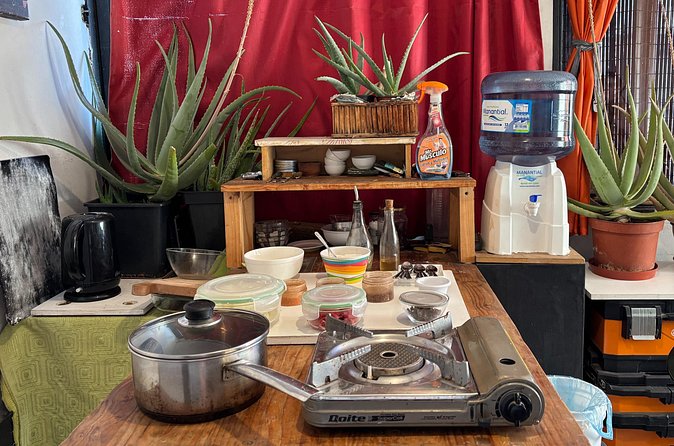
One of the strongest themes from the experience is that you are not watching someone else cook. You are cooking with guidance. People consistently highlight that instructions are clear, steps are explained as you go, and there is time for you to work.
That teaching approach matters because empanadas can go wrong in subtle ways. The dough can be too thick or too fragile. The filling can leak if sealing is weak. Baking time can change how crisp the exterior ends up.
With a small group and active participation, you get feedback while your hands are still learning. That is the difference between leaving with a memory and leaving with something you can actually reproduce at home.
Vegetarian options and adapting for special needs
The experience is designed to be flexible. You are invited to ask about special needs, and the class can adapt.
If you are vegetarian, there is at least an eggplant option referenced for the filling. That is useful because it lets you join the class while still learning the dough and shaping process, which is often the hardest part to vegan- or vegetarian-proof at home.
Meals, utensils, and what you get for $39
At $39 per person for about 3 hours, you are paying for more than food. You are paying for instruction, tools, and the meal experience built around your own cooking.
Here is what is included:
- Empanadas and pebre
- Bottled water
- All necessary utensils for the class
Alcoholic beverages are not included. If you want a drink, you will need to plan around that. The good news is you get a complete meal without needing extra spending just to eat.
Is it good value? For what you are doing, yes. A hands-on cooking class with a small group, ingredients, utensils, and a full bake-and-eat meal is rarely cheap. Here, the price is reasonable because it includes the learning components and what you produce.
Also, the class is commonly booked about 26 days in advance on average. If you have a specific day in mind, it is smart to book early rather than wait for last-minute choices.
Who should book this empanada class
This works especially well if you:
- Want a practical cultural experience where you leave with a skill
- Prefer small groups over crowded tours
- Like cooking lessons that include both the main dish and the sauce
- Travel with friends, a partner, or family and want everyone involved
It is also a good fit for people who enjoy food history in a usable way. You are not given a lecture for the sake of a lecture. You learn why the key elements matter, and you see the results in the final empanadas.
Who should skip it
Skip it if you have gluten intolerance, because the dough is part of the core process and the class is not recommended for that need.
If you dislike hands-on tasks, you might find it more effort than you expected. This class expects you to use your hands, cut dough, shape, fill, and seal.
Should you book this Chilean pine empanada class in Santiago?
Book it if you want a memorable Santiago moment that is not just eating. This is a real cooking lesson where masa, pine filling, and pebre all connect. The class format makes it easy to ask questions, and the end meal gives you a clear finish line.
Think twice if you need gluten-free handling, or if you are looking for something strictly passive. If those conditions do not apply, you will likely come away with both flavor and confidence.
If you do book, show up hungry, wear something you can get dough on, and be ready to practice sealing. That is the skill that turns a good empanada into a repeatable one.
FAQ
How long is the empanada class?
The class runs for about 3 hours.
Where does the class meet in Santiago?
The meeting point is Av. Gral. Bustamante 130, Providencia. The activity ends back at the meeting point.
What is included in the price?
You get empanadas and pebre, bottled water, and all necessary utensils for the class.
Is alcohol included?
Alcoholic beverages are not included.
How big is the group?
The class has a maximum of 6 travelers.
Is the class suitable for gluten intolerance?
It is not recommended for travellers with gluten intolerance.
What ingredients are used in the pine empanada filling?
The pine filling includes onion, meat, raisins, olives, and egg.
Is there a vegetarian option?
An eggplant option for vegetarian was mentioned, so it may be possible to adapt the filling. It is best to ask ahead about your needs.
Freshly reviewed in Santiago
- Colchagua Full Day Wine Tour: Casa Silva & L’Apostolle Wineries★ 4.0 · 3 reviews
- Santiago De Chile Highlights Walking Tour with a Guide★ 5.0 · 3 reviews
- Santiago de Chile: Half-Day City Tour with Local Cuisine★ 4.5 · 3 reviews
- Portillo & Laguna del Inca with Lunch at the Hotel Portillo★ 5.0 · 3 reviews
- Cajon del Maipo & Embalse El Yeso Tour from Santiago★ 3.5 · 3 reviews
- Full day hike to the viewpoint of Condores, Cajon del Maipo★ 5.0 · 3 reviews
- Kayaking Day Trip in the Andes from Santiago★ 5.0 · 3 reviews
- Private Transportation from Santiago or Santiago Airport AMB to Valle Nevado★ 3.5 · 3 reviews
Santiago Tours, compared.
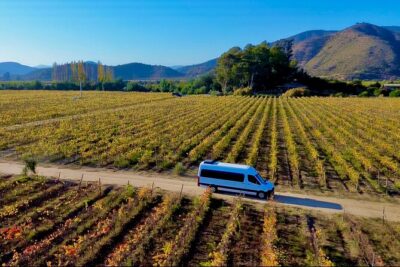
Valparaiso Port and Viña del Mar with Casablanca Wine Tasting
Read our review →
Cajon del Maipo/Embalse del Yeso Tour with Picnic
Read our review →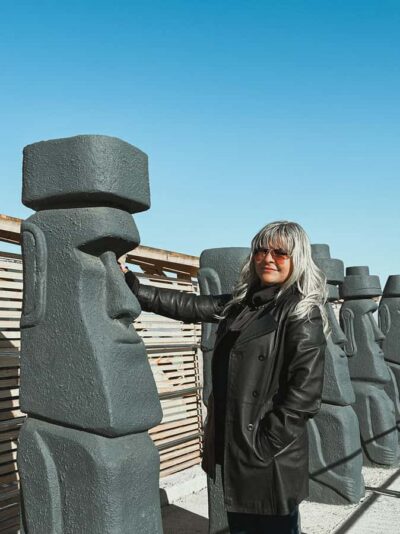
Vina Del Mar, Valparaiso, Casablanca & Reñaca Tour
Read our review →
Cable Car, Funicular and Sightseeing Bus in Santiago one day
Read our review →
Small-Group Cajón del Maipo Full-Day Tour and Picnic
Read our review →
Tour to Valparaíso, Viña del Mar, Pablo Neruda Museum and Vineyard
Read our review →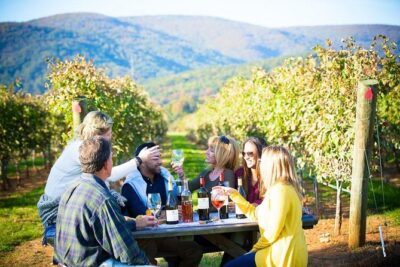
Maipo Valley Wine Tour with 4 vineyards from Santiago.
Read our review →